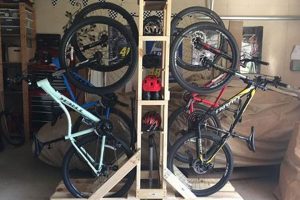
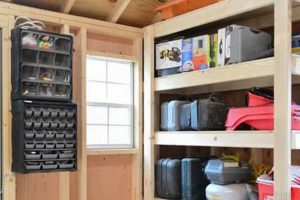
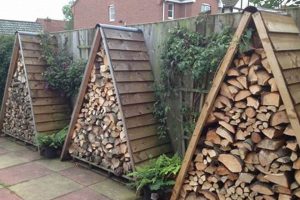
The concept involves the utilization of reclaimed wooden pallets to create customized organizational systems specifically designed for tools. These systems, often realized through do-it-yourself efforts, offer a resourceful approach to tool management. For example, an individual may disassemble a pallet to construct a wall-mounted rack with designated slots for screwdrivers, hammers, and pliers, optimizing space and accessibility.
This approach to tool storage presents several advantages, including cost-effectiveness, sustainability through material reuse, and the opportunity for personalized design. Historically, the practice of repurposing pallets has grown in popularity as awareness of environmental conservation has increased, combined with a desire for economical solutions to home organization challenges. The adaptability of pallet wood allows for projects ranging from simple shelving units to more elaborate mobile workstations, catering to varying needs and skill levels.
The following sections will explore specific designs, construction techniques, safety considerations, and finishing options related to creating effective and visually appealing tool storage solutions from repurposed pallets. These will guide the reader through the process of transforming discarded materials into functional and aesthetically pleasing organizational assets.
Tips for Optimized Pallet Tool Storage Creation
Effective design and construction are crucial when repurposing pallets for tool storage. Attention to detail during each stage will result in a durable, functional, and safe organizational system.
Tip 1: Material Selection and Inspection: Prioritize pallets that are structurally sound and free from chemical treatments. Look for the IPPC stamp indicating heat treatment (HT) and avoid those marked with MB (methyl bromide), a harmful fumigant. Thoroughly inspect each pallet for loose nails, splinters, and signs of rot or insect infestation before beginning any project.
Tip 2: Design for Functionality: Carefully assess the tool collection to be stored and design accordingly. Consider the size, weight, and quantity of each tool. Integrate features such as custom-sized slots for screwdrivers, designated shelves for larger items, and secure mounting options for power tools. Proper planning ensures efficient space utilization.
Tip 3: Secure Fastening Techniques: Use appropriate fasteners for the intended load. Screws generally provide a more secure and long-lasting connection than nails. Predrill holes to prevent wood splitting, especially when working with brittle pallet wood. Consider using wood glue in conjunction with screws for enhanced stability.
Tip 4: Prioritize Safety: Wear appropriate personal protective equipment (PPE), including safety glasses, gloves, and a dust mask, during all phases of construction. De-nailing pallets can be hazardous; use a specialized nail puller or pry bar with caution. Ensure all edges and surfaces are smooth to prevent cuts and splinters.
Tip 5: Implement Robust Mounting Solutions: When mounting pallet tool storage systems to a wall, use hardware appropriate for the wall type (e.g., drywall anchors for drywall, lag screws for studs). Ensure the mounting system is capable of supporting the fully loaded weight of the storage unit. Properly installed hardware prevents accidental dislodging and potential injury.
Tip 6: Consider Weather Resistance: If the pallet tool storage is to be located outdoors or in an unheated space, apply a suitable sealant or paint to protect the wood from moisture and decay. This step will extend the lifespan of the project and prevent premature failure.
Tip 7: Modular Design: Create a modular system. Build smaller, independent storage units that can be combined or rearranged as needs evolve. This approach provides flexibility and adaptability to changing tool collections and workspace configurations.
Adhering to these recommendations facilitates the creation of safe, effective, and durable organizational solutions, contributing to a more efficient and enjoyable workspace.
The subsequent section will address common challenges encountered during construction and provide troubleshooting guidance.
1. Accessibility

Accessibility, in the context of pallet-based tool storage solutions, refers to the ease and speed with which tools can be located and retrieved. The design and implementation of these projects directly influence this factor. A well-designed pallet tool storage system minimizes search time and physical effort required to access necessary tools, contributing to improved workflow and reduced frustration.
Inefficient storage solutions often result in tools being misplaced or buried beneath other items. Pallet projects that prioritize clear organization and readily visible placement enhance accessibility. For example, a pallet wall rack with individual compartments for each tool, labelled clearly, offers superior accessibility compared to a disorganized toolbox where tools are piled haphazardly. The spatial arrangement enabled by pallet construction enables customized layouts, ensuring that frequently used tools are positioned within easy reach. Conversely, poorly planned projects with overcrowded storage or tools stored in inaccessible locations negate the potential benefits.
Therefore, the success of pallet-based tool storage hinges on thoughtful design choices that prioritize accessibility. Failure to consider this aspect results in a storage system that, despite its potential cost-effectiveness, compromises efficiency and potentially increases the time spent on projects. Prioritizing visibility, reach, and organization within the design directly enhances the utility and practical value of these DIY tool storage solutions.
2. Durability

Durability, in the context of pallet projects designed for tool storage, is a critical attribute that determines the longevity and reliability of the storage system. The ability of a pallet-based tool storage solution to withstand repeated use, environmental factors, and the weight of tools directly influences its overall value and practicality.
- Material Selection and Treatment
The inherent durability of the pallet wood used in construction is paramount. Different wood species exhibit varying levels of resistance to decay, insect infestation, and physical stress. Proper treatment, such as the application of sealants or preservatives, can significantly enhance the wood’s resistance to moisture and biological degradation. Failure to select durable materials or apply appropriate treatments can lead to premature failure of the tool storage system, rendering it unusable.
- Construction Techniques and Joinery
The methods employed to assemble the pallet wood directly impact the structural integrity and durability of the final product. Secure fastening techniques, such as screws and glue, provide greater strength and stability compared to relying solely on nails. Reinforcing critical joints and load-bearing points with additional supports or metal brackets enhances the system’s ability to withstand heavy loads and prolonged use. Poorly executed construction techniques can result in weak points that are susceptible to breakage or collapse.
- Load Capacity and Weight Distribution
The design of the tool storage system must account for the weight and distribution of the tools it is intended to hold. Exceeding the load capacity can lead to structural failure and potential damage to the tools. Distributing the weight evenly across the structure minimizes stress on individual components. Reinforcing shelves, drawers, or mounting points is crucial for accommodating heavier items. Failure to consider load capacity and weight distribution compromises the long-term durability of the system.
- Environmental Factors and Protection
Exposure to environmental elements such as moisture, sunlight, and temperature fluctuations can significantly impact the durability of pallet wood. Applying protective coatings, such as paint or varnish, shields the wood from these damaging effects. Selecting appropriate materials and construction techniques for the intended environment is essential. Outdoor tool storage systems require more robust protection than those located indoors. Neglecting environmental factors can accelerate the deterioration of the tool storage system.
In conclusion, the durability of pallet projects designed for tool storage is a multifaceted characteristic influenced by material selection, construction techniques, load management, and environmental protection. A durable system ensures long-term functionality and reliability, justifying the investment of time and effort in its construction. Addressing each of these aspects contributes to a tool storage solution that effectively serves its intended purpose for an extended period.
3. Customization

The inherent adaptability of pallet wood directly supports the concept of customized tool storage solutions. Pallet projects, by their very nature, involve a degree of individual tailoring. The standardized dimensions of pallets offer a modular starting point, but the ultimate configuration is dictated by the user’s specific needs and tool inventory. This stands in contrast to mass-produced tool storage options, which often impose limitations on layout and capacity.
The ability to modify pallet structures allows for precise accommodation of diverse tool sizes and shapes. An individual requiring storage for long-handled gardening tools might construct a tall, narrow rack, while someone primarily using power tools could prioritize a workbench with integrated electrical outlets and cord management systems. Furthermore, customization extends beyond spatial arrangement to include aesthetic preferences. Painting, staining, or adding decorative elements to the pallet wood allows for integration with existing workshop or garage decor, resulting in a functional and visually cohesive storage solution. A basic example is creating custom spaces to suit the tool inventory, from small sections for screw drivers to large sections for power tools.
In summary, customization is not merely an optional feature of pallet-based tool storage; it is a fundamental advantage. The raw material’s malleability empowers users to create storage solutions that are precisely aligned with their unique requirements. The economic benefits of using recycled materials are amplified by the ability to optimize storage space and workflow, making customized pallet projects a highly practical and sustainable approach to tool management. However, the level of customization requires skill in woodworking and design, and should always consider safety precautions.
4. Organization

Organization is a fundamental principle underpinning the effectiveness of pallet projects aimed at DIY tool storage. The inherent objective of constructing tool storage solutions, regardless of the materials employed, is to establish a system that promotes order, accessibility, and efficiency within a workspace. Pallet projects, specifically, offer a unique opportunity to tailor organizational strategies to individual needs and spatial constraints. A direct correlation exists between the level of organization achieved and the overall utility of the resulting tool storage system. For example, a carefully designed pallet wall organizer allows for the categorization and readily accessible display of tools, minimizing search time and maximizing workflow. Conversely, a poorly planned structure, lacking clear organizational principles, may exacerbate clutter and hinder productivity.
The practical implementation of organization within pallet projects necessitates a systematic approach. Initially, a thorough assessment of the tool inventory is required, classifying tools based on size, frequency of use, and function. This analysis informs the design process, guiding the creation of dedicated compartments, racks, or shelves optimized for specific tool types. For instance, small hand tools such as screwdrivers and pliers can be neatly arranged in slotted racks, while larger items such as power drills and saws may require more robust shelving or drawer systems. Furthermore, labeling and color-coding can be incorporated to enhance visual organization and facilitate rapid tool identification. A real-world example may include a mechanic’s shop that converts reclaimed pallets into modular storage units, allowing them to quickly reconfigure their workspace as needed to suit different repair projects. By categorizing and arranging tools logically, the mechanic reduces time spent searching for the right tool, which improves overall efficiency and client satisfaction.
In conclusion, organization is not merely an ancillary benefit of pallet projects DIY tool storage; it is the foundational element upon which their success is predicated. While the cost-effectiveness and sustainability of utilizing reclaimed pallets are significant advantages, the realization of these benefits hinges on the deliberate and systematic application of organizational principles. The challenges associated with transforming raw pallet materials into functional storage solutions are mitigated by a clear understanding of organizational strategies and their impact on workspace efficiency. Therefore, when undertaking such projects, prioritizing organization is paramount to creating a tool storage system that truly enhances productivity and streamlines workflow.
5. Cost-effectiveness

The core appeal of “pallet projects DIY pallet tool storage” lies in its inherently economical nature. The primary material, discarded wooden pallets, is often obtainable at minimal cost or even free. This drastically reduces the upfront investment typically associated with purchasing pre-fabricated tool storage solutions, which can represent a significant expenditure for hobbyists, small businesses, and homeowners alike. The cause-and-effect relationship is direct: acquiring readily available and inexpensive materials directly translates to lower project costs. Cost-effectiveness is not merely an ancillary benefit, but a central pillar supporting the widespread adoption of this DIY approach. For instance, a small woodworking shop can significantly reduce its operational expenses by constructing a comprehensive tool organization system from repurposed pallets, diverting funds to other critical areas such as equipment maintenance or material procurement.
Furthermore, the utilization of pallets promotes resourcefulness and reduces waste. By repurposing materials destined for landfills, these projects contribute to a more sustainable approach to tool management. The practical application extends beyond initial cost savings. Durable pallet-based storage systems minimize the need for frequent replacements, resulting in long-term financial benefits. The labor involved is primarily the individual’s own effort, further reducing expenses. Consider a home garage where a pallet-based shelving unit is built to organize gardening tools. The initial cost is limited to fasteners and perhaps some paint, a fraction of the price of purchasing a metal or plastic shelving unit. Over time, the durability of the pallet wood prevents the need for replacement, amplifying the initial savings.
In conclusion, cost-effectiveness is inextricably linked to the viability and attractiveness of “pallet projects DIY pallet tool storage.” The reduced material costs, coupled with the potential for long-term durability and waste reduction, create a compelling argument for individuals and businesses seeking economical and sustainable tool management solutions. The understanding and appreciation of this cost-effectiveness drives the innovation and proliferation of diverse pallet-based storage designs, further solidifying the value proposition of this DIY approach.
Frequently Asked Questions
This section addresses common inquiries and concerns related to the construction and utilization of tool storage systems derived from repurposed wooden pallets.
Question 1: What types of pallets are suitable for tool storage projects?
Heat-treated (HT) pallets are generally preferred due to the absence of harmful chemical treatments. Avoid pallets marked with “MB,” indicating methyl bromide fumigation, a hazardous process. Structural integrity is paramount; inspect for damage, rot, or insect infestation.
Question 2: Are pallet projects for tool storage durable?
Durability depends on material selection, construction techniques, and environmental conditions. Employing robust joinery methods, such as screws and glue, enhances structural integrity. Applying protective coatings mitigates the effects of moisture and sunlight. Properly constructed systems can exhibit considerable longevity.
Question 3: What safety precautions are necessary when working with pallets?
Wear appropriate personal protective equipment (PPE), including safety glasses, gloves, and a dust mask. Exercise caution when disassembling pallets, as nails and splinters pose potential hazards. Ensure proper ventilation when sanding or applying finishes. Securely mount storage systems to prevent collapse or instability.
Question 4: How can pallet-based tool storage systems be customized?
Pallet wood can be readily cut, shaped, and assembled to accommodate specific tool collections and spatial constraints. Design considerations should include tool size, weight, frequency of use, and desired level of accessibility. Painting, staining, or adding decorative elements further enhances personalization.
Question 5: What are the primary cost considerations associated with these projects?
The primary cost factor involves fasteners (screws, nails), adhesives, and any desired finishes (paint, varnish). The pallets themselves are often obtainable at minimal or no cost. Labor is primarily self-provided, contributing to overall cost savings.
Question 6: Are there specific regulatory considerations pertaining to pallet reuse?
Local regulations may govern the disposal or reuse of certain types of pallets, particularly those originating from international shipments. Research and comply with any applicable ordinances to ensure responsible material handling.
Key takeaways include the importance of material selection, safe construction practices, and adherence to regulatory guidelines. The customization potential and cost-effectiveness of pallet projects offer compelling advantages for individuals seeking efficient tool storage solutions.
The subsequent section will present practical examples of various pallet-based tool storage designs.
Conclusion
This exploration has detailed various aspects of `pallet projects diy pallet tool storage`, encompassing design principles, construction considerations, and the inherent benefits associated with this approach. The viability of repurposing pallets for tool organization is predicated on the combination of cost-effectiveness, customization potential, and a commitment to sustainable practices. The information presented underscores the importance of careful planning, adherence to safety protocols, and a thorough understanding of the materials involved to ensure the creation of durable and functional storage systems. This has included accessibility, durability, customization, organization, and cost-effectiveness.
The continued relevance of `pallet projects diy pallet tool storage` rests on its adaptability to evolving needs and its contribution to a more resourceful and environmentally conscious approach to tool management. Individuals are encouraged to consider the practical implications of these principles, adopting the strategies outlined to optimize workspaces and minimize environmental impact. The emphasis on practical application of woodworking skill is to create durable customized solutions that may extend to the future of sustainable projects.