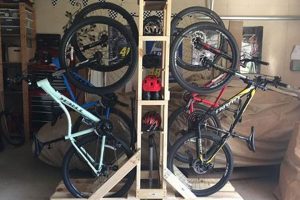
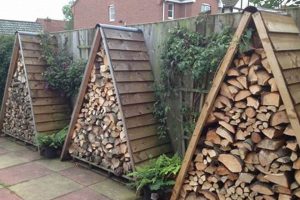
Independent construction of organizational units within an outdoor storage structure permits customized space management. These units, frequently composed of lumber or metal components, facilitate the ordered arrangement of gardening tools, seasonal items, and general household supplies. For example, a homeowner might construct tiered platforms to accommodate various container sizes, maximizing vertical space within the enclosure.
Effective utilization of vertical space inside such a structure optimizes storage capacity and enhances accessibility. Historically, homeowners have employed rudimentary wooden structures to store tools and protect them from the elements. Today, options range from simple, readily assembled kits to elaborate, custom-designed solutions, reflecting individual needs and available skill sets. The practice can result in significant cost savings compared to purchasing pre-fabricated or professionally installed options and allows for personalization unavailable through standard retail offerings.
The subsequent sections will explore critical aspects of designing, constructing, and installing such organizational systems, encompassing material selection, load-bearing considerations, construction techniques, and safety protocols. These topics are essential for ensuring the longevity and functionality of the project.
Practical Considerations for DIY Storage Shed Organization Systems
The following tips offer guidance on creating effective and durable organizational units within an outdoor storage structure.
Tip 1: Material Selection is Paramount: Prioritize weather-resistant materials such as pressure-treated lumber or powder-coated steel to withstand environmental exposure. Untreated wood is susceptible to rot and insect infestation, leading to premature failure.
Tip 2: Plan for Load Capacity: Accurately estimate the maximum weight each unit will bear. Reinforce critical support points with additional bracing to prevent structural collapse under heavy loads.
Tip 3: Precise Measurement is Essential: Measure available space meticulously before commencing construction. Accurate dimensions ensure a proper fit and prevent costly errors. Account for obstructions like doorframes and existing structural elements.
Tip 4: Utilize Wall Studs for Support: Attach units directly to wall studs for increased stability. Employ a stud finder to locate studs accurately and use appropriate fasteners designed for structural connections.
Tip 5: Incorporate Vertical Space: Maximize storage efficiency by utilizing the full height of the structure. Install units at varying heights to accommodate items of different sizes, optimizing overall space utilization.
Tip 6: Prioritize Safety: Wear appropriate safety gear, including eye protection and gloves, when cutting, drilling, or assembling materials. Securely fasten all components to prevent accidents and ensure structural integrity.
Tip 7: Consider Ventilation: Allow for adequate airflow to prevent moisture buildup and mildew growth. Leave small gaps between units and the shed walls to promote air circulation.
These considerations contribute to a robust and functional organization system, extending the lifespan of the storage shed and its contents.
The subsequent section will delve into potential design flaws and mitigation strategies for enhancing overall durability and performance.
1. Space Optimization
Effective space optimization directly determines the utility and functionality of self-constructed storage units within a shed. The causal relationship is straightforward: maximized space utilization translates to enhanced storage capacity within the same physical footprint. Inadequate consideration of space during the design and construction phase leads to inefficient storage, potentially negating the purpose of installing units in the first place. For instance, designing narrow platforms restricts the storage of wider items, leaving unused space. Careful measurement and planning are thus critical for maximizing the effectiveness of the structure.
The practical significance of optimized space is evident in various scenarios. A homeowner storing gardening tools can utilize vertical space by installing units of varying heights, accommodating both short hand tools and taller equipment like rakes and shovels. Similarly, tiered platforms can efficiently store multiple containers of varying sizes. The strategic use of vertical space and customized dimensions ensures that every available inch is utilized effectively, preventing clutter and facilitating easy access to stored items.
Ultimately, the successful integration of organizational units hinges on a commitment to space optimization. This requires a detailed assessment of storage needs, precise measurements, and a design that leverages all available dimensions. Neglecting this critical aspect results in a suboptimal storage solution, diminishing the overall benefit of constructing units. Prioritizing optimized space provides an efficient and user-friendly storage environment, enhancing the functionality and value of the outdoor storage structure.
2. Load Bearing
Load bearing is a primary determinant of the structural integrity and safety of independently constructed organizational units within a storage structure. The relationship is causal: insufficient load-bearing capacity directly precipitates failure under stress, resulting in potential damage to stored items and, more critically, posing a safety hazard. For example, a shelving system constructed with inadequate lumber dimensions or insufficient support will eventually sag or collapse under the weight of heavy objects, rendering it unusable and potentially dangerous. Proper consideration of load-bearing principles is therefore non-negotiable when designing and constructing these systems.
The practical application of load-bearing calculations involves several considerations. First, an accurate assessment of the maximum weight each unit will be required to support is paramount. This necessitates identifying the types of items to be stored and their individual weights. Second, appropriate materials and construction techniques must be selected to meet or exceed the calculated load requirements. For instance, using thicker lumber or incorporating additional support brackets can significantly increase the load-bearing capacity of a unit. Real-world examples demonstrate this point: a unit designed to store heavy tools should employ robust materials and reinforced joints, while a system intended for lighter items can utilize lighter-gauge materials and simpler construction methods. Furthermore, adherence to established engineering principles and building codes ensures that structures meet minimum safety standards.
In conclusion, load bearing is an indispensable component of independent storage unit construction within a shed. Failure to adequately address load-bearing requirements jeopardizes the stability and safety of the entire system. Employing sound engineering principles, selecting appropriate materials, and executing precise construction techniques are critical for ensuring the longevity and safe operation of storage units. Understanding and implementing these principles is not merely a matter of best practice, but a fundamental requirement for responsible home improvement.
3. Material Durability
Material durability is a critical determinant of the lifespan and overall value of independent construction of organizational units within a storage structure. It directly influences the system’s resistance to environmental stressors and its ability to withstand the intended load over an extended period. The selection of materials resistant to rot, insect infestation, and corrosion is therefore paramount for ensuring the long-term functionality of these structures.
- Resistance to Environmental Factors
Material selection must prioritize resistance to moisture, temperature fluctuations, and ultraviolet (UV) radiation. In outdoor environments, untreated wood is susceptible to rot and decay, significantly reducing its lifespan. Metal components are vulnerable to rust and corrosion, particularly in humid climates. Employing pressure-treated lumber, galvanized steel, or plastics designed for outdoor use is essential for mitigating these risks.
- Load-Bearing Capacity Over Time
The ability of a material to maintain its load-bearing capacity over time is crucial for the safe and reliable storage of items. Materials that degrade or deform under sustained loads pose a risk of structural failure. Considerations include the material’s tensile strength, compressive strength, and resistance to creep. Using appropriate fasteners and construction techniques also contributes to maintaining the integrity of the structure under load.
- Resistance to Biological Degradation
Wooden components are susceptible to attack by insects, fungi, and other organisms that can compromise their structural integrity. Pressure-treated lumber offers resistance to these threats, but alternative materials such as composite lumber or plastics provide inherent resistance to biological degradation. Regular inspection and maintenance are necessary to detect and address any signs of infestation or decay promptly.
- Impact and Abrasion Resistance
The ability of materials to withstand impacts and abrasion is important for preventing damage during loading and unloading of items. Storage units are often subjected to impacts from tools, equipment, and other objects. Selecting materials with high impact resistance, such as thick-gauge steel or reinforced plastics, can minimize the risk of damage and extend the lifespan of the structure.
In conclusion, material durability is an indispensable consideration when planning and executing independent construction of storage units. The judicious selection of materials that resist environmental stressors, maintain load-bearing capacity, and resist biological degradation ensures the creation of a long-lasting and reliable storage system. Neglecting these factors leads to premature failure, increased maintenance costs, and potential safety hazards. Prioritizing material durability is thus a fundamental aspect of responsible home improvement and contributes to the long-term value of the outdoor storage structure.
4. Accessibility
Accessibility is a core design principle directly impacting the functionality and usability of self-constructed storage systems within a shed. The organization of internal storage has a proportional influence on the convenience and effectiveness of the storage area. An inefficient organizational strategy with accessibility limitations negates much of the benefit of having a dedicated space. For example, units constructed without regard to the frequency of use of stored items or positioned in difficult-to-reach locations result in increased time and effort to retrieve and store materials.
The strategic design and placement of shelves determine ease of use. High-frequency items require placement at convenient, easily accessible heights, while less frequently accessed items can occupy higher or lower spots. Consider the physical constraints of users. Shelves that can be modified provide adjustability for different heights. Clear labeling is vital for rapidly identifying and finding stored things. All of these contribute to an easy-to-manage organization strategy.
In summary, accessibility must be integrated into the design and building of organization units. Attention to shelf height, organization, and labeling is critical for maximizing the practical value of the area and improving ease of use. An organizational layout that promotes simple and efficient material retrieval translates directly into a more functional and usable storage space, highlighting the important role of accessibility in project success.
5. Cost Effectiveness
Cost effectiveness is a primary motivator for engaging in independent construction of organizational systems within a storage structure. The financial advantage stems from the elimination of labor costs associated with professional installation and the ability to source materials strategically, optimizing expenditure.
- Material Selection and Budget Alignment
Material selection directly impacts the overall cost of the project. Opting for readily available, less expensive lumber species or utilizing reclaimed materials can significantly reduce expenses. However, this must be balanced against durability and longevity considerations. Sacrificing material quality to minimize initial costs may lead to premature failure and necessitate costly repairs or replacements in the future.
- Design Simplicity and Reduced Material Waste
Simple, efficient designs minimize material waste and construction time, contributing to overall cost savings. Complex designs often require specialized tools, additional materials, and increased labor, thereby increasing the total project cost. Careful planning and precise measurements reduce the likelihood of errors and minimize the need for material re-orders.
- Phased Construction and Incremental Investment
Independent construction allows for phased implementation, enabling homeowners to spread the cost over time. Rather than incurring a large upfront expense, the project can be broken down into manageable stages, with each stage funded as resources become available. This approach provides flexibility and reduces the financial strain associated with a large-scale undertaking.
- Elimination of Professional Labor Costs
The most significant cost savings typically result from eliminating professional labor. Professional installation services can represent a substantial portion of the total project expense. By undertaking the construction independently, homeowners avoid these costs and retain complete control over the budget. However, it is essential to accurately assess one’s skills and capabilities to ensure a successful outcome.
In conclusion, cost effectiveness is a compelling advantage. Strategic material selection, design simplicity, phased construction, and the elimination of professional labor contribute to significant financial savings. These factors collectively make it an attractive alternative to purchasing pre-fabricated or professionally installed options, particularly for individuals seeking customized storage solutions while adhering to budget constraints.
6. Structural Integrity
Structural integrity, in the context of independently constructed organizational systems within a storage structure, refers to the ability of these systems to withstand applied loads and environmental stresses without failure or significant deformation. Its maintenance is paramount for ensuring the safety of users and the protection of stored items.
- Material Selection and Load Distribution
The choice of materials directly affects load-bearing capacity and resistance to environmental factors. Selecting materials appropriate for the anticipated load and exposure conditions is crucial. Even distribution of load across all structural members prevents localized stress concentrations that could lead to premature failure. Real-world examples include utilizing thicker lumber for heavier items and reinforcing joints with metal brackets to distribute stress.
- Joint Construction and Fastener Selection
The method of joining structural components significantly influences overall stability. Properly executed joinery techniques, such as mortise and tenon or dovetail joints, provide superior strength compared to simple butt joints. The selection of appropriate fasteners, such as screws, bolts, or nails, is equally critical. Fasteners must be appropriately sized and spaced to ensure adequate holding power. For instance, using deck screws for exterior applications prevents corrosion and ensures long-term durability.
- Bracing and Reinforcement
Bracing and reinforcement techniques enhance stability and prevent racking or twisting of the structure. Diagonal bracing adds rigidity and prevents deformation under load. Reinforcing critical connections with metal straps or gussets provides additional support and distributes stress more evenly. For example, adding a diagonal brace to the back of a shelf unit significantly improves its resistance to lateral forces.
- Foundation and Support Systems
The foundation or support system upon which the organizational units rest directly affects their stability. Units must be supported on a level and stable surface to prevent uneven loading and stress concentrations. Utilizing shims to level units on uneven surfaces or anchoring them to the shed walls enhances stability and prevents tipping. Examples include constructing a solid base using concrete blocks or pressure-treated lumber to provide a stable foundation for the storage system.
These aspects are interconnected and collectively contribute to overall structural integrity. A system designed with careful consideration of material selection, joint construction, bracing, and support systems will provide a safe and durable storage solution, enhancing the value and utility of the outdoor storage structure.
Frequently Asked Questions
The following questions address common inquiries regarding the design, construction, and maintenance of storage systems within outdoor storage structures.
Question 1: What are the primary considerations when selecting materials for self-constructed storage?
Material selection should prioritize resistance to environmental factors such as moisture, temperature fluctuations, and insect infestation. Pressure-treated lumber, galvanized steel, and plastics designed for outdoor use are recommended for their durability and longevity.
Question 2: How can the load-bearing capacity of an existing storage system be assessed?
The load-bearing capacity is determined by the materials used and the structural design. Calculate the maximum weight that the system is expected to support and compare this to the specifications for the materials and construction methods employed. Reinforce with additional support or bracing if necessary.
Question 3: What strategies optimize space utilization within a limited storage area?
Employ vertical space effectively by installing tiers at varying heights to accommodate different item sizes. Consider adjustable shelving to adapt to changing storage needs. Maximize space utilization while maintaining accessibility and functionality.
Question 4: What safety precautions should be observed during the construction process?
Prioritize safety by wearing appropriate protective gear, including eye protection and gloves. Ensure a safe and stable working environment. Employ proper lifting techniques to avoid injury. Disconnect electrical power before working near electrical components.
Question 5: How does ventilation affect the longevity of a storage structure and its contents?
Adequate ventilation prevents moisture buildup and mildew growth, prolonging the lifespan of both the storage structure and its contents. Proper air circulation minimizes the risk of damage and deterioration. Ensure adequate airflow by leaving small gaps between the system and the shed walls.
Question 6: What maintenance practices are recommended to extend the lifespan of the self-constructed storage system?
Regular inspection for signs of damage, rot, or insect infestation is recommended. Promptly address any issues to prevent further deterioration. Apply protective coatings or sealants as needed to protect materials from environmental damage. Maintain proper ventilation and ensure the structure remains dry.
Adherence to these principles contributes to the creation of a durable, efficient, and safe storage solution within an outdoor structure.
The subsequent section will provide a comprehensive checklist for project planning and execution, ensuring a systematic approach to system construction.
Conclusion
The foregoing analysis has provided a thorough examination of construction processes within outdoor storage structures. Key considerations included material selection, load-bearing capacity, space optimization, and the imperative of ensuring structural integrity. Each element directly influences the longevity, functionality, and safety of the resulting system. Failure to adequately address any one of these components compromises the entire construction.
The principles and techniques outlined are intended to serve as a foundation for informed decision-making. The successful execution of such projects demands meticulous planning, adherence to safety protocols, and a commitment to quality craftsmanship. Individuals considering independent construction are encouraged to apply this knowledge responsibly to realize durable and efficient storage solutions.