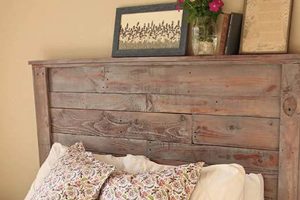
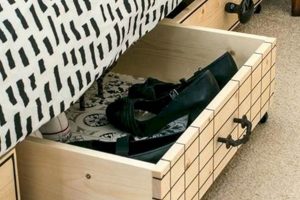
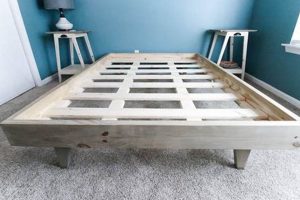
A bedside platform, constructed by an individual, offers a convenient surface adjacent to a bed. These personalized solutions provide readily accessible storage for nighttime essentials such as books, reading glasses, mobile devices, and beverages, negating the need for a conventional nightstand. An example includes a simple wooden ledge clamped to a bed frame.
The value of these self-made structures lies in their adaptability and cost-effectiveness. They are particularly useful in smaller bedrooms where space is limited. Historically, individuals have employed ingenuity to create storage solutions that optimize living spaces. Furthermore, the creation of these platforms promotes resourcefulness and allows for a personalized aesthetic, reflecting individual style and needs.
The following sections will delve into the various materials, design considerations, and construction techniques relevant to creating a stable and aesthetically pleasing bedside surface. Different attachment methods, suitable for various bed frame styles, will also be explored. Finally, this analysis will cover safety precautions and finishing touches to ensure the longevity and functionality of the finished product.
Essential Considerations for a Self-Made Bedside Platform
The successful creation of a bedside surface hinges on careful planning and execution. The following guidelines provide a framework for a durable and functional result.
Tip 1: Material Selection: Consider the load-bearing capacity and aesthetic compatibility of the chosen material. Solid wood offers strength and visual appeal, while plywood provides an economical and versatile alternative. Particleboard is less recommended due to lower durability.
Tip 2: Secure Attachment Method: The attachment mechanism is critical for stability. Clamps, screws, or brackets must be appropriately sized and fastened to both the platform and the bed frame. Ensure the chosen method does not compromise the structural integrity of the bed.
Tip 3: Weight Distribution: Distribute weight evenly across the platform surface. Avoid concentrating heavy items in one area, which could lead to sagging or failure of the supporting structure. Consider reinforcing the platform’s underside for heavier loads.
Tip 4: Edge Treatment: Smooth all edges and corners to prevent injury. Sanding sharp edges is essential, and the application of edge banding or a rounded profile can further enhance safety and aesthetics.
Tip 5: Finish Application: A protective finish enhances durability and appearance. Choose a finish appropriate for the chosen material and intended use. Consider factors such as moisture resistance and ease of cleaning.
Tip 6: Accurate Measurements: Precise measurements are paramount for a snug fit and proper functionality. Measure the available space adjacent to the bed and account for the thickness of the materials used. Double-check all measurements before cutting any components.
Tip 7: Safety First: Prioritize safety throughout the construction process. Wear appropriate protective gear, such as safety glasses and gloves, and use power tools according to manufacturer’s instructions. Ensure the platform is securely attached and stable before use.
Adherence to these principles will contribute to a safe, functional, and visually appealing addition to the bedroom.
The subsequent sections will elaborate on specific design ideas and advanced construction techniques.
1. Accessibility

Accessibility, in the context of a self-constructed bedside surface, directly impacts its functional value. The height, depth, and placement of the structure determine the ease with which items can be reached from a supine or seated position. Inadequate accessibility negates the intended convenience, rendering the shelf functionally useless. For example, a shelf positioned too high requires undue stretching, disrupting sleep and potentially causing injury. Conversely, a shelf located too low necessitates excessive bending, creating similar discomfort.
The dimensions of the platform also influence accessibility. A shallow surface may be insufficient for larger items, such as books or tablets, while an excessively deep shelf requires reaching further, potentially leading to items being knocked over. Furthermore, the proximity of the platform to the bed is critical. A shelf positioned too far away necessitates awkward reaching, compromising comfort and convenience. The design should account for the user’s arm length and typical sleeping position. Consider a modular design with adjustable height, or the inclusion of drawers or compartments to enhance organization and accessibility.
Effective accessibility results from careful consideration of user needs and ergonomic principles. Prioritizing ease of reach and intuitive organization maximizes the shelf’s functional benefit. Ultimately, a properly designed and positioned self-constructed bedside surface promotes convenience, enhances comfort, and contributes to a more restful sleep experience.
2. Stability

The concept of stability is paramount in the design and construction of a self-made bedside platform. Adequate stability ensures the safe and reliable support of items placed upon the surface. Insufficient stability poses a significant risk, potentially leading to the platform’s collapse and subsequent damage to belongings, or even injury to the occupant of the bed. Cause and effect are directly linked: inadequate structural design leads to instability, culminating in potential failure. Consider, for example, a self-made platform constructed with improperly secured joints or insufficient weight-bearing capacity. The result is a structure prone to wobbling, tipping, or complete collapse when subjected to even moderate weight.
The materials chosen for the platforms construction directly influence its stability. A platform constructed from lightweight or flexible materials requires a more robust support system than one made from denser, more rigid materials. Similarly, the method of attachment to the bed frame plays a crucial role. Clamps or brackets that are improperly sized or inadequately secured compromise the overall stability, regardless of the material’s inherent strength. Real-world examples of poorly constructed platforms demonstrate the practical significance of understanding stability principles. A common error involves using excessively long screws without pilot holes, resulting in weakened wood and compromised joint strength. Another frequent mistake is relying solely on adhesive for load-bearing connections, a practice that rarely provides adequate long-term stability.
In summary, stability is an indispensable attribute of any self-made bedside platform. Achieving adequate stability necessitates careful consideration of material selection, joint construction, and attachment methods. Overcoming the challenges associated with ensuring stability requires a thorough understanding of basic structural principles and a commitment to meticulous craftsmanship. Neglecting this foundational element undermines the platforms utility and introduces an unacceptable level of risk.
3. Material Durability
Material durability, in the context of self-constructed bedside surfaces, directly correlates with the structure’s longevity, functionality, and overall value. The selection of durable materials mitigates premature wear, structural failure, and the need for frequent repairs or replacements, thus ensuring a cost-effective and reliable solution. The following facets outline key considerations relating to material durability.
- Resistance to Moisture
Moisture resistance is paramount, particularly in environments prone to humidity or spills. Materials such as solid hardwood or treated plywood exhibit greater resistance to moisture absorption and subsequent warping, swelling, or fungal growth compared to untreated particleboard. Selecting moisture-resistant materials prevents structural degradation and extends the lifespan of the structure. For example, a shelf constructed from untreated fiberboard will quickly degrade in a humid environment or after exposure to spilled liquids, whereas a shelf crafted from marine-grade plywood will withstand such conditions for an extended period.
- Load-Bearing Capacity
The inherent strength and stiffness of a material dictate its ability to support weight without deformation or failure. Solid hardwoods, such as oak or maple, possess a higher load-bearing capacity than softer woods or composite materials. Selecting materials with adequate load-bearing capacity ensures the shelf can safely accommodate anticipated weight loads, such as books, electronics, or beverages. For instance, a shelf intended to hold heavy textbooks requires a material with sufficient structural integrity to prevent sagging or collapse.
- Resistance to Wear and Abrasion
The ability of a material to withstand surface wear and abrasion is crucial for maintaining its aesthetic appearance and structural integrity over time. Harder materials, such as solid wood or laminate, resist scratches, dents, and other forms of surface damage more effectively than softer materials. Selecting materials with high resistance to wear and abrasion preserves the visual appeal and prolongs the useful life of the shelf. A shelf constructed from soft pine, for example, is more susceptible to scratches and dents than one made from a more durable material such as bamboo or powder-coated steel.
- Resistance to Environmental Degradation
Exposure to environmental factors, such as ultraviolet radiation and temperature fluctuations, can degrade certain materials over time. Materials such as treated lumber or powder-coated metal are more resistant to these effects than untreated wood or certain plastics. Choosing materials with good resistance to environmental degradation ensures a longer lifespan and less maintenance. For example, a DIY bed shelf made of untreated pine would quickly degrade if left outside, while one made of cedar could last much longer.
These factors collectively underscore the importance of carefully evaluating material durability when constructing a self-made bedside platform. Opting for materials that exhibit superior resistance to moisture, load-bearing capacity, wear, and environmental factors results in a more robust, reliable, and long-lasting structure. Consideration of these properties ensures both the functionality and aesthetic appeal are maintained over an extended service life.
4. Space Optimization

Space optimization is an intrinsic consideration in the construction of self-made bedside platforms, particularly in environments with limited square footage. The creation of a bedside surface inherently addresses the need to maximize usable space. This occurs due to the effect of consolidating storage within the vertical plane, thereby liberating valuable floor area. Without this integration, the placement of a conventional nightstand could impede movement, create a sense of confinement, or necessitate compromises in furniture arrangement. Space optimization is a crucial component of a bed shelf, especially in smaller living environments, because it provides a functional surface without occupying significant floor space. Real-life examples include cramped apartments or dorm rooms where a traditional nightstand proves impractical, while a slim bedside platform offers sufficient space for essential items, such as a phone, book, or reading glasses, without impeding movement.
The design of the platform directly impacts its efficacy in optimizing space. A minimalist approach, characterized by clean lines and a compact footprint, maximizes the available area. Incorporating features such as integrated charging ports or hidden storage compartments can further enhance functionality without expanding the overall dimensions. Furthermore, the placement and mounting method are critical. A shelf securely attached to the bed frame, rather than resting on the floor, frees up valuable vertical space. Moreover, the platform’s depth should be carefully considered. An excessively deep shelf may encroach upon the usable area and negate the intended space-saving benefits, whereas a shallower design minimizes intrusion while still providing adequate surface area.
In summary, space optimization is an essential design criterion for any self-constructed bedside platform. By carefully considering dimensions, placement, and functionality, individuals can create a practical and aesthetically pleasing solution that maximizes usable space, enhances comfort, and contributes to a more organized living environment. The challenge lies in balancing functionality with a minimal footprint, ensuring the platform effectively meets user needs without compromising valuable living space.
5. Aesthetic Integration

Aesthetic integration represents a crucial element in the successful design and implementation of a self-constructed bedside platform. It refers to the harmonious blending of the new structure with the existing decor and architectural style of the bedroom, thereby enhancing the visual appeal of the space rather than creating a jarring or discordant element. The careful consideration of color, material, form, and finish contribute to a cohesive and aesthetically pleasing outcome.
- Color Palette Compatibility
The color palette selected for the bedside structure must complement the existing colors within the bedroom. This involves considering the wall color, bedding, furniture, and accessories. A discordant color scheme can detract from the overall aesthetic and create a sense of unease. For example, a brightly colored shelf in a room with muted, neutral tones can appear out of place. Conversely, a shelf finished in a complementary color or a neutral shade that blends seamlessly with the existing decor will enhance the visual harmony of the space. Color matching or utilizing a color wheel for complementary shade selection are practical methods for achieving aesthetic integration.
- Material Consistency
The choice of materials should align with the materials used in other furnishings within the room. Using similar wood types, finishes, or hardware creates a sense of unity and visual cohesion. Introducing a drastically different material can disrupt the aesthetic flow and make the bedside platform appear out of place. For instance, a sleek metal shelf may not integrate well into a room predominantly furnished with rustic wooden furniture. Matching the wood species, stain color, or hardware style with existing furniture can contribute to a more harmonious and visually appealing aesthetic.
- Form and Style Congruence
The form and style of the self-constructed unit should be consistent with the overall design aesthetic of the bedroom. Whether the room features a modern, minimalist, traditional, or eclectic style, the platform’s design should reflect these characteristics. A highly ornate, traditional shelf would appear incongruous in a modern, minimalist bedroom. Similarly, a sleek, geometric design would not complement a room with curved lines and ornate details. Matching the form and style to the existing dcor enhances the visual coherence and creates a more pleasing aesthetic.
- Finish and Texture Harmonization
The finish and texture of the platform should harmonize with the finishes and textures present in other elements of the room. A glossy finish may be appropriate in a modern setting, while a matte or textured finish might be more suitable for a rustic or traditional space. A mismatch in finishes can create a visual distraction and detract from the overall aesthetic. A rough, unfinished wood shelf may not integrate well with smooth, polished furniture. Carefully selecting a finish and texture that complements the existing elements of the room contributes to a more unified and aesthetically pleasing design.
In conclusion, aesthetic integration is a critical component of successful bedside platform creation. By carefully considering color, material, form, and finish, the unit can be seamlessly integrated into the existing bedroom decor, enhancing the overall visual appeal of the space and creating a more harmonious and comfortable environment. Prioritizing aesthetic integration elevates the design from a purely functional object to a visually pleasing and integral part of the room’s overall aesthetic.
Frequently Asked Questions
The following addresses common inquiries regarding the design, construction, and utilization of self-constructed bedside platforms.
Question 1: What is the maximum recommended weight capacity for a self-constructed bedside platform?
The maximum recommended weight capacity varies depending on material selection, construction techniques, and attachment methods. However, a general guideline suggests a maximum load of 20 pounds for platforms constructed from softwood and attached with basic clamping mechanisms. Platforms utilizing hardwood and more secure attachment methods may support greater weights, but thorough structural analysis is advised.
Question 2: Which materials are best suited for a durable and aesthetically pleasing self-constructed bedside platform?
Solid hardwoods, such as oak or maple, offer superior durability and aesthetic appeal, but are more expensive. High-quality plywood provides a cost-effective alternative with reasonable strength. Particleboard is generally discouraged due to its lower durability and susceptibility to moisture damage.
Question 3: What safety precautions should be observed during the construction of a bedside platform?
Safety glasses, gloves, and appropriate respiratory protection should be worn when cutting, sanding, or applying finishes. Power tools should be operated according to the manufacturers instructions. Ensure adequate ventilation when working with adhesives or finishes. The platform should be securely attached to the bed frame to prevent accidental dislodgement.
Question 4: How can the self-constructed platform be securely attached to the bed frame without causing damage?
Clamping mechanisms, padded brackets, or strategically placed screws can be used to secure the platform to the bed frame. Avoid overtightening clamps or screws, which can damage the bed frame. Rubber or felt pads can be used to protect the bed frames surface from scratches or abrasions. Direct drilling into the bed frame is discouraged unless absolutely necessary and performed with caution.
Question 5: What are the potential drawbacks of self-constructed bedside platforms compared to commercially available nightstands?
Self-constructed platforms may lack the refined finish and integrated features of commercially available nightstands. Construction time and skill level are required. Uniformity and mass-produced consistency cannot be guaranteed. However, the adaptability and cost-effectiveness often outweigh these drawbacks.
Question 6: How can the longevity of a self-constructed bedside platform be extended?
Regular cleaning and maintenance are crucial. Avoid placing excessive weight on the platform. Protect the surface from moisture and spills. Periodically inspect attachment points for looseness or damage and make necessary repairs. A protective finish, such as varnish or polyurethane, can further enhance durability and resistance to wear.
In summary, adherence to sound construction principles, careful material selection, and diligent maintenance contribute to the creation of a safe, functional, and long-lasting bedside platform.
The following section will explore advanced design options and customization techniques for self-constructed bedside platforms.
Conclusion
This exploration of the “diy bed shelf” design space has demonstrated the potential for cost-effective and personalized bedside storage solutions. Considerations of accessibility, stability, material durability, space optimization, and aesthetic integration are paramount to achieving functional and visually cohesive results. Adherence to established safety protocols during construction is non-negotiable to mitigate potential hazards.
The successful implementation of a self-constructed bedside platform requires careful planning and execution. As living spaces continue to evolve, individualized solutions such as the “diy bed shelf” exemplify the potential for resourcefulness and creative problem-solving in interior design. This careful approach ensures a safe, functional, and aesthetically consistent addition to the bedroom environment.