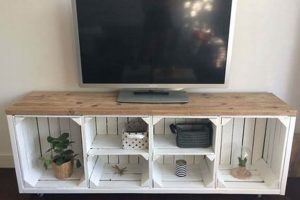
The creation of a bespoke media center using readily available materials and individual craftsmanship has gained significant traction. This activity results in a personalized furniture piece designed to house electronic equipment, typically a television, and related components. An example includes constructing a platform from repurposed wood pallets to accommodate a flat-screen television and associated gaming consoles.
Engaging in such projects offers several advantages, encompassing cost savings, customization potential, and a sense of personal accomplishment. Historically, individuals have modified existing furniture or built new pieces to suit evolving entertainment technology. This practice allows for optimal integration of the viewing experience within a given space, leading to a more efficient and aesthetically pleasing environment.
The subsequent discussion will explore various design considerations, material choices, and construction techniques applicable to creating functional and visually appealing media storage solutions. Further sections will also detail safety protocols and necessary tools for successful project completion.
Essential Construction Guidance
The following guidelines are intended to enhance the success rate and overall quality of self-fabricated media consoles. Adherence to these recommendations will contribute to a safer and more aesthetically pleasing result.
Tip 1: Prioritize Structural Integrity: Accurate measurements and robust joinery are paramount. A poorly constructed foundation will compromise stability and potentially damage the electronic equipment it supports. Utilize appropriate fasteners and reinforcement techniques based on the materials chosen.
Tip 2: Emphasize Cable Management: Integrate designated pathways and concealed spaces for wiring. This minimizes clutter and reduces the risk of accidental disconnection or damage to cables. Pre-planning cable routing during the design phase is highly recommended.
Tip 3: Consider Ventilation Requirements: Electronic devices generate heat. Ensure adequate airflow around the equipment to prevent overheating and potential component failure. Open shelving or ventilation slots are crucial for enclosed designs.
Tip 4: Select Durable and Compatible Materials: The chosen materials should be capable of withstanding the weight of the intended electronic devices and be compatible with the surrounding environment. Moisture-resistant materials are advisable in humid climates.
Tip 5: Incorporate a Leveling System: Uneven flooring can compromise stability and aesthetics. Adjustable feet or shims should be integrated to ensure a level surface, particularly with heavier components.
Tip 6: Apply Appropriate Finishes: Protective finishes, such as sealants or paints, can extend the lifespan of the structure and enhance its visual appeal. Ensure the chosen finish is compatible with the selected materials and applied according to manufacturer instructions.
Tip 7: Verify Weight Capacity: Determine the maximum weight the media console will need to support and select materials and construction methods accordingly. Overloading the structure can result in structural failure and potential damage to equipment.
Following these guidelines will lead to a more functional, safer, and aesthetically pleasing result. Careful planning and attention to detail are crucial for a successful outcome.
The subsequent sections will address the legal considerations and potential liabilities associated with self-fabricated furniture.
1. Dimensions

Dimensional accuracy is paramount in the design and construction of a self-assembled media console. The overall size and internal compartments must align with both the spatial constraints of the intended location and the physical characteristics of the electronic components to be housed.
- Television Size Accommodation
The width and depth of the television directly dictate the minimum size of the platform. Consideration must be given not only to the screen size but also to the dimensions of the television’s base or stand. Failure to account for these measurements will result in an improperly sized structure, potentially leading to instability or an inability to securely support the television.
- Component Bay Dimensions
The internal compartments intended for housing media players, gaming consoles, or audio receivers require precise dimensional planning. Adequate space must be allocated for each component, allowing for proper ventilation and ease of access for cable connections. Overly cramped compartments can lead to overheating and difficulty in connecting or disconnecting devices.
- Spatial Footprint Considerations
The overall dimensions of the media console must be compatible with the available floor space. Factors such as viewing distance, room traffic flow, and proximity to other furniture must be taken into account. A console that is disproportionately large for the room can obstruct movement and detract from the overall aesthetic.
- Shelf Height and Clearance
The height of each shelf and the clearance between shelves must be carefully considered to accommodate the varying sizes of electronic components. Insufficient clearance can prevent components from being properly inserted or removed, while excessive clearance can result in wasted space and a less visually appealing design.
The interplay of these dimensional factors directly impacts the functionality and visual harmony of the finished media console. Accurate measurements and thorough planning are essential to ensure a successful integration of the unit within its intended environment.
2. Materials

The selection of materials directly influences the structural integrity, aesthetic appeal, and overall longevity of a self-constructed media console. Material choice dictates the console’s ability to bear weight, resist environmental factors, and visually integrate with the surrounding decor. For example, solid hardwood offers superior strength and durability compared to particleboard, enabling it to support heavier televisions and withstand prolonged use. Conversely, reclaimed wood, while offering unique aesthetic qualities, may present challenges in terms of structural consistency and require additional reinforcement.
Diverse material options offer varied aesthetic and functional properties. Metal provides a sleek, modern aesthetic and can be utilized for supporting frames or decorative accents. Glass, frequently used for shelving, adds a touch of elegance while allowing light to pass through. The practical implications of material selection extend to ease of construction; some materials are more readily worked with using common tools. For instance, plywood is easier to cut and assemble than solid wood, making it a preferable option for those with limited woodworking experience. The cost of materials also impacts project feasibility, with options ranging from affordable repurposed materials to high-end hardwoods.
Ultimately, informed material selection is crucial for a successful project. Careful consideration of structural requirements, desired aesthetic, and construction capabilities dictates the optimal choice. Ignoring these factors can lead to structural failure, aesthetic incompatibility, or increased construction difficulty, thereby highlighting the critical role of materials in the self-fabrication of media consoles. The correct selection is a cornerstone of achieving a functional and visually cohesive result.
3. Stability

The structural integrity of a self-fabricated television stand, or stability, is a paramount concern, directly impacting the safety of the electronic equipment it supports and the well-being of individuals in its proximity. A compromised support structure presents a significant risk of collapse, potentially resulting in damage to valuable electronics and physical injury.
- Weight Distribution Analysis
Proper weight distribution is crucial. Overloading one area of the television stand can lead to structural stress and eventual failure. Analyzing the weight of the television, peripheral devices, and any decorative items is essential. Uniform weight distribution across the support structure minimizes the risk of tipping or collapse. Example: a television with a high center of gravity placed on a narrow stand increases the likelihood of instability.
- Material Strength and Load Capacity
The selected materials must possess adequate strength to bear the anticipated load. Wood type, thickness, and joinery techniques directly affect the stand’s load capacity. Inadequate material strength can result in sagging, warping, or catastrophic failure. For instance, particleboard has a lower load-bearing capacity compared to solid hardwood and may not be suitable for supporting heavier televisions.
- Joint Integrity and Reinforcement
Secure and well-executed joints are critical for maintaining structural stability. Weak joints compromise the stand’s ability to withstand stress and prevent movement. Reinforcement techniques, such as adding corner braces or using stronger fasteners, enhance joint integrity and overall stability. Example: improperly glued or screwed joints are prone to failure under stress.
- Base Stability and Leveling
The base of the television stand must provide a stable and level foundation. Uneven flooring can compromise stability, increasing the risk of tipping. Adjustable feet or shims can compensate for uneven surfaces, ensuring a level and secure base. Example: a stand placed on an uneven floor is more susceptible to tipping if bumped or subjected to sudden weight shifts.
The interplay of weight distribution, material strength, joint integrity, and base stability collectively determines the overall stability of the television stand. Addressing each of these facets mitigates the risk of structural failure and ensures the safe and reliable support of electronic equipment. The design and construction process should prioritize these stability considerations to prevent potential accidents and protect valuable assets. Failure to consider these can lead to catastrophic events.
4. Cable Management

Cable management constitutes an indispensable element in the design and construction of self-fabricated television stands. The proliferation of electronic devices associated with modern entertainment systems necessitates a structured approach to organizing and concealing the multitude of power cords, audio cables, and video interconnects. Inadequate planning in this area results in a visually cluttered and potentially hazardous environment. For example, a tangle of cables behind a media console presents a tripping hazard and impedes access to components for maintenance or adjustments.
Effective cable management strategies include incorporating designated pathways within the structure of the television stand. These pathways may consist of pre-drilled holes, channels, or concealed compartments designed to route cables discreetly. Furthermore, the use of cable ties, sleeves, and labels facilitates organization and simplifies the identification of individual connections. An instance of successful implementation involves integrating a vertical channel at the rear of the television stand to accommodate power cords, preventing them from dangling and creating a more streamlined appearance. This reduces not only clutter, but also the likelihood of cables being damaged or inadvertently disconnected.
Neglecting cable management during the construction phase can significantly detract from the aesthetic appeal and functionality of the self-built television stand. By prioritizing a well-organized cable routing system, the overall viewing experience is enhanced, and the long-term maintainability of the entertainment setup is improved. The integration of comprehensive cable management solutions is, therefore, an essential consideration in the development of any bespoke media console. Failure to do so may lead to compromised utility and a less-than-satisfactory outcome, regardless of other design merits.
5. Ventilation
Ventilation is a critical design consideration in the construction of media consoles, particularly those intended for housing heat-generating electronic equipment. Inadequate airflow can lead to elevated operating temperatures, diminishing component performance and potentially shortening the lifespan of enclosed devices.
- Passive Airflow Strategies
Passive ventilation relies on natural convection to dissipate heat. This involves incorporating strategically placed openings within the console’s structure, allowing cooler air to enter at lower points and warmer air to escape from higher locations. An example includes integrating ventilation slots in the rear panel of the stand, facilitating the upward flow of heated air from components such as amplifiers or gaming consoles. The effectiveness of passive airflow is influenced by ambient temperature and the size and placement of ventilation apertures.
- Active Cooling Solutions
In scenarios where passive ventilation proves insufficient, active cooling methods may be required. This entails the use of fans to forcibly circulate air within the media console, enhancing heat dissipation. Small, low-noise fans can be integrated to exhaust warm air or draw in cool air, maintaining optimal operating temperatures. The selection and placement of fans should be based on the specific thermal requirements of the enclosed components, considering factors such as airflow volume and noise levels.
- Material Selection and Thermal Conductivity
The choice of materials used in the construction of the media console can impact its ability to dissipate heat. Materials with high thermal conductivity, such as metal, facilitate the transfer of heat away from electronic components. Conversely, materials with low thermal conductivity, such as certain types of wood or plastic, can impede heat dissipation. Careful consideration should be given to the thermal properties of materials when designing ventilation strategies.
- Component Placement and Spacing
The arrangement of electronic components within the media console affects airflow and heat distribution. Providing adequate spacing between components allows for unimpeded airflow and prevents the concentration of heat in specific areas. Grouping heat-generating components together can create thermal hotspots, necessitating localized ventilation solutions. Optimal component placement minimizes thermal interference and promotes efficient heat dissipation.
The integration of effective ventilation strategies is essential for ensuring the reliable operation and longevity of electronic devices housed within media consoles. Whether employing passive or active cooling techniques, careful planning and execution are crucial for maintaining optimal thermal conditions and preventing equipment failure.
6. Aesthetics
Aesthetics constitutes a significant factor in the design and construction of a self-fabricated television stand. The visual appeal of the unit directly impacts the overall ambiance of the room and the perceived value of the entertainment system it houses. A poorly designed or constructed television stand can detract from the aesthetic qualities of the surrounding space, while a well-executed design can enhance the visual harmony and create a more inviting and sophisticated environment. For example, a minimalist design with clean lines and a natural wood finish can complement a modern living room, while a more rustic design with distressed wood and metal accents can suit a farmhouse-style decor.
The influence of aesthetics extends beyond surface appearances to encompass functional design elements. The choice of materials, colors, and proportions affects the visual weight and balance of the television stand, influencing how it integrates with the surrounding furniture and architectural features. Thoughtful consideration of these elements can create a sense of visual cohesion, making the television stand appear as an intentional and integral part of the room’s design. Practical applications of aesthetic considerations include selecting hardware finishes that match existing fixtures, incorporating storage solutions that minimize visual clutter, and optimizing the overall dimensions of the stand to achieve a balanced and proportionate appearance within the available space.
In summary, aesthetics plays a vital role in shaping the user’s perception and experience of a self-made media console. While functional requirements such as stability and ventilation are paramount, neglecting aesthetic considerations can diminish the overall impact and value of the project. Integrating aesthetic principles into the design process elevates the television stand from a mere functional object to a visually pleasing and integral element of the living space, thereby improving the overall viewing and entertainment experience.
7. Safety
Safety is an indispensable component of any self-constructed media console project. The potential for structural failure, electrical hazards, and improper weight distribution necessitates a rigorous adherence to safety protocols throughout the design and construction phases. A failure to prioritize safety can result in property damage, personal injury, or even fatality. For example, an inadequately supported television stand can collapse, causing damage to the television and potentially injuring anyone nearby. Similarly, improper wiring can create a fire hazard, endangering occupants and property.
The significance of safety extends beyond the immediate construction process. A well-designed and properly built media console minimizes the risk of future accidents. Stable construction prevents tipping or collapse, even under accidental impact. Appropriately managed cabling reduces the risk of electrical shock or tripping hazards. Implementing child-proofing measures, such as anchoring the unit to the wall, further enhances safety, particularly in households with young children. Furthermore, proper ventilation prevents overheating, reducing the risk of fire and prolonging the life of electronic components. These considerations should be integral to the design and construction process from inception to completion.
In conclusion, safety is not merely an ancillary consideration but rather a core requirement in the creation of a self-assembled television stand. Prioritizing structural integrity, electrical safety, and hazard mitigation is essential for protecting individuals and property. Failure to adhere to safety protocols can have severe consequences, underscoring the importance of meticulous planning, careful execution, and a comprehensive understanding of potential risks. This focus on safety ensures the long-term usability and security of the finished media console.
Frequently Asked Questions
The following section addresses common inquiries regarding the design, construction, and safety of self-fabricated media consoles, offering guidance to ensure project success and minimize potential risks.
Question 1: What is the minimum structural requirement for a self-fabricated television stand to support a 65-inch television?
The minimum structural requirement depends on the television’s weight, which can vary significantly between models. Consult the television manufacturer’s specifications for the exact weight. The selected materials and joinery methods must be capable of supporting at least this weight with a safety factor of 1.5 to account for potential impacts or additional loads.
Question 2: How can adequate ventilation be ensured for electronic components housed within an enclosed media console?
Adequate ventilation can be achieved through a combination of passive and active cooling methods. Passive ventilation involves incorporating strategically placed openings to allow for natural airflow. Active cooling may necessitate the use of low-noise fans to exhaust warm air and draw in cool air. Consider the specific thermal requirements of each component when designing the ventilation system.
Question 3: What are the key safety considerations when routing electrical cables within a self-constructed media console?
Key safety considerations include using appropriately rated cables, avoiding sharp bends or crimps, and securing cables to prevent accidental disconnection or damage. Implement cable management solutions to keep cables organized and prevent them from coming into contact with heat-generating components. Consider using surge protectors to safeguard against electrical surges.
Question 4: What is the recommended method for ensuring the stability of a media console on an uneven floor?
The recommended method involves incorporating adjustable feet or shims to compensate for uneven surfaces. Adjustable feet allow for precise leveling, while shims can be used to fill gaps between the console’s base and the floor. Regularly check and readjust the leveling devices to maintain stability over time.
Question 5: What are the potential legal liabilities associated with self-fabricating furniture, such as a television stand?
Potential legal liabilities may arise if the self-fabricated furniture fails and causes damage or injury. If the construction is negligent or deviates from established safety standards, the builder could be held liable for damages. It is advisable to consult with a qualified professional to ensure compliance with relevant building codes and safety regulations.
Question 6: What are the most common mistakes made during the construction of self-assembled television stands, and how can they be avoided?
Common mistakes include inadequate structural support, insufficient ventilation, poor cable management, and neglecting safety precautions. These mistakes can be avoided through careful planning, accurate measurements, proper material selection, and adherence to established construction techniques. Prioritize safety, structural integrity, and functionality over aesthetic considerations.
By addressing these frequently asked questions, individuals can approach the self-construction of media consoles with greater confidence and a heightened awareness of potential challenges and safety considerations. Thorough planning and adherence to established best practices are essential for a successful and safe outcome.
The subsequent section will delve into a comparative analysis of pre-fabricated versus self-fabricated media consoles, weighing the advantages and disadvantages of each approach.
Conclusion
The preceding exploration of constructing a diy television stand has underscored the multifaceted nature of this undertaking. From dimensional planning and material selection to structural integrity, cable management, ventilation, aesthetics, and safety considerations, each element plays a critical role in the successful creation of a functional and visually cohesive media console. A thorough understanding of these principles is essential for mitigating potential risks and maximizing the long-term usability of the finished product.
Given the inherent complexities and potential liabilities associated with self-fabricated furniture, individuals are encouraged to approach this project with diligence and informed decision-making. Prioritizing safety, adhering to established construction techniques, and consulting with qualified professionals when necessary will contribute to a positive and secure outcome. The informed application of these principles ensures that the resulting media console not only enhances the viewing experience but also provides a safe and stable platform for valuable electronic equipment.
![Build a Strong DIY Boat Motor Stand [Easy Guide] | The DIY Hub: Creative Crafts, Repairs & Life Hacks](https://craftingdiycenter.com/wp-content/uploads/2025/07/th-3394-300x200.jpg "Build a Strong DIY Boat Motor Stand [Easy Guide] The DIY Hub: Creative Crafts, Repairs & Life Hacks")