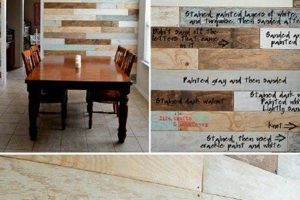
The construction of a self-assembled electric fireplace surround on a wall integrates aesthetic design with functional heating. This project involves incorporating an electric fireplace insert into a custom-built structure, typically framed with wood and finished with materials such as drywall, stone veneer, or decorative panels. An example includes a homeowner building a wooden frame, installing an electric fireplace unit within, and then cladding the structure with faux stone to create a visually appealing focal point in a living room.
Such installations provide supplemental heat and enhance the ambiance of a space. The process allows for personalization, enabling individuals to tailor the design to complement existing decor and architectural features. Historically, fireplaces were central to home heating and social gathering. The electric version offers a modern, safer, and more energy-efficient alternative to traditional wood-burning fireplaces, retaining the visual appeal without the associated maintenance and environmental concerns. The custom aspect further allows for unique design expressions unavailable through pre-manufactured units.
The subsequent discussion will explore various aspects of creating a custom fireplace feature, encompassing design considerations, material selection, construction techniques, electrical safety protocols, and finishing options. This detailed examination aims to provide a comprehensive guide for individuals undertaking this project.
Essential Considerations for Creating a Custom Electric Fireplace Feature
The successful integration of an electric fireplace into a wall requires meticulous planning and execution. Adherence to the following guidelines will help ensure a safe, aesthetically pleasing, and functional result.
Tip 1: Precise Measurement and Planning: Accurate measurements of the intended wall space and the electric fireplace insert are crucial. Develop detailed plans or schematics before commencing construction to avoid costly errors. Consider the overall dimensions, recess depth, and any necessary clearances for the unit’s safe operation.
Tip 2: Structural Integrity and Support: The wall structure must be capable of supporting the weight of the fireplace insert and any additional facing materials, such as stone or brick veneer. Reinforce framing as necessary to ensure structural stability and prevent sagging or collapse over time.
Tip 3: Proper Ventilation and Clearances: Electric fireplaces generate heat. Ensure adequate ventilation around the unit and maintain the manufacturer-specified clearances to combustible materials. Failure to do so may pose a fire hazard. Consult the product manual for detailed ventilation requirements.
Tip 4: Electrical Safety and Wiring: Electrical work must comply with local building codes and safety regulations. Employ a qualified electrician to install a dedicated circuit for the electric fireplace, ensuring proper grounding and protection from overloads. Use appropriate wiring gauge for the amperage draw of the unit.
Tip 5: Material Selection and Compatibility: Choose materials that are fire-resistant or non-combustible for areas close to the fireplace unit. Consider the aesthetic compatibility of facing materials with the surrounding decor. Select adhesives and fasteners appropriate for the chosen materials to ensure a secure and durable bond.
Tip 6: Seamless Integration and Finishing: Pay close attention to detail when finishing the fireplace surround. Achieve seamless transitions between different materials and ensure a professional appearance. Use appropriate trim and molding to conceal any gaps or imperfections.
Tip 7: Accessibility for Maintenance: Design the installation to allow for easy access to the electric fireplace unit for maintenance and repairs. Consider incorporating removable panels or access points to facilitate future servicing without requiring significant disassembly of the surround.
Careful adherence to these guidelines enhances the safety, longevity, and visual appeal of any electric fireplace project. The implementation of these considerations contributes to a successful and enjoyable outcome.
The subsequent sections will delve deeper into specific construction techniques and finishing options, providing additional guidance for creating a personalized and functional fireplace feature.
1. Planning

Effective planning serves as the foundational element for any successful electric fireplace surround project. The absence of meticulous planning can lead to structural deficiencies, aesthetic inconsistencies, and potential safety hazards. Specifically, planning determines the dimensions of the frame, the type and quantity of materials required, and the overall design aesthetic. This preparatory phase dictates the subsequent stages of construction and significantly impacts the final outcome. For example, inadequate planning regarding the fireplace insert’s dimensions may result in a surround that is either too small or too large, necessitating costly revisions or complete reconstruction.
The planning phase also addresses practical considerations such as electrical access, ventilation requirements, and adherence to local building codes. Failure to account for these factors can result in code violations, functional limitations, and potential fire risks. A comprehensive plan incorporates detailed schematics, material lists, and a clearly defined construction timeline. Consider a scenario where ventilation is overlooked; the electric fireplace unit may overheat, leading to premature failure or, in extreme cases, posing a fire hazard. Proper electrical planning ensures a dedicated circuit is installed, preventing overloads and ensuring safe operation.
In summary, planning is not merely a preliminary step, but an integral component that determines the success and safety of an electric fireplace project. A well-defined plan mitigates risks, reduces material waste, and ensures the final product aligns with design expectations and safety standards. The investment in thorough planning upfront yields substantial benefits throughout the construction process and ultimately contributes to a durable, aesthetically pleasing, and safe electric fireplace feature.
2. Framing

Framing constitutes a critical structural element within a “diy electric fireplace wall” project. It establishes the foundational support for the electric fireplace insert and the surrounding decorative facade. The precision and robustness of the framing directly influence the stability, safety, and longevity of the entire construction. Incorrectly executed framing can lead to structural instability, causing the surrounding materials to crack, shift, or even collapse. A well-constructed frame provides a secure enclosure for the electric fireplace, ensuring it operates safely and efficiently. Consider, for example, a scenario where the framing is not level or plumb. This misalignment can create uneven weight distribution, potentially damaging the electric fireplace unit or compromising the aesthetic appearance of the finished wall.
The choice of framing materials, typically wood or metal studs, dictates the structural capacity and fire resistance of the “diy electric fireplace wall.” Wood framing, while more common for ease of use and cost-effectiveness, requires appropriate fire-retardant treatments to mitigate potential hazards. Metal framing offers enhanced fire resistance and dimensional stability but may require specialized tools and expertise for installation. A real-world example illustrates this point: using untreated lumber for framing near the electric fireplace unit presents a significant fire risk. Implementing fire-rated drywall and maintaining appropriate clearances reduces the likelihood of ignition and fire spread. Furthermore, the method of fastening the framing members, whether with nails, screws, or adhesives, directly impacts the overall strength and rigidity of the structure.
In summary, framing is not merely a supporting structure but an integral component that determines the success and safety of an electric fireplace wall installation. Proper framing ensures structural integrity, fire safety, and aesthetic appeal. The attention to detail in framing design and construction is critical for creating a durable, functional, and visually pleasing electric fireplace feature. Ignoring the fundamental principles of framing construction can result in compromised safety, structural failure, and dissatisfaction with the final outcome. The selection of appropriate materials and the implementation of proper construction techniques are paramount for a successful project.
3. Wiring

Electrical wiring represents a critical and potentially hazardous aspect of a self-assembled electric fireplace structure. The functionality and safety of the entire system hinges upon correct wiring practices. Improperly executed wiring can lead to electrical shock, fire hazards, and equipment malfunction. The electric fireplace unit requires a dedicated electrical circuit capable of handling its power consumption, often necessitating the installation of a new circuit breaker and wiring run. A scenario where the wiring is insufficient for the load demand could result in overheating, tripping the circuit breaker, or, in severe cases, initiating an electrical fire within the wall cavity.
Adherence to local electrical codes is paramount throughout the wiring process. Employing a qualified electrician ensures that all wiring connections are made safely and correctly, utilizing appropriate gauge wiring, grounding techniques, and protective measures such as conduit or cable clamps. Consider the real-world implications of neglecting proper grounding: a faulty connection within the electric fireplace unit could energize the metal chassis, posing a significant electrocution risk to anyone who comes into contact with it. Furthermore, the wiring must be concealed within the wall cavity in a manner that prevents physical damage or accidental contact. The use of junction boxes and strain relief connectors is essential for maintaining secure and safe wiring terminations.
In conclusion, electrical wiring is not merely an ancillary component, but a fundamental element of a safe and functional electric fireplace structure. The investment in professional electrical work and the diligent adherence to safety regulations are crucial for mitigating the risks associated with electricity. Neglecting these aspects can have severe consequences, jeopardizing personal safety and property integrity. Therefore, a thorough understanding of electrical wiring principles and practices is essential for any individual undertaking a build of this kind.
4. Fireproofing

Fireproofing is an indispensable element in the construction of a “diy electric fireplace wall.” Its absence creates a significant hazard, increasing the risk of fire ignition and propagation. Electric fireplaces, while not producing open flames, generate substantial heat, particularly around the heating element and vent areas. Without proper fireproofing, combustible materials in close proximity to the unit can ignite, leading to a structural fire. Consider the scenario where wood framing or drywall is directly adjacent to the heat vent of an electric fireplace; prolonged exposure to high temperatures can cause these materials to smolder and eventually ignite. The implementation of fire-resistant materials mitigates this risk significantly.
The selection of appropriate fireproofing materials and their correct application are critical for ensuring safety. Non-combustible materials like cement board, fire-rated drywall, and mineral wool insulation serve as effective barriers against heat transfer and flame spread. Furthermore, maintaining adequate clearances between the electric fireplace unit and surrounding combustible materials is crucial. The manufacturer’s specifications typically outline these clearances. For instance, installing a layer of cement board behind the electric fireplace and extending it beyond the unit’s footprint provides a protective barrier against radiant heat. Applying fire-resistant sealant to seams and joints further prevents flames from penetrating the structure. This preventative approach ensures that even in the event of a malfunction or overheating, the risk of a fire spreading beyond the immediate area is minimized.
In summary, fireproofing is not merely a precautionary measure but a necessity in the fabrication of a self-assembled electric fireplace surround. Its application minimizes the risk of fire ignition and propagation, protecting both property and individuals. Proper material selection, adherence to safety clearances, and diligent installation techniques are paramount for achieving effective fire resistance. Therefore, fireproofing should be considered an integral component of the overall project design, not an afterthought.
5. Aesthetics
Aesthetics represents a fundamental driver in the decision to construct a “diy electric fireplace wall.” The primary motivation often stems from a desire to enhance the visual appeal of a living space. The visual impact of the structure directly influences the ambiance and perceived value of the room. An electric fireplace wall, when thoughtfully designed, becomes a focal point, drawing attention and establishing a sense of warmth and sophistication. The failure to consider aesthetic principles can result in a structure that clashes with the existing decor, detracting from the overall visual harmony of the space. For example, a modern, minimalist electric fireplace design integrated into a rustic, traditional room may appear discordant, undermining the intended aesthetic improvement.
The aesthetic considerations extend beyond the overall design to encompass the selection of materials, colors, and textures. The chosen materials must complement both the electric fireplace unit and the surrounding environment. A stone veneer finish, for instance, evokes a sense of natural elegance, while a sleek, painted drywall finish offers a more contemporary aesthetic. The color palette should harmonize with the existing furniture and wall colors to create a cohesive and visually pleasing effect. Lighting also plays a critical role in enhancing the aesthetic appeal. Strategically placed accent lights can highlight the texture of the surround or create a warm, inviting glow around the fireplace unit. Furthermore, the incorporation of decorative elements, such as mantels, shelves, or artwork, can further personalize the “diy electric fireplace wall” and integrate it seamlessly into the overall design scheme. A practical application includes selecting a color palette that complements the existing room colors and integrating decorative elements like shelves or mantels to personalize the design.
In conclusion, aesthetics is not merely a superficial consideration but a critical element that determines the success and value of a self-assembled electric fireplace surround. Prioritizing aesthetic principles and carefully considering the design elements, material selections, and lighting schemes are essential for creating a visually appealing and harmonious focal point within the living space. While the technical aspects of construction are crucial, the aesthetic impact ultimately determines the perceived value and satisfaction derived from the project. Therefore, a thorough understanding of aesthetic principles and their application is paramount for achieving a successful and visually pleasing result.
6. Ventilation
Adequate ventilation is a non-negotiable component in the construction and operation of a custom electric fireplace wall installation. The electric fireplace unit generates heat during its operation, and without proper ventilation, this heat can accumulate within the enclosed structure, leading to several adverse consequences. Overheating can damage the electric fireplace components, reducing its lifespan and potentially causing a malfunction. More critically, trapped heat can pose a significant fire hazard if it elevates the temperature of surrounding combustible materials, such as wood framing or drywall, to their ignition point. This direct cause-and-effect relationship underscores the importance of ventilation as a core safety consideration.
The design and implementation of ventilation strategies vary depending on the specific model of electric fireplace and the construction methods employed. Many units require a specific amount of free air space surrounding the unit, as outlined in the manufacturer’s specifications. These clearances are essential for proper airflow and heat dissipation. A common example involves an electric fireplace recessed into a wall cavity with insufficient ventilation around the top or sides. The lack of airflow can cause the unit to overheat, triggering a thermal shutdown or, in extreme cases, damaging the internal components. Incorporating ventilation grilles or strategically placed openings in the surround allows for convective airflow, facilitating heat removal and maintaining safe operating temperatures. Additionally, the design should ensure that these ventilation points do not compromise the aesthetic appearance of the completed fireplace wall.
In summary, ventilation is not an optional add-on but a fundamental design requirement for a safe and functional electric fireplace wall. Its practical significance lies in preventing overheating, mitigating fire hazards, and prolonging the lifespan of the electric fireplace unit. Overlooking ventilation during the planning and construction phases can have serious consequences, jeopardizing both property and personal safety. Therefore, diligent adherence to manufacturer specifications and the implementation of effective ventilation strategies are crucial for a successful project.
7. Support

The structural integrity of a self-assembled electric fireplace wall is paramount to its longevity, safety, and aesthetic appeal. The term “support,” in this context, encompasses the various elements that contribute to the overall stability and load-bearing capacity of the structure, ensuring it can safely accommodate the weight of the electric fireplace unit, facing materials, and any additional decorative elements.
- Framing Reinforcement
The foundational support relies on the framing structure, typically constructed from wood or metal studs. Reinforcement of this framing, especially around the fireplace insert, is crucial. This may involve using thicker studs, adding additional vertical or horizontal supports, or employing gussets to strengthen joints. An example includes doubling up the studs around the opening where the electric fireplace will be inserted, providing a more robust platform to bear the unit’s weight and prevent sagging or deformation over time. Failure to adequately reinforce the framing can lead to structural instability, causing the facing materials to crack or the entire wall to become uneven.
- Load Distribution
Proper load distribution is essential to prevent localized stress points that could compromise the structural integrity of the “diy electric fireplace wall.” This involves carefully planning how the weight of the fireplace unit and facing materials is transferred to the underlying wall and floor. Using a ledger board to distribute the load across multiple studs, or adding a foundation base to provide ground support, are practical examples. Without proper load distribution, excessive weight concentrated on a single point can cause the framing to buckle or the wall to sag, potentially leading to structural failure and safety hazards.
- Material Selection
The choice of materials significantly impacts the overall support capacity of the structure. Using heavy facing materials like stone veneer or brick requires a more robust support system compared to lighter materials like drywall or wood paneling. Selecting high-density framing lumber or utilizing metal studs can provide increased strength and stability. An instance of this is choosing a thicker plywood backing instead of thinner sheetrock, as a means of more robustly supporting a heavy electric fireplace and finish materials. Using inferior materials can result in inadequate support, leading to deformation, cracking, or even collapse of the structure.
- Anchoring and Fasteners
The method of anchoring the “diy electric fireplace wall” to the existing wall and floor, as well as the fasteners used to connect the framing members, play a vital role in its overall stability. Using appropriate anchors that are rated for the weight being supported and employing screws or bolts instead of nails for critical connections ensures a secure and long-lasting structure. As a reference, selecting appropriate wall anchors that are specifically designed to hold a specific amount of weight will properly secure the entire unit to the wall. Inadequate anchoring or the use of weak fasteners can cause the “diy electric fireplace wall” to detach from the existing wall or floor, posing a significant safety risk.
The aspects of framing, load distribution, material selection and fasteners are fundamentally interconnected for any electrical fireplace self-build project. Addressing each of these factors diligently ensures a robust, safe and visually pleasing final product. Overlooking any of these elements can compromise the structural integrity of the entire installation, potentially leading to costly repairs, safety hazards, or complete structural failure.
Frequently Asked Questions
The following questions address common inquiries regarding the design, construction, and safety of building a self-assembled fireplace feature. Clarification on these points is essential before commencing such a project.
Question 1: Is a building permit required for constructing an electric fireplace surround?
The necessity of a building permit varies depending on local regulations and the scope of the project. Consult the local building department to determine if a permit is required, particularly if the project involves structural alterations or electrical work.
Question 2: What are the recommended safety precautions when working with electrical components?
Electrical safety is paramount. Disconnect power at the breaker before working on any electrical wiring. Use appropriately rated wiring and connectors, and ensure proper grounding. Employ a qualified electrician for any electrical work exceeding one’s expertise.
Question 3: How does one ensure adequate ventilation for the electric fireplace unit?
Refer to the manufacturer’s specifications for the required clearances around the electric fireplace unit. Maintain these clearances and incorporate ventilation openings in the surround to allow for proper airflow and heat dissipation.
Question 4: What materials are best suited for fireproofing the surround?
Use non-combustible materials such as cement board, fire-rated drywall, or mineral wool insulation for areas close to the electric fireplace unit. Ensure that any wood framing is treated with a fire retardant.
Question 5: How does one properly support the weight of the electric fireplace and surround materials?
Reinforce the framing structure to adequately support the weight of the fireplace and any facing materials. Distribute the load evenly across the framing members and ensure that the structure is securely anchored to the wall.
Question 6: What are the key considerations for designing an aesthetically pleasing fireplace surround?
Consider the existing decor and architectural style of the room. Choose materials, colors, and textures that complement the surrounding environment. Pay attention to detail and strive for seamless transitions between different materials.
These frequently asked questions highlight critical considerations for planning and executing a safe and visually appealing project. Careful attention to these details contributes to a successful outcome.
The subsequent section will explore specific design ideas and inspiration for creating a custom fireplace feature.
Conclusion
The preceding discussion has elucidated the multifaceted aspects of the “diy electric fireplace wall,” emphasizing the imperative nature of meticulous planning, structural integrity, electrical safety, and aesthetic considerations. The proper execution of framing, wiring, fireproofing, and support mechanisms directly influences the final product’s safety, longevity, and visual appeal.
Ultimately, the successful realization of a custom fireplace feature demands a comprehensive understanding of construction principles and diligent adherence to safety protocols. The information presented serves as a foundational guide for informed decision-making and responsible project implementation, fostering safe usage and enduring functionality.