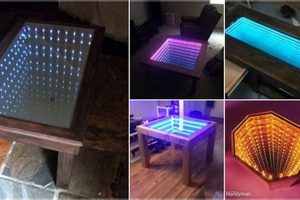
The construction of furniture using reclaimed wooden platforms and self-directed methods represents a growing trend in sustainable and affordable design. Such projects typically involve disassembling, modifying, and reassembling these platforms to create functional pieces, offering a cost-effective alternative to traditional furniture acquisition. A common example involves transforming a standard shipping platform into a coffee or side table through cleaning, sanding, and the addition of legs or a protective finish.
This approach to furniture creation offers several advantages, including environmental benefits through the reuse of materials, cost savings compared to purchasing new items, and the potential for customization to meet specific needs and aesthetic preferences. Historically, repurposing materials has been a necessity driven by resource scarcity, but contemporary adoption reflects a broader commitment to environmental responsibility and creative expression. The process aligns with principles of reducing waste and promoting circular economy practices.
The following sections will explore the essential steps involved in creating furniture from repurposed wooden platforms, including sourcing materials, preparation techniques, design considerations, and finishing options. Safety precautions and practical tips will also be provided to ensure a successful and rewarding building experience.
Table Pallet DIY
Successful repurposing of wooden platforms into furniture requires careful planning and execution. The following tips outline key considerations for ensuring both the structural integrity and aesthetic appeal of the finished project.
Tip 1: Material Assessment: Prior to commencing any project, thoroughly inspect the wooden platform for structural damage, rot, or pest infestations. Reject platforms displaying significant deterioration, as they may compromise the furniture’s stability and longevity. Opt for heat-treated (HT) platforms over those treated with methyl bromide (MB), a hazardous fumigant.
Tip 2: Proper Disassembly: Employ appropriate tools, such as a reciprocating saw or pry bar, to carefully disassemble the wooden platform. Exercise caution to avoid splitting or damaging the wood during this process. Remove nails and staples completely to prevent injuries and ensure a smooth surface for subsequent steps.
Tip 3: Thorough Cleaning: Clean the reclaimed wood thoroughly using a stiff brush, soap, and water. Address any stains or mildew with appropriate cleaning agents. Allow the wood to dry completely before proceeding to sanding or finishing.
Tip 4: Sanding and Surface Preparation: Sand all surfaces of the wood to achieve a smooth and uniform finish. Start with a coarse grit sandpaper to remove imperfections and gradually progress to finer grits for a polished appearance. Pay particular attention to edges and corners to prevent splinters.
Tip 5: Design Planning and Measurement: Create a detailed plan for the desired furniture piece, including precise measurements and dimensions. Accurately cut the wood pieces according to the plan, ensuring square and accurate joints for structural stability.
Tip 6: Secure Assembly: Employ durable fasteners, such as screws or bolts, to securely assemble the furniture. Consider using wood glue in conjunction with fasteners to enhance joint strength and prevent movement over time. Clamp the pieces together during the gluing process to ensure proper adhesion.
Tip 7: Protective Finishing: Apply a suitable finish to protect the wood from moisture, wear, and tear. Options include varnish, lacquer, paint, or stain. Choose a finish that complements the wood’s natural appearance and provides the desired level of protection. Apply multiple coats for enhanced durability.
Tip 8: Edge and Corner Treatment: Soften sharp edges and corners with a router or sandpaper to improve safety and aesthetics. Consider adding decorative elements, such as trim or molding, to enhance the furniture’s visual appeal.
Adherence to these principles contributes significantly to the creation of robust, aesthetically pleasing, and functional furniture from repurposed wooden platforms. The resulting pieces offer a sustainable and cost-effective alternative to conventionally manufactured furniture.
The subsequent section will address safety protocols when manipulating and handling wooden platforms, an essential prerequisite to any successful DIY project.
1. Material Selection
The selection of appropriate materials forms the bedrock of any successful furniture construction project involving repurposed wooden platforms. The material directly influences the durability, stability, aesthetic qualities, and overall suitability of the finished product. This section details key facets of material selection in the context of transforming reclaimed platforms into functional tables.
- Wood Type and Condition
The type of wood used in the original platform significantly affects its suitability for furniture creation. Hardwoods, such as oak or maple, offer superior strength and resistance to wear, while softwoods like pine are more susceptible to damage. The condition of the wood is paramount; platforms exhibiting significant rot, warping, or insect infestation should be avoided, as they compromise the structural integrity of the table.
- Platform Treatment and Safety
Shipping platforms undergo various treatments to prevent pest infestations and decay. Platforms marked with “HT” indicate heat treatment, a generally safe method. Platforms marked with “MB,” indicating methyl bromide fumigation, pose a health hazard and should not be used. Thoroughly inspecting platforms for treatment marks and understanding associated risks is crucial for ensuring a safe working environment and a non-toxic finished product.
- Fastener Selection
The choice of fastenersscrews, nails, bolts, and adhesivesdirectly impacts the table’s structural stability. Screws offer superior holding power compared to nails, particularly in high-stress areas. Exterior-grade fasteners resist corrosion when the table is exposed to moisture. Utilizing appropriate adhesives, such as wood glue, enhances joint strength and prevents movement over time. The size and type of fastener must be appropriate for the thickness and density of the wood being joined.
- Finishing Materials
The selection of finishing materialspaints, stains, varnishes, and sealantsaffects the table’s appearance and its resistance to environmental factors. Exterior-grade finishes provide protection against moisture, UV radiation, and abrasion. Low-VOC (volatile organic compound) finishes minimize off-gassing and promote a healthier indoor environment. The chosen finish should be compatible with the wood type and any previous treatments to ensure proper adhesion and prevent discoloration.
The successful creation of a durable and aesthetically pleasing table from reclaimed platforms hinges on a comprehensive understanding of material characteristics and their interdependencies. Careful consideration of wood type, treatment methods, fastener properties, and finishing material compositions is essential for transforming discarded platforms into functional and safe pieces of furniture.
2. Structural Integrity
The stability and load-bearing capacity of a table constructed from repurposed wooden platforms are paramount considerations. Structural integrity, in this context, refers to the ability of the table to withstand applied forces without deformation or failure. The design and construction methods employed directly influence the resulting structural performance of the furniture.
- Material Quality and Selection
The grade and condition of the wooden platform material are fundamental to structural integrity. Platforms exhibiting significant decay, cracks, or insect damage inherently possess reduced load-bearing capacity. Employing high-quality, structurally sound components is essential for creating a stable and durable table. For example, using thicker platform boards for the tabletop and legs distributes weight more effectively and reduces the risk of sagging or collapse under load.
- Joint Design and Construction
The manner in which individual components are joined together significantly impacts the overall strength of the table. Weak or poorly executed joints are primary failure points. Employing robust joinery techniques, such as mortise and tenon, dovetail, or reinforced screw connections, maximizes the load-transfer capabilities between components. A common example is reinforcing corner joints with metal brackets to prevent racking or wobbling.
- Load Distribution and Support Systems
An effective structural design ensures that applied loads are evenly distributed throughout the table’s structure. Inadequate load distribution concentrates stress on specific areas, increasing the likelihood of failure. Implementing support systems, such as cross braces or aprons, redirects weight away from vulnerable points. For example, adding a central support beam beneath a large tabletop prevents deflection under heavy objects.
- Fastener Selection and Placement
The type, size, and placement of fasteners directly influence the strength and longevity of the assembled table. Inappropriately sized or spaced fasteners can compromise joint integrity and lead to premature failure. Employing fasteners specifically designed for wood construction, such as wood screws or lag bolts, provides superior holding power compared to generic fasteners. Strategic placement of fasteners, considering the direction of applied forces, is crucial for maximizing joint strength.
The interrelation of these factors determines the ultimate structural integrity of the wooden platform table. A holistic approach that integrates material selection, joint design, load distribution, and fastener implementation is essential for creating a safe, durable, and aesthetically pleasing piece of furniture. Overlooking any of these aspects can lead to compromised structural performance and potential safety hazards.
3. Design Customization
Design customization is an intrinsic element of furniture construction using repurposed wooden platforms. The inherent variability in platform dimensions, wood type, and existing imperfections necessitates a tailored design approach. This contrasts with mass-produced furniture, where standardized designs and materials prevail. The selection of a platform initiates a cascade of design choices, dictating the potential dimensions and aesthetic characteristics of the final table. For instance, a platform with a damaged section might inspire a unique, asymmetrical design feature rather than a conventional rectangular tabletop. The availability of specific tools and skills further shapes design possibilities, creating a cause-and-effect relationship between resourcefulness and aesthetic expression. This adaptability is paramount to transforming discarded materials into functional and appealing furniture.
The practical significance of design customization lies in its capacity to address specific needs and spatial constraints. A small apartment may necessitate a narrow side table, while a larger living room can accommodate a substantial coffee table. The design can incorporate integrated storage solutions, such as shelving or drawers, maximizing functionality within a limited footprint. Moreover, customization allows for the expression of individual style and preferences. The choice of finishes, hardware, and decorative elements enables the creation of a unique piece that complements existing dcor. Examples range from rustic, distressed finishes that emphasize the platform’s history to sleek, modern designs that conceal its origins. Understanding the interplay between design customization and material limitations is crucial for achieving a successful and satisfying outcome.
In summary, design customization serves as the bridge between discarded wooden platforms and functional furniture. It is not merely an aesthetic consideration but a practical necessity driven by material variability and individual requirements. Successfully navigating this design process requires a blend of creativity, technical skill, and a deep understanding of the material’s potential. The resulting table represents a testament to the transformative power of mindful design and sustainable practices, overcoming the challenges inherent in repurposing discarded materials.
4. Surface Finishing
Surface finishing constitutes a critical phase in the construction of tables from repurposed wooden platforms. It extends beyond mere aesthetics, directly influencing the durability, hygiene, and overall suitability of the finished product. The proper application of finishing techniques protects the wood from environmental factors, enhances its visual appeal, and can mitigate potential health hazards associated with reclaimed materials.
- Protection Against Moisture and Wear
Wooden platforms, having often been exposed to outdoor conditions, are susceptible to moisture absorption, leading to warping, cracking, and decay. Surface finishes, such as varnishes, sealants, and paints, create a protective barrier that prevents moisture penetration and minimizes wear and tear from daily use. For example, a polyurethane coating applied to a coffee table made from a wooden platform resists spills and scratches, extending the table’s lifespan.
- Enhancement of Aesthetic Appeal
Surface finishes allow for the customization of the table’s appearance, enabling the creation of a specific aesthetic style. Stains can highlight the natural grain of the wood, while paints offer a wide range of color options to complement existing dcor. Distressed finishes can further enhance the rustic character of the reclaimed platform. For instance, a dark walnut stain applied to a wooden platform table gives it a classic, elegant look, while a bright, glossy paint transforms it into a modern, eye-catching piece.
- Mitigation of Hygiene Concerns
Reclaimed wooden platforms may harbor dirt, bacteria, and other contaminants accumulated during their previous use. Surface finishes, particularly those with antimicrobial properties, create a barrier that prevents these contaminants from migrating to the surface of the table. Smooth, non-porous finishes facilitate easy cleaning and disinfection, promoting a hygienic surface for food preparation or other activities. For example, applying a food-safe sealant to a wooden platform used as a kitchen island ensures a sanitary surface for preparing meals.
- UV Protection and Color Retention
Exposure to sunlight can cause fading and discoloration of wooden surfaces. Surface finishes containing UV inhibitors protect the wood from harmful ultraviolet radiation, preserving its color and appearance over time. This is particularly important for tables placed near windows or in outdoor settings. For instance, a UV-resistant varnish applied to a wooden platform patio table prevents it from fading and cracking under prolonged sun exposure.
The implementation of appropriate surface finishing techniques is thus essential for maximizing the value and longevity of tables constructed from repurposed wooden platforms. It represents a crucial step in transforming discarded materials into durable, aesthetically pleasing, and functionally sound furniture, contributing to both the environmental sustainability and the practical utility of the finished product.
5. Cost-Effectiveness
The economic advantages inherent in constructing tables from repurposed wooden platforms represent a significant driver for the adoption of this practice. Cost-effectiveness, in this context, extends beyond the mere avoidance of retail furniture prices, encompassing material sourcing, labor considerations, and long-term value assessment.
- Reduced Material Expenditure
The primary cost-saving factor stems from utilizing discarded wooden platforms as the core building material. These platforms are often available for free or at a nominal cost, significantly reducing the material expenses associated with traditional furniture construction. For example, businesses frequently dispose of unwanted platforms, providing a readily accessible source of raw material. This contrasts sharply with the expense of purchasing lumber from retail outlets, thereby creating substantial savings for the do-it-yourself enthusiast.
- Minimized Labor Costs
The labor involved in table construction from repurposed platforms is typically performed by the individual end-user, eliminating the need to pay for professional furniture assembly. This self-sufficiency translates directly into financial savings. While certain tools and skills may be required, the investment in these areas is often a one-time expense, providing long-term benefits for future projects. In contrast, hiring a carpenter or furniture maker can incur significant labor charges, substantially increasing the overall cost of the table.
- Durability and Longevity Considerations
Although the initial investment in materials and labor may be lower, the long-term cost-effectiveness of a wooden platform table depends on its durability and lifespan. Platforms constructed from hardwoods and properly treated with protective finishes can provide years of reliable service, mitigating the need for frequent replacements. While mass-produced furniture may initially appear more affordable, its shorter lifespan often results in higher cumulative costs over time. This long-term value proposition is a key factor in the cost-effectiveness equation.
- Reduced Waste Disposal Fees
Beyond the direct costs of furniture acquisition, constructing tables from reclaimed platforms contributes to indirect savings by reducing waste disposal fees. Diverting these materials from landfills minimizes the environmental impact and potentially lowers waste management expenses for businesses and individuals. This holistic view of cost-effectiveness considers not only the financial aspects but also the environmental benefits associated with repurposing discarded materials.
In summation, the cost-effectiveness of creating tables from repurposed wooden platforms is a multifaceted concept encompassing reduced material expenditure, minimized labor costs, durability considerations, and reduced waste disposal fees. These factors, when considered collectively, highlight the economic advantages of this sustainable and resourceful approach to furniture construction.
6. Environmental Impact
The construction of tables from repurposed wooden platforms yields a demonstrable reduction in environmental impact compared to conventional furniture manufacturing. The cause-and-effect relationship is straightforward: diverting discarded platforms from landfills mitigates waste accumulation and reduces the demand for virgin wood resources. The importance of this impact stems from its contribution to sustainable resource management and the reduction of deforestation, a significant driver of climate change and biodiversity loss. For instance, a furniture manufacturer producing tables solely from new lumber contributes to deforestation, whereas an individual utilizing reclaimed platforms directly conserves forest resources.
Furthermore, the process of creating tables from reclaimed materials often requires fewer energy inputs than manufacturing new furniture. Conventional furniture production involves the extraction, processing, and transportation of raw materials, all of which contribute to greenhouse gas emissions and resource depletion. Repurposing platforms bypasses these energy-intensive steps, resulting in a lower carbon footprint. Practical application includes the use of low-VOC (volatile organic compound) finishes on the reclaimed wood, minimizing air pollution and promoting a healthier indoor environment. Organizations and individuals who are environmentally conscious often choose DIY pallet tables to furnish their spaces because they are aware of these benefits.
In summary, the environmental benefits of crafting tables from recycled wooden platforms are multifaceted and significant. The practice addresses issues of waste management, resource conservation, and energy efficiency. While challenges exist in ensuring the safe handling and treatment of reclaimed wood, the overall impact is demonstrably positive, aligning with broader goals of environmental sustainability and responsible consumption. The environmental impact is critical to pallet diy.
Frequently Asked Questions
The following questions address common concerns and misconceptions regarding the construction of tables from repurposed wooden platforms. The answers provided aim to offer clear and informative guidance for prospective builders.
Question 1: Are all wooden platforms safe for repurposing into furniture?
No. Platforms treated with methyl bromide (MB) are unsafe due to the chemical’s toxicity. Platforms marked “HT” (heat treated) are generally considered safe. Inspect platforms carefully for markings indicating treatment methods before use.
Question 2: How is a wooden platform properly cleaned and prepared for furniture construction?
The platform should be thoroughly cleaned with soap, water, and a stiff brush. Remove any nails, staples, or debris. Allow the wood to dry completely before sanding. Sanding is crucial for creating a smooth surface and removing splinters.
Question 3: What are the essential tools required for building a table from a reclaimed platform?
Essential tools include a saw (circular or reciprocating), a drill, a sander, a pry bar, a hammer, measuring tape, safety glasses, and work gloves. Additional tools, such as a router or planer, may be beneficial for specific designs or advanced techniques.
Question 4: What type of finish is recommended for a wooden platform table, and why?
A durable, protective finish is recommended. Options include polyurethane, varnish, or exterior-grade paint. The finish should provide resistance to moisture, scratches, and UV damage. Low-VOC finishes are preferable for indoor use to minimize air pollution.
Question 5: How can the structural integrity of a table made from a reclaimed platform be ensured?
Structural integrity depends on the quality of the platform material, the design of the joints, and the secure assembly of components. Utilize sound platform boards, employ robust joinery techniques (e.g., screws, bolts, wood glue), and reinforce vulnerable areas with brackets or braces.
Question 6: What are the legal considerations regarding the use of reclaimed wooden platforms?
Ownership of discarded platforms may vary depending on local regulations and business practices. It is advisable to obtain permission from the platform’s owner before repurposing it. Adherence to local building codes and safety regulations is also essential.
These FAQs provide foundational knowledge for individuals considering building furniture from repurposed wooden platforms. Careful planning, proper material selection, and adherence to safety guidelines are crucial for a successful project.
The following section will provide information about safety precaustions.
Table Pallet DIY
This article has provided a comprehensive examination of constructing furniture, specifically tables, from repurposed wooden platforms, a practice known as table pallet diy. Key considerations include material selection, focusing on safety and structural integrity; design customization to meet individual needs and preferences; surface finishing for protection and aesthetic appeal; cost-effectiveness stemming from reduced material expenditures; and the environmental impact, primarily the reduction of waste and the conservation of resources. Furthermore, safety guidelines, common challenges, and frequently asked questions have been addressed to provide a well-rounded understanding of the subject.
The information presented underscores the value of repurposing discarded materials as a sustainable alternative to conventional furniture acquisition. While challenges remain in ensuring consistent material quality and adhering to safety protocols, the benefits of table pallet diy extend beyond mere cost savings, contributing to a more responsible and environmentally conscious approach to consumption. Individuals and organizations are encouraged to carefully consider the principles outlined in this article when evaluating the feasibility and desirability of constructing tables from reclaimed wooden platforms. The future of furniture design may well incorporate such sustainable practices as a standard, rather than an exception.