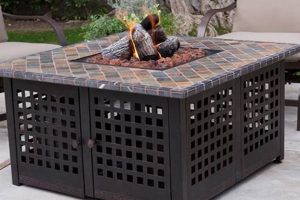
A self-constructed outdoor heating unit, designed to mimic commercially available products, is typically built using readily accessible materials and a propane or natural gas fuel source. These custom-built features offer a customizable and often more cost-effective alternative to purchasing pre-made fire tables. An example would be a concrete-topped structure with a stainless steel burner insert connected to a propane tank.
The increasing popularity of these outdoor features stems from a desire for personalized outdoor spaces and potential cost savings. Such constructions allow individuals to tailor the design to match existing patio furniture and landscaping, fostering a cohesive aesthetic. Historically, outdoor fireplaces required significant masonry work; however, modern versions offer a simpler, more accessible approach to creating ambiance and warmth.
The following sections will delve into the critical aspects of constructing these features, including design considerations, material selection, burner installation, and essential safety precautions to ensure a successful and secure outcome.
Construction Guidance
The following guidance addresses crucial considerations for the successful and safe construction of a custom outdoor heating unit. Adherence to these tips will contribute to a durable and functional final product.
Tip 1: Design Schematics: Prior to initiating construction, develop a detailed schematic. This should include precise measurements, material specifications, and gas line routing. A well-defined plan minimizes errors and material waste.
Tip 2: Material Selection: Choose weather-resistant materials suitable for outdoor use. Concrete, treated lumber, and stainless steel are common choices. Consider the long-term durability and maintenance requirements of each material.
Tip 3: Burner Assembly: The burner is a critical component. Purchase a certified burner kit designed for outdoor fire features. Ensure the kit includes a regulator, gas line, and ignition system. Install per manufacturer instructions.
Tip 4: Ventilation: Proper ventilation is paramount. Provide adequate airflow to the burner compartment to prevent gas buildup. This can be achieved through strategically placed vents or an open-bottom design.
Tip 5: Gas Line Connections: All gas line connections must be leak-tested using a soap solution. Apply the solution to all joints and fittings; the presence of bubbles indicates a leak that must be addressed immediately.
Tip 6: Safety Barrier: Consider incorporating a safety barrier around the flame area to prevent accidental contact and potential burns. This can be a raised edge, decorative rocks, or a metal screen.
Tip 7: Propane Tank Placement: When utilizing a propane tank, ensure it is stored safely away from the heat source and in a well-ventilated area. Secure the tank to prevent tipping.
Careful planning, appropriate material selection, and adherence to safety guidelines are essential for a functional and secure construction. Prioritizing these aspects will enhance the lifespan and enjoyment of the finished feature.
The concluding section will summarize the key elements discussed and offer final considerations for the successful implementation of this type of project.
1. Material Durability

Material durability is a foundational consideration for any self-constructed outdoor heating unit. The longevity and safety of such a feature are directly proportional to the quality and resilience of the materials employed. Selecting appropriate materials dictates the feature’s ability to withstand environmental stressors and prolonged use.
- Weather Resistance
Outdoor environments expose structures to rain, snow, sun, and temperature fluctuations. Materials susceptible to degradation from these elements will require frequent repair or replacement. For example, untreated wood will rot, while non-UV-resistant plastics will become brittle. Selecting materials like treated lumber, concrete, or stainless steel significantly extends the lifespan of the structure.
- Heat Resistance
Proximity to the burner and open flame necessitates materials capable of withstanding high temperatures without warping, cracking, or emitting toxic fumes. Common examples of heat-resistant materials include fire-rated brick, concrete, and certain types of metal. Choosing materials with inadequate heat resistance poses a significant safety risk and compromises the structural integrity of the assembly.
- Structural Integrity
The chosen materials must possess sufficient load-bearing capacity to support the weight of the burner assembly, decorative elements, and any potential accidental impact. Insufficient structural integrity can lead to collapse or instability, creating a hazardous situation. Concrete, steel, and reinforced composites are often selected for their robust structural performance.
- Corrosion Resistance
Exposure to moisture and potentially corrosive byproducts of combustion necessitates materials resistant to corrosion. Rust and other forms of corrosion weaken the structure, leading to eventual failure. Stainless steel and certain coated metals are commonly employed to mitigate corrosion risks.
The interplay between weather resistance, heat resistance, structural integrity, and corrosion resistance dictates the overall durability of a custom-built heating feature. Proper material selection, informed by these considerations, is crucial for ensuring a safe, functional, and long-lasting outdoor amenity. Failing to adequately address material durability can result in costly repairs, safety hazards, and a significantly reduced lifespan for the entire unit.
2. Burner Certification

Burner certification serves as a critical validation of safety and performance for any self-constructed outdoor heating appliance. The absence of certification introduces substantial risk, potentially leading to gas leaks, explosions, or the emission of hazardous substances. A certified burner undergoes rigorous testing by independent laboratories to ensure compliance with established safety standards, such as those set by ANSI (American National Standards Institute) or CSA (Canadian Standards Association). This testing verifies that the burner operates within defined parameters for gas pressure, flame stability, and emissions, minimizing the potential for malfunction and ensuring user safety. An example of consequence can be seen in instances of uncertified burners failing to properly combust fuel, resulting in carbon monoxide poisoning.
The utilization of a certified burner in a DIY construction significantly reduces liability. Should an incident occur involving a certified component, manufacturers and certification bodies share responsibility, offering some protection to the builder. In contrast, employing an uncertified burner places the entirety of the responsibility on the builder, potentially leading to legal ramifications in the event of property damage or personal injury. Furthermore, certified burners are typically accompanied by comprehensive installation instructions and technical support, aiding in proper assembly and minimizing the risk of errors during the construction process. For instance, certified burner kits often include detailed diagrams for gas line connections and regulator settings, ensuring correct installation and preventing gas leaks.
In summary, burner certification is not merely a recommendation but a fundamental safety imperative. It minimizes the risk of accidents, reduces liability, and provides assurance of proper functionality. Choosing a certified burner constitutes a critical step in the construction process, directly impacting the safety and well-being of users and preventing potential catastrophic consequences. Consequently, neglecting burner certification is a significant oversight with potentially severe ramifications.
3. Gas Line Integrity

Gas line integrity is paramount in any do-it-yourself fire table construction due to the inherent risks associated with flammable gas. Compromised gas lines, whether from improper installation, material defects, or environmental factors, can lead to gas leaks. These leaks pose an immediate fire and explosion hazard, endangering both property and individuals in proximity. The consequence of a gas leak can range from a minor flare-up to a catastrophic explosion, depending on the volume of gas released and the ignition source. A documented example includes residential fires initiated by poorly sealed gas lines connected to outdoor fire pits, emphasizing the real-world danger of neglecting gas line integrity.
The practical significance of understanding and ensuring gas line integrity lies in preventing these hazardous scenarios. This involves several key steps, beginning with selecting gas lines rated for the intended pressure and fuel type (propane or natural gas). Proper installation techniques, including the use of pipe thread sealant specifically designed for gas lines, are essential to create airtight connections. Regular leak testing, utilizing a soap solution applied to all connections, is crucial to identify and rectify any potential leaks before the fire table is put into operation. Neglecting any of these steps increases the likelihood of gas leaks and subsequent hazards. Moreover, environmental factors such as ground shifting or corrosion can degrade gas lines over time, necessitating periodic inspections and maintenance to maintain integrity.
In conclusion, gas line integrity is not merely a technical detail but a fundamental safety requirement for the construction and operation of fire tables. The potential consequences of neglecting this aspect are severe, ranging from property damage to loss of life. Consistent vigilance in material selection, installation practices, and maintenance protocols is imperative to mitigate the risks associated with flammable gas and ensure the safe enjoyment of a self-constructed fire table.
4. Adequate Ventilation

Adequate ventilation is a non-negotiable safety requirement in the design and construction of any do-it-yourself fire table. Insufficient airflow within the fire table’s enclosure can lead to hazardous gas buildup, potentially resulting in explosions or incomplete combustion, which produces toxic carbon monoxide. Properly designed ventilation mitigates these risks and ensures safe operation.
- Prevention of Gas Accumulation
Propane and natural gas are heavier than air and can accumulate in enclosed spaces. Without adequate ventilation, escaping gas from minor leaks or incomplete combustion settles within the fire table’s structure. This concentration increases the risk of an explosion should an ignition source be present. Purpose-built ventilation ports allow gas to dissipate, preventing dangerous accumulations. Consider, for example, strategically placed openings near the base of the fire table enclosure, facilitating the escape of heavier-than-air gases.
- Supporting Complete Combustion
Complete combustion of fuel requires sufficient oxygen. Inadequate ventilation restricts oxygen supply to the burner, leading to incomplete combustion. This produces carbon monoxide, an odorless and deadly gas. Ventilation allows fresh air to circulate, ensuring a sufficient oxygen supply for complete combustion, reducing carbon monoxide production. A real-world implication involves fire tables placed in poorly ventilated patios, increasing carbon monoxide exposure for those nearby.
- Temperature Regulation
Enclosed spaces within a fire table can experience significant temperature increases during operation. Without adequate ventilation, this can lead to overheating of components, potentially damaging gas lines, regulators, or even the structural materials of the fire table itself. Ventilation facilitates the dissipation of heat, maintaining safe operating temperatures and extending the lifespan of the unit. This is critical particularly in fire table designs incorporating sensitive electronic ignition systems.
- Pilot Light Stability
Fire tables equipped with pilot lights require a continuous supply of oxygen to maintain a stable flame. Insufficient ventilation can cause the pilot light to extinguish, leading to gas buildup and a potential explosion upon reignition. Properly sized ventilation openings ensure a consistent airflow to the pilot light, preventing flameout and maintaining safe operation. Many commercially available fire tables incorporate specific ventilation designs to address this issue.
Adequate ventilation is not merely a design consideration but a critical safety component of every fire table construction. The outlined facets underscore its multifaceted role in preventing gas accumulation, supporting complete combustion, regulating temperature, and ensuring pilot light stability. Neglecting these aspects compromises safety and risks severe consequences.
5. Safety Regulations

Construction of a fire table requires strict adherence to applicable safety regulations. These regulations are not arbitrary; they are codified standards designed to minimize risks associated with flammable gas, open flames, and potentially high temperatures. Failure to comply with safety regulations can have severe consequences, ranging from fines and legal liabilities to property damage, personal injury, and even fatalities. Building codes, fire codes, and gas codes are among the primary regulatory frameworks impacting construction. An example can be seen in local ordinances stipulating minimum distances between open flames and combustible structures, requirements that directly influence fire table placement.
The practical significance of understanding and adhering to safety regulations is twofold. First, compliance ensures the safety of individuals utilizing the fire table and those in the surrounding environment. Regulations pertaining to gas line installation, burner certification, and ventilation are specifically designed to prevent gas leaks, explosions, and carbon monoxide poisoning. Second, adherence to regulations protects the builder from legal liability. In the event of an accident or injury, compliance with relevant codes demonstrates responsible construction practices and can significantly mitigate legal risks. For instance, failing to obtain necessary permits before construction can result in fines, stop-work orders, and potential legal action in the event of an incident.
In summary, safety regulations constitute a critical component of any do-it-yourself fire table project. The challenges associated with compliance, such as navigating complex codes and obtaining necessary permits, are outweighed by the imperative to ensure safety and mitigate legal liability. Adherence to these regulations is not optional but a fundamental responsibility for anyone undertaking such a project, linking directly to the broader theme of responsible construction practices.
6. Design Aesthetics
Design aesthetics play a crucial role in the integration of a self-constructed fire table into an outdoor living space. While functionality and safety are paramount, the visual appeal contributes significantly to the overall ambiance and value of the area. Careful consideration of aesthetic elements ensures the feature complements existing dcor and reflects individual preferences.
- Material Harmony
The selection of materials directly impacts the visual integration of the fire table with its surroundings. Harmonizing materials, such as matching the stone veneer of the fire table to that of a nearby patio or retaining wall, creates a cohesive and visually appealing aesthetic. Conversely, clashing materials can detract from the overall appearance of the outdoor space. The use of reclaimed wood, for instance, can introduce a rustic element, while polished concrete offers a more contemporary feel. The choice of materials influences the fire table’s ability to blend seamlessly with its environment or to stand out as a focal point.
- Form and Proportion
The shape and size of the fire table must be proportionate to the surrounding space. A large, imposing structure in a small patio can appear overwhelming, while a diminutive feature in a sprawling yard may be visually insignificant. Geometric forms, such as squares or rectangles, often convey a sense of formality, while curved or organic shapes tend to evoke a more relaxed and natural atmosphere. Considering the scale and form of existing furniture and landscaping elements is essential to achieving a balanced and aesthetically pleasing design.
- Color Palette
The color palette of the fire table should complement the existing outdoor color scheme. Neutral tones, such as grays, beiges, and browns, tend to blend well with a variety of outdoor settings, while bolder colors can add a touch of personality and visual interest. However, the use of highly saturated colors should be carefully considered, as they can easily overwhelm the surrounding space. The color of the burner medium, such as fire glass or lava rock, also contributes to the overall aesthetic and should be chosen to harmonize with the fire table’s primary color palette.
- Integration of Landscaping
Integrating landscaping elements around the fire table can enhance its visual appeal and create a more natural and inviting atmosphere. Planting drought-tolerant shrubs or ornamental grasses around the base of the structure can soften its edges and create a seamless transition between the fire table and the surrounding landscape. The use of strategically placed lighting can further enhance the aesthetic, highlighting the fire table’s features and creating a warm and inviting ambiance. The integration of landscaping transforms the fire table from a standalone feature into an integral part of the outdoor environment.
The interplay of material harmony, form and proportion, color palette, and landscaping integration collectively determines the aesthetic impact of the self-constructed fire table. Thoughtful consideration of these elements ensures the feature enhances the visual appeal of the outdoor space, creating a cohesive and inviting environment for relaxation and entertainment. A well-designed fire table not only provides warmth and ambiance but also serves as a visually appealing focal point, contributing significantly to the overall enjoyment of the outdoor living area.
Frequently Asked Questions
The following addresses common inquiries regarding the construction and safe operation of outdoor heating features.
Question 1: Is a permit required to construct this feature?
Permit requirements vary depending on local building codes. Contact the municipal building department to determine specific regulations regarding gas line installation and outdoor fire features.
Question 2: What type of gas line is suitable for this type of construction?
Use a gas line specifically rated for either propane or natural gas, depending on the fuel source. Consult a qualified professional to determine the appropriate size and material for the intended application.
Question 3: What is the minimum safe distance from combustible materials?
The minimum safe distance from combustible materials depends on the fire table design and burner output. Consult the burner manufacturer’s specifications and local fire codes for specific requirements. Maintaining a clear zone around the feature is crucial.
Question 4: How often should the gas connections be inspected for leaks?
Gas connections should be inspected for leaks prior to each use and periodically throughout the year. Use a soap solution to test all fittings and connections. Address any identified leaks immediately by tightening connections or replacing damaged components.
Question 5: What type of fire extinguishing equipment should be readily available?
A fully charged Class ABC fire extinguisher should be readily available near the feature. Familiarize oneself with the proper operation of the extinguisher prior to use.
Question 6: Can this be installed on a wooden deck?
Installation on a wooden deck is not recommended without taking specific precautions to prevent heat damage. Consult with a qualified professional to assess the deck’s suitability and implement appropriate heat shielding measures.
Careful planning and consistent maintenance are essential for the safe and long-lasting enjoyment of a self-constructed outdoor heating feature.
The subsequent discussion will offer guidance on troubleshooting common issues encountered during construction and operation.
Concluding Remarks on Fire Table Construction
The preceding discourse has examined critical facets of constructing a self-made outdoor heating apparatus. Topics explored encompass material selection, burner certification, gas line integrity, adequate ventilation, regulatory compliance, and aesthetic integration. The consistent application of these principles directly influences the operational safety and longevity of the constructed feature. Thorough planning, meticulous execution, and unwavering adherence to safety guidelines are indispensable elements of successful construction.
The undertaking represents a significant investment of time, resources, and skill. Prioritizing safety, evidenced by adherence to regulations and sound construction practices, is paramount. The ultimate success lies not only in the creation of a functional and aesthetically pleasing addition to an outdoor space, but also in the assurance of user safety and responsible construction. Therefore, proceed with diligence and unwavering commitment to established safety protocols.