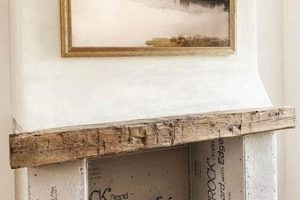
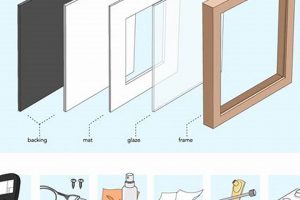
The creation of a decorative border for reflective glass surfaces using do-it-yourself methods involves selecting materials, measuring dimensions, and employing construction techniques to produce a personalized aesthetic. For instance, reclaimed wood can be cut and assembled to surround a looking glass, resulting in a rustic and unique home accent.
Engaging in such projects provides opportunities for creative expression, cost savings compared to purchasing pre-made alternatives, and customization to perfectly complement existing decor. Historically, handcrafted embellishments for looking glasses were common practice, reflecting available resources and individual artistic styles.
Subsequent sections will detail specific material choices, construction methods, and design considerations for successfully completing these customized home improvement endeavors. These include techniques for cutting and joining materials, applying finishes, and ensuring secure attachment of the border to the reflective surface.
Essential Construction Advice
The following recommendations provide guidance for the successful fabrication of custom borders for reflective glass surfaces, ensuring structural integrity and aesthetic appeal.
Tip 1: Material Selection. Prioritize materials compatible with the environment. For high-humidity locations, opt for moisture-resistant woods or synthetics to prevent warping and degradation. Consider the weight of the material relative to the mounting surface.
Tip 2: Precise Measurement. Accurate dimensions are critical. Measure the reflective glass surface meticulously, accounting for any overlap or reveal desired. A tolerance of error should be established before cutting materials.
Tip 3: Secure Joinery. The method of joining the border segments must be robust. Mitered corners offer an aesthetically pleasing option, but require accurate cutting and secure fastening, such as glue and brad nails. Consider reinforcing corners with metal brackets for added stability.
Tip 4: Appropriate Adhesives. Select an adhesive specifically formulated for the chosen materials. Ensure the adhesive is compatible with both the border material and the backing of the reflective surface to prevent delamination or damage. Follow the manufacturer’s instructions precisely.
Tip 5: Level Surface Application. Apply the assembled border to a level surface during the curing process to prevent warping or distortion. Weight the assembly evenly to ensure uniform adhesion.
Tip 6: Finishing Techniques. Select a finish that complements the design and protects the material. Apply multiple thin coats of sealant or paint, allowing adequate drying time between applications. Sanding between coats ensures a smooth and professional appearance.
Adherence to these principles promotes a durable, visually appealing, and structurally sound outcome. Careful planning and execution are essential for realizing a successful customization.
The subsequent conclusion will summarize the key points and offer final considerations for completing the fabrication process.
1. Material Selection

Material selection exerts a fundamental influence on the success, longevity, and aesthetic quality of do-it-yourself mirror frame projects. The chosen material dictates not only the visual appeal but also the structural integrity and resistance to environmental factors. For example, utilizing inexpensive, untreated softwood in a humid bathroom environment will inevitably lead to warping, rot, and eventual failure. Conversely, selecting a durable hardwood, composite material, or even metal offers greater resistance to moisture and temperature fluctuations, thereby extending the lifespan of the constructed border.
Consider the impact of material choice on the overall design. Reclaimed wood, with its inherent imperfections and rustic appearance, lends itself to a farmhouse or industrial aesthetic. Conversely, smoothly finished hardwoods or metallic accents evoke a more contemporary or modern feel. Furthermore, the weight of the chosen material influences the mounting requirements. A heavy oak frame necessitates robust hardware and a securely anchored mounting surface to prevent detachment and potential damage. The compatibility of finishing products, such as paints, stains, and sealants, with the chosen material is another critical consideration to achieve the desired aesthetic and protective qualities. For instance, some wood species may require a specific primer or sealant to prevent uneven stain absorption.
In conclusion, conscientious material selection is paramount in the construction of a customized border. It determines durability, influences the aesthetic character, and impacts the overall feasibility of the project. Careful consideration of environmental factors, desired aesthetic, and structural requirements is essential for achieving a satisfactory and long-lasting outcome. A seemingly minor oversight in this foundational stage can compromise the entire endeavor.
2. Precise Measurements

Accurate dimensional assessment is fundamentally critical to the successful fabrication and integration of a decorative border. Deviations from correct measurements invariably lead to aesthetic compromises, structural instability, and potential material wastage, ultimately undermining the entire endeavor.
- Mitigating Material Waste
Inaccurate initial dimensions necessitate rework or complete replacement of component sections. Overestimation results in excess material that may be unusable for other aspects of the project, while underestimation demands the procurement of additional supplies. Precise measurements minimize waste, contributing to cost-effectiveness and responsible resource utilization.
- Ensuring Flush Alignment
A lack of precision in measuring individual components results in gaps, overlaps, or misalignments during assembly. Mitered corners, for example, require exacting angles and lengths to achieve a seamless transition. Dimensional errors compromise the visual appeal, detracting from the overall quality.
- Facilitating Structural Integrity
The structural soundness of the surrounding border relies heavily on the accurate fit of its components. Inconsistent dimensions create stress points, potentially leading to joint failure and instability over time. Properly measured and fitted sections distribute loads evenly, enhancing the durability and longevity of the finished piece.
- Optimizing Aesthetic Harmony
A harmonious visual outcome depends on proportional accuracy. Inconsistent dimensions disrupt the visual balance and symmetry. Precise measurements ensure that all aspects of the constructed border align seamlessly, creating a cohesive and professional finished product.
These interconnected facets demonstrate the indispensable role of precise dimensional assessment in creating a durable, aesthetically pleasing, and cost-effective surround. Prioritizing accuracy from the outset minimizes potential errors, reduces material wastage, and ensures a final product that meets both functional and aesthetic expectations. Neglecting this critical step invariably leads to compromised results and avoidable complications.
3. Secure Joinery

The structural integrity of a do-it-yourself mirror frame fundamentally depends on the robustness of its joinery. Inadequate connections between frame components will, over time, result in separation, instability, and eventual failure of the assembled structure. Consider a frame constructed with simple butt joints held together solely by adhesive. While initially appearing functional, the lack of mechanical reinforcement renders it susceptible to stress from handling, temperature fluctuations, and the weight of the reflective glass. This illustrates a direct cause-and-effect relationship where insufficient joint strength directly impacts the longevity of the final product.
The selection of appropriate joinery techniques is paramount. Mitered corners, a common choice for aesthetic reasons, demand precise cuts and robust reinforcement. Simple adhesive bonding is insufficient; mechanical fasteners, such as brad nails or screws, are necessary to provide enduring stability. Dowel joints offer increased surface area for adhesive bonding and contribute to structural rigidity. Mortise-and-tenon joints, while more complex to execute, provide exceptional strength and are particularly well-suited for larger or heavier frames. An understanding of these techniques and their suitability for specific material types and design requirements is essential for achieving a durable and visually appealing outcome. A poorly joined frame not only compromises the aesthetic appeal but also presents a safety hazard if it were to detach from the mirror surface.
In summary, secure joinery is an indispensable component of successful mirror frame fabrication. The strength and durability of the frame are directly proportional to the quality of its joints. Selecting appropriate techniques, employing mechanical reinforcement, and ensuring precise execution are crucial for creating a frame that will withstand the test of time. Neglecting this aspect will inevitably lead to structural deficiencies and premature failure, underscoring the practical significance of understanding and implementing robust joinery practices.
4. Adhesive Compatibility

Adhesive compatibility represents a critical determinant in the successful and durable construction of customized reflective surface borders. The selection of an inappropriate bonding agent can lead to structural failures, aesthetic degradation, and even damage to the mirror itself. This section outlines key facets demonstrating the essential role of adhesive selection in do-it-yourself mirror frame projects.
- Material Reactivity
Different materials exhibit varying chemical interactions with adhesives. Certain adhesives may degrade or fail to bond effectively with specific woods, plastics, or metals. For instance, acidic adhesives can corrode metal surfaces, while solvents in some adhesives may dissolve certain plastics. Matching the adhesive chemistry to the substrate materials is essential to ensure a strong and lasting bond.
- Surface Porosity and Preparation
The porosity of the surfaces being joined influences adhesive penetration and bond strength. Porous materials like unfinished wood require adhesives that can permeate the surface to create a mechanical interlock. Conversely, non-porous materials such as glass or metal necessitate adhesives that form a strong surface bond. Proper surface preparation, including cleaning and abrasion, enhances adhesion by removing contaminants and increasing surface area.
- Environmental Factors
Environmental conditions such as temperature and humidity can significantly affect adhesive performance. Adhesives formulated for interior use may degrade in high-humidity environments, leading to bond failure. Exposure to direct sunlight can cause some adhesives to yellow, become brittle, or lose their adhesive properties. Selecting adhesives rated for the intended environmental conditions is crucial for long-term durability.
- Long-Term Stability
The long-term stability of the adhesive bond is paramount for the longevity of the finished product. Adhesives can degrade over time due to factors such as UV exposure, temperature cycling, and chemical reactions. Selecting adhesives with a proven track record of long-term performance and resistance to degradation ensures a durable and aesthetically pleasing outcome.
These elements of adhesive compatibility underscore its importance in achieving a durable and visually appealing customized frame. Careful consideration of material properties, surface characteristics, environmental factors, and long-term stability ensures that the selected adhesive provides a reliable and lasting bond, contributing significantly to the overall success and longevity of the mirror frame project.
5. Surface Preparation

Surface preparation constitutes a foundational phase in the successful execution of a customized reflective glass surround. Its influence extends beyond mere aesthetics, impacting adhesion, durability, and the overall lifespan of the completed structure. Neglecting proper surface preparation inevitably results in compromised outcomes, potentially leading to premature failure of the assembly.
- Adhesion Enhancement
The removal of contaminants, such as dust, grease, or pre-existing finishes, is paramount for achieving optimal adhesive bonding. These impurities create a barrier between the bonding agent and the substrate, weakening the resulting bond. Sanding or abrading the surface creates microscopic irregularities, increasing the surface area available for adhesion and promoting a stronger, more durable connection. The absence of adequate surface preparation directly impedes the adhesive’s ability to form a secure and lasting bond.
- Material Compatibility Facilitation
Certain materials may require specific surface treatments to enhance compatibility with adhesives or finishes. For instance, some metals benefit from etching or priming to promote adhesion and prevent corrosion. Wood surfaces often require sanding to remove mill glaze or imperfections, ensuring a smooth and uniform surface for subsequent finishing. Tailoring the surface preparation method to the specific material properties optimizes the bonding process and enhances the overall quality of the finished surround.
- Finish Uniformity Promotion
Uneven or poorly prepared surfaces can result in inconsistent finish application, leading to visual imperfections and detracting from the aesthetic appeal. Sanding, filling, and priming create a smooth and uniform base for paints, stains, and sealants, ensuring even coverage and a professional-looking finish. Proper surface preparation eliminates imperfections that would otherwise be amplified by the application of a finish, resulting in a more aesthetically pleasing outcome.
- Durability Augmentation
Proper surface preparation not only enhances the initial bond strength but also contributes to the long-term durability of the assembled structure. By removing contaminants and creating a sound bonding surface, surface preparation prevents premature delamination, cracking, or peeling of the finish. A well-prepared surface resists moisture penetration, preventing warping, rot, or corrosion, thereby extending the lifespan of the completed border.
In summary, surface preparation is an indispensable aspect of creating a reflective surface surround. Its multifaceted benefits, ranging from adhesion enhancement to durability augmentation, underscore its critical role in achieving a successful and long-lasting outcome. A commitment to thorough and meticulous surface preparation is a prerequisite for any serious endeavor in crafting custom borders, ensuring a visually appealing and structurally sound finished piece.
6. Finishing Techniques
The application of finishing techniques represents a crucial stage in the mirror frame fabrication process, directly influencing the final aesthetic, durability, and protective qualities of the completed piece. The choice of finishing method, encompassing surface treatments such as painting, staining, sealing, or clear coating, determines not only the visual appearance but also the resistance to environmental factors and wear. An improperly finished frame may be susceptible to moisture damage, scratches, fading, or discoloration, thereby reducing its lifespan and diminishing its visual appeal. For instance, a wood frame exposed to humidity without a protective sealant will likely warp and degrade over time, demonstrating a clear cause-and-effect relationship between finishing techniques and frame longevity.
Different finishing techniques offer distinct advantages and disadvantages depending on the materials used and the desired aesthetic. Staining wood allows the natural grain patterns to be enhanced while providing some degree of protection. Painting offers a wider range of color options and can provide a more opaque and uniform finish. Sealants create a barrier against moisture and UV radiation, protecting the underlying material from degradation. Clear coats enhance the durability and scratch resistance of the finish. The selection of the appropriate finishing technique should be carefully considered based on the material, the intended use environment, and the desired visual effect. The application of these finishes also contributes to the perceived quality of the mirror frame.
In conclusion, finishing techniques are integral to the creation of a customized frame, directly affecting its aesthetic qualities and structural integrity. Careful selection and application of appropriate finishes enhance the visual appeal, protect the underlying material from damage, and extend the lifespan of the completed piece. Challenges in this process often involve selecting the correct finish for the material type and ensuring proper application techniques to achieve a uniform and durable coating. Understanding the practical significance of finishing techniques is essential for achieving a professional and long-lasting result in these projects, linking directly to the overall success of the endeavor.
Frequently Asked Questions Regarding Custom Decorative Border Creation
The following section addresses common inquiries and misconceptions pertaining to the construction of decorative borders for reflective surfaces using do-it-yourself methods.
Question 1: What constitutes an appropriate adhesive for securing a wooden border to the backing of reflective glass?
The optimal adhesive selection involves a neutral pH formulation designed for bonding dissimilar materials. Construction-grade adhesives specifically labeled as “mirror mastic” or “mirror adhesive” are recommended to prevent chemical reactions that can damage the silvering on the back of the glass. Avoid solvent-based adhesives, as they may dissolve protective coatings.
Question 2: Which materials are most resistant to warping in high-humidity environments, such as bathrooms?
Solid hardwoods like teak, cedar, or redwood exhibit superior moisture resistance compared to softwoods like pine or fir. Alternatively, composite materials such as PVC trim or medium-density fiberboard (MDF) specifically formulated for moisture resistance provide a stable and durable option.
Question 3: How can mitered corners be reinforced to prevent separation over time?
Reinforcement methods involve the incorporation of mechanical fasteners in conjunction with adhesive bonding. Options include the use of metal corner braces, splines inserted into slots cut into the mitered edges, or pocket screws driven from the back of the frame. These techniques augment the strength and stability of the joint.
Question 4: What safety precautions should be observed when cutting reflective glass or working with sharp tools?
Eye protection in the form of safety glasses or a face shield is mandatory. Gloves protect hands from cuts and splinters. Power tools must be used in accordance with manufacturer guidelines, and appropriate dust collection measures should be implemented to minimize inhalation of particulate matter. A stable and well-lit workspace is essential.
Question 5: What is the recommended procedure for achieving a smooth and uniform finish on a painted wooden border?
Surface preparation is crucial. Sanding the wood to a smooth surface prior to priming promotes adhesion and reduces imperfections. Multiple thin coats of high-quality paint, applied with a brush or sprayer, are preferable to a single thick coat, as this minimizes runs and drips. Light sanding between coats ensures a smooth and even finish.
Question 6: How does one determine the appropriate dimensions for a border relative to the size of the reflective surface?
The border width is a matter of aesthetic preference, but a general guideline suggests a width proportional to the overall size of the reflective glass. For smaller surfaces, a narrow border (1-2 inches) may be appropriate, while larger surfaces can accommodate wider borders (3-5 inches). A scaled drawing or mockup can assist in visualizing the final proportions.
These answers provide a foundational understanding of key considerations in the construction of customized borders for reflective surfaces. Diligence and careful planning are essential for a successful project.
The subsequent concluding statement will summarize key aspects and offer final points.
Conclusion
The preceding discussion has detailed essential considerations for successful mirror frame diy execution. These encompass material selection, precise measurement, secure joinery, adhesive compatibility, surface preparation, and finishing techniques. Each element contributes critically to the aesthetic quality, structural integrity, and longevity of the finished product.
Careful adherence to these principles elevates the outcome from a mere craft project to a lasting enhancement of the living space. Future endeavors in customized decorative border construction should prioritize thoughtful planning and meticulous execution to achieve optimal results. The reward for such diligence is a personalized, durable, and visually pleasing reflection of individual style and craftsmanship.