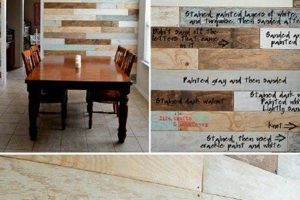
The practice of adding decorative or functional panels to interior walls, often undertaken by homeowners themselves, represents a method for enhancing aesthetics or improving insulation. Examples of this activity include installing shiplap boards, applying wainscoting to the lower portion of a wall, or affixing decorative trim to create a paneled effect. These projects typically involve the use of common tools and readily available materials.
The application of this approach can significantly alter the character of a room, providing visual interest and a sense of depth. Historically, this form of interior design served to protect walls from damage and offer a degree of thermal regulation. Modern implementations continue to offer these benefits, while also allowing for personalization and cost-effective home improvement. The ability to customize the style, color, and materials used contributes to its ongoing popularity.
The subsequent sections will detail the types of materials suitable for this application, the fundamental techniques involved in the installation process, and considerations for proper surface preparation and finishing.
DIY Wall Paneling Tips
The following tips are intended to optimize the experience and ensure a successful outcome when undertaking a do-it-yourself wall paneling project. Careful planning and execution are critical for achieving professional-looking results.
Tip 1: Accurate Measurement and Planning: Prior to commencing any work, measure the wall area precisely and create a detailed plan. This includes accounting for existing features such as outlets, switches, and windows. An accurate plan minimizes material waste and potential errors.
Tip 2: Material Selection: Choose appropriate materials based on the desired aesthetic and the existing wall conditions. Consider factors such as moisture resistance, durability, and ease of cutting and installation. For example, MDF may be suitable for dry areas, while solid wood or PVC panels are preferable in bathrooms.
Tip 3: Surface Preparation: Ensure the wall surface is clean, dry, and free of imperfections. Repair any holes or cracks with appropriate filler. Sanding the wall may be necessary to promote proper adhesion of adhesives or fasteners. Priming the wall can also enhance adhesion and provide a uniform surface for painting.
Tip 4: Proper Cutting Techniques: Employ precise cutting techniques to ensure panels fit together seamlessly. Use a miter saw for accurate angle cuts and a jigsaw for curved or irregular shapes. Always wear appropriate safety gear, including eye protection.
Tip 5: Secure Attachment: Select appropriate fasteners or adhesives based on the type of paneling and the wall material. Construction adhesive provides a strong bond for many paneling types, while nails or screws may be necessary for heavier materials. Ensure fasteners are countersunk to create a flush surface.
Tip 6: Consistent Spacing and Alignment: Maintain consistent spacing between panels for a uniform appearance. Use shims or spacers to ensure proper alignment, especially when working with uneven walls. A laser level can be helpful for establishing a straight line.
Tip 7: Careful Finishing: Pay close attention to finishing details, such as filling nail holes, caulking gaps, and applying paint or stain. Sand the surface lightly before applying the final finish for a smooth, professional look. Multiple coats of finish may be necessary for optimal durability and appearance.
These tips, when diligently followed, will contribute to a successful and visually appealing wall paneling installation. By prioritizing accuracy, proper material selection, and careful execution, a professional-quality result can be achieved.
The following section will address common challenges encountered during this type of project and offer practical solutions.
1. Material Selection

The selection of appropriate materials is a foundational element in any do-it-yourself wall paneling project. The chosen material directly influences the aesthetic appeal, durability, and ease of installation of the finished paneling. A poorly selected material can lead to premature failure, detract from the intended design, and increase the overall cost due to necessary repairs or replacements. For example, using untreated wood in a bathroom environment will likely result in warping, mold growth, and eventual degradation of the paneling. Conversely, selecting a moisture-resistant material, such as PVC or treated wood, would mitigate these risks, ensuring a longer lifespan and maintaining the desired appearance.
Considerations beyond moisture resistance are equally important. The desired style modern, rustic, traditional often dictates material choices. Shiplap, frequently crafted from pine or MDF, lends itself to a farmhouse or coastal aesthetic. Wainscoting, typically made from hardwood or paint-grade materials, evokes a more formal, traditional ambiance. Furthermore, the structural integrity of the existing wall plays a role. Heavy materials, such as solid wood, may require additional support, while lighter materials, such as polystyrene panels, can be applied to less robust surfaces. The availability of tools and the installer’s skill level also influence the practical feasibility of certain material choices. Hardwoods, for instance, require specialized cutting equipment and a higher degree of precision compared to softer materials like MDF.
In summary, the relationship between material selection and successful do-it-yourself wall paneling is undeniable. A thorough assessment of environmental factors, aesthetic goals, structural requirements, and practical limitations is crucial. Informed material choices not only enhance the visual impact of the finished project but also contribute to its longevity, functionality, and overall value. Failure to prioritize this aspect can result in costly mistakes and a diminished return on investment.
2. Design & Layout

The design and layout phase is paramount to the successful execution of a do-it-yourself wall paneling project. This initial planning stage establishes the visual framework for the entire undertaking, influencing aesthetic appeal, spatial perception, and ultimately, the perceived value of the finished space. Thoughtful design and layout considerations mitigate potential errors, minimize material waste, and ensure a cohesive and visually pleasing result.
- Scale and Proportion
The scale of the paneling must be proportionate to the dimensions of the room. Large panels in a small room can overwhelm the space, while small panels in a large room may appear insignificant. The height of wainscoting, for example, should be carefully considered in relation to ceiling height to maintain visual harmony. A common guideline is to use the golden ratio to determine appropriate proportions. Deviation from proportional balance can result in a disjointed and aesthetically unappealing outcome.
- Style and Aesthetic Coherence
The style of the paneling must align with the overall aesthetic of the room and the existing architectural details. Installing modern, minimalist paneling in a room with traditional moldings may create visual dissonance. Similarly, using rustic shiplap in a highly contemporary space could appear incongruous. Careful consideration should be given to the compatibility of the paneling style with the existing decor, furniture, and color palette to ensure a cohesive and harmonious design.
- Pattern and Repetition
The pattern and repetition of the paneling design influence the perceived rhythm and visual interest of the wall. A consistent, repeating pattern can create a sense of order and stability, while a more complex or irregular pattern can add visual dynamism. However, excessive complexity can be overwhelming, particularly in smaller spaces. The spacing between panels, the size and shape of individual elements, and the overall symmetry or asymmetry of the design all contribute to the final visual effect. Thoughtful consideration of pattern and repetition is essential for achieving the desired aesthetic impact.
- Color and Contrast
The color of the paneling and the contrast between the paneling and the wall surface significantly affect the perceived brightness, warmth, and depth of the room. Light-colored paneling can make a small room feel larger and brighter, while dark-colored paneling can create a more intimate and dramatic atmosphere. High contrast between the paneling and the wall can accentuate the paneling design, while low contrast can create a more subtle and understated effect. The choice of color and contrast should be carefully considered in relation to the existing lighting conditions, the size of the room, and the desired mood.
These facets of design and layout collectively determine the overall impact of wall paneling. They are not merely aesthetic considerations but fundamental elements that influence the perception and experience of the space. Careful attention to scale, style, pattern, and color ensures that the paneling integrates seamlessly with the existing architecture and enhances the overall visual appeal of the room. Ultimately, a well-designed and carefully executed layout transforms a do-it-yourself wall paneling project from a simple home improvement task into a cohesive and impactful design statement.
3. Wall Preparation

Wall preparation constitutes a critical stage in any do-it-yourself wall paneling endeavor. Adequate preparation ensures proper adhesion, a level surface, and ultimately, the longevity and aesthetic appeal of the finished installation. Neglecting this phase can lead to a variety of problems, including panel misalignment, adhesive failure, and a generally unprofessional appearance.
- Cleaning and Degreasing
The presence of dirt, dust, grease, or other contaminants on the wall surface can impede the bonding process between the adhesive and the wall. Cleaning with a suitable detergent and degreaser removes these substances, providing a clean surface for optimal adhesion. For instance, in kitchens, grease buildup is common, necessitating thorough cleaning prior to panel installation. Failure to clean properly can result in panels detaching or exhibiting uneven adhesion patterns.
- Repairing Imperfections
Holes, cracks, or uneven surfaces must be addressed before paneling is installed. Filling these imperfections with spackle or joint compound creates a smooth, uniform substrate. Unrepaired imperfections can cause panels to sit unevenly, creating visible gaps and detracting from the overall appearance. An example is patching nail holes from previous decorations. This step is crucial in achieving a professional and seamless look.
- Leveling the Surface
An uneven wall surface will cause panels to be misaligned, resulting in an unprofessional and aesthetically displeasing outcome. Using shims or applying a skim coat of joint compound can level the surface, providing a consistent plane for panel installation. Consider older homes where walls may have settled over time. Addressing these irregularities is essential for a successful paneling project.
- Priming the Wall
Applying a primer creates a uniform surface and promotes better adhesion of the adhesive or fasteners. Primer also seals porous surfaces, preventing the adhesive from being absorbed into the wall and weakening the bond. For example, priming a drywall surface before installing paneling is essential to prevent the drywall from absorbing moisture from the adhesive, which can lead to panel failure. Furthermore, tinted primers can help to create a uniform base color, especially when working with light or translucent panels.
These elements of wall preparation collectively contribute to the success of a do-it-yourself wall paneling project. Each step plays a vital role in ensuring a secure, aesthetically pleasing, and long-lasting installation. Ignoring these preparatory measures can lead to costly rework and a diminished final result. Therefore, meticulous attention to wall preparation is paramount for achieving a professional-grade finish.
4. Accurate Cutting

Accurate cutting is intrinsically linked to the success of any do-it-yourself wall paneling project. The precision with which panels are cut directly affects the aesthetic appeal, structural integrity, and overall longevity of the installation. Inaccurate cuts introduce gaps, misalignments, and uneven surfaces, detracting significantly from the intended visual impact. For instance, if shiplap boards are not cut precisely to length, the resulting gaps will disrupt the uniform, overlapping pattern characteristic of this style. Similarly, improperly mitered corners in wainscoting will create visible seams, undermining the intended seamless transition between panels. These inaccuracies necessitate additional corrective measures, such as filling gaps with caulk or replacing incorrectly cut pieces, increasing both the time and cost associated with the project.
The importance of accurate cutting extends beyond purely aesthetic considerations. Precise cuts are essential for ensuring that panels fit snugly against walls, ceilings, and adjoining structures, preventing the accumulation of moisture and debris behind the paneling. This is particularly critical in areas prone to humidity, such as bathrooms and kitchens, where moisture ingress can lead to mold growth and structural damage. Consider a scenario where a panel is cut slightly too short, leaving a small gap at the baseboard. This seemingly minor imperfection can create a pathway for moisture to seep behind the paneling, potentially causing significant damage to the underlying wall structure over time. Proper cutting, therefore, acts as a preventative measure, safeguarding the longevity and structural integrity of the installation.
In summary, accurate cutting is not merely a desirable attribute but a fundamental requirement for successful do-it-yourself wall paneling. It is a critical factor in achieving a professional finish, preventing structural damage, and ensuring the long-term durability of the installation. Diligence in measuring, marking, and executing precise cuts is essential for achieving the desired aesthetic outcome and maximizing the value of the investment. Ignoring this crucial aspect can lead to avoidable errors, increased costs, and a diminished final result.
5. Secure Installation

The aspect of secure installation is paramount to the success and longevity of any do-it-yourself wall paneling project. Proper securement ensures that the panels remain firmly affixed to the wall surface, maintaining their aesthetic appeal and structural integrity over time. Neglecting this aspect can lead to loose panels, gaps, and ultimately, a compromised appearance.
- Adhesive Selection and Application
Choosing the appropriate adhesive is critical for secure panel installation. Factors such as the panel material, wall surface, and environmental conditions must be considered. For example, heavy panels may require a high-strength construction adhesive, while lighter panels may be adequately secured with a general-purpose adhesive. Proper application of the adhesive, following the manufacturer’s instructions, is equally important. Insufficient adhesive coverage or incorrect application techniques can lead to weak bonds and eventual panel detachment. A thorough understanding of adhesive properties and application methods is therefore essential.
- Fastener Usage and Placement
In addition to or in lieu of adhesives, fasteners such as nails, screws, or staples may be necessary to provide additional support and secure the panels to the wall. The type and size of fastener should be appropriate for the panel material and the underlying wall structure. For example, drywall screws are suitable for securing panels to drywall, while masonry nails are required for concrete or brick walls. Proper placement of fasteners, ensuring that they are driven straight and flush with the panel surface, is crucial to prevent damage to the panels and maintain a clean appearance. Overdriving fasteners can weaken the panel, while underdriving them can create protrusions that detract from the finished look.
- Substrate Preparation and Compatibility
The condition of the wall substrate plays a significant role in the success of a secure panel installation. A clean, dry, and structurally sound substrate provides the optimal surface for adhesion and fastener penetration. Loose paint, wallpaper, or crumbling plaster should be removed prior to panel installation. Additionally, it is important to ensure that the panel material is compatible with the substrate. For example, installing moisture-sensitive panels on a damp wall can lead to warping and detachment. Adequate substrate preparation and material compatibility are essential for achieving a long-lasting and secure installation.
- Addressing Wall Irregularities
Walls are rarely perfectly flat or plumb, and these irregularities can pose challenges to achieving a secure and visually appealing panel installation. Shimming or furring strips may be necessary to create a level surface for the panels to be attached to. By addressing wall irregularities before panel installation, potential problems such as gaps or uneven surfaces can be avoided. Accurately assessing the wall’s condition and implementing appropriate corrective measures are critical for a secure and professional-looking result.
In conclusion, the long-term success of do-it-yourself wall paneling hinges significantly on meticulous attention to secure installation practices. The appropriate choice and application of adhesives and fasteners, coupled with thorough substrate preparation and wall irregularity management, guarantee that the panels remain firmly affixed, enhancing both the aesthetics and structural integrity of the space.
6. Finishing Touches
The successful completion of do-it-yourself wall paneling projects hinges significantly on the execution of appropriate finishing touches. These final steps, encompassing activities such as caulking, filling nail holes, sanding, and applying paint or stain, directly influence the overall aesthetic appeal and perceived quality of the installation. The absence of meticulous finishing work detracts from the visual impact, potentially undermining the effort invested in the preceding stages. For example, uncaulked seams between panels and adjacent surfaces create visible gaps, compromising the seamless appearance often desired in paneling installations. Similarly, unfilled nail holes and rough edges diminish the smooth, refined finish that distinguishes professional-grade work. In practical terms, the selection of appropriate finishing materials, coupled with diligent application techniques, is crucial for transforming a rudimentary paneling installation into a polished and sophisticated interior design element.
The selection of paint or stain directly impacts the visual integration of the wall paneling with the surrounding environment. Matching the color palette to existing dcor or architectural features requires careful consideration. Furthermore, the chosen finish, whether matte, satin, or gloss, influences the light reflectance and perceived texture of the panels. Consider a scenario where a homeowner installs wainscoting in a dining room. Selecting a semi-gloss paint finish, for instance, might accentuate the details of the paneling and create a brighter, more formal ambiance. Conversely, a matte finish would result in a softer, more subtle effect, better suited to a casual or rustic setting. Proper sanding prior to painting or staining ensures a smooth, even surface, maximizing the adherence of the finish and preventing unsightly imperfections.
In summary, the importance of finishing touches in do-it-yourself wall paneling cannot be overstated. They are not merely cosmetic add-ons but integral components that contribute to the overall success and visual impact of the project. Challenges in this phase often arise from improper material selection, inadequate surface preparation, or a lack of attention to detail. However, by prioritizing meticulous execution and employing appropriate techniques, homeowners can achieve professional-looking results, enhancing the aesthetic appeal and value of their homes.
7. Cost Efficiency

The appeal of engaging in do-it-yourself wall paneling is intrinsically linked to its potential for cost savings compared to professional installation. Material costs, which vary based on selection, represent a primary expense. However, the elimination of labor fees, often a significant portion of professional quotes, contributes substantially to the overall cost efficiency. For instance, installing shiplap in a 10×12 room might cost $500 in materials for a DIY project, while professional installation could easily exceed $1500. This difference underscores the financial incentive for homeowners willing to undertake the work themselves.
Achieving true cost efficiency, however, necessitates careful planning and execution. Errors in measurement or installation can lead to material waste and the need for rework, negating some of the initial savings. Furthermore, the investment in necessary tools, such as saws, levels, and fasteners, must be factored into the overall budget. Choosing readily available and affordable materials, such as MDF or pine, over more expensive hardwoods can further enhance cost efficiency. Moreover, maximizing material usage through strategic planning of cuts and layouts minimizes waste and reduces the overall expenditure. A homeowner meticulously planning cuts to minimize waste of expensive hardwood panels exemplifies a commitment to cost efficiency beyond simply avoiding professional labor.
In conclusion, while do-it-yourself wall paneling offers the potential for significant cost savings, realizing this potential requires diligence and foresight. Accurate planning, careful material selection, and skillful execution are essential to minimize waste and ensure a successful outcome. The initial investment in tools and the time commitment required must also be weighed against the potential savings to determine the true cost efficiency of the project. Understanding these factors allows homeowners to make informed decisions and maximize the financial benefits of this undertaking.
DIY Wall Paneling
The following frequently asked questions address common concerns and misconceptions surrounding the practice of do-it-yourself wall paneling. This information aims to provide clarity and guidance for individuals considering undertaking such projects.
Question 1: Is specialized expertise necessary to undertake a wall paneling project?
While prior experience in carpentry or home improvement is beneficial, it is not strictly required. Success hinges on meticulous planning, careful execution, and a willingness to learn. Access to accurate measuring tools, appropriate cutting equipment, and reliable fastening methods is essential.
Question 2: What are the most common challenges encountered during wall paneling installation?
Frequently encountered challenges include uneven walls, inaccurate measurements leading to material waste, and difficulty achieving seamless transitions between panels. Careful preparation and attention to detail are crucial for mitigating these issues.
Question 3: Does wall paneling installation necessitate the removal of existing drywall?
Generally, the removal of existing drywall is not necessary. Wall paneling is typically installed directly over the existing wall surface, provided the surface is structurally sound and free of significant imperfections. However, removal may be required in cases of extensive damage or mold growth.
Question 4: What factors should be considered when selecting materials for wall paneling?
Material selection should be guided by considerations of durability, moisture resistance, aesthetic preferences, and budgetary constraints. Options range from inexpensive MDF to more costly hardwoods, each offering distinct advantages and disadvantages.
Question 5: How can one ensure proper alignment and spacing during panel installation?
Proper alignment and spacing can be achieved through the use of levels, spacers, and careful measurements. A laser level is particularly useful for establishing a straight, consistent line across the wall surface. Consistent spacing between panels enhances the visual uniformity of the installation.
Question 6: What are the recommended safety precautions for undertaking a wall paneling project?
Safety precautions should include the use of appropriate personal protective equipment, such as safety glasses, gloves, and a dust mask. Proper ventilation is essential when working with adhesives or finishes. Additionally, caution should be exercised when operating power tools.
In summary, successful do-it-yourself wall paneling requires a combination of careful planning, meticulous execution, and adherence to established safety protocols. By addressing common concerns and potential challenges, individuals can increase their likelihood of achieving a satisfactory outcome.
The following section will provide a detailed guide to selecting the appropriate tools for wall paneling installation.
Conclusion
This exploration of DIY wall paneling has detailed fundamental aspects from material selection and design considerations to installation techniques and finishing touches. The analysis underscores the importance of meticulous planning, precise execution, and a comprehensive understanding of available resources in achieving a successful and cost-effective outcome.
Engaging in DIY wall paneling presents an opportunity for homeowners to enhance their living spaces. The knowledge presented serves as a foundation for informed decision-making. The success of such endeavors hinges on a commitment to quality and a diligent application of learned principles, offering a lasting enhancement to the home environment.