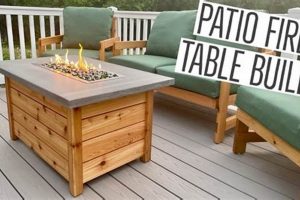
A self-constructed outdoor furnishing, incorporating a recessed area for a contained flame, provides both a functional surface and a source of heat and ambiance. These projects range from simple repurposed designs to complex builds utilizing various materials and fuel sources. An example could include a wooden frame surrounding a propane-fueled burner insert, creating a gathering spot for cooler evenings.
The growing interest stems from factors like personalization, cost-effectiveness, and enhanced outdoor living experiences. Constructing these features allows individuals to tailor the design to their specific aesthetic and spatial requirements. Historically, open flames served practical purposes; adapting this element into modern furnishings offers both utility and a connection to primal gathering traditions.
Subsequent sections will delve into crucial aspects of building this type of outdoor feature, including design considerations, material selection, safety precautions, and step-by-step construction guides. The information presented aims to equip readers with the knowledge necessary to undertake such a project responsibly and effectively.
Essential Construction Guidance
The following recommendations address key considerations for the responsible construction of an outdoor furnishing with an integrated flame element. Adherence to these guidelines enhances safety and ensures structural integrity.
Tip 1: Compliance with Local Codes: Verify all regional building codes and regulations pertaining to open flames and outdoor structures. Obtain necessary permits before commencing any construction. This ensures legal compliance and helps prevent future complications.
Tip 2: Prioritize Non-Combustible Materials: Select materials resistant to heat and flames for components directly exposed to the heat source. Examples include concrete, stone, brick, or specialized fire-resistant boards. This reduces the risk of fire hazards and material degradation.
Tip 3: Implement Adequate Ventilation: Ensure sufficient airflow around the burner unit, particularly if utilizing propane or natural gas. This prevents gas accumulation and reduces the risk of explosions or carbon monoxide poisoning. Consult manufacturer specifications for recommended ventilation guidelines.
Tip 4: Maintain Safe Clearance Distances: Establish appropriate clearances between the heat source and surrounding combustible materials, such as wood framing or landscaping. These distances are crucial to avoid accidental ignition. Refer to safety standards for recommended clearances.
Tip 5: Install a Reliable Shut-Off Valve: Integrate an easily accessible shut-off valve in the gas supply line. This allows for immediate termination of the fuel source in case of emergencies. Ensure the valve is clearly labeled and easily operable.
Tip 6: Regular Inspection and Maintenance: Conduct routine inspections of the structure, burner unit, and gas connections. Promptly address any signs of wear, damage, or gas leaks. Regular maintenance prolongs the lifespan and ensures continued safe operation.
Tip 7: Fire Safety Equipment: Have readily available fire extinguishing equipment, such as a fire extinguisher or a bucket of sand, near the structure. Familiarize all users with the location and operation of the equipment.
Adhering to these guidelines contributes significantly to the safety and longevity of this particular outdoor furnishing. Prioritizing safety considerations is paramount during both the construction and utilization phases.
The subsequent section will address design considerations and aesthetic integration within various outdoor spaces.
1. Material Selection

Material selection is a pivotal determinant in the safety, longevity, and aesthetic appeal of a self-constructed outdoor furnishing with an integrated flame element. The materials chosen directly impact the structure’s resistance to heat, weather, and general wear, while also defining its visual characteristics.
- Heat Resistance and Fire Safety
Materials in direct proximity to the flame source must exhibit high heat resistance and non-combustibility. Examples include fire-rated brick, concrete, stone, and specialized cement boards. Selecting inappropriate materials, such as untreated wood, presents significant fire hazards and compromises structural integrity. Instances of improperly insulated flame areas leading to structural fires underscore the necessity of careful material evaluation.
- Weather Resistance and Durability
Outdoor environments necessitate materials capable of withstanding exposure to moisture, temperature fluctuations, and ultraviolet radiation. Rot-resistant woods like cedar or redwood, treated lumber, and weather-resistant metals like stainless steel are commonly employed. Failure to select appropriate materials can result in premature decay, corrosion, and structural failure, rendering the structure unsafe and aesthetically unappealing. Projects in humid climates highlight the criticality of weather-resistant choices.
- Structural Integrity and Load-Bearing Capacity
The materials must possess sufficient strength and load-bearing capacity to support the weight of the burner unit, surrounding structure, and any intended surface loads. Reinforced concrete, sturdy metal frameworks, and dense hardwoods are often used to ensure stability. Underestimating load requirements can lead to structural collapse, posing a safety risk. Designs incorporating heavy stone or concrete elements must account for these weight considerations.
- Aesthetic Compatibility and Design Cohesion
Selected materials should complement the surrounding environment and align with the desired aesthetic. Natural stone and wood can create a rustic ambiance, while metal and concrete lend themselves to modern designs. Incongruous material combinations can detract from the overall visual appeal and reduce the perceived value of the structure. Harmonious integration with existing landscaping and outdoor furniture enhances the project’s aesthetic success.
These considerations are paramount in the successful integration of a flame element within an outdoor furnishing. Instances of rapid deterioration due to poor material choices serve as cautionary tales. Thoughtful material selection contributes significantly to the safety, durability, and aesthetic integration of this type of structure, ultimately enhancing the user experience.
2. Structural Integrity

The structural integrity of a self-constructed outdoor furnishing with a flame element is paramount to its safe and prolonged functionality. This aspect directly affects the stability and load-bearing capacity of the entire assembly. Insufficient structural design can lead to a range of hazardous outcomes, from gradual deformation to catastrophic collapse, particularly when subjected to the combined stresses of weight, heat, and environmental factors. A poorly constructed base, for instance, may buckle under the load of the burner unit and surrounding materials, compromising the entire structure.
The materials selected and the methods of assembly significantly influence the overall structural integrity. Weak joints, inadequate supports, or the use of materials with insufficient strength ratings can create vulnerabilities. For example, employing untreated lumber for the frame without proper reinforcement can result in warping and eventual failure due to moisture exposure and heat stress. Conversely, designs incorporating robust support systems, such as reinforced concrete footings and steel framing, provide enhanced stability and resistance to deformation, extending the lifespan of the finished product. Case studies of failures caused by neglecting proper construction principles underscore the importance of adhering to established engineering practices and safety standards.
Prioritizing structural integrity in the design and construction process is not merely an aesthetic concern but a fundamental safety requirement. A durable and stable framework ensures the safe operation of the flame element and protects users from potential hazards. Rigorous planning, meticulous execution, and adherence to established building principles are essential for creating a reliable and secure outdoor feature. Overlooking this aspect can negate the intended benefits and introduce unacceptable risks.
3. Burner Integration

The successful incorporation of a burner unit into a self-constructed outdoor furnishing is a critical determinant of its overall functionality and safety. This integration demands careful consideration of various factors to ensure both efficient performance and adherence to established safety standards. The following points delineate key facets of this process.
- Burner Unit Selection and Compatibility
Choosing an appropriate burner unit for the intended application is paramount. Factors such as heat output (BTU rating), fuel type (propane or natural gas), ignition system, and control mechanisms must align with the design parameters and usage expectations. Mismatched components can lead to inefficient operation, potential hazards, and premature equipment failure. An undersized burner may not provide sufficient heat, while an oversized unit could exceed the structure’s thermal capacity.
- Gas Line Installation and Safety
Proper installation of the gas line is non-negotiable for systems utilizing propane or natural gas. This includes employing appropriately sized and rated pipes, fittings, and regulators. All connections must be leak-tested before operation, and a shut-off valve should be readily accessible. Deviations from established safety protocols can result in gas leaks, explosions, and carbon monoxide poisoning.
- Ventilation and Airflow Management
Adequate ventilation around the burner unit is essential to prevent gas accumulation and ensure proper combustion. Sufficient airflow promotes complete burning of the fuel, minimizing the production of harmful byproducts. Poor ventilation can lead to incomplete combustion, resulting in reduced efficiency and increased levels of carbon monoxide. This aspect demands careful consideration during the design phase.
- Heat Shielding and Insulation
Protecting surrounding combustible materials from the direct heat of the burner requires effective heat shielding and insulation. This can be achieved through the use of non-combustible barriers, such as metal plates or ceramic fiber insulation. Inadequate heat shielding can result in the ignition of adjacent wood framing or other flammable components, posing a significant fire hazard. Proper insulation also improves the efficiency of the system by reducing heat loss.
Collectively, these facets of burner integration contribute to the safe and effective utilization of a flame element in a self-constructed outdoor structure. Instances of poorly integrated systems resulting in accidents underscore the importance of meticulous planning, adherence to safety standards, and the use of qualified professionals when necessary. Prioritizing these considerations ensures a functional and safe experience.
4. Safety Precautions

The integration of a flame element within a self-constructed outdoor table necessitates stringent adherence to safety precautions. The combination of combustible materials, open flames, and potentially flammable fuels presents inherent risks that demand careful mitigation. The following points outline critical safety considerations applicable to such projects.
- Clearance Distances and Material Selection
Maintaining appropriate clearance distances between the flame source and surrounding combustible materials is paramount. Minimum distances, as specified by relevant fire safety codes, must be observed. The selection of non-combustible materials, such as concrete, stone, or fire-resistant treated lumber, for components in close proximity to the flame significantly reduces the risk of accidental ignition. Instances of fires originating from inadequate clearance distances highlight the importance of these preventative measures.
- Gas Line Integrity and Leak Detection
For systems utilizing propane or natural gas, the integrity of the gas line is of utmost importance. All connections must be properly sealed and regularly inspected for leaks. A readily accessible shut-off valve should be installed to allow for immediate termination of the gas supply in emergency situations. The use of a gas leak detector is recommended to identify potential hazards before ignition. Failures in gas line integrity have resulted in explosions and fires, underscoring the necessity of vigilant maintenance.
- Ventilation and Carbon Monoxide Mitigation
Adequate ventilation around the burner unit is crucial to prevent the accumulation of carbon monoxide, a colorless and odorless gas produced during combustion. Insufficient ventilation can lead to dangerous concentrations of carbon monoxide, posing a serious health risk. Proper design should ensure sufficient airflow to facilitate complete combustion and prevent the build-up of hazardous gases. Carbon monoxide detectors are recommended for enclosed or partially enclosed outdoor spaces.
- Fire Suppression Equipment and Emergency Procedures
The presence of readily accessible fire suppression equipment, such as a fire extinguisher or a bucket of sand, is essential for mitigating potential fires. All users should be familiar with the location and operation of this equipment. Clear emergency procedures, including contact information for emergency services, should be readily available. The rapid deployment of fire suppression equipment can prevent minor incidents from escalating into larger, more dangerous events.
These safety precautions are not merely advisory; they are fundamental requirements for the responsible construction and operation of a flame-integrated outdoor table. Neglecting these aspects can have severe consequences. Adherence to established safety standards minimizes the risks associated with open flames and enhances the enjoyment of the outdoor space.
5. Ventilation Design

Ventilation design assumes a critical role in the safe and efficient operation of a self-constructed outdoor table incorporating a flame element. Proper ventilation mitigates potential hazards associated with incomplete combustion and gas accumulation, ensuring user safety and optimizing performance. Neglecting this aspect can lead to a range of adverse consequences.
- Combustion Efficiency and Byproduct Removal
Adequate ventilation facilitates complete combustion by providing sufficient oxygen to the flame. This process minimizes the production of harmful byproducts, such as carbon monoxide, a colorless and odorless gas posing a significant health risk. Examples of inadequate ventilation include enclosed spaces or designs restricting airflow around the burner. Properly designed ventilation systems remove combustion byproducts, promoting cleaner and more efficient fuel consumption. Failure to address byproduct removal can lead to hazardous air quality and reduced heating efficiency.
- Gas Accumulation Prevention
In structures utilizing propane or natural gas, ventilation is crucial to prevent the accumulation of unburned fuel. Leaks or incomplete combustion can result in gas pockets, creating a risk of explosion or fire. Designs incorporating strategically placed vents or open areas allow for the dissipation of any accumulated gas, reducing the likelihood of hazardous incidents. Confined spaces without adequate ventilation are particularly susceptible to gas accumulation. Mitigation strategies include incorporating open-air designs or installing forced-air ventilation systems.
- Heat Dissipation and Component Protection
Ventilation aids in dissipating excess heat generated by the burner, protecting surrounding components from thermal damage. Excessive heat can degrade materials, compromise structural integrity, and increase the risk of fire. Designs incorporating ventilation channels or heat shields help regulate temperature and prevent overheating. Examples include venting systems diverting heat away from wooden framing or heat-resistant materials protecting sensitive components. Effective heat dissipation prolongs the lifespan of the structure and enhances safety.
- Regulatory Compliance and Safety Standards
Ventilation design must adhere to relevant building codes and safety standards. Regulations often specify minimum ventilation requirements for structures incorporating open flames or gas appliances. Compliance with these standards ensures the safe and responsible operation of the outdoor table. Failure to meet regulatory requirements can result in fines, legal liabilities, and increased risk of accidents. Prioritizing regulatory compliance in the design process is essential for safeguarding users and preventing legal repercussions.
These considerations highlight the critical importance of ventilation design in the context of a self-constructed outdoor table with a flame element. Effective ventilation contributes to safety, efficiency, and regulatory compliance, ensuring a positive and hazard-free experience. Conversely, neglecting this aspect can lead to significant risks and operational deficiencies.
6. Aesthetic Harmony
Aesthetic harmony, in the context of a self-constructed outdoor furnishing incorporating a flame element, constitutes the cohesive integration of design elements to create a visually pleasing and contextually appropriate structure. This integration extends beyond mere superficial appearance; it encompasses the seamless blending of form, function, and environment to produce a unified and aesthetically satisfying result.
- Material Consistency and Color Palette
The selection of materials and their corresponding colors plays a crucial role in achieving aesthetic harmony. Materials should complement each other in texture, tone, and style to create a cohesive visual experience. For instance, pairing rough-hewn stone with rustic wood can evoke a naturalistic ambiance, while sleek metal accents juxtaposed against smooth concrete can create a modern aesthetic. Inconsistent material choices or clashing color palettes can disrupt visual flow and detract from the overall appeal, creating a discordant and unrefined appearance.
- Scale and Proportion Relative to Surroundings
The dimensions of the structure must be proportionate to the surrounding outdoor space and existing landscape elements. An oversized table can overwhelm a small patio, while an undersized feature may appear insignificant in a large garden. Proper scaling ensures that the furnishing integrates seamlessly into the environment without disrupting the visual balance. Careful consideration of height, width, and depth is essential for achieving this proportional harmony.
- Style Integration with Existing Dcor
The style of the self-constructed feature should align with the existing outdoor dcor and architectural style of the residence. A modern design might clash with a traditional Victorian home, while a rustic piece might appear out of place in a contemporary setting. Integrating complementary design elements, such as similar color schemes, patterns, or materials, fosters a sense of visual unity and cohesion. This ensures that the new addition enhances rather than detracts from the overall aesthetic appeal of the outdoor space.
- Flame Element as a Focal Point
The flame element, whether fueled by propane, natural gas, or wood, should be strategically positioned to serve as a visual focal point without overpowering the overall design. Its scale, shape, and intensity should complement the surrounding structure and landscape. Careful consideration of the flame’s visual impact ensures that it enhances the aesthetic appeal of the structure, creating a warm and inviting ambiance without becoming visually distracting or overwhelming.
These considerations are integral to achieving aesthetic harmony in a self-constructed outdoor structure incorporating a flame element. The harmonious integration of materials, scale, style, and flame ensures that the finished product not only serves its functional purpose but also enhances the visual appeal of the surrounding environment, contributing to a unified and aesthetically satisfying outdoor living space. Examples of failed integration often result in visually jarring elements that detract from the intended ambiance.
Frequently Asked Questions Regarding Self-Constructed Outdoor Furnishings with Flame Elements
The following questions address common concerns and misconceptions surrounding the construction and utilization of an outdoor table incorporating a flame element. Answers are provided to enhance understanding and promote safe practices.
Question 1: What are the fundamental safety considerations when constructing such a feature?
Prioritize non-combustible materials in proximity to the flame source. Ensure adequate ventilation to prevent gas accumulation. Maintain appropriate clearance distances between the heat source and surrounding materials. Install a readily accessible shut-off valve for gas-fueled systems. Have fire suppression equipment readily available.
Question 2: What type of materials is recommended for the construction of the table frame?
Weather-resistant and structurally sound materials are advised. Treated lumber, cedar, redwood, or steel are suitable options. Avoid materials prone to rot, corrosion, or rapid degradation when exposed to the elements. Structural integrity must be sufficient to support the weight of the burner unit and surrounding materials.
Question 3: How should the burner unit be properly integrated into the table design?
Select a burner unit appropriate for the desired heat output and fuel type. Ensure proper gas line installation and leak testing. Provide adequate ventilation around the burner unit. Implement heat shielding to protect surrounding materials from excessive heat exposure. Adhere to manufacturer specifications and relevant safety codes.
Question 4: What are the ventilation requirements for propane or natural gas-fueled flame elements?
Sufficient airflow is essential to prevent gas accumulation and promote complete combustion. Designs should incorporate vents or open areas to allow for the dissipation of unburned fuel. Consult local building codes for specific ventilation requirements. Carbon monoxide detectors are recommended in enclosed or partially enclosed spaces.
Question 5: Is it necessary to obtain permits before constructing a self-made outdoor table with flame element?
Verification of local building codes and regulations is crucial. Many jurisdictions require permits for outdoor structures and open flame features. Obtaining necessary permits ensures compliance with safety standards and prevents potential legal issues.
Question 6: What maintenance procedures are recommended for a self-constructed structure that incorporate a flame element?
Regularly inspect the structure, burner unit, and gas connections for wear, damage, or leaks. Promptly address any issues identified. Clean the burner unit and surrounding area to remove debris and prevent obstructions. Replace worn or damaged components as needed.
The information presented aims to address common questions and provide guidance for the responsible construction and maintenance of self-constructed outdoor tables with flame elements. Prioritizing safety and adherence to established standards are essential for a positive and hazard-free experience.
The subsequent section will address common errors and how to avoid them.
Conclusion
The preceding discussion has illuminated critical aspects of crafting a self-constructed outdoor structure incorporating a flame element. It emphasized safety protocols, material selection, structural necessities, integration methodologies, and the aesthetic considerations intrinsic to such undertakings. A thorough understanding of these facets is imperative for responsible project execution.
The construction of a diy table with fire pit presents unique challenges demanding meticulous planning and rigorous adherence to safety guidelines. Prioritizing these aspects ensures a functional, aesthetically pleasing, and, most importantly, safe addition to any outdoor space. Neglecting these considerations carries potential risks, underscoring the importance of thorough preparation and informed decision-making.