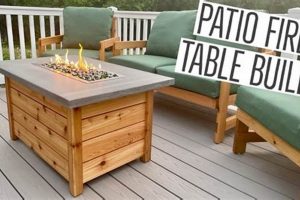
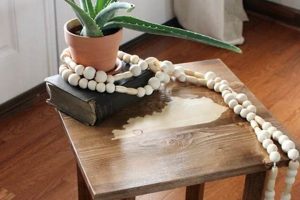
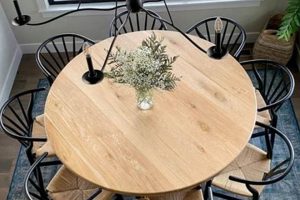
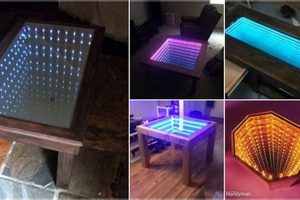
Constructing a customized outdoor surface for dining or relaxation using cement as the primary building material exemplifies resourceful home improvement. Such projects often involve creating a sturdy base, typically formed from wood or metal, followed by carefully pouring and shaping the cement mixture to achieve the desired tabletop dimensions and finish. The resulting product offers a durable and aesthetically versatile addition to any outdoor space.
The appeal of crafting personalized outdoor furniture lies in its blend of cost-effectiveness and the opportunity for individual expression. Compared to purchasing commercially manufactured pieces, undertaking a build allows for significant control over materials and design, potentially leading to substantial savings. Furthermore, these endeavors permit tailoring the dimensions and aesthetics to precisely match the available space and desired style, ensuring seamless integration with existing landscaping and decor. The resulting robust and personalized piece contributes functional beauty to the outdoor environment.
The subsequent sections will delve into the specific materials and tools required for project completion, outline a step-by-step construction process, and provide essential considerations for ensuring structural integrity and longevity of the finished product. Emphasis will be placed on safe handling of materials and techniques for achieving a professional-quality outcome.
Essential Considerations for Concrete Outdoor Tables
The following recommendations are provided to maximize the durability, stability, and aesthetic appeal of cement-based outdoor tables. Careful adherence to these guidelines will contribute to a successful and long-lasting construction.
Tip 1: Reinforcement is Critical. Integrate a robust reinforcement system within the cement matrix. Wire mesh, rebar, or fiber reinforcement significantly increases tensile strength, preventing cracking and structural failure under stress or temperature fluctuations.
Tip 2: Proper Curing is Non-Negotiable. Cement hydration, the chemical process of hardening, necessitates adequate moisture. Cover the freshly poured surface with plastic sheeting or apply a curing compound to prevent premature drying, which can compromise strength and surface integrity. Aim for a curing period of at least seven days.
Tip 3: Formwork Design Impacts Outcome. The formwork dictates the final shape and surface texture. Construct forms from sturdy, dimensionally stable materials, ensuring they are properly sealed to prevent cement slurry leakage. Precise alignment and secure bracing are essential for achieving the desired table dimensions and a level surface.
Tip 4: Surface Sealing Provides Protection. Applying a penetrating concrete sealer protects against water absorption, staining, and freeze-thaw damage. Choose a high-quality sealer specifically designed for outdoor use and apply it according to the manufacturer’s instructions. Reapplication may be necessary periodically.
Tip 5: Consider Aggregate Selection. The type and size of aggregate (sand, gravel, or crushed stone) influence the cement’s workability, strength, and aesthetic. Select aggregates that are clean, well-graded, and compatible with the chosen cement type. Experiment with different aggregate colors and textures to achieve desired visual effects.
Tip 6: Implement Controlled Mixing. Precise water-to-cement ratio is paramount. Adhere strictly to recommended proportions to ensure optimal hydration and strength. Over-watering weakens the cement, while insufficient water hinders proper hardening. Use a mechanical mixer to ensure thorough and uniform blending of ingredients.
These six points represent vital considerations for ensuring the successful creation of a lasting and aesthetically pleasing outdoor table. Neglecting any of these facets can drastically reduce the lifespan and quality of the project.
The following section will discuss common errors that are encountered when cement is used, alongside strategies for rectification.
1. Cement Mix Design
Cement mix design is foundational to the successful construction of a cement outdoor table. It dictates the material’s compressive strength, workability, and overall durability, directly influencing the table’s ability to withstand environmental stressors and prolonged use. An inappropriate mix can lead to premature cracking, crumbling, or complete structural failure, rendering the table unusable. For example, using a mix with insufficient cement content results in a weaker structure susceptible to damage from freeze-thaw cycles.
The selection of appropriate ratios of cement, aggregate (sand and gravel), and water is critical. Too much water weakens the cement matrix, while too little hinders proper hydration and bonding. The type and size distribution of aggregates also impact the mix’s workability and final surface texture. Experimentation with different aggregate blends can produce diverse aesthetic outcomes, ranging from smooth, polished surfaces to textured, rustic appearances. Understanding the impact of each component is essential for achieving the desired structural and aesthetic properties of the finished table.
In conclusion, cement mix design represents a critical engineering consideration in the creation of cement-based outdoor furniture. A properly formulated mix ensures structural integrity, resistance to environmental damage, and the achievement of desired aesthetic qualities. Understanding the interplay of cement, aggregate, and water is essential for successful execution and longevity. Neglecting mix design principles is a certain path to project failure, while informed material selection guarantees a high-quality, long-lasting piece.
2. Reinforcement Strategy
The integrity of a cement outdoor table is inextricably linked to its reinforcement strategy. Cement, inherently strong in compression but weak in tension, requires internal reinforcement to withstand bending forces, thermal stress, and impact loads encountered in outdoor environments. A poorly executed reinforcement plan inevitably leads to cracking, deformation, and premature failure, negating the labor invested in its creation. For example, a table without adequate steel mesh will quickly develop surface cracks from temperature fluctuations and daily use, eventually compromising the structural integrity of the tabletop.
Effective reinforcement typically involves embedding steel mesh, rebar, or fiber reinforcement within the cement matrix. The choice of material and its configuration depend on the table’s size, shape, and intended load-bearing capacity. Steel mesh, strategically positioned near the surface, resists tensile stresses caused by bending. Rebar provides additional strength in areas subject to high stress concentrations, such as corners and edges. Fiber reinforcement, dispersed throughout the cement, enhances resistance to cracking from shrinkage and thermal expansion. The distribution of the reinforcement is crucial; it must effectively counteract the tensile forces acting on the table under various loading conditions. The omission of corner reinforcement often leads to chipping and cracking, a common failure point in cement tabletops.
In summary, a well-designed reinforcement strategy is non-negotiable for a durable and functional cement outdoor table. Careful consideration of the table’s dimensions, anticipated loads, and environmental conditions is essential to selecting the appropriate reinforcement materials and implementing an effective distribution plan. Ignoring this critical aspect undermines the entire project, resulting in a table that is visually appealing but structurally unsound and unsuitable for long-term outdoor use. Thus, the reinforcement strategy forms the very skeleton that determines the longevity and usability of the cement outdoor table.
3. Formwork Precision
Formwork precision directly dictates the dimensional accuracy, surface finish, and structural integrity of a cement outdoor table. As the mold within which the cement mixture solidifies, the formwork’s design and construction critically influence the final product. Deviations from the intended dimensions, such as uneven surfaces or warped edges, detract from the table’s aesthetic appeal and can compromise its functionality. For instance, an improperly leveled form will result in a tabletop that slopes, rendering it unsuitable for stable placement of items. The tight joints prevent slurry leakage, which reduces surface imperfections and ensures consistent material density, strengthening the final product.
The choice of formwork material also impacts the outcome. Smooth, non-reactive materials like melamine or plastic-coated plywood yield smoother surfaces, reducing the need for extensive post-casting finishing. However, careful construction is necessary to prevent bowing or distortion under the weight of the cement. Alternatively, textured form liners can be employed to impart decorative patterns or surface textures to the cement. Reusable formwork allows for efficient production of multiple tables with consistent dimensions, while single-use forms offer design flexibility for custom shapes. Release agents are always used to ensure smooth separation, avoiding potential damage. It is important to avoid materials that may negatively affect the setting or curing process.
In conclusion, meticulous attention to formwork construction is indispensable for a successful table construction. Precise dimensions, rigid support, and appropriate surface treatments are not merely cosmetic considerations; they contribute directly to the table’s structural stability, surface quality, and overall aesthetic value. Compromising on formwork precision is essentially compromising the quality of the finished table, rendering it either functionally deficient or visually unappealing. Thus, achieving excellence requires careful planning, accurate construction, and proper material selection to guarantee the formwork effectively shapes and supports the cement during the critical curing phase.
4. Curing Process
The hydration process, occurring when cement interacts with water, forms the fundamental binder that gives the material its strength and durability. The curing process in cement projects, particularly in the construction of outdoor tables, dictates the extent to which this hydration reaction progresses. Premature drying inhibits hydration, leading to a weaker cement matrix and increasing susceptibility to cracking and disintegration. For example, if a cement table is exposed to direct sunlight and wind immediately after pouring, the surface water evaporates rapidly, hindering the hydration reaction near the surface and leaving a brittle, easily damaged layer.
Proper curing involves maintaining a moist environment around the cement during the initial stages of hardening. Common techniques include covering the cement surface with plastic sheeting to prevent evaporation, periodically misting the surface with water, or applying a curing compound that seals the surface and retains moisture. The duration of the curing process is critical, generally extending for at least seven days, with longer periods recommended for high-strength applications or adverse weather conditions. Insufficient curing compromises the cement’s ability to develop its full compressive strength and resistance to environmental factors. Consider the scenario where two tables are created using identical materials and construction methods, but one is properly cured while the other is not; the former will exhibit significantly greater resistance to cracking and weathering over time, extending its lifespan considerably.
In summary, the curing process represents a non-negotiable step in the construction of any cement table. It directly influences the long-term durability, strength, and resistance to environmental degradation. Adhering to proper curing techniques is crucial for ensuring the longevity and functionality of the table, mitigating potential structural failures, and maximizing the investment in materials and labor. Thus, the effectiveness of the hydration reaction governs the eventual service life of the outdoor table, highlighting the curing process as a paramount consideration.
5. Surface Sealing
Surface sealing constitutes a critical post-construction process for cement outdoor tables, directly impacting their longevity and aesthetic preservation. The porous nature of cement renders it susceptible to water absorption, staining from spills, and damage from freeze-thaw cycles. Without proper sealing, these factors can lead to discoloration, cracking, and eventual structural degradation. For instance, an unsealed cement tabletop exposed to frequent rainfall will gradually absorb moisture, creating an environment conducive to mold growth and accelerating the cement’s deterioration. Sealing creates a protective barrier, mitigating these detrimental effects and extending the table’s service life.
The selection of an appropriate sealant is paramount. Penetrating sealants, designed to permeate the cement matrix, offer enhanced protection against water intrusion and stain penetration. Topical sealants, forming a surface film, provide a barrier against abrasion and chemical attack, but may require periodic reapplication. The choice depends on the table’s intended use and exposure conditions. In areas prone to harsh winters, a sealant resistant to freeze-thaw damage is essential. Furthermore, sealants should be compatible with the cement type and any applied surface treatments, such as stains or dyes. The application process itself requires careful attention, ensuring uniform coverage and proper curing of the sealant to maximize its effectiveness. Incorrect application negates the potential benefits, leaving the cement vulnerable.
In summary, surface sealing is an indispensable step in the creation of a durable and visually appealing cement outdoor table. It serves as a proactive measure against environmental damage, preventing water absorption, staining, and the degradation caused by freeze-thaw cycles. Selecting the appropriate sealant and adhering to proper application techniques are crucial for maximizing its protective capabilities. The practice will guarantee that the meticulously crafted surface remains resilient, maintaining its structural integrity and aesthetic charm throughout its service life. Therefore, neglecting surface sealing undermines the entire project, exposing the table to avoidable damage and shortening its lifespan considerably.
6. Base Construction
The base of a cement outdoor table, often overlooked, is the foundation upon which the table’s stability, load-bearing capacity, and overall longevity depend. The tabletop, regardless of its artistry or cement composition, becomes structurally unsound without a correctly engineered and constructed base. The connection between the top and the base creates the structure. The lack of solid base, affects the structure.
Base construction directly influences the distribution of weight and stress across the table. A well-designed base, typically constructed from wood, metal, or even pre-cast cement components, evenly distributes the load, preventing localized stress concentrations that could lead to cracking or deformation of the cement tabletop. For instance, a narrow or poorly supported base beneath a large, heavy cement top would create excessive stress at the points of contact, increasing the risk of structural failure. A sturdy and stable base provides a level and secure platform, preventing wobbling or tipping. Proper base attachment methods, such as mechanical fasteners or cement adhesives, are essential for creating a durable connection between the tabletop and the base. Example: Cement tables that do not have metal fasteners are likely to detach after a few years.
In summary, base construction represents an inseparable element of a successfully completed table. It provides essential stability, load distribution, and structural support. Careful consideration of materials, design, and attachment methods is vital for ensuring the long-term functionality and safety of the cement outdoor table. The robustness of the table will always be determined by its foundation.
7. Design Aesthetics
Design aesthetics profoundly influences the perceived value and integration of a cement outdoor table within its environment. While structural integrity and durability remain paramount, the table’s aesthetic appeal determines its harmony with the surrounding landscape and its contribution to the overall ambiance of the outdoor space. The relationship between design aesthetics and this project is causal: aesthetically pleasing designs enhance the table’s desirability, whereas poorly conceived designs detract from its appeal, regardless of its structural soundness. For example, a meticulously crafted cement table with clean lines and a polished surface might seamlessly complement a modern patio, while a crudely formed table with a rough, unfinished surface would appear out of place, diminishing the aesthetic quality of the area. Design should be in accord with the structural integrity.
The incorporation of specific design elements directly affects the table’s aesthetic impact. The choice of aggregate, for instance, dictates the cement’s color and texture. Integrating colored pigments or decorative inlays further enhances visual interest. The shape and proportions of the tabletop and base contribute to the overall style, ranging from minimalist and contemporary to rustic and traditional. Furthermore, surface treatments, such as staining, polishing, or texturing, can dramatically alter the table’s appearance. The practical application of this understanding lies in the ability to tailor the table’s design to complement specific outdoor settings, whether it be a sleek urban balcony or a sprawling country garden. An example can be the smooth and polished look which complements a modern garden.
In conclusion, design aesthetics represents a crucial component of the overall value. While structural soundness and durability are crucial elements, the tables design appeal determines its integration. It is the element that invites use and enjoyment. The design aesthetics should be carefully considerd so it can fulfill the demands and expectations of the person who created it. It provides beauty and longevity. Thus, the design aesthetics elevates this durable building project from a mere functional object to a valued and pleasing element of the outdoor environment.
Frequently Asked Questions
The following section addresses common inquiries regarding the creation of cement outdoor tables, providing detailed information to ensure project success and mitigate potential challenges.
Question 1: What is the optimal cement mix ratio for a tabletop that is durable?
The ideal cement mix ratio generally consists of 1 part cement, 2 parts sand, and 3 parts gravel, combined with water to achieve a workable consistency. However, it’s essential to adjust this ratio based on the specific cement type, aggregate size, and desired surface finish. Refer to the cement manufacturer’s recommendations for guidance. Prior testing of small trial mixes is highly advised before committing to a large pour.
Question 2: What reinforcement techniques are most effective at preventing cracking?
Embedding a steel reinforcing mesh or rebar within the cement matrix significantly enhances tensile strength, mitigating cracking. Position the reinforcement strategically, particularly near the surface and edges where stress concentrations are highest. Fiber reinforcement, dispersed throughout the cement mix, further reduces the risk of cracking caused by shrinkage and thermal expansion.
Question 3: How does one minimize air bubbles in the finished surface?
Thorough vibration of the cement mixture after pouring helps to release trapped air. Employ a concrete vibrator or gently tap the formwork to encourage air bubbles to rise to the surface. Overworking the cement can also introduce air, so avoid excessive manipulation. A well-designed cement mix with appropriate water content also contributes to minimizing air entrainment.
Question 4: What is the recommended duration for the curing process?
A curing period of at least seven days is generally recommended, with longer durations beneficial for achieving maximum strength and durability. Maintain a moist environment around the cement by covering it with plastic sheeting, misting it with water periodically, or applying a curing compound. Premature drying compromises cement hydration and weakens the resulting structure.
Question 5: What sealant is most suitable for protecting outdoor surfaces?
Penetrating concrete sealants are generally preferable for outdoor applications, as they provide water resistance and prevent staining without altering the surface appearance. Select a sealant specifically designed for outdoor use and follow the manufacturer’s instructions carefully. Reapplication may be necessary periodically, depending on the sealant type and exposure conditions.
Question 6: How can one ensure the base provides adequate support and stability?
The base must be structurally sound and capable of supporting the cement tabletop’s weight without deflection. Use sturdy materials such as wood, metal, or pre-cast cement components. Ensure the base is level and securely attached to the tabletop using mechanical fasteners or cement adhesives. Distribute the load evenly across the base to prevent localized stress concentrations.
Careful adherence to these guidelines will significantly improve the likelihood of a successful and long-lasting cement outdoor table.
The following section provides a compilation of resources for constructing cement tables.
Conclusion
The preceding discussion has illuminated the multifaceted nature of the diy concrete patio table project, encompassing cement mix design, reinforcement strategies, formwork precision, curing processes, surface sealing, base construction, and design aesthetics. A thorough understanding of these elements is crucial for successful creation. Careful planning and attention to detail throughout each stage are essential for ensuring structural integrity, aesthetic appeal, and long-term durability.
The knowledge and skills described equip individuals to undertake a demanding yet rewarding endeavor. The potential outcome is a bespoke piece of outdoor furniture that offers both practical functionality and enduring aesthetic value. Further research and diligent application of the best practices outlined are encouraged to achieve optimal results in constructing a personalized and lasting addition to any outdoor living space.