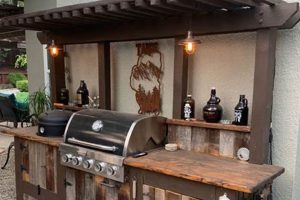
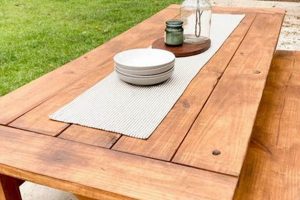
A self-constructed cooking station designed for open-air environments offers a customized platform for preparing meals outdoors. These structures typically incorporate a level surface for a grill, along with features such as storage for utensils, fuel, and ingredients. Construction materials can range from reclaimed wood to metal framing, reflecting individual aesthetic preferences and functional needs.
Creating a personalized outdoor cooking space provides several advantages, including cost savings compared to purchasing pre-fabricated units. Furthermore, the design can be tailored to specific spatial constraints and grilling habits, resulting in a highly efficient and aesthetically pleasing addition to the outdoor living area. Historically, the concept of cooking over open flames outdoors has evolved from basic necessity to a recreational and social activity, with dedicated spaces enhancing the experience.
The following sections will address key aspects of planning and building a functional and durable structure. This includes selecting appropriate materials, considering ergonomic factors, ensuring structural integrity, and implementing safety precautions to ensure a long-lasting and enjoyable outdoor cooking experience.
Construction and Design Considerations
The following points outline critical considerations for a successful outcome. Addressing these aspects will contribute to the longevity, functionality, and safety of the final product.
Tip 1: Material Selection: Prioritize weather-resistant materials. Treated lumber, cedar, or composite decking are suitable choices for the main structure. Stainless steel or powder-coated metal are recommended for any exposed metal components to mitigate corrosion.
Tip 2: Grill Compatibility: Accurately measure the grill’s dimensions prior to construction. Allow for adequate ventilation around the grill to prevent overheating and ensure proper combustion. Consider the grill’s weight when designing the supporting structure.
Tip 3: Ergonomic Design: Optimize the height of the work surface to minimize strain and fatigue. The ideal height typically falls between 36 and 42 inches, depending on the user’s height. Incorporate designated areas for food preparation, utensil storage, and serving.
Tip 4: Structural Integrity: Employ robust construction techniques to ensure stability and load-bearing capacity. Use appropriate fasteners, such as exterior-grade screws or bolts, and reinforce joints with corner braces or metal plates. Consider the potential for uneven terrain and adjust the foundation accordingly.
Tip 5: Safety Precautions: Incorporate heat-resistant surfaces near the grill to prevent accidental burns. Install a fire-resistant barrier between the grill and any combustible materials. Ensure adequate clearance from overhead structures and vegetation to minimize the risk of fire.
Tip 6: Storage Solutions: Integrate enclosed storage compartments to protect fuel, utensils, and grilling accessories from the elements. Consider incorporating drawers, cabinets, or shelves, depending on storage requirements. Ensure proper ventilation within enclosed storage spaces to prevent the buildup of flammable gases.
Tip 7: Surface Treatment: Apply a weather-resistant sealant or stain to protect the wood from moisture, UV radiation, and pests. Regularly inspect and maintain the finish to prolong the lifespan of the structure. Choose products specifically designed for outdoor use and follow the manufacturer’s instructions.
Proper attention to these details is crucial for a safe, functional, and aesthetically pleasing addition to the outdoor living space. A well-planned construction not only enhances the grilling experience but also increases the value of the property.
The concluding section will summarize these points and provide resources for further exploration.
1. Dimensions

The dimensions of a self-constructed outdoor cooking station are critically linked to its functionality and safety. Inadequate planning of dimensions directly affects grill compatibility and the available workspace. For example, if the support surface’s dimensions are smaller than the grill’s footprint, the grill will be unstable, creating a hazardous situation. Conversely, if the dimensions significantly exceed the grill size without a clear purpose, it leads to wasted space and potentially an inefficient workflow.
Proper dimensional planning considers several factors. These include the grill’s exact measurements (length, width, and height), space for preparing food (chopping boards, mixing bowls), storage of utensils, and accessibility. Real-world examples demonstrate the practical significance of this. A table designed with insufficient depth may force the user to place hot items precariously close to the edge. Similarly, a table lacking adequate width might not accommodate the necessary ingredients and tools simultaneously, slowing down the cooking process. Furthermore, ergonomic dimensions are essential. A table that is too low causes back strain, while one that is too high can be awkward and tiring to use.
Therefore, precise measurement and careful consideration of spatial relationships are indispensable. The dimensions determine not only the physical fit of the grill but also the overall efficiency and safety of the cooking area. Overlooking this fundamental aspect can result in a poorly designed, unsafe, and ultimately unusable outdoor cooking space, highlighting the dimensional planning importance.
2. Materials

The selection of materials directly dictates the durability, safety, and aesthetic appeal of a self-constructed outdoor cooking station. A causal relationship exists between the chosen materials and the structure’s longevity. For example, using untreated lumber exposes the structure to rapid deterioration due to moisture, insects, and ultraviolet radiation. The importance of material selection cannot be overstated; it is a foundational element that impacts both the short-term functionality and long-term viability of the cooking area. Real-world examples illustrate the consequences of poor material choices. A table constructed with particleboard will warp and disintegrate quickly when exposed to rain, rendering it unusable and potentially hazardous.
The practical significance of understanding material properties extends to safety considerations. Flammable materials near a heat source pose a fire risk. Therefore, using fire-resistant or non-combustible materials for surfaces adjacent to the grill is crucial. Similarly, the structural integrity of the materials must withstand the weight of the grill and any stored items. Choosing materials with adequate load-bearing capacity prevents collapse and ensures the safety of users. Furthermore, consider the maintenance requirements of different materials. Some materials require regular sealing or painting to prevent degradation, while others are naturally resistant to weathering and require minimal upkeep.
In summary, careful material selection is essential for a successful project. Selecting materials based on durability, safety, and aesthetic appeal contributes directly to the functionality, lifespan, and overall satisfaction of a self-constructed outdoor cooking station. Overlooking material properties can lead to costly repairs, safety hazards, and a diminished outdoor cooking experience. Therefore, thorough research and planning are crucial to ensure the appropriate materials are chosen for each component of the structure.
3. Stability
The structural integrity, or stability, of a self-constructed outdoor grilling table directly impacts its usability and safety. The ability of the table to withstand the weight of the grill, cooking equipment, and prepared food is paramount. Instability creates hazardous conditions, increasing the risk of accidents and potential injury. A stable table provides a secure platform for cooking, ensuring a safer and more enjoyable outdoor grilling experience. Real-world examples illustrate this connection: a table with wobbly legs can cause a hot grill to tip, resulting in severe burns or a fire. In contrast, a properly braced and level table offers a dependable surface for preparing and cooking food.
Achieving stability requires careful planning and execution during the construction process. This includes selecting appropriate materials, employing robust joinery techniques, and ensuring a level foundation. For example, using thick lumber for the table legs and apron provides a solid base. Reinforcing the joints with metal brackets or gussets further enhances stability. Moreover, adjusting the leg lengths to compensate for uneven ground ensures a level cooking surface. These construction aspects minimize the risk of movement or collapse, contributing to a safer and more reliable grilling platform. Failure to address stability can result in a temporary or dangerous platform.
In summary, stability is a non-negotiable aspect of any self-constructed outdoor grilling table. It directly affects the safety, functionality, and longevity of the structure. By prioritizing stable construction through careful material selection, robust joinery, and a level foundation, one ensures a safe and enjoyable outdoor cooking experience. The practical significance of stability lies in its ability to mitigate risks and provide a reliable surface for preparing and cooking food outdoors. Omitting or minimizing such an effort can lead to potential injury.
4. Ergonomics

The field of ergonomics, concerned with designing workspaces to maximize efficiency and minimize discomfort, holds significant relevance to the creation of a self-constructed outdoor grilling table. A direct relationship exists between ergonomic design principles and the user’s experience. An improperly designed grilling station can lead to physical strain, reduced cooking efficiency, and potential long-term musculoskeletal issues. For instance, a table that is too low forces the user to stoop, causing back pain, while a surface that is too high can lead to shoulder and arm fatigue. In essence, prioritizing ergonomics transforms a simple grilling structure into a comfortable and efficient outdoor cooking environment.
Practical application of ergonomics involves considering factors such as table height, reach distances, and storage placement. The height of the grilling surface should be tailored to the individual user, typically ranging between 36 and 42 inches. Easy reach of commonly used items, such as utensils and spices, minimizes unnecessary movement and reduces strain. Storage solutions, strategically placed, prevent the need for bending and lifting heavy items. The practical significance of these considerations is evident in the improved comfort and efficiency experienced during outdoor cooking. A well-designed, ergonomic station minimizes physical fatigue and maximizes the enjoyment of outdoor meal preparation. Neglecting ergonomics can result in user discomfort.
In summary, ergonomics represent a critical component of designing a functional and user-friendly self-constructed grilling table. Its principles, when applied correctly, foster comfort, efficiency, and long-term physical well-being. While the initial construction might require additional planning and effort, the long-term benefits of an ergonomically designed station outweigh the investment. Ignoring ergonomic considerations undermines the practicality and enjoyment of the outdoor cooking experience. Prioritizing it ensures a more comfortable and safe workspace.
5. Ventilation

Adequate ventilation is a crucial, yet often overlooked, safety aspect when constructing an outdoor grilling table. Without proper airflow, combustible gases can accumulate, creating a fire hazard and posing a risk to users. Therefore, incorporating ventilation considerations during the design and construction phases is paramount.
- Gas Grill Safety
When a gas grill is integrated into the table, ventilation becomes critical. Propane or natural gas leaks can occur, and without adequate airflow, these gases can concentrate within enclosed spaces beneath the table. This creates a significant explosion risk. Ventilation openings, strategically placed, allow these gases to dissipate, mitigating the potential for a dangerous buildup.
- Charcoal Grill Combustion
While charcoal grills don’t pose the same gas leak risk, proper ventilation is still necessary for efficient combustion. Charcoal requires oxygen to burn effectively. Restricted airflow can lead to incomplete combustion, resulting in excessive smoke production and a reduced cooking temperature. Ventilation around the charcoal chamber ensures sufficient oxygen supply for optimal burning.
- Heat Dissipation
Grills generate substantial heat, which can transfer to the surrounding table structure. Inadequate ventilation can lead to heat buildup, potentially damaging the table materials, particularly if they are combustible. Ventilation openings allow heat to dissipate, preventing overheating and prolonging the lifespan of the table.
- Material Considerations
The materials used in the construction of the table influence ventilation requirements. Enclosed storage compartments made of non-breathable materials require more extensive ventilation than open-air designs. Selecting materials with inherent breathability, such as slatted wood, can improve airflow. Furthermore, consider the proximity of the grill to the table’s frame and choose heat-resistant materials accordingly.
In summary, ventilation is not merely an afterthought but an essential element in the design of a safe and functional self-constructed grilling table. It is important to consider gas safety, ensure combustion efficiency, manage heat dissipation, and to select proper materials. Careful planning of the airflow can greatly enhance grilling results and safety precautions. Ignoring ventilation creates a significant hazard and undermines the integrity of the structure.
6. Storage
The integration of storage solutions within a self-constructed outdoor grilling table is a key factor in enhancing functionality and organization. Thoughtful consideration of storage needs directly contributes to a more efficient and enjoyable outdoor cooking experience.
- Fuel Containment
One primary function of storage is the safe and secure containment of fuel sources, whether propane tanks or charcoal. A designated, well-ventilated compartment minimizes the risk of leaks or spills and protects the fuel from the elements. Proper fuel containment also contributes to a cleaner and more organized grilling area.
- Utensil Organization
Storage provides a designated space for grilling utensils, keeping them readily accessible while protecting them from weather exposure and preventing clutter. Utensil storage can take various forms, including drawers, hooks, or shelving, depending on individual needs and space constraints. Organized utensils streamline the cooking process and contribute to a safer work environment.
- Ingredient Accessibility
Incorporating storage for frequently used ingredients, such as spices, sauces, and marinades, ensures that these items are within easy reach during cooking. This eliminates the need to constantly return to the indoor kitchen, improving efficiency and convenience. Ingredient storage can be designed to protect contents from sunlight and moisture, preserving their quality and extending their shelf life.
- Tool and Accessory Management
Beyond utensils and ingredients, storage facilitates the organization of grilling tools and accessories, such as cleaning brushes, thermometers, and grill covers. Dedicated storage compartments prevent these items from being misplaced or damaged, ensuring they are readily available when needed. Proper tool and accessory management contributes to the longevity of the grilling equipment and maintains a tidy outdoor cooking space.
In conclusion, the strategic incorporation of storage into a self-constructed outdoor grilling table offers significant advantages in terms of organization, efficiency, and safety. By addressing the storage needs of fuel, utensils, ingredients, and tools, one can create a more functional and enjoyable outdoor cooking environment. Neglecting storage considerations compromises the overall utility and convenience of the grilling station.
7. Durability

The longevity and sustained performance of a self-constructed outdoor grilling table are directly contingent upon its inherent durability. Durability, in this context, encompasses the structure’s resistance to environmental factors, physical wear and tear, and degradation over time. A grilling table subjected to frequent outdoor use and exposure to elements such as sunlight, rain, and temperature fluctuations necessitates robust construction and resilient materials. The failure to prioritize durability results in premature deterioration, necessitating costly repairs or complete replacement of the unit. Real-life examples are illustrative: a table constructed with untreated softwood will rapidly succumb to rot and insect infestation, while one fabricated with poorly joined components will become unstable and structurally unsound within a short period. The practical significance of understanding durability lies in its direct impact on the long-term cost-effectiveness and usability of the grilling table.
Effective strategies for enhancing durability include selecting weather-resistant materials, applying protective coatings, and employing robust construction techniques. For instance, using treated lumber or naturally decay-resistant wood species, such as cedar or redwood, significantly extends the lifespan of the structure. Applying a sealant or stain further protects the wood from moisture and ultraviolet radiation. Furthermore, employing strong joinery methods, such as mortise and tenon or bolted connections, ensures structural integrity and resistance to physical stress. Metal components should be corrosion-resistant, such as stainless steel or powder-coated steel, to prevent rust and maintain their structural integrity. These measures, when implemented correctly, contribute significantly to the overall durability and longevity of the grilling table, ensuring its continued functionality and aesthetic appeal for years to come. Proper attention to the details of construction, even hidden from view, will ensure the structures longevity.
In summary, durability is a critical consideration in the design and construction of a self-constructed outdoor grilling table. It directly impacts the structure’s lifespan, performance, and long-term cost-effectiveness. By selecting appropriate materials, applying protective finishes, and employing robust construction techniques, the durability of the grilling table can be significantly enhanced. Challenges to achieving optimal durability include the initial investment in high-quality materials and the labor required for meticulous construction. However, the long-term benefits of a durable grilling table, including reduced maintenance costs and extended usability, outweigh these initial challenges.
Frequently Asked Questions
This section addresses common inquiries regarding the construction, safety, and maintenance of personalized outdoor cooking stations. Information is presented in a factual and objective manner to provide clarity and guidance.
Question 1: What factors determine the optimal height for a personalized outdoor cooking station work surface?
The ideal work surface height is influenced by the user’s height and typical cooking tasks. A range of 36 to 42 inches is generally recommended, with adjustments based on individual needs to minimize strain and maximize comfort.
Question 2: What materials are most suitable for constructing a durable, weather-resistant outdoor grilling table?
Materials such as treated lumber, cedar, redwood, and composite decking offer good resistance to moisture, insects, and ultraviolet radiation. Stainless steel or powder-coated metal are recommended for hardware and framing to prevent corrosion.
Question 3: How can adequate ventilation be ensured when integrating a gas grill into a self-constructed outdoor grilling table?
Ventilation openings should be strategically placed beneath the grill to allow for the dissipation of any leaked gas. The size and number of openings should be sufficient to prevent the accumulation of combustible gases.
Question 4: What safety precautions should be taken when building a grilling table to minimize the risk of fire?
Maintain adequate clearance between the grill and any combustible materials. Incorporate heat-resistant surfaces near the grill. Ensure a fire extinguisher is readily accessible in the vicinity of the cooking area.
Question 5: How should the weight of the grill be considered when designing and constructing a personalized outdoor cooking station?
The supporting structure must be robust enough to bear the weight of the grill, cooking equipment, and any stored items. Distribute the load evenly across the support surface and reinforce joints to prevent structural failure.
Question 6: What maintenance procedures are recommended to prolong the lifespan of a personalized outdoor cooking station?
Regularly clean the table surface to remove debris and spills. Apply a weather-resistant sealant or stain as needed to protect the wood from moisture and ultraviolet radiation. Inspect and tighten any loose fasteners to maintain structural integrity.
These FAQs provide a foundation for informed decision-making during the planning and construction of a personalized outdoor grilling table. Prioritizing safety, durability, and ergonomic design will contribute to a successful and enjoyable outdoor cooking experience.
The following section will provide resources for further research.
Concluding Remarks
This exploration of the self-constructed outdoor cooking station addressed critical factors influencing its functionality, safety, and longevity. Dimensions, materials, stability, ergonomics, ventilation, storage, and durability were examined as essential elements in the design and construction process. Addressing these aspects methodically is essential for achieving a reliable and enduring structure.
The information provided serves as a foundation for informed decision-making in the pursuit of a customized outdoor cooking solution. Meticulous planning and execution are paramount to maximizing its value and ensuring a safe and enjoyable culinary experience. Neglecting these considerations diminishes the potential benefits and may lead to unsatisfactory or hazardous outcomes. Therefore, diligent application of these principles is strongly advised.