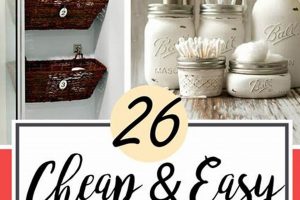
The concept involves resourceful construction and modification approaches to create bathroom sink cabinets or counters using readily available and affordable materials. Such projects typically encompass repurposing existing furniture, utilizing reclaimed lumber, or employing budget-friendly building supplies to fashion a functional and aesthetically pleasing fixture. For example, an old dresser might be transformed by adding a countertop and plumbing fixtures, resulting in a unique and cost-effective solution.
These projects offer significant advantages, including substantial cost savings compared to purchasing pre-made units. Furthermore, they promote sustainability through the reuse of materials and allow for customization to precisely fit specific space requirements and design preferences. Historically, resourcefulness in home improvement has been a necessity, leading to a rich tradition of creative problem-solving reflected in the popularity of these renovation techniques. This approach empowers individuals to personalize their living spaces while minimizing expenses and environmental impact.
The subsequent sections will explore specific methods for achieving these savings, detail material options, and provide step-by-step guidance on various construction techniques. Considerations such as plumbing integration and surface finishing will also be addressed to ensure successful implementation of these cost-conscious bathroom upgrades.
Essential Tips for Affordable Bathroom Vanity Construction
The following guidance aims to facilitate the creation of budget-conscious and functional bathroom vanities through resourceful material selection and efficient construction methods.
Tip 1: Salvage and Repurpose. Prioritize the use of reclaimed materials such as old dressers, desks, or cabinets. These items often require minimal modification to serve as a vanity base, significantly reducing material costs. Thoroughly inspect any salvaged piece for structural integrity and potential water damage before commencing the project.
Tip 2: Budget-Conscious Material Selection. When purchasing new materials, opt for affordable options such as MDF (Medium-Density Fiberboard) or plywood. These materials are paintable and offer a smooth surface for finishing. Explore local building supply stores for discounted or surplus stock.
Tip 3: Strategic Design Simplification. Implement a straightforward design to minimize material waste and labor. Avoid intricate details or complex joinery, focusing instead on clean lines and basic construction techniques. Simplified designs are easier to execute and less prone to errors.
Tip 4: Creative Countertop Alternatives. Explore alternative countertop materials beyond traditional stone or quartz. Options such as butcher block, concrete, or epoxy resin offer unique aesthetics and can be significantly more affordable. Ensure the chosen material is properly sealed to resist moisture and staining.
Tip 5: Faucet and Plumbing Fixture Savings. Shop around for discounted or refurbished faucets and plumbing fixtures. Check online marketplaces or local hardware stores for clearance items. Functionality should be prioritized over brand name recognition to reduce overall project costs.
Tip 6: Proper Sealing and Finishing. Invest in high-quality sealant and finishing products to protect the vanity from moisture damage. Thoroughly seal all surfaces, including joints and edges, to prevent water penetration and prolong the lifespan of the project. Consider using a waterproof paint or varnish for added protection.
Tip 7: Accurate Measurements and Planning. Before commencing construction, meticulously measure the available space and plan the vanity’s dimensions accordingly. Create a detailed sketch or blueprint to ensure accurate material cuts and avoid costly mistakes. Precise planning is crucial for efficient and successful project completion.
Successful implementation hinges on careful planning, strategic material selection, and diligent execution. By adopting these principles, a functional and aesthetically pleasing bathroom vanity can be constructed at a fraction of the cost of commercially available alternatives.
The following sections will delve deeper into the practical application of these tips, providing detailed instructions and examples to guide the reader through the construction process.
1. Repurposed materials

The integration of repurposed materials represents a cornerstone of cost-effective bathroom vanity construction. This approach leverages existing resources, reducing reliance on new material purchases and fostering sustainability.
- Cost Reduction Through Material Reuse
Repurposing materials directly lowers project expenses by eliminating the need to purchase new components. For example, an old dresser, suitably sized, can serve as the primary structure of a vanity, requiring only modification to accommodate plumbing. This eliminates the cost associated with buying lumber and hardware for a custom-built frame.
- Unique Aesthetic Character
Repurposed materials often possess distinctive characteristics not found in mass-produced items. Reclaimed wood, for instance, may exhibit weathering patterns or unique grain configurations that add character and visual interest to the vanity. This introduces an element of individuality, setting it apart from standard bathroom fixtures.
- Environmental Sustainability
Utilizing repurposed materials contributes to environmentally responsible practices by diverting materials from landfills. By extending the lifespan of existing items, consumption of new resources is minimized, reducing the environmental impact associated with manufacturing and transportation of new materials.
- Adaptability and Customization
Repurposed materials can be readily adapted to specific design requirements. An existing cabinet can be modified to accommodate specific sink dimensions or plumbing configurations. This adaptability allows for personalized solutions that meet the unique constraints of a given bathroom space.
In essence, the strategic application of repurposed materials significantly enhances the affordability and aesthetic appeal of a bathroom vanity project, while simultaneously promoting responsible environmental stewardship. This approach allows for creative and practical solutions that contribute to both financial savings and a distinctive design aesthetic.
2. Budget-friendly lumber
The strategic selection of budget-friendly lumber is a critical determinant in realizing affordable, do-it-yourself bathroom vanity projects. The availability and utilization of economical lumber options directly impact the overall cost and feasibility
of such endeavors. In essence, cheap diy bathroom vanity ideas are often predicated on the ability to source and work with lumber that minimizes material expenses.
Several lumber species and manufactured wood products fall within the category of budget-friendly options. Pine, for instance, is readily available and relatively inexpensive compared to hardwoods. Similarly, plywood and MDF (Medium-Density Fiberboard) offer cost-effective alternatives for constructing vanity carcasses and shelving. The use of these materials necessitates careful consideration of their properties, including moisture resistance and structural integrity. For example, plywood, while more resistant to warping than solid pine, requires sealing to prevent water damage in a bathroom environment. MDF, though smooth and paintable, is particularly susceptible to moisture and is best suited for components less likely to come into direct contact with water. Examples of successful integration include a vanity constructed from sanded plywood, sealed with multiple layers of polyurethane, or an MDF cabinet base paired with a durable countertop.
Ultimately, the informed selection and appropriate application of budget-friendly lumber options is essential for achieving the goals of cheap diy bathroom vanity ideas. While cost is a primary driver, considerations of durability, moisture resistance, and aesthetic appeal must also inform the material selection process. Prudent material choices, combined with sound construction techniques, enable the creation of functional and visually pleasing bathroom vanities without incurring excessive expense.
3. Salvaged fixtures

The incorporation of salvaged fixtures represents a pivotal strategy in the realization of cost-effective, do-it-yourself bathroom vanity projects. This approach not only minimizes material expenditures but also introduces a unique aesthetic dimension often absent in commercially produced units. Successful implementation of salvaged fixtures hinges on careful selection, restoration, and integration within the vanity design.
- Cost Reduction Through Reclaimed Components
Salvaging fixtures such as faucets, sinks, and hardware directly reduces project costs by circumventing the need for new purchases. These items, often discarded during renovations or demolitions, can be acquired at significantly reduced prices or even free of charge. A reclaimed faucet, for instance, eliminates a substantial expense compared to purchasing a new model, particularly if obtained from a salvage yard or through online marketplaces specializing in used building materials.
- Unique Aesthetic Contribution
Salvaged fixtures often possess distinctive characteristics not found in contemporary offerings. Vintage faucets, antique cabinet pulls, and repurposed sinks introduce a sense of character and history to the vanity. These elements can serve as focal points, enhancing the overall aesthetic appeal and differentiating the DIY project from conventional bathroom designs. Consider the impact of an intricately detailed, antique brass faucet paired with a rustic, repurposed wood vanity an aesthetic impossible to replicate with new, mass-produced items.
- Environmental Sustainability Through Reuse
Utilizing salvaged fixtures contributes to environmentally responsible practices by extending the lifespan of existing components and diverting materials from landfills. By choosing to restore and reuse rather than discard and replace, a reduction in the demand for new resources and manufacturing processes is achieved. This aligns with broader sustainability goals and minimizes the environmental impact of the renovation project.
- Restoration and Integration Challenges
The integration of salvaged fixtures may present certain challenges related to restoration and compatibility. Careful cleaning, repair, and adaptation may be required to ensure proper functionality and aesthetic harmony with the overall vanity design. A salvaged sink, for example, may require refinishing to remove stains or imperfections, and its dimensions must be carefully considered to ensure proper fit within the vanity structure. Thorough planning and execution are essential to overcome these challenges and successfully incorporate salvaged fixtures into the project.
In summary, the incorporation of salvaged fixtures offers a multifaceted approach to achieving cost-effective and aesthetically unique bathroom vanities. While requiring careful consideration and potentially posing integration challenges, the benefits in terms of cost savings, aesthetic enhancement, and environmental responsibility make it a worthwhile strategy for those pursuing DIY bathroom renovations. Successful implementation depends on a commitment to restoration, careful planning, and a creative vision for transforming discarded items into functional and visually appealing components.
4. Simplified design

The correlation between simplified design and cost-effective, do-it-yourself bathroom vanity projects is substantial. A streamlined approach to design directly impacts material requirements, construction complexity, and ultimately, the overall expense of the project. Embracing simplicity mitigates potential challenges and facilitates successful execution within budgetary constraints.
- Reduced Material Consumption
A simplified design typically involves fewer components and a reduction in intricate details. This translates directly to lower material costs, as less lumber, hardware, and finishing products are required. For instance, a basic rectangular vanity with a flat front panel requires significantly less material than a design incorporating curved elements, raised panels, or elaborate trim.
- Minimized Construction Complexity
Intricate designs necessitate advanced woodworking skills and specialized tools. A simplified design, conversely, can be executed using basic tools and fundamental construction techniques. This reduces the likelihood of errors, minimizes material waste due to miscuts, and shortens the overall construction time. A simple butt joint construction, for example, is considerably easier to execute than a mortise-and-tenon joint, requiring less precision and skill.
- Enhanced Assembly Efficiency
Simplified designs facilitate faster and more efficient assembly. Fewer components and straightforward connections contribute to a streamlined construction process. This is particularly advantageous for individuals with limited woodworking experience, as it reduces the potential for frustration and errors during assembly. A vanity consisting of pre-cut panels joined with screws and adhesive, for instance, can be assembled much more quickly than a design requiring intricate joinery or complex hardware installation.
- Greater Accessibility to Affordable Finishes
Simplified designs often lend themselves to more accessible and affordable finishing techniques. A flat, unadorned surface is easier to paint or stain than a surface with intricate carvings or moldings. This allows for the use of less expensive finishing products and simplifies the finishing process, saving both time and money. A simple painted finish, for example, is significantly less expensive and time-consuming than a multi-layered stain and varnish application.
In summary,
the adoption of a simplified design philosophy is paramount for achieving cost-effective, do-it-yourself bathroom vanity projects. By reducing material consumption, minimizing construction complexity, enhancing assembly efficiency, and increasing accessibility to affordable finishes, simplified designs enable individuals with varying skill levels to successfully create functional and aesthetically pleasing bathroom vanities without exceeding their budgetary limitations. Prioritizing simplicity, therefore, is a strategic approach to realizing affordable and achievable DIY renovations.
5. Cost-effective countertops
The selection of countertop materials represents a significant cost driver in bathroom vanity projects. Therefore, identifying and utilizing cost-effective countertop options is crucial for realizing affordable, do-it-yourself vanity designs. The material chosen directly influences both the overall budget and the aesthetic appeal of the finished product.
- Butcher Block Affordability and Warmth
Butcher block offers a relatively inexpensive alternative to stone or solid surface materials. It introduces a warm, natural aesthetic and can be customized to fit specific vanity dimensions. Proper sealing with food-safe oil or varnish is essential to prevent water damage. Example: A standard-sized butcher block countertop for a single-sink vanity can be acquired for a fraction of the cost of a comparable granite slab, making it a viable option for those seeking budget-conscious solutions.
- Concrete Versatility and Customization
Poured concrete countertops provide a highly customizable and relatively affordable option. Concrete can be tinted and molded to achieve a variety of shapes, textures, and colors. While the material cost is relatively low, the process requires careful mixing, pouring, and curing to avoid cracking or imperfections. Example: A DIY enthusiast can create a unique concrete countertop for under $100 in materials, offering significant savings compared to commercially available options. However, understanding the curing process and proper sealing techniques is essential.
- Tile Durability and Design Flexibility
Tile offers durability and design flexibility at a moderate cost. Ceramic, porcelain, or even glass tiles can be used to create unique and visually appealing countertops. Grout lines require regular maintenance to prevent staining and mildew growth. Example: Utilizing leftover tile from a previous home improvement project can significantly reduce the cost of a vanity countertop. Combining different tile patterns or colors can create a personalized and cost-effective design.
- Laminate Affordability and Ease of Installation
Laminate countertops represent one of the most affordable options. They are available in a wide range of colors and patterns, mimicking the appearance of more expensive materials. Laminate is easy to install but susceptible to scratches and water damage if not properly sealed around the edges. Example: A pre-fabricated laminate countertop can be purchased for a small vanity for under $50, making it an ideal choice for those with limited budgets and basic DIY skills.
The strategic selection of countertop materials directly impacts the feasibility of achieving “cheap diy bathroom vanity ideas.” By exploring alternatives to high-end materials, individuals can significantly reduce project costs while maintaining functionality and visual appeal. The chosen material should be carefully considered based on budget, desired aesthetic, and DIY skill level to ensure a successful and cost-effective outcome.
6. Efficient space utilization
Effective management of limited space is paramount in the context of affordable, do-it-yourself bathroom vanity projects. Optimizing spatial arrangements not only enhances functionality but also directly contributes to cost savings by minimizing material requirements and maximizing the utility of existing areas.
- Vertical Storage Maximization
Exploiting vertical space through the incorporation of shelving units, drawers, or recessed cabinets above and around the vanity expands storage capacity without increasing the footprint. For example, installing a narrow, floor-to-ceiling cabinet adjacent to the vanity provides ample storage for toiletries and linens, thereby eliminating the need for a larger, more expensive vanity unit. This maximizes usable area and reduces clutter.
- Corner Space Optimization
Corner areas are often underutilized in bathroom layouts. Custom-built corner vanities or strategically placed shelving units can effectively transform these spaces into functional storage areas. An example of this would be a triangular-shaped cabinet designed to fit snugly into a corner, providing storage for towels or cleaning supplies that would otherwise occupy valuable floor space. This approach enhances spatial efficiency while maintaining aesthetic appeal.
- Integrated Storage Solutions
Incorporating storage directly into the vanity design, such as pull-out drawers, hidden compartments, or built-in organizers, optimizes space utilization. For instance, a shallow drawer beneath the sink can house small items like makeup or toiletries, while a larger cabinet below can accommodate larger items. This integrated approach minimizes the need for separate storage units, reducing clutter and maximizing the functionality of the vanity area. The integrated approach requires careful planning and precise execution, especially when dealing with plumbing considerations.
- Compact Fixture Selection
Choosing smaller sinks, faucets, and plumbing fixtures can create more usable counter space and reduce the overall footprint of the vanity. A wall-mounted faucet, for example, frees up counter space around the sink, while a smaller, vessel-style sink occupies less surface area than a traditional drop-in model. While the aesthetic might lean toward modern design, this approach contributes to a more open and less cluttered bathroom environment, directly impacting cost-savings achieved by utilizing a smaller vanity footprint overall.
These space-saving strategies are essential for realizing affordable bathroom vanity projects, particularly in small bathrooms. By strategically maximizing available space, individuals can create functional and aesthetically pleasing vanities without incurring excessive expenses. Efficient utilization of existing space reduces material requirements and minimizes the need for costly renovations or expansions.
7. Durable, waterproof finishes
The selection and application of robust, water-resistant finishes constitute a non-negotiable aspect of cost-effective, do-it-yourself bathroom vanity projects. While the initial focus may center on affordable materials and construction techniques, the long-term viability and structural integrity of the vanity hinge on the efficacy of its protective coating. The vulnerability of wood and composite materials to moisture necessitates the implementat
ion of effective barrier measures.
- Prevention of Material Degradation
Water penetration into the substrate of a vanity can lead to swelling, warping, and eventual decay of the wood or composite material. A durable, waterproof finish creates a protective barrier that prevents moisture from reaching the underlying material, thereby extending the lifespan of the vanity. Examples of suitable finishes include marine-grade varnishes, epoxy resins, and specialized waterproof paints. The selection of an appropriate finish depends on the type of material used to construct the vanity and the level of moisture exposure anticipated in the bathroom environment.
- Resistance to Mold and Mildew Growth
Bathrooms, by their nature, are environments conducive to mold and mildew growth. Water-resistant finishes inhibit the proliferation of these microorganisms by creating a non-porous surface that is difficult for mold and mildew to colonize. Finishes with antimicrobial additives provide an additional layer of protection. The application of such finishes not only preserves the aesthetic appeal of the vanity but also promotes a healthier bathroom environment.
- Protection Against Staining and Chemical Damage
Bathroom vanities are routinely exposed to a variety of liquids and chemicals, including soaps, shampoos, cleaning products, and cosmetics. A durable finish provides a barrier against staining and chemical damage, preserving the appearance of the vanity over time. Finishes resistant to common household chemicals prevent discoloration and degradation of the surface, ensuring that the vanity maintains its aesthetic appeal despite regular use.
- Enhanced Cleanability and Maintenance
Waterproof finishes simplify cleaning and maintenance. Non-porous surfaces are easier to wipe down and disinfect, reducing the time and effort required to maintain the vanity’s cleanliness. Finishes that resist water spots and staining also contribute to a more pristine appearance. Properly finished surfaces ensure the vanity remains hygienic and easy to maintain, extending its lifespan and preserving its aesthetic quality.
In summation, the investment in durable, waterproof finishes is a crucial element of “cheap diy bathroom vanity ideas,” despite their initial cost, as they ensure the long-term viability and aesthetic appeal of the project. The consequences of neglecting this critical aspect can outweigh the initial savings, leading to premature degradation and the need for costly repairs or replacements. Proper finishing, therefore, represents a judicious investment in the longevity and functionality of the vanity.
Frequently Asked Questions
The subsequent section addresses common inquiries regarding the construction and implementation of budget-conscious, do-it-yourself bathroom vanities, providing clear and concise answers to prevalent concerns.
Question 1: What fundamental tools are required for constructing a DIY bathroom vanity?
Essential tools include a circular saw or hand saw for cutting lumber, a drill or screwdriver for assembling components, a measuring tape for accurate dimensions, a level for ensuring proper alignment, and safety glasses for eye protection. Additional tools such as a sander, clamps, and a jigsaw may be beneficial for more complex designs.
Question 2: How can moisture damage be effectively prevented in a DIY bathroom vanity?
Preventative measures include the application of waterproof sealant to all surfaces, the utilization of moisture-resistant lumber such as marine-grade plywood, and ensuring proper ventilation within the bathroom to minimize humidity levels. Regular inspection and prompt repair of any leaks are also crucial.
Question 3: What are some affordable alternatives to traditional stone countertops for a DIY bathroom vanity?
Cost-effective alternatives encompass butcher block, concrete, tile, and laminate countertops. Each material offers a unique aesthetic and varying degrees of durability. Proper sealing is essential for all materials to prevent water damage and staining.
Question 4: How can plumbing be integrated into a repurposed dresser used as a bathroom vanity?
Integration involves creating appropriately sized openings in the dresser for the sink drain and water supply lines. Careful measurement and precise cutting are crucial to avoid damaging the dresser. Flexible supply lines and drain extensions may be necessary to connect the existing plumbing to the new sink location.
Question 5: What are some effective strategies for maximizing storage space in a small bathroom vanity?
Strategies include utilizing vertical space with shelves or drawers, incorporating pull-out organizers, and selecting compact fixtures such as wall-mounted faucets. Optimizing corner spaces with custom-built cabinets or shelves can also significantly enhance storage capacity.
Question 6: How can the aesthetic appeal of a DIY bathroom vanity be enhanced without incurring significant expense?
Enhancements include applying decorative paint finishes, incorporating salvaged hardware, and adding trim or molding. Utilizing stencils or decoupage techniques can also create unique and visually appealing designs without exceeding budgetary constraints. The application of a clear coat of polyurethane can protect the decorative finishes and enhance durability.
These frequently asked questions address common challenges and concerns associated with DIY bathroom vanity construction. Careful planning, diligent execution, and informed material selection are paramount for achieving successful and affordable results.
The succeeding section will delve into specific design ideas and step-by-step construction guides for various DIY bathroom vanity projects.
Conclusion
The preceding exploration underscores the viability and multifaceted nature of “cheap diy bathroom vanity ideas” as a means of achieving functional and aesthetically pleasing bathroom renovations within constrained financial parameters. The discussion encompassed strategic material selection, resourceful repurposing techniques, space optimization methodologies, and the critical importance of protective finishing applications. Adherence to these principles facilitates the creation of customized bathroom fixtures that rival the functionality and visual appeal of commercially manufactured alternatives, while simultaneously promoting resource conservation.
Successful implementation of “cheap diy bathroom vanity ideas” demands meticulous planning, diligent execution, and a thorough understanding of basic construction principles. While cost savings remain a primary motivator, considerations of durability, aesthetic coherence, and long-term maintainability must also inform decision-making processes. The informed application of the presented strategies empowers individuals to transform their bathroom spaces while minimizing expenditures and maximizing the satisfaction derived from self-directed home improvement endeavors. Future advancements in sustainable building materials and accessible design resources promise to further enhance the feasibility and appeal of DIY bathroom renovations.