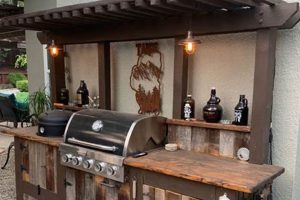
Structures designed for open-air heating and ambiance enhancement, supplied in component form for self-assembly, are becoming increasingly prevalent in residential landscaping. These packages typically contain the necessary materials and instructions to construct a functional fireplace within an outdoor setting. An example would be a collection of pre-cast concrete blocks, fire bricks, adhesive, and a metal firebox insert, accompanied by a detailed construction manual.
The appeal of these solutions lies in their cost-effectiveness compared to hiring a professional mason and their relative ease of installation. The capacity to enhance property value through the addition of a focal point for outdoor gatherings is another benefit. Historically, outdoor fireplaces were the domain of skilled artisans, but modern manufacturing and simplified designs have made them accessible to a broader segment of homeowners.
The following sections will delve into the selection criteria for these structures, outlining essential safety considerations, common construction challenges, and maintenance strategies for ensuring their longevity and optimal performance. Aspects of customization and permitting procedures will also be explored.
DIY Outdoor Fireplace Structure Assembly
Successful integration of a prefabricated outdoor fireplace requires meticulous planning and execution. The following guidelines promote safe construction and optimal functionality.
Tip 1: Foundation Integrity: Ensure a stable and level foundation. A concrete slab, properly reinforced and cured, provides the necessary support for the structure’s weight and prevents settling, which can compromise the fireplace’s integrity.
Tip 2: Compliance with Local Codes: Before commencing construction, verify adherence to all applicable building codes and regulations. Permitting requirements, setback distances from property lines and structures, and fuel restrictions must be thoroughly understood and followed.
Tip 3: Material Selection for Longevity: The material comprising the fireplace’s components should be selected for durability and resistance to weathering. Pre-cast concrete blocks and fire bricks are common choices, but proper sealing and weatherproofing are essential to mitigate moisture damage and extend the structure’s lifespan.
Tip 4: Firebox Installation Precision: Precise installation of the firebox insert is critical for safe operation. Ensure the firebox is level and securely anchored, with proper clearances from combustible materials to prevent fire hazards.
Tip 5: Ventilation and Chimney Design: Adequate ventilation is crucial for efficient combustion and smoke evacuation. The chimney’s height and diameter should be calculated to ensure proper draft and prevent smoke from backing up into the surrounding area.
Tip 6: Mortar Application Technique: Proper mortar application is essential for creating a strong and weather-resistant structure. Apply mortar evenly and thoroughly, ensuring complete coverage between blocks or bricks. Allow adequate curing time before exposing the structure to extreme temperatures.
These guidelines emphasize the importance of diligent planning, adherence to codes, and meticulous construction techniques. Implementing these considerations will contribute to the creation of a safe, functional, and enduring outdoor fireplace.
The subsequent sections will provide guidance on maintaining the assembled fireplace structure and troubleshooting common operational issues.
1. Material Durability

Material durability constitutes a fundamental aspect in the selection and longevity of “diy outdoor fireplace kits”. The ability of constituent materials to withstand environmental stressors directly influences the structural integrity and operational lifespan of the completed fireplace. Consequently, assessing the durability characteristics of various materials is paramount.
- Resistance to Thermal Stress
Outdoor fireplaces are subjected to extreme temperature fluctuations during operation and seasonal changes. Materials must resist cracking, warping, or degradation under intense heat and rapid cooling cycles. Fire bricks, specifically designed for high-temperature applications, exemplify materials suitable for the firebox interior. The selection of materials with a high coefficient of thermal expansion mismatch can lead to premature failure.
- Weathering and Erosion Resistance
Exposure to rain, snow, ice, and ultraviolet radiation can erode or degrade the surface of materials over time. Materials employed in outdoor fireplace structures must exhibit resistance to weathering effects. Concrete blocks, for example, should be formulated with appropriate additives to minimize water absorption and prevent freeze-thaw damage. Sealants and protective coatings can further enhance weather resistance.
- Corrosion Resistance
Metal components, such as chimney liners or firebox inserts, are susceptible to corrosion, particularly in environments with high humidity or exposure to acidic precipitation. Materials selected for these components should exhibit inherent corrosion resistance or be treated with protective coatings. Stainless steel and powder-coated metals are commonly utilized to mitigate corrosion.
- Structural Stability Under Load
The materials must possess sufficient compressive strength to withstand the weight of the fireplace structure and any additional loads, such as snow accumulation. Improper material selection or inadequate foundation support can result in structural instability and potential collapse. Reinforced concrete or engineered masonry blocks are often employed to provide the necessary load-bearing capacity.
The long-term performance and safety of “diy outdoor fireplace kits” are inextricably linked to the durability of the materials used in their construction. Thoughtful material selection, informed by an understanding of the environmental stresses the fireplace will encounter, is essential for ensuring a lasting and reliable outdoor heating structure. The factors above highlight the importance of considering these elements when selecting and assembling such kits.
2. Code Compliance

Adherence to local building codes represents a mandatory prerequisite when considering the installation of “diy outdoor fireplace kits”. Failure to comply with relevant regulations can result in financial penalties, legal liabilities, and the potential for forced removal of the constructed structure. Building codes exist to safeguard public safety, prevent property damage, and ensure that structures meet minimum standards for fire resistance, structural integrity, and environmental impact. With “diy outdoor fireplace kits”, it is important to understand that construction practices vary across jurisdictions. For example, some municipalities mandate specific setback distances from property lines or require the installation of spark arrestors to mitigate the risk of wildfires. A lack of awareness regarding these regulations can lead to non-compliant installations, resulting in costly rectification measures. The absence of proper permitting, often required for outdoor fireplace construction, is a common violation that can lead to significant fines.
The practical significance of code compliance extends beyond merely avoiding penalties. Properly constructed outdoor fireplaces, adhering to code requirements, minimize the risk of fire hazards, structural failures, and environmental damage. For example, regulations pertaining to chimney height and flue design are intended to ensure adequate ventilation, preventing the accumulation of harmful gases and reducing the risk of carbon monoxide poisoning. Similarly, regulations regarding the use of non-combustible materials in the firebox and surrounding areas are designed to prevent the spread of fire. Concrete, masonry and the proper air flow design.
In summary, code compliance is not merely a procedural formality but a fundamental aspect of responsible “diy outdoor fireplace kits” installation. A proactive approach, involving thorough research of local building codes and obtaining necessary permits, is essential for ensuring a safe, legal, and enduring outdoor fireplace structure. Ignoring code compliance poses substantial risks, undermining the intended benefits of the outdoor amenity.
3. Assembly Difficulty
Assembly difficulty represents a crucial determinant in the overall suitability of “diy outdoor fireplace kits” for potential purchasers. The level of complexity inherent in the assembly process directly impacts the time, resources, and skill required to complete the project successfully. A high degree of assembly difficulty can deter less experienced individuals, potentially leading to incomplete or unsafe installations. Conversely, kits designed for ease of assembly broaden accessibility, appealing to a wider range of homeowners seeking to enhance their outdoor living spaces.
Several factors contribute to assembly difficulty. The number of component parts, the intricacy of the design, the quality of the instructions, and the necessity for specialized tools all play a significant role. Kits with numerous small parts and complex interlocking mechanisms typically demand greater patience, precision, and technical aptitude. Instructions lacking clarity or illustrations can further exacerbate the challenge, increasing the likelihood of errors and frustrating the assembly process. For example, “diy outdoor fireplace kits” that require precise mortar application between individual bricks demand significantly more skill than those utilizing pre-fabricated modular blocks that simply interlock.
Ultimately, an understanding of assembly difficulty allows prospective buyers to realistically assess their capabilities and select “diy outdoor fireplace kits” that align with their skill level and available resources. By carefully considering these factors, homeowners can minimize the risk of project failure, ensuring a safe, functional, and aesthetically pleasing addition to their outdoor environment. The selection of appropriately designed, well-documented kits greatly increases the chances of a successful assembly, even for individuals with limited construction experience.
4. Fire Safety

Fire safety constitutes a paramount consideration in the context of “diy outdoor fireplace kits” due to the inherent risks associated with open flames and combustible materials. The potential for uncontrolled fires, property damage, and personal injury necessitates a thorough understanding and implementation of appropriate safety measures. The selection of fire-resistant materials, adherence to recommended clearances from combustible structures, and the incorporation of safety features such as spark arrestors are critical for mitigating these risks. For instance, utilizing non-combustible materials like fire brick for the firebox lining directly reduces the likelihood of structural ignition, while maintaining appropriate distances between the fireplace and wooden decks or fences prevents the spread of accidental fires.
Further augmenting fire safety involves establishing clear operational protocols and educating users on safe fireplace usage. Maintaining a readily available water source or fire extinguisher, regularly inspecting the fireplace for cracks or structural damage, and avoiding the burning of inappropriate materials such as treated wood or accelerants are all crucial preventative measures. A practical example of this is the routine removal of accumulated ashes and debris from the firebox, which minimizes the risk of smoldering embers escaping and igniting surrounding vegetation. Furthermore, adhering to burn bans or restrictions during periods of high fire danger is essential for preventing wildfires.
In summary, a comprehensive approach to fire safety is indispensable for the safe and responsible enjoyment of “diy outdoor fireplace kits”. This encompasses not only the selection of appropriate materials and installation techniques but also the establishment of clear operational guidelines and a commitment to ongoing maintenance and preventative measures. By prioritizing fire safety, users can minimize the risks associated with open flames, protecting themselves, their property, and the surrounding environment. This commitment enhances the overall value and sustainability of the outdoor fireplace as a functional and aesthetically pleasing amenity.
5. Aesthetic Integration
Aesthetic integration represents a critical, yet often overlooked, component in the successful implementation of “diy outdoor fireplace kits”. It denotes the seamless blending of the newly constructed fireplace with its surrounding environment, ensuring visual harmony and enhancing the overall appeal of the outdoor space. A poorly integrated fireplace can appear incongruous, detracting from the property’s value and diminishing the user’s enjoyment. This connection operates on a cause-and-effect basis: selecting a kit that complements the existing landscape style leads to a visually pleasing result, whereas disregarding aesthetic considerations can result in a discordant element. For instance, installing a rustic stone fireplace in a modern, minimalist garden would likely create visual disharmony.
The importance of aesthetic integration stems from its impact on the perceived value and usability of the outdoor space. A well-integrated fireplace becomes a focal point, enhancing the ambiance and inviting social interaction. This can be achieved by carefully selecting materials, colors, and design elements that echo the existing architectural style of the home and the surrounding landscape features. For example, if a home features a brick exterior, choosing a fireplace kit that incorporates similar brickwork can create a cohesive and unified aesthetic. Furthermore, incorporating landscaping elements such as strategically placed plants or stone pathways can further enhance the integration and create a more inviting outdoor living area.
In summary, aesthetic integration is not merely an ancillary consideration but an essential component of successful “diy outdoor fireplace kits” installation. It involves a conscious effort to harmonize the fireplace’s design with its surroundings, creating a visually appealing and functional outdoor space. While factors such as functionality and fire safety are paramount, neglecting aesthetic integration can undermine the overall value and enjoyment of the outdoor fireplace. Achieving seamless aesthetic integration requires careful planning, thoughtful material selection, and a clear understanding of the existing design elements within the outdoor environment.
Frequently Asked Questions
This section addresses common inquiries concerning the selection, installation, and maintenance of prefabricated outdoor fireplace structures. The information provided aims to clarify crucial aspects relevant to informed decision-making.
Question 1: What foundational requirements are necessary for “diy outdoor fireplace kits” installation?
A stable, level, and non-combustible base is imperative. A reinforced concrete slab of appropriate thickness and dimensions, extending beyond the fireplace’s footprint, is generally recommended. Local building codes dictate specific requirements that must be met.
Question 2: Are building permits mandatory for “diy outdoor fireplace kits”?
In the majority of jurisdictions, obtaining a building permit prior to installation is legally required. Permit requirements vary depending on location and fireplace size. Contacting the local building department is essential to ensure compliance.
Question 3: What constitutes appropriate fuel for “diy outdoor fireplace kits”?
Seasoned hardwoods are generally considered the most suitable fuel source. Softwoods and treated lumber should be avoided due to their propensity to produce excessive smoke and potentially release harmful chemicals. Local regulations may impose restrictions on specific fuel types.
Question 4: How frequently should “diy outdoor fireplace kits” undergo maintenance?
Regular maintenance, including ash removal, chimney cleaning, and inspection for cracks or structural damage, is recommended at least annually. More frequent inspections may be necessary in climates with harsh weather conditions.
Question 5: What safety precautions should be observed during “diy outdoor fireplace kits” operation?
Maintaining a safe distance from combustible materials, never leaving a fire unattended, and ensuring a readily available water source or fire extinguisher are essential safety precautions. A spark arrestor is often required to prevent the escape of embers.
Question 6: Can “diy outdoor fireplace kits” be installed on a wooden deck?
Direct installation on a wooden deck is generally discouraged due to fire hazards. A non-combustible barrier, such as concrete or stone, is required between the fireplace and any combustible surface. Local building codes specify minimum clearance requirements.
This FAQ section underscores the importance of responsible planning, adherence to regulations, and diligent maintenance practices. By addressing these common questions, it aims to empower individuals to make informed decisions regarding “diy outdoor fireplace kits”.
The subsequent sections will explore the legal aspects of owning and operating these structures, as well as common issues that may be faced.
DIY Outdoor Fireplace Kits
This exploration of “diy outdoor fireplace kits” has elucidated critical factors for their successful selection, installation, and maintenance. The considerations encompass material durability, code adherence, assembly difficulty, fire safety, and aesthetic integration. Prudent evaluation of these elements is paramount to ensuring a safe, functional, and visually harmonious outdoor amenity.
The long-term value and responsible utilization of “diy outdoor fireplace kits” hinge upon informed decision-making and diligent execution. Prospective purchasers are urged to prioritize safety, comply with all applicable regulations, and maintain their installations meticulously. By embracing a proactive and informed approach, homeowners can derive lasting enjoyment and enhance their property value through these structures.