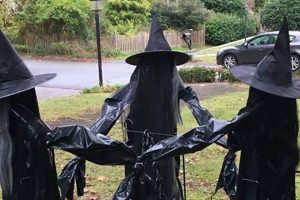
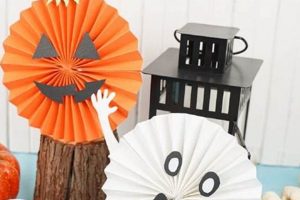
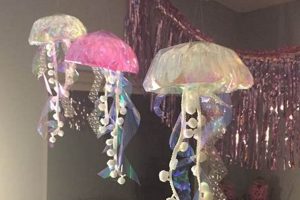
Crafting spectral figures for decorative purposes during the Halloween season, utilizing primarily self-sourced materials and personal labor, constitutes a significant area of do-it-yourself (DIY) crafting. For instance, a common activity involves suspending cheesecloth over an armature, stiffening it with diluted glue to create a free-floating apparition simulation.
Engaging in such creative projects fosters resourcefulness, allows for personalization surpassing commercially available items, and provides a cost-effective method for seasonal ornamentation. Historically, homemade decorations have been integral to holiday celebrations, reflecting community engagement and individual expression beyond mass-produced commodities. Furthermore, these activities promote sustainable practices by repurposing existing household materials.
The following sections will explore various methodologies for constructing ethereal adornments, detailing materials, processes, and design considerations for optimal visual impact and durability. Techniques encompassing fabric manipulation, illumination integration, and three-dimensional sculpting will be presented to facilitate a range of skill levels and aesthetic preferences.
DIY Ghost Decorations
The creation of spectral adornments necessitates careful planning and execution to achieve aesthetically pleasing and durable results. Attention to detail during the construction process ensures the final product aligns with desired visual impact and longevity.
Tip 1: Material Selection: Prioritize lightweight fabrics such as cheesecloth, muslin, or tulle for ethereal qualities. Heavier materials, while offering durability, may compromise the desired floating or translucent effect.
Tip 2: Armature Construction: If utilizing an armature, opt for malleable wire or repurposed coat hangers. Securely fasten the fabric to the frame, ensuring balanced weight distribution to prevent instability.
Tip 3: Adhesive Application: Employ diluted white glue or fabric stiffener sparingly to prevent stiffness and maintain draping. Excessive adhesive can result in an unnatural rigidity, detracting from the ghostly aesthetic.
Tip 4: Illumination Integration: When incorporating lighting, utilize battery-operated LED lights to mitigate fire hazards and eliminate the need for external power sources. Strategically position lights within the structure to highlight fabric textures and create eerie shadows.
Tip 5: Weather Resistance: For outdoor displays, apply a water-resistant sealant to protect the fabric from moisture damage. Consider anchoring the decorations to prevent displacement by wind. Regularly inspect for signs of wear and tear.
Tip 6: Facial Detailing: Exercise restraint when adding facial features. Simple, minimalist designs, such as dark fabric cutouts or subtle paint strokes, can convey a more unsettling effect than elaborate renderings.
Tip 7: Suspension Techniques: Employ clear fishing line or thin wire for suspending decorations. Securely attach the line to a sturdy support structure, ensuring adequate clearance from obstacles.
Adhering to these guidelines will contribute to the creation of sophisticated and visually compelling spectral decorations, enhancing the ambiance of seasonal displays while minimizing potential hazards and maximizing material lifespan.
The concluding section will address advanced techniques and innovative approaches to elevating the craft of spectral adornment creation.
1. Material Selection
Material selection constitutes a foundational element in the domain of spectral DIY decorations. The properties inherent to chosen materials directly influence the aesthetic quality, structural integrity, and overall effectiveness of the final product. Inadequate material choice can lead to a decoration that lacks the desired ethereal quality, is structurally unsound, or proves unsuitable for its intended environment. For example, utilizing heavy canvas instead of lightweight cheesecloth will result in a ghost decoration that appears grounded and lacks the intended floating appearance. Conversely, selecting materials prone to degradation when exposed to moisture can compromise the decoration’s longevity when used outdoors.
The impact of material selection extends beyond visual appeal and structural stability to encompass practical considerations such as safety and cost-effectiveness. Selecting inherently flame-retardant fabrics or applying flame-retardant treatments to flammable materials is paramount when incorporating illumination. Repurposing existing materials, such as old bedsheets or discarded clothing, offers a cost-effective alternative to purchasing new textiles, simultaneously promoting sustainability. However, thorough cleaning and inspection are necessary to ensure that repurposed materials are free from contaminants and structurally sound. Furthermore, certain materials, such as wire, require careful handling to prevent injury during the construction process.
In summary, the effectiveness of creating spectral DIY decorations hinges significantly upon the judicious selection of materials. Factors such as weight, texture, durability, safety, and cost must be carefully evaluated to achieve the desired aesthetic effect, ensure structural soundness, and promote safe and sustainable practices. Failure to prioritize material selection can lead to a subpar final product that compromises visual impact, structural integrity, or poses potential safety hazards.
2. Construction Technique
Construction technique, in the realm of DIY ghost decorations, dictates the structural integrity, visual impact, and overall success of the final product. It encompasses the methodologies employed to assemble materials, shape the desired form, and secure components, playing a critical role in translating a conceptual design into a tangible spectral representation.
- Fabric Manipulation
This facet involves cutting, draping, and securing fabric to achieve the desired spectral form. Techniques range from simple gathering and tying to more complex draping and sewing. For instance, layering cheesecloth over a wire frame and securing it with glue creates a billowing, ghostly effect. The chosen technique directly impacts the texture and volume of the decoration.
- Armature Building
An armature provides the structural support for the fabric. Construction might involve bending wire, shaping chicken wire, or repurposing household items like coat hangers. A poorly constructed armature can lead to a misshapen or unstable decoration, while a well-designed armature allows for greater control over the ghost’s pose and overall form. This directly impacts the durability and poseability of the ghost decoration.
- Adhesive Application
Adhesives, such as glue or fabric stiffener, secure the fabric to the armature and maintain the desired shape. Overuse can lead to a stiff and unnatural appearance, while insufficient application can cause the fabric to sag or detach. The correct application method ensures the ghost maintains its intended shape and appearance over time.
- Illumination Integration
Techniques for incorporating lighting, such as string lights or battery-operated LEDs, can significantly enhance the ghostly effect. Methods include concealing lights within the fabric folds or strategically placing them to create eerie shadows. Careful planning is essential to avoid visible wiring and ensure safe operation, thus lighting can bring a different scary sensation to the ghost decorations.
These construction techniques are interdependent and collectively contribute to the effectiveness of DIY ghost decorations. The careful selection and execution of each technique directly influence the final product’s visual appeal, structural stability, and overall impact within the Halloween display.
3. Spatial Arrangement
Spatial arrangement plays a crucial role in the effective deployment of DIY ghost decorations. The strategic placement of these decorative elements within a given environment directly influences their visibility, impact, and contribution to the overall ambiance.
- Scale and Proportion
The size and relative dimensions of the ghost decorations must correspond appropriately to the scale of the surrounding space. Overly large decorations in confined areas can appear overwhelming and visually disruptive. Conversely, diminutive decorations in expansive settings may become insignificant and fail to capture attention. A careful consideration of scale and proportion ensures harmonious integration with the environment.
- Visibility and Focal Points
Placement should optimize visibility while strategically directing the viewer’s attention. Positioning ghost decorations near prominent architectural features or within naturally occurring sightlines can enhance their impact. Conversely, obscuring decorations behind obstructions or placing them in dimly lit areas diminishes their effectiveness. Creating focal points through strategic placement encourages visual engagement.
- Environmental Context
The existing environmental conditions, including lighting, color schemes, and architectural styles, must inform the arrangement of DIY ghost decorations. Contrasting colors or textures can create visual interest and draw attention to specific elements. Conversely, harmonizing colors and textures can foster a sense of cohesion and visual unity. Adaptation to the environment ensures seamless integration.
- Narrative Consistency
The arrangement of multiple ghost decorations should contribute to a cohesive narrative or thematic representation. Grouping decorations to create a scene or arrange them sequentially to tell a story can enhance their impact and engagement. Inconsistent or random arrangements can detract from the overall effect and dilute the intended message. Spatial arrangement provides a way to tell a story through decorative expression.
Integrating these facets of spatial arrangement ensures that DIY ghost decorations effectively contribute to the desired atmosphere, enhancing the visual narrative and maximizing the impact of each individual piece. Proper consideration for the environment and the relationship between decorations and their surroundings is essential for creating a truly immersive and impactful Halloween display.
4. Lighting Effects
Illumination plays a pivotal role in augmenting the visual impact of homemade spectral adornments. The strategic deployment of light sources can transform rudimentary fabrications into captivating, eerie displays. Without careful consideration of lighting, DIY ghost decorations may appear lackluster and fail to evoke the intended sense of unease.
- Color Temperature
The chromaticity of the light source significantly influences the perceived atmosphere. Warm-toned illumination (e.g., amber or orange) can evoke a sense of decay or menace, while cool-toned light (e.g., blue or white) can create a chilling or ethereal effect. Employing green or purple hues can amplify the supernatural ambiance. Selecting the appropriate color temperature enhances the intended emotional response to the decorations.
- Intensity and Contrast
Varying the intensity of light sources and creating areas of high and low contrast can accentuate specific features of the ghost decorations. Strategic placement of spotlights or dimmers can highlight textures, create shadows, and emphasize movement. High contrast lighting can create a dramatic and unsettling effect, while low contrast lighting produces a more subtle and atmospheric result. Adjusting intensity maximizes visual impact.
- Movement and Flicker
Incorporating dynamic lighting effects, such as flickering or pulsating light sources, can simulate paranormal activity and enhance the illusion of a spectral presence. Battery-operated candles or LED lights with programmed flicker patterns can create a sense of instability and unease. The illusion of movement significantly amplifies the decoration’s realism.
- Concealment and Reflection
Strategically concealing light sources within the fabric or structure of the ghost decorations can create a sense of mystery and intrigue. Backlighting or internal illumination can highlight the translucent qualities of the material and generate ethereal glows. Conversely, reflecting light off reflective surfaces can create unexpected highlights and shadows. Careful management of light direction adds depth and complexity.
In essence, lighting effects are not merely an ancillary element but rather an integral component of crafting compelling DIY ghost decorations. The judicious application of color temperature, intensity, movement, and concealment transforms simple fabrications into captivating representations of the supernatural, significantly enhancing the overall ambiance of Halloween displays. The interplay of light and shadow is critical to achieving a truly spectral effect.
5. Durability Enhancement
Durability enhancement is a critical consideration in the creation of DIY ghost decorations, directly affecting their longevity, resistance to environmental factors, and overall value. The inherent fragility of many commonly used materials necessitates the implementation of strategies designed to prolong the lifespan of these crafted items.
- Material Selection for Resilience
The selection of robust materials forms the foundation of durable ghost decorations. Opting for weather-resistant fabrics, such as treated canvas or outdoor-grade nylon, over delicate options like cheesecloth significantly improves resistance to moisture and wind. Similarly, utilizing metal armatures instead of cardboard or thin wire provides greater structural integrity against physical stress. Careful material selection minimizes the risk of premature degradation and extends the usable life of the decorations.
- Protective Coatings and Sealants
The application of protective coatings and sealants provides an additional layer of defense against environmental damage. Waterproofing sprays or UV-resistant sealants can prevent fabric fading, mildew growth, and water damage. Similarly, applying a clear coat to painted surfaces protects against chipping and abrasion. These measures are particularly crucial for decorations intended for outdoor display, where they are exposed to the elements. This practice safeguard’s long-term appearance and structural stability.
- Reinforcement and Structural Support
Reinforcing vulnerable areas and providing adequate structural support is essential for preventing collapse or deformation. Strengthening seams with durable thread, adding internal supports to hollow structures, and securing attachments with robust fasteners all contribute to overall stability. For example, reinforcing the base of a free-standing ghost figure with a weighted platform prevents tipping. This strategic reinforcement enhances the decoration’s ability to withstand physical stress and maintain its intended form.
- Proper Storage and Handling
Even with durable materials and protective treatments, proper storage and handling are crucial for maximizing the lifespan of DIY ghost decorations. Storing decorations in dry, climate-controlled environments during the off-season prevents moisture damage and pest infestations. Similarly, handling decorations with care during setup and takedown minimizes the risk of accidental damage. Implementing these practices ensures that the decorations remain in optimal condition for subsequent use.
The proactive implementation of durability enhancement techniques represents a pragmatic approach to maximizing the investment in DIY ghost decorations. By prioritizing robust materials, protective coatings, structural reinforcement, and proper storage, creators can significantly extend the lifespan of their crafted items, ensuring that these spectral adornments continue to enhance seasonal celebrations for years to come.
6. Safety Protocols
The intersection of “Safety Protocols” and DIY ghost decorations constitutes a critical area of consideration. The creation and deployment of homemade decorations inherently introduce potential hazards that necessitate careful planning and adherence to established safety guidelines. A failure to prioritize safety can result in property damage, personal injury, or even fire. For instance, the improper wiring of electrical components within a decoration could lead to a short circuit and subsequent fire, while unstable structures could collapse, causing injury to passersby. Safety protocols thus represent an indispensable component of any DIY ghost decoration project, directly influencing the well-being of individuals and the security of the surrounding environment.
Practical application of safety protocols involves several key areas. Material selection plays a crucial role, with preference given to flame-retardant fabrics and non-toxic paints. Electrical components must be UL-certified and installed in accordance with relevant electrical codes. Decorations intended for outdoor use must be securely anchored to prevent displacement by wind, and pathways should remain unobstructed to avoid trip hazards. Furthermore, decorations should be placed away from heat sources and combustible materials to minimize the risk of fire. Regular inspection and maintenance are also essential to identify and address potential hazards before they escalate. An example would be to ensure no frayed wires or loose connections exist in an illuminated ghost decoration.
In summation, the integration of safety protocols into the DIY ghost decoration process is paramount. While the creation of spectral adornments can be a rewarding endeavor, it is imperative to recognize and mitigate the inherent risks involved. By adhering to established safety guidelines, selecting appropriate materials, and implementing rigorous inspection procedures, individuals can ensure that their DIY ghost decorations contribute to a safe and enjoyable Halloween experience. The primary challenge lies in raising awareness of potential hazards and promoting a culture of safety within the DIY community. This understanding links to the broader theme of responsible crafting and underscores the importance of prioritizing well-being alongside creative expression.
7. Aesthetic Consistency
Aesthetic consistency, within the context of DIY ghost decorations, denotes the unified and harmonious visual presentation achieved through deliberate choices in design elements. It represents a cohesive integration of style, color, form, and thematic representation, ensuring that individual decorations contribute to a unified and compelling overall display.
- Thematic Unity
Thematic unity refers to the adherence to a central concept or narrative thread throughout the decoration scheme. For example, a Victorian-era haunted house theme necessitates incorporating spectral figures dressed in period attire, utilizing muted color palettes, and employing props such as antique furniture and candelabras. Deviating from this established theme compromises the immersive quality of the display. A spaceship ghost for a victorian era is not suitable.
- Color Palette Cohesion
Color palette cohesion involves the strategic selection and consistent application of a limited range of colors. Employing a monochromatic scheme, such as varying shades of gray and white, can create an eerie and unsettling atmosphere. Alternatively, a complementary color scheme, such as pairing orange and blue, can generate visual contrast and highlight specific elements. A discordant mix of vibrant colors can detract from the intended ghostly aesthetic. For instance: the use of neon colors in a scary ghost will not be appropriate.
- Stylistic Harmony
Stylistic harmony entails maintaining a consistent design approach across all decorations. If adopting a minimalist aesthetic, decorations should feature clean lines, simple forms, and a limited number of embellishments. Conversely, a more elaborate and ornate style necessitates intricate detailing, complex patterns, and a greater degree of ornamentation. Mixing minimalist and ornate styles can create a jarring and disjointed visual effect.
- Scale and Proportion Balance
Scale and proportion balance refers to the harmonious relationship between the size of individual decorations and their surroundings. Decorations should be appropriately scaled to the space they occupy, avoiding instances where they appear either overwhelming or insignificant. Furthermore, the proportions of individual decorations should be visually pleasing and consistent with the overall aesthetic. For example, an oversized ghost in a small room can look absurd.
Achieving aesthetic consistency in DIY ghost decorations enhances the overall visual impact of a display, creating an immersive and compelling experience for viewers. The deliberate and thoughtful integration of thematic unity, color palette cohesion, stylistic harmony, and scale balance elevates the decorations from a collection of individual pieces to a unified work of art. This elevates the experience from a collection of mismatched decor to one cohesive experience.
Frequently Asked Questions
This section addresses common inquiries regarding the creation, deployment, and maintenance of spectral decorations, providing concise and informative answers to frequently encountered concerns.
Question 1: What fabrics are most suitable for creating ethereal ghost decorations?
Lightweight and translucent fabrics, such as cheesecloth, muslin, tulle, or gauze, are optimal for achieving an ethereal effect. These materials allow for light diffusion, creating a ghostly shimmer. Avoid heavy or opaque fabrics, as they compromise the intended translucency.
Question 2: How can outdoor ghost decorations be protected from inclement weather?
Application of a water-resistant sealant is recommended to protect fabrics from moisture damage. Furthermore, securing decorations with sturdy anchors minimizes displacement by wind. Regular inspection and maintenance are crucial for identifying and addressing signs of wear or deterioration.
Question 3: What are the safety precautions when incorporating electrical lighting into ghost decorations?
Employ battery-operated LED lights to mitigate fire hazards. Ensure all electrical components are UL-certified and installed in accordance with electrical codes. Avoid overloading circuits and keep decorations away from flammable materials. Regular inspection of wiring is essential.
Question 4: How can one achieve a realistic floating effect for ghost decorations?
Suspending decorations with clear fishing line or thin wire creates the illusion of levitation. Attaching the line to a sturdy, concealed support structure is crucial. Proper balancing of the decoration ensures stability and prevents unnatural tilting.
Question 5: What is the best method for creating facial features on ghost decorations?
Minimalist designs, such as dark fabric cutouts or subtle paint strokes, often prove more effective than elaborate renderings. Avoid overly detailed or cartoonish features, as they can detract from the intended eerie aesthetic. The use of shadows and negative space can create a sense of mystery.
Question 6: How can one prevent ghost decorations from appearing tacky or amateurish?
Adherence to a consistent aesthetic theme, judicious use of color, and attention to detail are paramount. Avoid excessive embellishments or haphazard material combinations. Prioritize quality over quantity and strive for a refined and understated presentation.
These FAQs offer guidance on key considerations for constructing and deploying DIY ghost decorations. Attention to material selection, safety, and aesthetic principles will contribute to the creation of compelling and enduring spectral adornments.
The concluding section will synthesize key learnings and propose avenues for further exploration in the domain of spectral decoration.
Conclusion
This exploration of “diy ghost decorations” has illuminated the multifaceted considerations inherent in their creation. From material selection and construction techniques to spatial arrangement, lighting effects, durability enhancement, safety protocols, and aesthetic consistency, a comprehensive understanding of these elements is crucial for successful execution. The preceding analysis underscores the nuanced interplay between technical skill and artistic vision in crafting impactful spectral displays.
The domain of homemade spectral ornamentation extends beyond mere recreation, embodying resourcefulness, creative expression, and a connection to seasonal traditions. Continued innovation in materials, techniques, and design approaches will undoubtedly shape the future of DIY ghost decorations. Further investigation into advanced construction methods, sustainable material sourcing, and the integration of emerging technologies promises to elevate the craft to unprecedented levels of sophistication and artistry. The potential for creative exploration remains substantial.