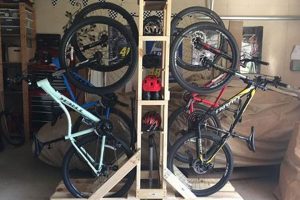
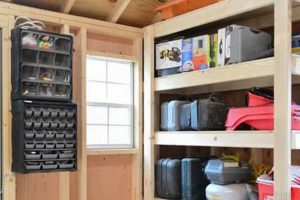
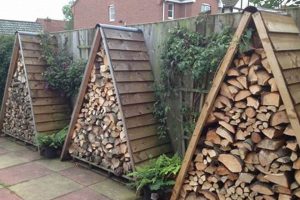
Utilization of reclaimed wooden platforms, often originating from shipping and warehousing, in the creation of customized organizational systems for implements and equipment within outdoor storage structures is a popular practice. These projects typically involve disassembling, resizing, and reassembling the platforms to construct shelves, racks, and other storage solutions tailored to specific needs. For example, a person might use the lumber from these platforms to build a wall-mounted organizer inside a small backyard shed for holding gardening trowels, rakes, and other tools.
Employing such repurposed materials for tool organization presents several advantages. It offers a cost-effective alternative to purchasing commercially manufactured storage units, diverting discarded materials from landfills. Furthermore, it allows for a high degree of customization, enabling individuals to create storage solutions precisely suited to the dimensions of their shed and the specific tools they need to accommodate. Historically, the practice of repurposing materials has been driven by both economic necessity and a desire for sustainable resource management.
The subsequent sections will delve into various design considerations, construction techniques, and finishing options relevant to constructing storage solutions from reclaimed platforms for tool organization within outdoor structures. The discussion will encompass safety precautions, material selection criteria, and illustrative examples of successful projects.
Practical Considerations for Reclaimed Platform Tool Organization
The following recommendations aim to optimize the design and construction of storage solutions from repurposed wooden platforms for tools within outdoor structures. Adherence to these guidelines promotes safety, durability, and efficiency.
Tip 1: Material Selection. Prioritize platforms stamped with “HT” (heat treated), indicating they were not chemically treated. Avoid platforms marked with “MB” (methyl bromide), a hazardous fumigant. Inspect platforms for rot, insect infestation, or structural damage prior to use.
Tip 2: Disassembly Techniques. Exercise caution during platform disassembly. Employ a reciprocating saw or specialized pallet buster tool to separate boards while minimizing wood splitting. Wear appropriate safety gear, including eye protection and gloves.
Tip 3: Design Planning. Accurately measure the interior dimensions of the shed and the tools to be stored. Create a detailed plan or sketch outlining the storage unit’s dimensions, shelf placements, and overall configuration. Prioritize vertical space utilization.
Tip 4: Secure Fastening. Use exterior-grade screws or nails to assemble the storage unit. Ensure sufficient penetration into the wood to provide structural integrity. Pre-drill pilot holes to prevent wood splitting, particularly when working with hardwoods.
Tip 5: Weight Distribution. Reinforce shelves designed to hold heavy tools. Consider adding vertical supports or horizontal braces to distribute the load and prevent sagging. Avoid overloading shelves beyond their capacity.
Tip 6: Surface Treatment. Apply a sealant or preservative to protect the wood from moisture and weathering. Consider painting or staining the storage unit to improve its aesthetic appearance and further protect it from the elements.
Tip 7: Safety Considerations. Sand down any rough edges or splinters on the finished storage unit. Ensure that all screws and nails are flush or countersunk to prevent injuries. Consider adding rubber feet to the base of the storage unit to prevent slippage and moisture damage.
Proper planning, material selection, and construction techniques are paramount to realizing a functional and durable tool storage solution. By implementing these considerations, one can maximize the utility and longevity of repurposed platforms within an outdoor storage context.
The subsequent section explores diverse design approaches for maximizing space utilization with repurposed platforms for tool organization in external structures.
1. Platform Assessment
Platform assessment constitutes a crucial initial phase in any project involving the repurposing of wooden platforms for tool storage within outdoor structures. This evaluation determines the suitability of the material for its intended application and mitigates potential risks associated with structural instability or material contamination.
- Material Condition
The physical condition of the wooden platform directly impacts its structural integrity and lifespan. Platforms exhibiting significant rot, decay, or insect infestation should be rejected, as their load-bearing capacity is compromised. Visual inspection for cracks, splits, and warping is essential. For instance, a platform with visible fungal growth poses a structural risk and may require specialized disposal procedures.
- Treatment Type
The type of treatment applied to the platform is a critical determinant of its safety for repurposing. Platforms marked with “HT” (heat treated) are generally considered safe, while those marked with “MB” (methyl bromide) should be avoided due to the toxicity of the fumigant. Untreated platforms are acceptable, but their susceptibility to decay necessitates appropriate sealing or preservation. An example involves identifying an “MB”-marked platform; its utilization would contravene safety regulations and necessitate appropriate disposal.
- Structural Integrity
The overall structural soundness of the platform dictates its ability to withstand the intended loads within the tool storage unit. Assessing the integrity of joints, fasteners, and individual boards is paramount. Platforms with loose or missing fasteners, or with boards exhibiting significant bowing or twisting, may require reinforcement or component replacement. A practical instance involves examining the corner joints of a platform; any indication of separation or weakness signals a need for structural remediation before reuse.
- Contamination Risks
Platforms used to transport potentially hazardous materials may pose a contamination risk if repurposed without proper precautions. Identifying any staining, residue, or odors that suggest prior exposure to chemicals, oils, or other contaminants is essential. If contamination is suspected, the platform should be appropriately decontaminated or discarded. As an example, a platform with visible oil stains should be treated with a degreasing agent or discarded to prevent contamination of stored tools.
These facets of platform assessment directly influence the safety, durability, and overall success of any tool storage solution constructed from repurposed materials. Thorough evaluation of the platform prior to its incorporation into the project is essential for mitigating risks and ensuring a long-lasting, functional storage system. Failing to conduct an effective assessment can lead to structural failures, health hazards, and ultimately, a less-than-satisfactory project outcome.
2. Structural Integrity
Structural integrity constitutes a fundamental requirement for successful implementation of repurposed platform projects designed for tool storage within external structures. The ability of the storage system to withstand applied loads, environmental stressors, and prolonged use directly correlates with the overall stability and longevity of the unit. Compromised structural integrity can lead to collapse, posing a risk to both tools and individuals. For example, a shelf constructed from weakened platforms may buckle under the weight of stored equipment, resulting in damage and potential injury. The careful evaluation and reinforcement of structural elements are, therefore, paramount.
The design phase should incorporate load calculations to determine the necessary support for shelves, walls, and other weight-bearing components. Appropriate fastening techniques, such as the use of exterior-grade screws and proper joint construction, are essential to ensure secure connections. Reinforcement measures, including the addition of vertical supports or horizontal bracing, may be necessary to address weaknesses in the platform material or design. One illustration involves the construction of a tool rack; the addition of diagonal bracing to the back panel reinforces its ability to resist racking forces, preventing distortion and collapse under load.
In summary, structural integrity represents a non-negotiable attribute for storage solutions crafted from repurposed platforms. Achieving this requires a thorough assessment of material quality, meticulous design planning, and diligent construction practices. Neglecting this aspect jeopardizes the safety and durability of the system, undermining the intended purpose of providing organized and reliable tool storage within an outdoor environment. The long-term performance and functional effectiveness depend on a commitment to sound structural engineering principles.
3. Spatial Optimization
Spatial optimization, in the context of repurposed platform projects for tool storage within outdoor structures, denotes the strategic allocation of available volume to maximize storage capacity while maintaining accessibility and functionality. Effective spatial optimization is critical for achieving efficient organization and preventing clutter within limited shed environments. The utilization of repurposed platform materials necessitates careful consideration of dimensions and configurations to ensure optimal use of available space.
- Vertical Space Utilization
Exploiting vertical space through the construction of multi-tiered shelving systems and wall-mounted organizers is a primary method of spatial optimization. Maximizing vertical dimensions allows for the storage of a greater quantity of tools without increasing the ground footprint of the storage unit. An example involves building a tall, narrow rack along a shed wall to accommodate long-handled tools such as shovels and rakes, effectively utilizing previously underutilized vertical space.
- Customized Storage Solutions
Tailoring storage solutions to the specific dimensions and shapes of tools and equipment is integral to spatial optimization. Creating custom-sized compartments, racks, and holders ensures that each item occupies only the necessary space, minimizing wasted volume. Constructing a dedicated rack with slots precisely sized for various screwdrivers, wrenches, or pliers exemplifies this principle, leading to a more compact and organized storage arrangement.
- Multifunctional Design
Incorporating multifunctional elements into the storage design enhances spatial efficiency by serving multiple purposes within a single structure. A work surface integrated into a shelving unit or a storage bench that doubles as a seating area demonstrates this concept. An illustrative case involves building a platform-based workbench with integrated drawers and shelves below, providing both a workspace and storage area within the same footprint.
- Accessibility and Organization
Spatial optimization is not solely about maximizing storage volume but also about ensuring convenient access to stored tools. Strategic placement of frequently used items within easy reach and clear labeling of compartments and shelves facilitate efficient retrieval and prevent time wasted searching for misplaced tools. Arranging tools according to frequency of use or type, with readily accessible items placed at the front of shelves and less frequently used items stored towards the back, exemplifies this principle.
These facets of spatial optimization, when effectively implemented within repurposed platform tool storage projects, result in a more organized, efficient, and functional outdoor storage environment. The strategic allocation of space, customized storage solutions, multifunctional design, and emphasis on accessibility contribute to maximizing the utility of limited shed volume and enhance the overall user experience. The end result is a tool storage system that not only accommodates a large number of items but also promotes ease of use and prevents clutter, transforming the storage space into a practical and efficient work area.
4. Ergonomic Design
Ergonomic design principles are integral to the effective implementation of repurposed platform projects for tool storage within outdoor structures. The application of ergonomic considerations aims to optimize the interaction between the user and the storage system, minimizing physical strain, enhancing accessibility, and promoting efficient work practices. A tool storage system that is ergonomically unsound can lead to discomfort, fatigue, and an increased risk of injury, thereby negating the benefits of an otherwise well-organized space.
- Reach and Accessibility
Reach and accessibility dictate the ease with which tools can be retrieved and stored. Ergonomically designed systems prioritize locating frequently used items within easy reach, minimizing the need for bending, stretching, or climbing. Shelves and racks should be positioned at appropriate heights to accommodate the user’s stature and prevent excessive strain. As an example, heavy tools should be stored at waist height, while lighter items can be placed on higher shelves. The positioning of tools must also consider the range of motion required to safely remove and replace them.
- Weight Management and Load Distribution
Weight management and load distribution are crucial for preventing musculoskeletal strain. Heavy tools should be stored in a manner that minimizes the effort required to lift and maneuver them. Utilizing mechanical assistance, such as rolling carts or pulley systems, may be necessary for particularly heavy items. Shelves and supports must be designed to evenly distribute weight, preventing sagging or collapse that could lead to awkward lifting postures and potential injury. For instance, storing heavy power tools on a reinforced bottom shelf minimizes the need for lifting them to higher levels.
- Grip and Handling
Grip and handling relate to the design of tool holders and storage compartments to facilitate secure and comfortable grasping of tools. Holders should be sized appropriately for the tool handles, providing a firm grip and preventing slippage. Ergonomically designed tool holders may incorporate features such as contoured shapes or non-slip surfaces to enhance grip and reduce hand fatigue. Designing a rack with custom-fit slots for each screwdriver, ensuring easy retrieval and secure storage, is an example.
- Posture and Work Height
Posture and work height influence the user’s overall body position during tool retrieval and use. Storage systems should be designed to encourage a neutral posture, minimizing bending, twisting, and reaching. Integrating a workbench into the tool storage system can provide a comfortable work surface at an appropriate height, reducing strain on the back and shoulders. The height of the workbench should be adjusted to suit the user’s stature, allowing for comfortable operation while standing or sitting.
The integration of ergonomic design principles into repurposed platform tool storage projects not only enhances user comfort and safety but also promotes efficiency and productivity. By carefully considering reach and accessibility, weight management, grip and handling, and posture, one can create a tool storage system that is both functional and ergonomically sound. This approach transforms the storage space into a user-friendly environment, reducing the risk of injury and enabling efficient completion of tasks. The result is a tool storage system that supports the user’s well-being and enhances the overall effectiveness of the outdoor workspace.
5. Weather Protection
Weather protection is a critical consideration in the design and construction of tool storage solutions from repurposed platforms within outdoor structures. The inherent vulnerability of tools to environmental elements necessitates proactive measures to mitigate damage from moisture, temperature fluctuations, and ultraviolet radiation. Inadequate weather protection directly correlates with accelerated corrosion, material degradation, and a shortened lifespan of both tools and the storage system itself. For instance, tools exposed to persistent humidity can develop rust, compromising their functionality and precision. Similarly, platforms not treated for weather resistance may rot, compromising the structural integrity of the storage unit.
Implementing effective weather protection strategies involves a multi-faceted approach. First, the selection of suitable materials is paramount. Pressure-treated lumber or naturally weather-resistant woods should be prioritized for constructing the primary structure of the storage unit. Applying a sealant or preservative to all wooden surfaces creates a barrier against moisture penetration and reduces the risk of fungal growth. Furthermore, designing the storage unit to minimize direct exposure to rain and sunlight is essential. This may involve incorporating overhangs, angled roofs, or positioning the unit in a sheltered location. Utilizing waterproof covers or containers for storing tools further enhances protection against moisture and dust. As an illustration, constructing a platform storage unit with a sloping roof and applying a water-repellent sealant can effectively protect tools from rain and snow. Storing sensitive electronic tools in airtight containers with desiccant packets provides an additional layer of protection against humidity.
In conclusion, weather protection constitutes an indispensable element in the creation of durable and effective tool storage systems from repurposed platforms. Ignoring this aspect can lead to premature deterioration of tools and the storage unit itself, resulting in increased replacement costs and reduced efficiency. By employing appropriate materials, applying protective coatings, and incorporating design features that minimize exposure to the elements, individuals can significantly extend the lifespan of their tools and ensure the long-term functionality of their outdoor storage solutions. The integration of weather protection strategies represents a pragmatic investment in the longevity and value of tools, safeguarding them against the detrimental effects of the external environment.
6. Tool Accessibility
Tool accessibility is a crucial component within the framework of shed pallet projects designed for do-it-yourself tool storage. The ease and efficiency with which tools can be located, retrieved, and returned to their designated positions directly impacts the productivity and safety of any work undertaken. If a storage system, constructed from repurposed platforms, does not prioritize tool accessibility, the potential benefits of organization and space utilization are diminished. For instance, a system where tools are haphazardly piled or obscured behind other items necessitates time-consuming searches, increasing the likelihood of frustration and potentially leading to the use of inappropriate or less-than-ideal tools for a given task. This inefficient retrieval process can also contribute to a cluttered workspace, elevating the risk of accidents and injuries.
Several design considerations within shed pallet projects can significantly enhance tool accessibility. These include the strategic placement of frequently used tools within easy reach, the implementation of clear labeling systems for identification, and the creation of custom-sized compartments or racks tailored to the specific dimensions of individual tools. For example, a wall-mounted platform organizer, constructed with clearly labeled hooks and shelves, allows for rapid identification and retrieval of commonly used hand tools such as screwdrivers, pliers, and wrenches. Similarly, a repurposed platform frame, configured with vertical slots, can provide readily accessible storage for long-handled tools such as shovels, rakes, and brooms. These design features minimize the need for bending, reaching, or sorting through piles of tools, promoting a more streamlined and efficient workflow.
Ultimately, the successful integration of tool accessibility into shed pallet projects necessitates a holistic approach that considers the user’s needs, the tools being stored, and the available space. By prioritizing efficient retrieval and storage, these projects can transform cluttered outdoor storage areas into organized and productive workspaces, enhancing both safety and efficiency. Ignoring this aspect can result in a storage solution that, despite being cost-effective and aesthetically pleasing, fails to adequately serve its primary purpose: the readily available storage of tools. Therefore, tool accessibility should be regarded as a core principle driving the design and implementation of any successful shed pallet project focused on do-it-yourself tool storage.
7. Project Safety
Safety during the execution of shed pallet projects for do-it-yourself tool storage is paramount. These projects, while offering cost-effective storage solutions, inherently involve potential hazards that necessitate careful planning and adherence to safety protocols to mitigate risk.
- Material Handling Safety
The manipulation of wooden platforms, often reclaimed from industrial use, carries several inherent risks. Platforms may contain splinters, protruding nails, or uneven surfaces that pose a laceration or puncture hazard. Furthermore, the weight and bulkiness of platforms require proper lifting techniques and, in some cases, mechanical assistance to prevent musculoskeletal injuries. As an example, individuals should utilize gloves and safety glasses when handling platforms, and employ a dolly or forklift for moving excessively heavy units. Neglecting these precautions increases the likelihood of injuries ranging from minor cuts to serious back strain.
- Tool Safety
The construction of storage units from repurposed platforms invariably involves the use of power tools such as saws, drills, and nail guns. Inadequate training or improper operation of these tools can result in severe injuries, including lacerations, amputations, and eye damage. Adherence to manufacturer’s instructions, utilization of appropriate safety guards and personal protective equipment (e.g., safety glasses, hearing protection), and maintenance of a clean and organized workspace are essential for mitigating these risks. A practical example involves ensuring that power tools are equipped with functional safety switches and that extension cords are in good condition to prevent electrical hazards.
- Structural Safety
The structural integrity of the storage unit is a critical safety concern. An improperly constructed unit may collapse under load, posing a risk of injury and damage to stored tools. Thorough planning, proper joint construction techniques, and utilization of appropriate fasteners are crucial for ensuring the stability and load-bearing capacity of the structure. A real-world example entails reinforcing shelf supports with additional bracing to prevent sagging under the weight of heavy tools. Regular inspection of the structure for signs of weakness or deterioration is also necessary to prevent catastrophic failures.
- Environmental Safety
Environmental factors can also contribute to project safety. Working outdoors or in poorly ventilated spaces may expose individuals to dust, fumes, or other airborne contaminants released during cutting or sanding of the wooden platforms. Furthermore, the application of paints, stains, or sealants can release volatile organic compounds (VOCs) that pose respiratory hazards. Adequate ventilation, respiratory protection (e.g., dust masks, respirators), and proper disposal of waste materials are essential for minimizing these environmental risks. For example, sanding wooden platforms outdoors or in a well-ventilated workshop can reduce the inhalation of harmful dust particles.
These facets of project safety are integral to the successful and responsible execution of shed pallet projects for do-it-yourself tool storage. By prioritizing safety protocols and implementing preventive measures, individuals can minimize the risk of injury and ensure a positive and productive project experience. Failure to address these safety concerns can lead to accidents, delays, and potentially long-term health consequences, underscoring the importance of a proactive and safety-conscious approach to these projects.
Frequently Asked Questions
This section addresses common inquiries concerning the construction and implementation of tool storage solutions utilizing repurposed wooden platforms within external storage structures.
Question 1: Are all wooden platforms suitable for repurposing into tool storage?
No. Platforms designated with an “MB” stamp, indicating fumigation with methyl bromide, are unsuitable due to toxicity. Prioritize platforms marked “HT” (heat-treated) or those demonstrably untreated.
Question 2: What safety precautions should be observed when disassembling wooden platforms?
Eye protection, gloves, and sturdy footwear are essential. Employ specialized tools, such as a pallet buster or reciprocating saw with a metal-cutting blade, to minimize wood splitting and reduce the risk of injury.
Question 3: How can the load-bearing capacity of platform-based shelving be enhanced?
Reinforce shelves with vertical supports, horizontal bracing, or by using thicker platform boards. Ensure proper fastening with exterior-grade screws and pilot holes to prevent wood splitting.
Question 4: What steps can be taken to protect platform-based tool storage from the elements?
Apply a sealant, preservative, or exterior-grade paint to all wooden surfaces. Consider incorporating an overhanging roof or positioning the storage unit in a sheltered area to minimize direct exposure to rain and sunlight.
Question 5: How can the risk of splintering be minimized in finished platform projects?
Thorough sanding of all exposed surfaces is crucial. Apply a clear coat or sealant to further encapsulate the wood fibers and create a smoother surface.
Question 6: How can tool accessibility be optimized within a platform-based storage system?
Strategically place frequently used tools within easy reach. Utilize clear labeling systems and create custom-sized compartments to accommodate specific tool dimensions and prevent clutter.
These FAQs provide essential guidance for the safe and effective implementation of tool storage solutions utilizing repurposed wooden platforms. Adherence to these recommendations promotes structural integrity, user safety, and the longevity of the storage system.
The concluding section will summarize key considerations for maximizing the value and functionality of these DIY storage solutions.
Conclusion
The preceding discussion has explored diverse facets of constructing tool storage solutions from repurposed wooden platforms within outdoor structures. Key considerations encompassed material selection, structural reinforcement, spatial optimization, ergonomic design, weather protection, tool accessibility, and project safety. Successful implementation of these principles enables the creation of functional, cost-effective, and environmentally conscious storage systems. The effective integration of “shed pallet projects diy pallet tool storage” demands careful planning and execution to maximize utility and minimize potential hazards.
The judicious application of these guidelines ensures that repurposing wooden platforms for tool storage is a viable and sustainable approach. The commitment to sound construction practices and safety protocols remains paramount in transforming discarded materials into valuable organizational assets. This effort promotes resourcefulness and contributes to a more efficient and secure workspace within the confines of the outdoor storage environment.