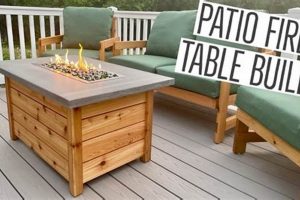
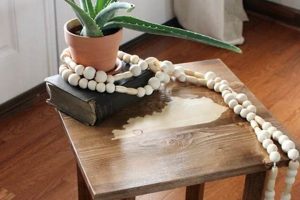
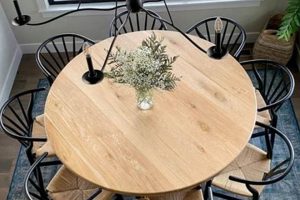
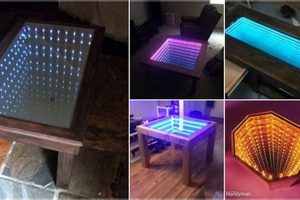
Constructing outdoor furniture, specifically tables designed for patios, through do-it-yourself methods is a common practice. This involves individuals utilizing their skills and resources to build tables suitable for outdoor dining, relaxation, or decorative purposes in patio settings. An example includes using reclaimed wood to create a rustic-style table for an outdoor seating area.
The practice offers several advantages, including cost savings, customization options, and the satisfaction of creating a unique piece. Its historical context is rooted in the broader do-it-yourself movement, which emphasizes self-reliance and resourcefulness. Benefits extend to personalized design, allowing builders to tailor the size, style, and materials to match specific patio aesthetics and functional needs.
The subsequent sections will address various construction methods, suitable materials, design considerations, and essential tools required for successful table building. Safety precautions and finishing techniques will also be discussed to ensure durability and longevity.
Tips for Constructing Outdoor Tables
The following guidelines aim to improve the success rate and overall quality of self-made outdoor tables. Adhering to these points enhances structural integrity, aesthetic appeal, and longevity of the finished product.
Tip 1: Material Selection: Prioritize weather-resistant materials such as treated lumber, cedar, or teak. These woods naturally resist rot and insect damage, reducing the need for frequent maintenance. Consider using recycled plastic lumber as an alternative for enhanced durability.
Tip 2: Precise Measurements: Accuracy is paramount. Double-check all measurements before cutting any materials. Inaccurate cuts lead to structural instability and require costly material replacement. Utilize a precise measuring tape and a square for accurate angles.
Tip 3: Secure Joinery: Employ robust joinery techniques like mortise and tenon, dovetails, or pocket screws with exterior-grade adhesive. Weak joints compromise the table’s stability, especially under stress or adverse weather conditions. Ensure screws are adequately sized for the thickness of the materials.
Tip 4: Adequate Support: Reinforce table legs and the tabletop frame with braces or aprons. This prevents sagging and enhances the table’s weight-bearing capacity. Position braces strategically to distribute weight evenly across the structure.
Tip 5: Surface Preparation: Before applying any finish, thoroughly sand all surfaces to achieve a smooth, even texture. This ensures proper adhesion of the finish and prevents unsightly imperfections. Use progressively finer grits of sandpaper for optimal results.
Tip 6: Protective Finish: Apply a high-quality exterior-grade sealant, stain, or paint to protect the wood from moisture, UV rays, and abrasion. Regular reapplication of the finish, typically every one to two years, extends the table’s lifespan. Consider the environmental impact of the chosen finish.
Tip 7: Hardware Considerations: Use stainless steel or galvanized hardware to prevent rust and corrosion. Pre-drill pilot holes before inserting screws to avoid splitting the wood. Countersink screw heads for a flush, professional finish.
Adherence to these recommendations will increase the likelihood of a structurally sound, aesthetically pleasing, and durable outdoor table. The focus on material selection, precise construction, and protective finishing is critical for long-term performance.
The article will now transition to discuss specific design styles and project examples to further inspire and guide the table-building process.
1. Material Durability
Material durability is a foundational element in the realm of constructing outdoor tables through do-it-yourself methods. The inherent properties of the chosen materials directly influence the lifespan, structural integrity, and maintenance requirements of the finished product, making careful selection paramount for a successful and enduring outcome.
- Weather Resistance
Weather resistance refers to a material’s ability to withstand exposure to various environmental factors, including rain, sunlight, temperature fluctuations, and humidity, without significant degradation. For instance, teak wood contains natural oils that repel water and resist insect infestation, making it a durable choice for outdoor furniture. Conversely, untreated pine is susceptible to rot and warping when exposed to moisture, necessitating protective coatings and increased maintenance. The implications for self-made outdoor tables are that selecting weather-resistant materials minimizes the need for repairs and prolongs the table’s usability.
- Structural Strength
Structural strength denotes a material’s capacity to bear weight and withstand stress without deformation or failure. Steel, for example, possesses high tensile strength, making it suitable for supporting heavy tabletops and enduring significant loads. Softer woods like cedar, while aesthetically pleasing, may require reinforcement to prevent sagging or breakage. In the context of building tables, structural strength ensures the table can safely accommodate its intended use, whether for dining, holding decorative items, or serving as a workspace.
- Resistance to Decay
Resistance to decay encompasses a material’s ability to resist decomposition caused by biological agents, such as fungi, bacteria, and insects. Pressure-treated lumber undergoes a chemical process that infuses it with preservatives, rendering it resistant to rot and termite damage. Untreated wood is vulnerable to these agents, leading to structural weakening and eventual collapse. For self-assembled outdoor tables, decay resistance is critical for preventing premature failure, especially in humid or damp environments.
- Maintenance Requirements
Material choice directly impacts the level of maintenance required to preserve the integrity and appearance of an outdoor table. Materials like recycled plastic lumber require minimal maintenance, needing only occasional cleaning. Wood, on the other hand, necessitates regular staining, sealing, or painting to protect it from the elements and prevent degradation. The selection of low-maintenance materials reduces the ongoing effort and expense associated with preserving the table’s condition.
In summary, the selection of durable materials is inextricably linked to the long-term success of building outdoor tables through DIY methods. The chosen materials dictate the table’s ability to withstand environmental stressors, maintain structural integrity, resist decay, and minimize ongoing maintenance, directly impacting its overall value and longevity. For example, opting for inherently durable materials like teak or aluminum can significantly extend the life of the table compared to using less robust alternatives.
2. Joint Strength
The structural integrity of any table, especially one intended for outdoor use, is inextricably linked to the strength of its joints. In the context of do-it-yourself patio table construction, the methods used to connect individual components directly determine the table’s ability to withstand loads, resist environmental stresses, and maintain its form over time. Weak joints constitute a primary failure point, leading to instability, sagging, or complete collapse. For instance, a table constructed with poorly executed butt joints and inadequate adhesive is highly susceptible to separation under moderate weight or wind pressure. Conversely, utilizing robust joinery techniques, such as mortise and tenon, dovetail, or properly executed pocket screws with exterior-grade adhesive, significantly enhances the table’s overall durability.
The practical application of understanding joint strength is evident in the longevity and usability of the finished product. A well-constructed table, featuring strong and reliable joints, will require less maintenance and resist degradation caused by repeated use or exposure to weather elements. For example, consider two tables: one assembled with simple screws and another utilizing mortise-and-tenon joints. The former may exhibit wobbling and require frequent tightening within a season, while the latter, due to the inherent strength of its joinery, maintains stability and requires minimal intervention. This underscores the significance of selecting and executing appropriate jointing methods relative to the intended use and anticipated environmental conditions.
In summary, joint strength is a critical determinant of success in constructing durable outdoor tables through do-it-yourself methods. The implementation of appropriate joinery techniques directly affects the table’s load-bearing capacity, resistance to environmental stressors, and overall lifespan. While the selection of aesthetically pleasing materials and finishes is important, the underlying structural integrity afforded by strong joints remains paramount. Challenges may arise in mastering complex joinery methods, but the investment in learning and applying these techniques translates directly into a more robust and enduring finished product, contributing to the broader goal of creating functional and aesthetically pleasing outdoor furniture.
3. Design Stability
Design stability, within the context of self-assembled patio tables, denotes the inherent ability of the table to maintain its structural integrity and remain upright under various conditions. It is a critical consideration, influencing both the safety and longevity of the finished product. A lack of stability can lead to tipping, wobbling, or even collapse, rendering the table unusable and potentially hazardous.
- Base Geometry and Weight Distribution
The geometry of the table’s base and the distribution of weight are fundamental to its stability. A wider base offers a lower center of gravity, increasing resistance to tipping. For instance, a table with widely spaced legs is inherently more stable than one with legs clustered closely together. Distributing weight evenly across the tabletop and base also minimizes the risk of imbalance. The implications for tables built through DIY methods are that careful consideration of base design and weight distribution is essential for ensuring a stable and safe structure.
- Material Rigidity and Joint Integrity
The rigidity of the materials used and the integrity of the joints connecting them contribute significantly to overall stability. Stiff materials like steel or hardwood provide a solid framework that resists deformation under load. Secure joints, such as mortise and tenon or properly executed bolted connections, prevent wobbling and maintain structural integrity. When individuals construct tables independently, the selection of rigid materials and the meticulous execution of strong joints are paramount for achieving a stable and durable design.
- Environmental Factors and Load Capacity
External factors, such as wind, uneven ground, and applied loads, can significantly impact a table’s stability. Designing a table to withstand typical wind conditions and variations in ground level is crucial for outdoor applications. Furthermore, the table must be capable of supporting the intended load without compromising its stability. DIY table builders must consider these factors by implementing features like weighted bases or adjustable feet to mitigate the effects of environmental influences and ensure adequate load-bearing capacity.
- Height-to-Base Ratio and Overhang
The ratio of a table’s height to the width of its base is a key determinant of stability. Taller, narrower tables are inherently more prone to tipping than shorter, wider tables. Similarly, excessive tabletop overhang can create an imbalance, particularly when weight is applied to the overhanging portion. DIY projects require careful attention to these proportions to ensure a stable and balanced design. Limiting the height-to-base ratio and minimizing tabletop overhang can significantly improve the table’s resistance to tipping.
These facets are interconnected and collectively determine the stability of a table. When pursuing self-directed table construction, integrating these considerations is pivotal. For example, a table designed with a wide base, rigid materials, strong joints, and minimal overhang will generally exhibit greater stability than one lacking these features. This proactive approach mitigates potential hazards and enhances the utility and lifespan of the finished product.
4. Weather Resistance
Weather resistance constitutes a critical performance parameter in the realm of do-it-yourself patio table construction. The outdoor environment exposes these tables to a range of degrading influences, including precipitation, ultraviolet radiation, temperature fluctuations, and humidity. Consequently, the material choices, construction methods, and finishing techniques employed must prioritize protection against these elements to ensure the table’s longevity and maintain its structural integrity. The absence of adequate weather resistance leads to premature degradation, manifested as warping, cracking, rotting, and fading, ultimately rendering the table unusable. For example, an untreated wooden table left exposed to the elements will quickly deteriorate, whereas one constructed from weather-resistant materials like teak or cedar, and properly sealed, can withstand years of outdoor use.
The practical significance of incorporating weather resistance into the design and construction process is multifaceted. From a financial perspective, selecting durable, weather-resistant materials may entail a higher initial investment, but it yields long-term cost savings by reducing the need for frequent repairs, replacements, and maintenance. Functionally, weather resistance ensures the table remains aesthetically pleasing and structurally sound, providing a safe and reliable surface for dining, entertainment, or relaxation. Environmental considerations also come into play, as the use of durable materials reduces the consumption of resources associated with replacing deteriorated furniture. Moreover, appropriate finishes, such as water-based sealants and UV-resistant coatings, minimize the release of harmful volatile organic compounds into the atmosphere.
In summary, weather resistance is an indispensable element in the successful construction of patio tables through do-it-yourself methods. It dictates the table’s ability to withstand the rigors of outdoor exposure, preserving its functionality, appearance, and structural integrity over time. Neglecting weather resistance compromises the investment of time, resources, and effort, resulting in a short-lived and potentially unsafe piece of furniture. Therefore, careful consideration of material properties, construction techniques, and protective finishes is paramount for creating durable and long-lasting outdoor tables.
5. Finish Protection
Finish protection plays a crucial role in the longevity and aesthetic appeal of outdoor tables constructed through do-it-yourself methods. The application of appropriate finishes safeguards the underlying materials from environmental degradation, thereby extending the lifespan of the table and preserving its appearance.
- Moisture Resistance
Moisture resistance is essential for preventing water absorption, which can lead to warping, cracking, and rot in wooden tables. Sealants, paints, and varnishes form a protective barrier against water penetration. For example, applying a marine-grade varnish to a wooden table can significantly enhance its resistance to rain and humidity. In the context of outdoor tables, moisture resistance ensures structural integrity and prevents fungal growth.
- Ultraviolet (UV) Radiation Protection
Prolonged exposure to UV radiation can cause fading, discoloration, and degradation of many materials, including wood and certain plastics. UV-resistant coatings contain additives that absorb or reflect harmful UV rays, thereby preserving the color and structural integrity of the table. As an instance, UV-inhibiting stains can help maintain the natural color of a wooden table exposed to sunlight. This is vital because UV damage compromises the table’s appearance and structural integrity.
- Abrasion Resistance
Abrasion resistance refers to a finish’s ability to withstand wear and tear from physical contact, such as scratching, scraping, and rubbing. Durable finishes, like polyurethane, provide a hard, protective layer that resists damage from everyday use. An example is the application of a scratch-resistant clear coat to a tabletop to prevent blemishes. For patio tables, abrasion resistance ensures the finish remains intact despite regular use.
- Chemical Resistance
Chemical resistance is the ability of a finish to withstand exposure to household chemicals, such as cleaning solutions, spills, and pollutants. Chemical-resistant finishes prevent staining, etching, and other forms of damage caused by chemical contact. An example is applying a chemical-resistant epoxy coating to a tabletop used for serving food and beverages. This is important for outdoor tables as it protects against spills and environmental contaminants.
The effective application of finish protection, encompassing moisture, UV radiation, abrasion, and chemical resistance, is integral to the successful construction of outdoor tables. This comprehensive approach minimizes degradation, preserves aesthetic qualities, and ultimately extends the functional lifespan of the furniture. The selection of appropriate finishes should align with the specific materials used and the anticipated environmental conditions to ensure optimal protection.
6. Size Appropriateness
Size appropriateness, in the context of patio tables constructed through do-it-yourself methods, refers to the dimensional compatibility of the table with its intended surroundings and function. It necessitates careful consideration of the available space, the number of intended users, and the table’s purpose to ensure usability and aesthetic harmony. Improper sizing can lead to spatial inefficiencies, functional limitations, and visual disharmony within the patio environment.
- Spatial Constraints and Ergonomics
Spatial constraints dictate the maximum allowable dimensions of the table, preventing overcrowding and ensuring ease of movement within the patio area. Ergonomic considerations pertain to the table’s height and surface area relative to the users’ comfort and accessibility. For instance, a large table in a small patio may impede circulation, while a table that is too low may cause discomfort during dining. When constructing tables through DIY methods, it is vital to measure the patio dimensions accurately and consider the ergonomic needs of potential users to ensure a functional and comfortable design.
- User Capacity and Table Functionality
The intended number of users and the primary function of the table influence its required surface area and shape. A dining table for a family of four necessitates a larger surface area than a side table intended for holding drinks. The shape of the table, whether round, square, or rectangular, also affects its capacity and suitability for different activities. DIY table builders should carefully assess the intended use and user capacity to determine the appropriate dimensions and shape for optimal functionality.
- Aesthetic Proportions and Visual Harmony
Aesthetic proportions relate to the visual balance and harmony of the table relative to the surrounding environment. The table’s dimensions should complement the scale of the patio and other outdoor furniture, creating a cohesive and visually pleasing arrangement. A disproportionately large or small table can disrupt the visual balance of the space. When constructing tables through DIY methods, considering aesthetic proportions ensures the finished product integrates seamlessly into the patio environment, enhancing its overall aesthetic appeal.
- Storage and Portability Considerations
For individuals with limited storage space or a need for portability, the size and weight of the table become critical factors. A foldable or easily disassembled table may be preferable in such situations. Smaller, lightweight tables are also easier to move and reposition as needed. DIY table projects can be tailored to accommodate storage and portability requirements by selecting appropriate materials and incorporating features like folding legs or detachable tabletops.
In summary, size appropriateness is a multifaceted consideration that significantly impacts the functionality, usability, and aesthetic integration of patio tables constructed through DIY methods. Addressing spatial constraints, user capacity, aesthetic proportions, and storage needs ensures that the finished product is not only functional but also enhances the overall appeal and usability of the outdoor space. A table that is appropriately sized contributes to a more comfortable, visually appealing, and functional patio environment.
7. Tool Precision
The fabrication of patio tables through do-it-yourself methods is directly contingent upon the precision of the tools employed. Imprecise tools yield inaccurate cuts, misaligned joints, and an overall reduction in the structural integrity and aesthetic quality of the finished product. The cause-and-effect relationship is clear: inaccurate measurements due to substandard tools lead to components that do not fit together correctly, resulting in instability and a compromised final product. Tool precision is therefore not merely a desirable attribute but a foundational requirement for successful table construction. For example, a table leg cut even slightly off-square will introduce a noticeable wobble, detracting from both its function and appearance. The use of a high-quality table saw with a calibrated fence, conversely, ensures accurate and repeatable cuts, contributing directly to the table’s stability and visual appeal.
Practical applications of tool precision extend to all phases of table construction. Accurate drilling, facilitated by a drill press and sharp bits, ensures that screws and fasteners are properly aligned and securely seated, maximizing joint strength. Likewise, a level and accurate measuring tools are vital for aligning table legs and ensuring a level tabletop surface. The absence of such precision can result in a table that is not only visually unappealing but also structurally unsound, potentially posing a safety hazard. The careful selection and calibration of tools, therefore, represents a critical investment in the overall quality and longevity of the self-made table.
In summation, the pursuit of precision in tool selection and utilization is indispensable for individuals engaged in the creation of patio tables through do-it-yourself projects. The connection between tool precision and the successful completion of the project is direct and unambiguous. Challenges associated with achieving high levels of accuracy can be mitigated through the selection of quality tools, diligent calibration, and the application of sound construction techniques. The pursuit of precision is an investment that yields a more stable, durable, and aesthetically pleasing outdoor table, aligning with the broader theme of craftsmanship and self-sufficiency in home improvement.
Frequently Asked Questions
This section addresses frequently encountered inquiries regarding the construction of patio tables using do-it-yourself methods. It aims to clarify common concerns and misconceptions, providing guidance for successful project completion.
Question 1: What are the most durable materials for outdoor table construction?
Durable material choices include treated lumber, teak, cedar, and recycled plastic lumber. These options exhibit inherent resistance to moisture, insect damage, and decay, ensuring extended lifespan and reduced maintenance requirements.
Question 2: How can one ensure adequate joint strength in a self-made table?
Employing robust joinery techniques, such as mortise and tenon, dovetails, or pocket screws with exterior-grade adhesive, is crucial. Ensure all screws are appropriately sized and that joints are securely fastened to prevent structural failure.
Question 3: What steps can be taken to maximize the stability of a patio table?
Widen the base of the table to lower the center of gravity. Utilize rigid materials and secure joints. Consider environmental factors such as wind and uneven ground. Minimize tabletop overhang to prevent tipping.
Question 4: Which finishes provide the best protection against weather damage?
High-quality exterior-grade sealants, stains, and paints offer optimal protection. Regularly reapply these finishes, typically every one to two years, to maintain protection against moisture, UV rays, and abrasion.
Question 5: How does one determine the appropriate size for a patio table?
Assess the available space, the intended number of users, and the table’s purpose. Consider ergonomic factors and visual harmony with the surrounding environment to ensure a functional and aesthetically pleasing design.
Question 6: What tools are essential for achieving precise cuts and accurate assembly?
Essential tools include a high-quality table saw, a miter saw, a drill press, a level, measuring tapes, and squares. Ensure all tools are calibrated and used with precision to minimize errors and maximize structural integrity.
In summary, careful material selection, robust joinery, stable design, protective finishes, appropriate sizing, and precise tooling are key elements for successful do-it-yourself patio table construction. Addressing these factors ensures a durable, functional, and aesthetically pleasing outcome.
The following section will explore specific project examples and design inspirations to further guide the table-building process.
Conclusion
This exploration of patio tables diy has emphasized the critical elements necessary for successful construction. Material durability, joint strength, design stability, weather resistance, finish protection, size appropriateness, and tool precision are all vital considerations that influence the longevity and functionality of self-made outdoor tables. Adherence to these principles mitigates potential structural weaknesses and enhances overall aesthetic appeal.
Effective implementation of these guidelines contributes to the creation of durable, functional, and visually pleasing outdoor furniture. The pursuit of quality in patio tables diy necessitates a commitment to careful planning, precise execution, and a thorough understanding of the principles outlined herein. Investing time and resources into these aspects will yield lasting results and enhance the outdoor living experience.