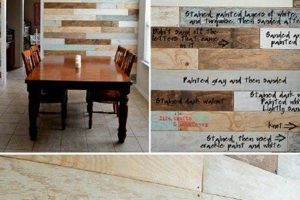
The application of wooden boards or panels to interior walls, undertaken by the homeowner, represents an accessible method for enhancing a room’s aesthetic and potentially increasing its value. An example includes installing shiplap boards on a living room wall to create a rustic or modern farmhouse atmosphere. This process typically involves measuring, cutting, and securely affixing the wood to the existing wall surface.
This form of interior decoration offers numerous advantages, including improved insulation, sound dampening, and concealment of imperfections in the original wall. Historically, such cladding served practical purposes, providing protection against drafts and regulating temperature within structures. Modern applications emphasize decorative appeal, offering diverse styles ranging from traditional wainscoting to contemporary geometric designs.
The subsequent sections will delve into the various types of wood suitable for this purpose, detailing the tools and techniques required for successful installation, and outlining the potential challenges and solutions encountered during the project. Furthermore, considerations for design planning, cost estimations, and long-term maintenance will be addressed.
Installation Tips for Wood Wall Paneling Projects
Proper execution of interior wood cladding installation requires meticulous planning and adherence to established best practices. The following tips aim to ensure a successful and visually appealing finished product.
Tip 1: Acclimatize the Wood: Prior to installation, allow the chosen wood panels to acclimatize to the room’s environment for several days. This minimizes expansion or contraction after installation, preventing gaps or warping. For example, store the panels in the room where they will be installed for at least 72 hours.
Tip 2: Proper Wall Preparation: Ensure the wall surface is clean, dry, and structurally sound. Repair any existing damage, such as cracks or holes, and apply a primer to promote adhesion. For instance, use a level to check for unevenness and address any significant deviations.
Tip 3: Precise Measurements and Cuts: Accurate measurements are crucial. Utilize a high-quality measuring tape and a precision saw to ensure clean, even cuts. A miter saw is particularly useful for angled cuts, contributing to a professional finish.
Tip 4: Secure Attachment: Employ appropriate fasteners, such as nails or screws, and construction adhesive to securely attach the panels to the wall studs. Locate studs using a stud finder and ensure fasteners penetrate sufficiently for a firm hold.
Tip 5: Consistent Spacing: Maintain consistent spacing between panels using spacers or shims. This creates a uniform and aesthetically pleasing appearance. The chosen spacing will depend on the desired design and the dimensions of the panels.
Tip 6: Professional Finishing: After installation, fill any nail holes or seams with wood filler and sand smooth. Apply a sealant, stain, or paint to protect the wood and enhance its appearance. Consider the overall design scheme when selecting a finish.
Tip 7: Account for Electrical Outlets: Plan and execute cuts precisely around electrical outlets and switch plates. De-energize the circuits before commencing this step. Use appropriate tools for creating accurate openings and maintain code compliance.
Adherence to these principles contributes significantly to the longevity and visual impact of the finished wall cladding. Proper preparation, precise execution, and attention to detail are essential for achieving professional-grade results.
The subsequent section will address common mistakes and troubleshooting techniques encountered during the installation process, providing solutions for resolving potential issues.
1. Wood Selection
The selection of appropriate wood materials is paramount to the success of any interior wall cladding installation. The chosen wood type significantly influences the aesthetic appeal, durability, and overall cost-effectiveness of the finished project. Careful consideration of these factors is therefore essential.
- Hardwood vs. Softwood
Hardwoods, such as oak or maple, offer greater resistance to dents and scratches, making them suitable for high-traffic areas or environments prone to wear and tear. Softwoods, like pine or cedar, are generally more affordable and easier to work with, but less durable. The selection depends on the intended use and aesthetic preferences. For example, hardwood cladding might be preferred in a hallway, while softwood may suffice in a rarely used guest room.
- Wood Grain and Appearance
Different wood species exhibit distinct grain patterns and natural colors. The grain pattern affects the visual texture and character of the finished wall. For instance, knotty pine imparts a rustic charm, while a straight-grained hardwood offers a more contemporary look. The chosen wood should complement the overall design scheme of the room.
- Moisture Content and Stability
Wood’s moisture content directly impacts its stability and susceptibility to warping or cracking after installation. Kiln-dried wood is generally preferred as it has a lower moisture content, reducing the risk of dimensional changes. Acclimatizing the wood to the room’s environment before installation is also crucial. Failure to do so can lead to significant problems over time.
- Cost and Availability
The cost of different wood species varies considerably, depending on factors such as rarity, processing, and transportation. Availability also plays a role; certain exotic hardwoods may be difficult to source or require special ordering. A balance between desired aesthetics, budget constraints, and ease of procurement is necessary.
Ultimately, informed wood selection constitutes a foundational step in achieving a high-quality and lasting interior wall cladding installation. Weighing the characteristics of different wood types against the project’s specific requirements is vital for ensuring a satisfactory and visually appealing result.
2. Wall Preparation
Successful “diy wood wall paneling” projects rely heavily on thorough wall preparation. The existing wall surface serves as the foundation for the new cladding; its condition directly influences the paneling’s long-term stability, aesthetic appeal, and overall performance. Inadequate preparation can lead to a range of problems, including uneven surfaces, insecure attachment, and eventual failure of the installation. For instance, neglecting to repair cracks or level unevenness results in visible imperfections in the finished paneling. Properly preparing the wall provides a smooth, stable, and receptive surface for the adhesive and fasteners, ensuring a secure and lasting bond. This step is not merely cosmetic; it is a fundamental requirement for a professional-quality outcome.
Specific preparation steps vary depending on the existing wall type and its condition. For drywall, this often involves cleaning the surface to remove dust and debris, patching any holes or imperfections with joint compound, and priming to promote adhesion. For plaster walls, it may be necessary to address cracking or crumbling by applying a bonding agent and skim coating. In cases where the existing wall is severely damaged or uneven, furring strips may be required to create a level and stable framework for the paneling. Regardless of the specific approach, thorough inspection and meticulous preparation are essential. Consider a scenario where paneling is directly applied to a dusty, unprimed wall; the adhesive may fail to bond effectively, leading to eventual detachment of the panels.
In conclusion, wall preparation is an indispensable component of any “diy wood wall paneling” project. Its importance stems from its direct impact on the paneling’s structural integrity and visual quality. Addressing wall imperfections, ensuring a clean and level surface, and using appropriate primers and bonding agents are all critical steps. While often perceived as time-consuming, proper wall preparation is an investment that minimizes future problems and maximizes the longevity and aesthetic appeal of the finished wall paneling. Failure to prioritize this stage invariably leads to compromised results and potential project failure.
3. Precise Measurement
Accurate measurement forms a critical foundation for successful “diy wood wall paneling” projects. The direct correlation between precise measurements and the final outcome is undeniable. Incorrect dimensions can result in material waste, mismatched seams, and an overall unprofessional appearance. For example, if the wall’s width is miscalculated by even a small margin, the final panel may require awkward trimming, disrupting the intended aesthetic. The cumulative effect of multiple measurement errors is a diminished quality and increased project cost.
The importance of precise measurement extends beyond simply determining the overall dimensions of the wall. It encompasses the accurate calculation of angles, the placement of electrical outlets and other fixtures, and the spacing between individual panels. Consider a scenario where an electrical outlet is not accounted for during the measurement process; the resulting panel may obstruct the outlet, requiring costly and time-consuming modifications. Furthermore, consistent spacing between panels relies entirely on accurate and repeated measurements, ensuring a uniform and visually pleasing pattern. Precision also reduces the probability of gaps or overlaps at the corners and edges of the wall paneling, contributing to a seamless and aesthetically polished result. Failure to emphasize precision during this stage often results in rework, increased material consumption, and a final product that deviates significantly from the intended design.
In summary, precise measurement is not merely a preliminary step in “diy wood wall paneling”; it is an integral component that directly influences the project’s success. Diligence and accuracy in measurement mitigate errors, reduce waste, and contribute to a high-quality, professional-looking finished product. The time invested in careful measurement is a worthwhile investment, yielding significant returns in terms of both aesthetic appeal and cost-effectiveness.
4. Secure Attachment
The longevity and aesthetic integrity of any “diy wood wall paneling” installation are fundamentally dependent on the security of its attachment to the underlying wall structure. Substandard attachment methods or materials precipitate a cascade of negative effects, culminating in compromised appearance, structural instability, and potential safety hazards. The choice of fasteners and adhesives, coupled with adherence to proper installation techniques, determines the ability of the paneling to resist gravitational forces, environmental fluctuations (temperature and humidity), and incidental impacts. For instance, utilizing insufficient adhesive on heavy panels can lead to detachment over time, creating unsightly gaps and potential for panel collapse. Secure attachment ensures the paneling remains flush against the wall, maintaining the intended visual design and preventing the accumulation of dust or moisture behind the panels, which can foster mold growth. Proper fastening also mitigates the risk of panels warping or buckling due to differential expansion and contraction, preserving the smooth, even surface that characterizes a professionally executed installation.
Practical applications of secure attachment principles are evident in various “diy wood wall paneling” scenarios. When installing paneling over drywall, the use of construction adhesive, coupled with appropriately sized screws driven into wall studs, provides a robust and reliable bond. Alternatively, when working with concrete walls, specialized masonry anchors are essential for achieving adequate holding power. Careful consideration must be given to the weight and dimensions of the panels, as heavier panels necessitate more frequent and substantial fasteners. Furthermore, the type of wood used influences the choice of fasteners; softer woods may require pre-drilling to prevent splitting, while denser hardwoods demand more forceful driving mechanisms. Regularly inspecting the installed paneling for any signs of loosening or detachment and promptly addressing such issues prevents minor problems from escalating into major structural concerns. Neglecting the importance of secure attachment can lead to costly repairs and even necessitate complete reinstallation of the paneling.
In summary, secure attachment is not merely a procedural step in “diy wood wall paneling” projects but a foundational principle that governs the long-term success and safety of the installation. The appropriate selection of fasteners and adhesives, combined with meticulous installation techniques, ensures the panels remain securely affixed to the wall, preserving their aesthetic appeal and structural integrity. Addressing potential attachment vulnerabilities proactively, such as using moisture-resistant adhesives in damp environments, is crucial. By prioritizing secure attachment, installers can mitigate risks, extend the lifespan of the paneling, and create visually pleasing and structurally sound interior spaces.
5. Consistent Spacing
Maintaining uniform gaps between individual boards or panels is a critical factor in achieving a professional and visually appealing “diy wood wall paneling” installation. Consistent spacing influences the overall aesthetic, perceived quality, and structural integrity of the finished wall.
- Aesthetic Uniformity
Consistent spacing contributes significantly to visual balance and harmony. Uniform gaps create a sense of order and intentionality, enhancing the paneling’s aesthetic appeal. Conversely, inconsistent spacing disrupts the visual rhythm, leading to a haphazard and unprofessional appearance. For instance, varying gaps in shiplap paneling draw the eye away from the overall design and highlight imperfections.
- Dimensional Accommodation
Wood is a hygroscopic material, meaning it expands and contracts with changes in humidity. Consistent spacing allows for this natural movement without causing buckling or warping of the panels. If panels are installed tightly without any gap, seasonal changes can exert significant pressure, potentially damaging the panels or the underlying wall structure. A consistent, albeit small, gap acts as a buffer, mitigating these effects.
- Shadow Line Definition
The consistent gaps between panels create subtle shadow lines that accentuate the texture and depth of the wall. These shadow lines add visual interest and dimension, enhancing the overall aesthetic impact. Irregular spacing results in uneven shadow lines, diminishing the desired effect and creating a disjointed appearance. For example, properly spaced beadboard paneling exhibits a distinct and attractive pattern of light and shadow.
- Installation Precision Indicator
Maintaining consistent spacing throughout the installation process serves as a tangible indicator of the installer’s precision and attention to detail. It demonstrates a commitment to quality craftsmanship and reflects a deliberate approach to the project. Inconsistent spacing, conversely, suggests a lack of care and a disregard for precision, undermining the perceived value of the “diy wood wall paneling” project.
These interconnected facets underscore the importance of meticulous attention to spacing during any “diy wood wall paneling” endeavor. Consistent spacing is not merely a cosmetic detail but an integral element that contributes to the paneling’s aesthetic appeal, structural stability, and overall quality.
6. Finishing Techniques
The execution of “diy wood wall paneling” culminates in the application of appropriate finishing techniques, a critical stage that directly influences the paneling’s aesthetic appeal, durability, and resistance to environmental factors. The selection and skillful application of finishes transform raw wood into a polished and protected surface. Failure to employ suitable finishing methods undermines the preceding efforts in material selection, measurement, and installation. Unprotected wood is susceptible to moisture damage, discoloration, and physical wear, negating the investment in time and resources. A properly finished surface, conversely, enhances the wood’s natural grain, adds visual depth, and provides a protective barrier against everyday use and environmental exposure. For instance, applying a clear polyurethane coating to a pine wall paneling not only enhances the grain pattern but also shields the wood from scratches, stains, and moisture. The choice of finishwhether stain, paint, varnish, or oildepends on the desired aesthetic, the type of wood, and the intended use of the room.
Practical applications of specific finishing techniques illustrate their significance. Staining, for example, allows for the alteration of the wood’s color, achieving a desired tone or matching existing dcor. Different stains penetrate the wood to varying degrees, creating subtle or dramatic color shifts. The application of a sealer prior to staining controls the stain’s penetration, ensuring a uniform color across the entire surface. Painting provides complete color coverage and allows for the introduction of non-natural colors, offering maximum design flexibility. However, paint can obscure the wood grain, which may be undesirable in certain applications. Varnishes and lacquers provide a durable, protective coating that resists scratches and moisture, making them suitable for high-traffic areas. Oil finishes penetrate the wood, enhancing its natural beauty and providing a soft, matte finish. The selection of a specific technique must align with the project’s aesthetic goals and functional requirements.
In conclusion, finishing techniques are an indispensable component of “diy wood wall paneling”, serving as the final touch that elevates the installation from a basic construction project to a polished and enduring interior design element. Appropriate selection and application of finishes significantly enhance the paneling’s aesthetic appeal, provide essential protection against environmental factors and physical wear, and contribute to the overall value and longevity of the installation. While often perceived as a final step, the planning and execution of finishing techniques require careful consideration and skill to achieve optimal results and maximize the investment in the “diy wood wall paneling” project.
7. Electrical Consideration
The integration of “diy wood wall paneling” with existing electrical systems demands meticulous planning and execution. Electrical safety codes mandate specific practices to prevent fire hazards and ensure the safe operation of electrical devices. Alterations to wall surfaces necessitate careful accommodation of outlets, switches, and wiring, transforming a purely aesthetic project into one with significant safety implications. Ignoring electrical considerations when installing wall paneling can lead to dangerous and costly consequences, including electrical shock, fire, and code violations.
- Outlet and Switch Relocation
When paneling covers existing outlets or switches, these fixtures must be safely and correctly extended to the new surface. This typically involves turning off the relevant circuit breaker, disconnecting the wiring, and using outlet extenders or deeper electrical boxes to bring the receptacle flush with the finished paneling. Improper extension can result in exposed wiring or a recessed outlet, posing both a safety hazard and an aesthetic issue. For example, failing to secure the extended outlet properly can cause the wires to disconnect, leading to a potential electrical short.
- Wiring Pathways and Protection
Installing paneling may require rerouting or modifying existing wiring. All wiring must be protected within approved conduits or cable assemblies. Running wires directly behind the paneling without proper protection can lead to damage from nails or screws during installation or subsequent repairs. For instance, a nail accidentally piercing a live wire can cause a short circuit and potentially start a fire within the wall cavity. Compliance with local electrical codes is paramount to ensure safe and compliant wiring practices.
- Grounding Considerations
Maintaining proper grounding throughout the electrical system is essential for safety. When extending outlets or modifying wiring, it is crucial to ensure that the grounding conductor remains intact and properly connected. A broken or disconnected ground wire can render the grounding system ineffective, increasing the risk of electrical shock. For example, if a metal paneling system is not properly grounded, a short circuit could energize the paneling, creating a significant electrical hazard.
- Access and Future Maintenance
The installation of wall paneling should not impede access to electrical junction boxes or wiring connections. Ensuring convenient access is vital for future maintenance, repairs, or upgrades. Covering junction boxes with paneling creates a fire hazard and violates electrical codes. For instance, if a wiring fault occurs behind the paneling and a junction box is inaccessible, significant demolition may be required to locate and repair the problem.
These electrical considerations are not secondary to the “diy wood wall paneling” process; they are integral to its safe and successful execution. A thorough understanding of electrical codes, proper wiring techniques, and the potential hazards involved is essential before commencing any wall paneling project. When in doubt, consulting a qualified electrician is advisable to ensure compliance and prevent dangerous outcomes.
Frequently Asked Questions Regarding DIY Wood Wall Paneling
The following addresses prevalent queries pertaining to the selection, installation, and maintenance of wooden wall coverings undertaken as a do-it-yourself project. The information presented aims to provide clarity and informed guidance.
Question 1: What constitutes the most appropriate type of wood for interior wall paneling applications?
The selection of wood should align with aesthetic preferences, budgetary constraints, and functional requirements. Hardwoods, such as oak or maple, offer superior durability but command a higher price point. Softwoods, including pine or cedar, present a more economical option, suitable for less demanding environments.
Question 2: Is specialized expertise required for the successful installation of wall paneling?
While prior experience in carpentry or woodworking is advantageous, successful installation can be achieved by individuals with moderate do-it-yourself skills. Meticulous planning, accurate measurements, and adherence to established best practices are essential.
Question 3: What is the projected lifespan of professionally installed wood wall paneling?
With appropriate installation and diligent maintenance, wood wall paneling can retain its structural integrity and aesthetic appeal for decades. Factors such as humidity levels, exposure to sunlight, and the quality of the wood contribute to the longevity of the installation.
Question 4: Does the installation of wall paneling necessitate the acquisition of specialized tools?
The project typically requires tools common to most do-it-yourself enthusiasts, including a measuring tape, level, saw (circular or miter), drill, and fastening implements (nails or screws). The acquisition of specialized tools may be warranted depending on the complexity of the design.
Question 5: What are the primary considerations regarding electrical outlets and switch placements during paneling installation?
Safety protocols mandate that all electrical components be de-energized prior to commencing any alteration. Outlets and switches must be carefully extended to the finished surface of the paneling, adhering to relevant electrical codes and safety regulations.
Question 6: What is the recommended procedure for maintaining the pristine condition of wood wall paneling?
Regular dusting and occasional cleaning with a damp cloth are generally sufficient to maintain the paneling’s appearance. Harsh cleaning agents or abrasive materials should be avoided to prevent damage to the finish.
In summary, a well-executed wood wall paneling installation enhances a room’s aesthetic and can add lasting value to a property. The success of the project is contingent upon careful planning, attention to detail, and adherence to established best practices.
The subsequent section will explore creative design ideas for wood wall paneling, showcasing various styles and applications.
diy wood wall paneling
This exposition has illuminated the multifaceted aspects of undertaking “diy wood wall paneling” projects. The narrative addressed the importance of material selection, wall preparation, precise measurement, secure attachment, consistent spacing, finishing techniques, and electrical considerations. Each element, when diligently addressed, contributes to a successful and enduring installation. Omission of any one component jeopardizes the integrity and aesthetic appeal of the final result.
Potential implementers should approach such endeavors with a thorough understanding of the outlined principles and a commitment to rigorous execution. The information provided serves as a foundation for informed decision-making and skilled craftsmanship, ultimately yielding a worthwhile enhancement to interior spaces. Future developments may incorporate sustainable materials and innovative installation methods, further refining the “diy wood wall paneling” process.