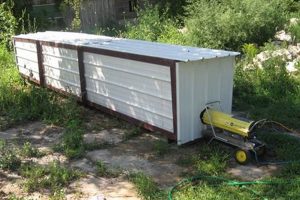
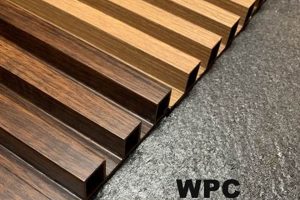
Structures designed for storing firewood, offered as unassembled packages for customer construction, commonly include pre-cut lumber, hardware, and assembly instructions. These packages provide a convenient solution for individuals seeking to protect their firewood from the elements, ensuring it remains dry and ready for use. For example, a homeowner might purchase one of these packages to store firewood near a fireplace or wood-burning stove.
Proper firewood storage is essential for efficient burning and reduced smoke production. Seasoned firewood, which has been allowed to dry, burns cleaner and produces more heat than wet or unseasoned wood. Utilizing a dedicated structure optimizes air circulation, prevents ground moisture absorption, and shields the wood from rain and snow. Historically, rudimentary wood storage solutions were commonplace, but modern pre-packaged options offer greater convenience and often, improved design aesthetics.
The subsequent discussion will delve into the selection criteria for these structures, exploring factors such as size, materials, foundation options, and assembly considerations. Furthermore, it will examine the benefits of this approach versus constructing a storage solution from raw materials, alongside exploring typical cost considerations and potential maintenance requirements.
Selection and Assembly Tips
The following guidelines offer crucial considerations when selecting and assembling pre-packaged firewood storage solutions. Careful attention to these points ensures both structural integrity and efficient firewood seasoning.
Tip 1: Assess Capacity Requirements. Before purchasing a package, accurately estimate the volume of firewood to be stored. Overestimating leads to wasted space; underestimating results in inadequate protection.
Tip 2: Evaluate Material Quality. Lumber should be pressure-treated to resist rot and insect infestation. Hardware must be corrosion-resistant to withstand outdoor exposure.
Tip 3: Prioritize Adequate Ventilation. Proper airflow is paramount for efficient drying. Packages should incorporate design features like slatted sides or raised floors to facilitate circulation.
Tip 4: Consider Foundation Options. A stable, level foundation is critical for structural stability. Options range from simple gravel beds to concrete pads; the choice depends on soil conditions and expected load.
Tip 5: Scrutinize Assembly Instructions. Clear, comprehensive instructions are essential for successful assembly. Review instructions prior to purchase to assess their clarity and completeness.
Tip 6: Implement Proper Drainage. Ensure rainwater runoff is directed away from the structure’s base. This prevents water damage and promotes faster drying.
Tip 7: Ensure Structural Integrity. Verify structural components and consider to add addition support. This process ensure quality and prolonged life of wood structure.
By adhering to these recommendations, individuals can select and construct storage solutions that provide effective firewood protection and promote optimal seasoning.
The subsequent sections will explore cost considerations, maintenance procedures, and long-term performance expectations associated with these pre-packaged solutions.
1. Pre-cut lumber quality
The quality of pre-cut lumber in a “diy wood shed kit” directly impacts the structural integrity and longevity of the finished product. Substandard lumber, characterized by excessive knots, warping, or inadequate drying, compromises the shed’s ability to withstand environmental stressors such as wind, snow load, and moisture. For example, if untreated or low-grade lumber is used, it is susceptible to rot and insect infestation, leading to premature failure of the shed’s walls or roof. Conversely, high-quality lumber, properly treated and kiln-dried, provides enhanced resistance to these elements, ensuring a durable and long-lasting structure. Thus, lumber quality is a critical factor influencing the overall value and performance of these kits.
Selecting a “diy wood shed kit” with high-quality pre-cut lumber significantly reduces the likelihood of future repairs and maintenance. Consider two scenarios: In the first, a kit using warped and knotty lumber necessitates constant adjustments and reinforcement, increasing the owner’s time and expense. In the second, a kit with straight, pressure-treated lumber assembled correctly offers years of trouble-free service. Reputable manufacturers typically specify the lumber grade and treatment process, allowing consumers to make informed decisions. Visual inspection of the lumber, when possible, further aids in assessing its suitability.
In conclusion, pre-cut lumber quality represents a foundational element in the overall success of a “diy wood shed kit.” Prioritizing kits constructed from durable, properly treated lumber translates to a more robust and enduring structure, minimizing long-term costs and maximizing firewood protection. The challenge lies in identifying reliable suppliers and understanding lumber specifications, ensuring the selected kit delivers the intended functionality and value.
2. Hardware corrosion resistance
The longevity and structural integrity of a do-it-yourself (DIY) wood shed are directly correlated with the corrosion resistance of its hardware components. Exposure to environmental elements, particularly moisture and temperature fluctuations, accelerates the degradation of susceptible metal fasteners and connectors, potentially leading to structural compromise.
- Fastener Integrity
Nails, screws, and bolts are essential for securing the wood framework. If these fasteners corrode, they lose their holding power, which can cause boards to separate, weakening the entire structure. For example, galvanized or stainless-steel fasteners are preferable as they offer a protective coating or inherent resistance to rust, whereas standard steel fasteners are prone to rapid deterioration in outdoor environments.
- Connector Durability
Metal connectors, such as brackets and hinges, provide crucial support and reinforcement at joints and stress points. Corrosion of these components can lead to instability and potential collapse, especially under heavy snow loads or strong winds. Utilizing powder-coated or hot-dip galvanized connectors increases resistance to rust and extends the lifespan of the connection.
- Impact on Structural Stability
The cumulative effect of corroded hardware can significantly diminish a wood shed’s ability to withstand external forces. Over time, weakened connections can result in sagging roofs, leaning walls, or even complete structural failure. Regular inspection and replacement of corroded hardware are necessary to maintain the shed’s stability.
- Material Selection Implications
The choice of hardware material is a critical factor in ensuring corrosion resistance. Stainless steel offers the highest level of protection but is often more expensive. Galvanized steel provides a cost-effective alternative with adequate resistance for many climates. Coatings, like powder coating, provide an additional barrier against corrosion on less-resistant metals. The material choice should align with the environmental conditions the shed will endure.
Therefore, when selecting a “diy wood shed kit,” careful consideration must be given to the type and quality of hardware included. Prioritizing corrosion-resistant materials ensures a longer lifespan for the shed, reducing the need for frequent repairs and replacements, and preserving the investment over time. Understanding the interaction between hardware and environmental conditions is essential for maintaining structural integrity.
3. Assembly instruction clarity
The ease and success of constructing a do-it-yourself (DIY) wood shed are inextricably linked to the clarity and comprehensiveness of the assembly instructions provided with the kit. Ambiguous or incomplete instructions can lead to errors, increased construction time, and potentially, a structurally unsound final product.
- Step-by-step Guidance
Effective assembly instructions provide a sequential, step-by-step guide, delineating each action required for construction. A lack of clear sequencing can result in confusion, misaligned components, and rework. For example, if the instructions fail to specify the correct order for attaching wall panels, the structure’s stability may be compromised.
- Visual Aids
Diagrams, illustrations, and photographs are crucial visual aids that supplement written instructions. Visual representations clarify component orientation and assembly techniques, particularly for individuals with limited construction experience. The absence of detailed visuals can lead to incorrect interpretations and misapplication of parts.
- Parts Identification
Precise identification of all components is essential. Instructions should include a comprehensive parts list with clear labeling and dimensions. Unclear or missing parts identification can cause delays as the builder struggles to differentiate similar-looking pieces, leading to frustration and potential errors.
- Troubleshooting and Support
Well-designed instructions anticipate potential challenges and offer troubleshooting tips. Contact information for technical support is also valuable. The inclusion of these elements demonstrates a commitment to customer success and provides a recourse for builders encountering difficulties during assembly.
In summary, the degree to which assembly instructions are clear, comprehensive, and well-supported significantly impacts the overall experience and outcome of constructing a “diy wood shed kit.” Prioritizing kits with robust instruction sets minimizes the risk of errors, reduces construction time, and enhances the likelihood of a structurally sound and aesthetically pleasing final product. Manufacturers who invest in high-quality instructions demonstrate a commitment to customer satisfaction and product reliability.
4. Foundation stability importance
The stability of the foundation beneath a “diy wood shed kit” is paramount to the structure’s longevity, functionality, and overall safety. An inadequately prepared or unstable foundation can lead to a cascade of problems, negating the benefits of a well-designed shed and potentially causing significant damage or even collapse.
- Load Distribution and Ground Settlement
The foundation serves to distribute the weight of the shed and its contents evenly across the ground. Uneven settlement, caused by inadequate compaction or unstable soil conditions, can induce stress within the shed’s frame, leading to warping, cracking, and structural instability. For example, a shed built on uncompacted soil may gradually sink on one side, causing doors to jam and roof lines to distort.
- Moisture Management and Rot Prevention
A properly constructed foundation elevates the shed above ground level, minimizing direct contact with moisture. This elevation is crucial for preventing rot and decay in the shed’s wooden components. Without a solid foundation, ground moisture can wick up into the wood, creating a breeding ground for fungi and insects that can compromise the structural integrity of the shed.
- Wind Resistance and Anchoring
The foundation provides a secure anchor point, increasing the shed’s resistance to wind uplift. A shed that is not properly anchored to a stable foundation can be vulnerable to being overturned or damaged by strong winds. Depending on the location and prevailing wind conditions, anchoring may involve the use of concrete piers, ground screws, or other specialized hardware.
- Level Surface and Structural Alignment
A level foundation ensures that the shed is built on a true plane, preventing distortions and ensuring proper alignment of walls, doors, and roof. An unlevel surface can cause structural stresses and make it difficult to assemble the shed correctly. For instance, if the foundation is not level, the walls may not be square, resulting in gaps and misaligned joints.
The long-term performance and safety of a “diy wood shed kit” are inextricably linked to the integrity of its foundation. Neglecting this aspect can lead to costly repairs, premature failure of the structure, and potential safety hazards. Therefore, meticulous attention to foundation preparation and construction is a crucial step in the successful deployment of any “diy wood shed kit”.
5. Ventilation adequacy check
Ventilation inadequacy within a “diy wood shed kit” directly correlates with moisture accumulation, fostering conditions conducive to wood decay and fungal growth. Conversely, a thorough ventilation adequacy check, encompassing design and execution, serves as a preventative measure, mitigating such adverse effects. The principle revolves around facilitating airflow to evaporate moisture emanating from freshly cut or damp firewood. Insufficient ventilation traps humidity, promoting the development of mold and mildew, which not only degrade the firewood’s quality but also weaken the shed’s structural components over time. A practical example includes observing a shed with inadequate ventilation exhibiting visible mold growth on interior surfaces and significantly slower drying times for stored wood, compared to a well-ventilated counterpart.
The practical significance of understanding and addressing ventilation adequacy extends beyond mere firewood preservation. It impacts the lifespan of the entire structure. Proper ventilation checks involve assessing the placement and size of vents, ensuring unobstructed airflow, and considering the prevailing wind direction to optimize natural ventilation. For instance, situating vents strategically on opposing sides of the shed, oriented towards the dominant wind flow, maximizes cross-ventilation. Furthermore, raising the shed floor slightly off the ground allows for air circulation underneath, preventing moisture buildup from ground contact. These design and execution elements are critical to maximizing the benefits of these types of kits.
In conclusion, a comprehensive ventilation adequacy check is not merely a secondary consideration, but rather an integral component of “diy wood shed kits,” influencing both the preservation of stored firewood and the structural integrity of the shed itself. While challenges may arise in retrofitting inadequate ventilation after construction, proactive planning and implementation during the initial assembly phase represent the most effective strategy for ensuring long-term performance and minimizing potential issues. The connection between ventilation adequacy and shed longevity underscores the importance of prioritizing this aspect in the selection and construction process.
6. Drainage implementation strategies
Effective drainage implementation is critical for the longevity and functionality of do-it-yourself (DIY) wood shed kits. The primary function of a wood shed is to protect firewood from the elements, ensuring it remains dry and seasoned for efficient burning. However, inadequate drainage can lead to moisture accumulation around and under the shed, negating its protective purpose and potentially causing structural damage. Poor drainage promotes rot, decay, and insect infestation, directly impacting both the firewood’s quality and the shed’s lifespan. As an example, consider a shed constructed on a site with poor soil drainage; rainwater accumulates around the base, saturating the wood and leading to accelerated deterioration. The success of any DIY wood shed is, therefore, intrinsically linked to effective water management strategies.
Several practical strategies can be employed to ensure adequate drainage. Grading the surrounding land to slope away from the shed directs surface runoff away from the structure’s base. Installing French drains, gravel-filled trenches that channel water away from the foundation, provides subsurface drainage. Utilizing a raised foundation, such as concrete blocks or gravel pads, elevates the shed above ground level, preventing direct contact with standing water. Furthermore, ensuring proper roof overhang diverts rainwater away from the shed’s walls. The selection of appropriate strategies depends on site-specific conditions, including soil type, slope, and rainfall patterns. Integrating these drainage solutions during the shed’s construction minimizes the risk of water damage and enhances its overall durability.
In summary, implementing robust drainage strategies is not merely an ancillary consideration but a fundamental requirement for the successful deployment of DIY wood shed kits. Failure to address drainage issues can result in premature structural failure, reduced firewood quality, and increased maintenance costs. Addressing challenges by integrating effective strategies during initial construction minimizes risks. Properly implemented drainage protects the investment, ensures the shed fulfills its intended purpose, and extends its service life.
7. Size appropriateness considerations
The selection of an appropriately sized “diy wood shed kit” is paramount to optimizing firewood storage and ensuring efficient space utilization. The dimensions of the kit should align with the intended volume of firewood to be stored, the available space for the shed’s placement, and logistical considerations related to accessing and handling the firewood. An undersized kit necessitates multiple storage locations, compromising firewood protection and convenience. Conversely, an oversized kit consumes valuable space and may represent an unnecessary expense. For instance, a homeowner requiring storage for two cords of wood would find a kit designed for four cords inefficient and potentially obstructive. Thus, evaluating size appropriateness is a foundational step in the selection process.
The process of determining appropriate dimensions involves several practical considerations. Accurately estimating firewood consumption based on heating needs provides a baseline for storage capacity. Evaluating the intended placement location and accounting for setbacks or easements dictates maximum allowable dimensions. Furthermore, considering the method of firewood delivery and access ensures adequate space for maneuvering and unloading. A rural property with ample space might accommodate a larger shed, while an urban dwelling may necessitate a more compact design. Precise measurements and careful planning are essential for selecting a kit that effectively meets storage needs without compromising functionality or aesthetics. One consideration is if the structure is too large it might need additional permits from local agencies.
In conclusion, size appropriateness considerations are integral to the successful implementation of “diy wood shed kits.” Neglecting this aspect can lead to inefficiencies, logistical challenges, and wasted resources. A strategic approach, encompassing accurate needs assessment, careful site evaluation, and attention to logistical constraints, ensures that the selected kit provides optimal firewood storage while seamlessly integrating into its surroundings. The challenges lie in accurately forecasting firewood consumption and anticipating future storage needs, underscoring the importance of thorough planning and informed decision-making.
Frequently Asked Questions
This section addresses common inquiries regarding “diy wood shed kits,” providing concise and factual responses to aid in informed decision-making.
Question 1: What is the typical lifespan of a structure assembled from a “diy wood shed kit?”
The lifespan is contingent upon material quality, construction precision, and environmental factors. Properly constructed and maintained structures, utilizing treated lumber and corrosion-resistant hardware, can reasonably be expected to last for 10-15 years or more.
Question 2: Are building permits generally required for “diy wood shed kits?”
Permit requirements vary based on local regulations. Structures exceeding specific size thresholds or located in designated zones may necessitate permits. Consultation with local authorities is advised prior to commencement of construction.
Question 3: Can “diy wood shed kits” be assembled by individuals with limited construction experience?
Many kits are designed for ease of assembly, incorporating pre-cut components and detailed instructions. However, a basic understanding of construction principles and proficiency with hand tools are beneficial. Assistance from experienced individuals may be necessary for complex assemblies.
Question 4: What foundation options are suitable for “diy wood shed kits?”
Viable foundation options include gravel pads, concrete blocks, and poured concrete slabs. The selection depends on soil conditions, site drainage, and the desired level of permanence. A stable, level foundation is crucial for structural integrity.
Question 5: How can adequate ventilation be ensured in a “diy wood shed kit?”
Ventilation is achieved through strategically placed vents or gaps in the shed’s walls. The design should promote cross-ventilation, allowing for the circulation of air to facilitate firewood drying and prevent moisture buildup. Ensuring vents are not obstructed is essential.
Question 6: What are the primary maintenance requirements for “diy wood shed kits?”
Maintenance typically involves periodic inspection for signs of rot, insect infestation, or structural damage. Applying wood preservatives or sealants can extend the lifespan of the structure. Clearing debris from around the base and ensuring proper drainage are also important.
Key takeaways emphasize the importance of proper planning, construction, and maintenance in maximizing the longevity and functionality of structures erected from “diy wood shed kits.”
The following section provides a comparison of commercially available “diy wood shed kits,” highlighting key features and considerations for prospective buyers.
DIY Wood Shed Kits
This exposition has systematically addressed critical facets of “diy wood shed kits,” encompassing selection criteria, assembly considerations, and maintenance protocols. The importance of lumber quality, hardware corrosion resistance, and foundation stability has been underscored, alongside the necessity of adequate ventilation and proper drainage implementation. The intent has been to provide a comprehensive understanding of the factors influencing the performance and longevity of these structures.
Effective firewood storage directly impacts heating efficiency and resource management. The proper construction and maintenance of structures derived from “diy wood shed kits” represent a responsible investment in both property and environmental stewardship. Diligence in application of the principles outlined herein will maximize the return on that investment. Further research into local building codes and material specifications is strongly encouraged prior to project commencement.