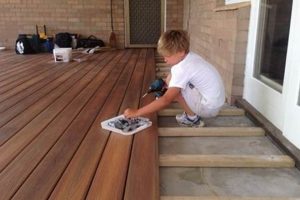
Constructing an access solution for mobility devices involves creating an inclined plane to overcome a vertical barrier, such as a step or threshold. This facilitates independent movement for individuals using wheelchairs or other wheeled mobility aids. These structures can range from simple, portable solutions for navigating temporary obstacles to permanent installations designed for long-term accessibility.
The provision of accessible pathways offers significant advantages, fostering greater independence, promoting social inclusion, and enhancing quality of life for individuals with mobility limitations. Historically, a lack of suitable access presented a major barrier to participation in various activities. The creation of these pathways represents a tangible commitment to equitable access and universal design principles, allowing individuals to navigate environments with greater ease and dignity.
The subsequent discussion will delve into considerations for material selection, structural integrity, and safety standards essential for building a durable and compliant access solution. Furthermore, it will explore relevant regulations and permitting processes necessary for ensuring the long-term functionality and safety of the constructed pathway.
Essential Considerations for Accessible Pathway Construction
This section outlines crucial aspects for the design and construction of an accessible pathway. Adherence to these principles ensures safety, durability, and compliance with relevant accessibility standards.
Tip 1: Precise Measurement is Paramount: Accurate assessment of the vertical rise is fundamental. Calculate the total rise, accounting for any variances in ground level. This measurement directly influences the required length of the inclined plane to achieve a safe and compliant slope.
Tip 2: Material Selection for Longevity: Choose materials that withstand environmental factors and anticipated usage. Pressure-treated lumber, composite decking, or concrete are viable options. Each material possesses distinct properties concerning durability, maintenance requirements, and initial cost; therefore, carefully evaluate the long-term implications of material selection.
Tip 3: Slope Gradient Adherence: Strict adherence to the maximum allowable slope is essential. Accessibility standards typically dictate a maximum slope of 1:12 (one inch of rise for every twelve inches of run). Exceeding this limit compromises safety and violates accessibility guidelines.
Tip 4: Secure Fastening and Structural Integrity: Employ robust fastening techniques to ensure structural stability. Use appropriate screws, bolts, and brackets designed for exterior applications and capable of withstanding anticipated weight loads. Verify that all connections are secure and properly aligned.
Tip 5: Implementing Safety Features: Install handrails that meet height and graspability requirements. Handrails should be continuous and provide a stable gripping surface for users. Edge protection, such as curbs or raised edges, is also crucial to prevent mobility devices from inadvertently rolling off the inclined plane.
Tip 6: Permitting and Code Compliance: Investigate local building codes and permitting requirements before commencing construction. Adherence to applicable codes ensures that the structure meets safety standards and complies with accessibility regulations. Failure to obtain necessary permits can result in costly modifications or removal.
Tip 7: Drainage Considerations: Ensure proper drainage to prevent water accumulation on the surface. Standing water can create hazardous conditions, particularly in freezing temperatures. Implement a drainage system that effectively channels water away from the structure.
Tip 8: Regular Inspection and Maintenance: Establish a routine inspection schedule to identify and address any potential issues, such as loose fasteners, damaged materials, or surface irregularities. Timely maintenance prolongs the lifespan of the structure and ensures continued safety.
These guidelines are critical for ensuring a safe, durable, and compliant accessible pathway. Careful planning, diligent construction practices, and adherence to relevant regulations are essential for creating a functional and inclusive environment.
The following section will explore common challenges encountered during construction and offer practical solutions for overcoming these obstacles.
1. Accurate Slope Calculation
Accurate slope calculation is a foundational element in the safe and functional construction of accessibility solutions. A meticulously calculated slope ensures that the resulting structure provides ease of access while adhering to established safety standards. Its importance cannot be overstated, as an improperly calculated slope can render the structure unusable or, worse, hazardous.
- Usability and Ergonomics
The gradient directly impacts the effort required to ascend or descend the structure. A slope exceeding the recommended maximum necessitates greater exertion, potentially posing challenges for individuals with limited strength or endurance. Conversely, a slope that is too shallow may require an unnecessarily long structure, increasing the space required for installation. A precise calculation optimizes usability, minimizing strain and maximizing accessibility.
- Adherence to Accessibility Standards
Accessibility guidelines, such as those outlined in the Americans with Disabilities Act (ADA), specify maximum allowable slopes for accessible routes. These standards are based on ergonomic research and aim to ensure accessibility for a wide range of users. Failure to adhere to these standards not only violates legal requirements but also compromises the safety and usability of the structure. Precise slope calculation is, therefore, essential for compliance.
- Safety and Risk Mitigation
An excessively steep incline increases the risk of falls or loss of control, especially in inclement weather conditions or for individuals using manual mobility devices. Conversely, an excessively shallow slope might encourage users to attempt to navigate the structure at a higher speed, increasing the risk of accidents. Accurate calculation, coupled with appropriate safety features like handrails and edge protection, mitigates these risks and promotes user safety.
- Structural Integrity and Longevity
Inaccurate slope calculations can lead to structural imbalances, potentially compromising the long-term stability of the structure. An uneven distribution of weight or stress can accelerate wear and tear, requiring more frequent maintenance and potentially shortening the lifespan of the structure. A well-calculated slope, integrated into a sound structural design, ensures even weight distribution and enhances the longevity of the installation.
In summation, accurate slope calculation is not merely a mathematical exercise but a critical determinant of the safety, usability, and longevity
of accessibility structures. It is a prerequisite for compliance with accessibility standards and a cornerstone of responsible construction practices. A meticulous approach to slope calculation ensures that the finished structure effectively meets the needs of its users while adhering to the highest standards of safety and durability.
2. Material Durability
The relationship between material durability and accessibility structures is a direct and critical one. The longevity, safety, and overall effectiveness of a structure designed to provide access for mobility devices are fundamentally contingent upon the inherent properties of the materials used in its construction. The impact of material choice manifests in multiple dimensions of the finished structure’s performance.
Selecting durable materials directly impacts the structure’s resistance to environmental degradation. For instance, untreated wood exposed to the elements is susceptible to rot, insect infestation, and warping, all of which compromise structural integrity and create safety hazards. In contrast, pressure-treated lumber, composite materials, or concrete offer superior resistance to these factors, thereby extending the lifespan of the structure and reducing the need for frequent repairs or replacements. Consider a concrete structure designed to withstand heavy traffic and exposure to freeze-thaw cycles. Its inherent resistance to these elements ensures consistent performance and minimizes the risk of deterioration, thus ensuring the safety and usability of the structure over an extended period. The cost benefits of investing in durable materials are further realized through reduced maintenance requirements. Structures built with durable materials require less frequent painting, sealing, or component replacement, resulting in significant cost savings over time. This is particularly relevant for public facilities where maintenance budgets are often constrained. The selection of appropriate materials is therefore a pragmatic decision driven by considerations of long-term cost-effectiveness and sustainability.
Ultimately, the selection of durable materials for accessibility structures is a non-negotiable aspect of responsible design and construction. It ensures not only the immediate functionality and safety of the structure but also its long-term reliability and cost-effectiveness. Neglecting material durability can lead to premature failure, increased maintenance costs, and, most importantly, compromised safety for users. A comprehensive understanding of material properties and their interaction with environmental factors is therefore essential for creating accessibility solutions that are both functional and sustainable.
3. Secure Fastening
Secure fastening represents a critical element in the construction of a stable and safe accessibility solution. This aspect directly influences the structural integrity and long-term performance of the pathway. The choice of fasteners and their proper installation techniques determine the ability of the structure to withstand anticipated loads, environmental stressors, and repeated use.
Insufficient or improper fastening introduces vulnerabilities that can lead to structural failure. For example, using screws that are too short or spaced too far apart can compromise the connection between deck boards and support framing. This can result in instability, uneven surfaces, or eventual collapse. Similarly, failing to adequately secure the structure to the ground or adjacent structures creates a risk of movement or detachment, particularly under heavy loads or during inclement weather. Proper fastening also involves selecting fasteners appropriate for the materials being joined. Using galvanized or stainless-steel fasteners in exterior applications is essential to prevent corrosion and maintain structural integrity over time. Furthermore, the method of fastening should be carefully considered, with techniques such as countersinking screws or using washers to distribute pressure and prevent damage to the surrounding materials.
In conclusion, secure fastening is not merely a superficial detail but an integral component of a safe and durable accessibility feature. Adherence to best practices in fastener selection and installation is paramount to ensuring the long-term performance and safety of the structure. Compromising on this aspect introduces significant risks that can ultimately undermine the functionality and integrity of the entire construction.
4. Code Adherence
Code adherence in the context of accessibility structures, specifically those created through do-it-yourself methods, is paramount for ensuring user safety, legal compliance, and long-term functionality. Neglecting established building codes and accessibility guidelines can lead to hazardous conditions, legal ramifications, and costly remediation efforts.
- Slope Requirements and ADA Compliance
The Americans with Disabilities Act (ADA) establishes stringent guidelines for maximum allowable slopes in accessible ramps. Exceeding these limits can render the ramp unusable or dangerous for individuals with mobility impairments. Code adherence mandates precise measurement and calculation to ensure the constructed slope aligns with ADA standards. A common example is the 1:12 slope requirement (one inch of rise for every twelve inches of run), which necessitates careful planning and execution during construction. Failure to meet this standard can result in legal challenges and the need for costly reconstruction.
- Handrail Specifications and Safety Standards
Building codes prescribe specific dimensions, height, and grip requirements for handrails to provide adequate support and prevent falls. Non-compliant handrails can increase the risk of accidents and injuries, particularly for individuals with limited balance or strength. For example, handrails must typically be between 34 and 38 inches in height and provide a continuous gripping surface. Utilizing materials and construction techniques that do not meet these standards compromises user safety and violates building codes.
- Load-Bearing Capacity and Structural Integrity
Codes dictate minimum load-bearing capacity requirements for accessibility structures to ensure they can safely support users and their mobility devices. Inadequate structural support can lead to collapse or failure, resulting in serious injuries. Building codes often specify minimum material dimensions and fastening methods to meet these load requirements. Failure to adhere to these guidelines can create a significant safety hazard and expose the property owner to liability.
- Permitting Processes and Legal Compliance
Most jurisdictions require permits for the construction of accessibility structures to ensure compliance with local building codes and zoning regulations. Bypassing the permitting process can result in fines, legal action, and the potential need to dismantle the structure. Obtaining the necessary permits involves submitting detailed plans and specifications for review by local authorities, ensuring that the proposed construction meets all applicable code requirements. This process provides an independent veri
fication of safety and code compliance, protecting both the property owner and potential users.
Code adherence is not an optional consideration but a fundamental obligation in the construction of access solutions. Compliance with building codes and accessibility guidelines ensures user safety, legal protection, and the long-term viability of the constructed pathway. Ignoring these requirements can have severe consequences, underscoring the importance of diligent planning, informed construction practices, and adherence to established standards.
5. Regular Maintenance
Sustained functionality and safety of a self-constructed access solution are intrinsically linked to consistent and thorough maintenance practices. A neglect of routine inspection and upkeep precipitates structural degradation, compromising the usability and safety of the structure, potentially leading to accidents and injuries.
- Structural Integrity Monitoring
Periodic examination of the frame, supports, and decking is essential to detect signs of wear, rot, or damage. Wood components, particularly those in contact with the ground, are susceptible to moisture damage and insect infestation. Metal components may exhibit corrosion. Addressing these issues promptly, through reinforcement or replacement, prevents further deterioration and maintains the structure’s load-bearing capacity. An example would be checking for loose fasteners or sagging deck boards and rectifying these issues immediately.
- Surface Condition Assessment
The surface should be regularly inspected for splinters, cracks, or unevenness that could pose tripping hazards or impede smooth passage. Surface treatments, such as paint or sealant, should be reapplied as needed to protect the underlying material from environmental damage and maintain traction. The accumulation of debris, such as leaves or ice, should be promptly removed to prevent slipping. Failing to address minor surface imperfections can lead to more significant structural problems over time.
- Fastener Integrity Verification
Screws, bolts, and other fasteners are subject to loosening due to vibration, temperature changes, and repeated use. A routine check of all fasteners ensures they remain securely in place. Tightening or replacing loose or corroded fasteners is crucial for maintaining the structural stability of the structure. Ignoring this aspect can lead to instability and potential collapse under load.
- Handrail and Edge Protection Evaluation
Handrails and edge protection features provide essential safety measures. Their integrity should be assessed regularly to ensure they remain firmly attached and free from damage. Handrails should be checked for stability and ease of grip, while edge protection should be inspected for breaks or gaps that could allow a mobility device to roll off the side. Neglecting these safety features increases the risk of accidents and injuries.
Consistent and diligent maintenance is not merely a cosmetic undertaking but a fundamental responsibility for ensuring the continued usability, safety, and longevity of a self-built accessibility feature. By adhering to a routine inspection and maintenance schedule, potential problems can be identified and addressed proactively, preventing costly repairs and mitigating the risk of accidents. This proactive approach ensures that the structure remains a safe and reliable means of access for individuals with mobility limitations.
Frequently Asked Questions
The following questions address common inquiries regarding the creation and maintenance of accessibility features. The information presented aims to clarify key considerations and best practices.
Question 1: What constitutes an acceptable slope for an access structure?
Accessibility standards typically mandate a maximum slope of 1:12, meaning one inch of vertical rise for every twelve inches of horizontal run. This ratio minimizes exertion and ensures usability for individuals with varying levels of mobility. Local codes should be consulted to verify specific requirements.
Question 2: What materials are best suited for constructing a durable and weather-resistant ramp?
Pressure-treated lumber, composite decking, and concrete are viable options, each offering varying degrees of resistance to environmental factors. Material selection should consider local climate conditions, anticipated traffic volume, and long-term maintenance requirements.
Question 3: How can structural integrity be ensured during construction?
Employ robust fastening techniques, utilizing screws, bolts, and brackets designed for exterior applications and capable of withstanding anticipated weight loads. Verify that all connections are secure, properly aligned, and corrosion-resistant.
Question 4: What are the key considerations for handrail design and installation?
Handrails should be continuous, graspable, and positioned at a height between 34 and 38 inches. They must provide a stable gripping surface and meet load-bearing requirements as specified by local building codes. Consider factors such as handrail extension beyond the ramp’s surface.
Question 5: What steps are necessary to ensure compliance with local building codes and permitting requirements?
Contact the local building department to ascertain specific code requirements and permitting procedures. Submit detailed plans and specifications for review to ensure compliance with all applicable regulations. Failure to obtain necessary permits can result in legal repercussions and costly remediation efforts.
Question 6: How frequently should an access solution be inspected and maintained?
A routine inspection should be conducted at least twice annually, with more frequent inspections in areas subject to harsh weather conditions. Address any identified issues, such as loose fasteners, damaged materials, or surface irregularities, promptly to prevent further deterioration and ensure continued safety.
These questions highlight essential considerations for constructing and maintaining a functional and safe accessibility solution. Diligent planning, adherence to codes, and consistent maintenance are crucial for ensuring long-term usability and mitigating potential risks.
The following section will provide a detailed construction guide for access solutions.
Concluding Remarks
This exposition has underscored critical facets of constructing a safe and compliant diy wheelchair ramp. From meticulous slope calculations and rigorous material selection to secure fastening techniques and unwavering code adherence, each element contributes to the structural integrity and long-term usability of the accessibility solution. The significance of regular maintenance in preventing degradation and ensuring continued safety has also been emphasized.
The construction of a diy wheelchair ramp represents a commitment to inclusivity and accessibility for individuals with mobility limitations. Responsible implementation of these principles, prioritizing safety and code compliance above all else, is essential. The creation of safe and accessible environments fosters independence, enhances quality of life, and promotes equitable participation for all members of the community. Continued vigilance in upholding these standards remains paramount.