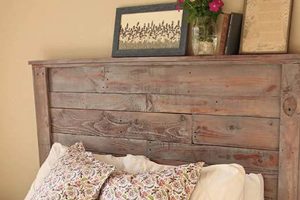
A do-it-yourself project focusing on creating a decorative and functional panel for the head of a twin-sized bed is a common undertaking. This construction typically involves utilizing various materials and techniques to craft a personalized headboard, tailored to the specific dimensions of a twin bed frame. For example, a homeowner might construct one using reclaimed wood, fabric upholstery, or even repurposed doors to achieve a unique aesthetic.
The construction of a personalized headboard offers several advantages, including cost savings when compared to purchasing pre-made options. It also allows for complete customization regarding style, materials, and dimensions, enabling the creator to match the bedroom decor precisely. Historically, headboards served a practical purpose in insulating sleepers from cold walls; however, modern interpretations often prioritize aesthetics and personal expression.
Subsequent sections will explore design considerations, material selection, construction methods, and finishing techniques relevant to building a custom headboard. These considerations will guide the reader through the necessary steps for successful completion of a personalized project.
Tips for Constructing a Personalized Twin Bed Headboard
The following recommendations are intended to assist in the successful fabrication of a custom headboard for a twin-sized bed. Careful consideration of these points can minimize errors and maximize the final product’s aesthetic and structural integrity.
Tip 1: Precise Measurement is Paramount. Prior to initiating the building process, accurately measure the width of the twin bed frame. Headboard dimensions must correspond precisely to the frame to ensure proper alignment and attachment. Account for any existing frame features that might obstruct a flush fit.
Tip 2: Prioritize Material Selection. Choose materials based on desired aesthetics, budget, and structural requirements. Solid wood offers durability, while MDF provides a smoother surface for painting or upholstery. Reclaimed materials can offer unique character, but require careful preparation.
Tip 3: Plan for Secure Mounting. Determine the method of attachment to the bed frame. Options include direct bolting, French cleats, or stand-alone construction. Ensure that the chosen method provides adequate stability and prevents the headboard from shifting or toppling.
Tip 4: Emphasize Structural Integrity. If the design incorporates complex shapes or significant weight, reinforce the structure with internal bracing or a robust frame. This will prevent warping or sagging over time, ensuring longevity.
Tip 5: Prioritize Safety. When using power tools, adhere to all safety guidelines and wear appropriate protective gear. Ensure that all edges and corners are smooth and free from sharp points to prevent injury.
Tip 6: Employ Proper Finishing Techniques. Select a finish that is appropriate for the chosen materials. Wood requires staining or sealing to protect against moisture and damage. Fabric upholstery requires careful application to avoid wrinkles or puckering.
Tip 7: Consider Upholstery Padding. For upholstered versions, choose a foam padding density that provides adequate comfort and support. Thicker padding can enhance the aesthetic appeal and improve the overall sleeping experience.
Adhering to these recommendations can result in a well-constructed, aesthetically pleasing, and structurally sound headboard that enhances the bedroom environment.
The subsequent section will address common pitfalls and troubleshooting strategies encountered during the building process, providing solutions to potential challenges.
1. Measurement Accuracy

Measurement accuracy serves as a foundational element in the successful execution of a do-it-yourself headboard project for a twin bed. Imprecise measurements can lead to a flawed final product, necessitating rework or rendering the headboard incompatible with the bed frame. This section outlines key facets illustrating the critical nature of accurate measurement.
- Frame Compatibility
Accurate measurement of the twin bed frame’s width is paramount for ensuring proper alignment and secure attachment of the headboard. A headboard that is too wide will overhang, creating an awkward aesthetic and potential safety hazard. Conversely, a headboard that is too narrow will leave unsightly gaps and compromise structural stability.
- Material Estimation
Precise measurements are essential for calculating the quantity of materials required for headboard construction. Overestimating material needs leads to unnecessary expenses and potential waste. Underestimating can result in project delays and the need to acquire additional materials, potentially disrupting the project timeline and consistency of materials used.
- Design Symmetry and Aesthetics
For symmetrical designs, accurate measurements ensure balanced proportions and visual harmony. Even minor discrepancies in dimensions can become glaringly obvious, detracting from the overall aesthetic appeal of the headboard. Careful attention to detail and precise execution are crucial for achieving a professional-looking finish.
- Mounting Hardware Placement
Accurate measurements are vital for determining the precise location of mounting hardware, such as brackets or bolts, on both the headboard and the bed frame. Misaligned mounting points can result in an unstable or insecure attachment, jeopardizing the safety and longevity of the headboard installation.
In summary, measurement accuracy directly influences the fit, finish, structural integrity, and overall aesthetic of a do-it-yourself twin bed headboard. Adhering to meticulous measurement practices is critical for achieving a successful and satisfying outcome, minimizing waste, and ensuring the headboard effectively complements the twin bed frame. Therefore, patience and careful execution during the measurement phase are invaluable investments in the success of the entire project.
2. Material Selection

Material selection constitutes a critical juncture in the do-it-yourself twin bed headboard construction process. The chosen materials directly influence the headboard’s aesthetic qualities, structural integrity, durability, and overall cost. Inappropriate material choices can lead to premature failure, compromised aesthetics, and increased project expenses. For instance, selecting softwood without proper reinforcement for a heavily padded headboard may result in warping or structural instability under the applied weight.
The selection process necessitates a comprehensive evaluation of available options, considering factors such as wood type (hardwood vs. softwood), sheet materials (MDF, plywood), upholstery fabrics, and hardware. The chosen materials must also align with the intended design and construction techniques. A headboard designed for a rustic aesthetic might favor reclaimed wood, while a contemporary design could utilize sleek metal accents and engineered wood products. Upholstery fabric selections influence the tactile experience and visual appeal; considerations include durability, cleanability, and colorfastness. For example, selecting a tightly woven, stain-resistant fabric for a headboard in a child’s bedroom would prove more practical than a delicate, light-colored material.
In conclusion, the link between material selection and the success of a do-it-yourself twin bed headboard project is undeniable. Prudent material choices, informed by a thorough understanding of their properties and suitability for the intended design, are crucial for creating a headboard that is both aesthetically pleasing and functionally durable. Ignoring this critical step can lead to costly rework or premature failure, ultimately undermining the project’s objectives.
3. Design Aesthetics

Design aesthetics hold significant influence in the execution of a do-it-yourself twin bed headboard project. Aesthetic considerations dictate the overall style, visual appeal, and integration of the headboard with the existing bedroom dcor. Ignoring design principles can result in a headboard that clashes with the room’s theme or lacks visual appeal.
- Style Coherence
The headboard design should complement the existing bedroom style, whether contemporary, traditional, rustic, or minimalist. A mismatch in style can create visual dissonance. For example, a sleek, geometric headboard would likely appear out of place in a bedroom furnished with antique furniture and floral wallpaper.
- Color Palette Integration
The color scheme of the headboard should harmonize with the room’s existing color palette. This involves selecting colors that complement or contrast effectively with the wall color, bedding, and other furnishings. A carefully chosen color palette can enhance the room’s overall aesthetic appeal, while a poorly chosen palette can create a sense of visual chaos. For instance, a neutral-toned headboard can provide a calming backdrop in a room with bold-colored walls, while a brightly colored headboard can serve as a focal point in a room with a more subdued color scheme.
- Material Texture and Pattern
The texture and pattern of the materials used in the headboard’s construction contribute significantly to its aesthetic appeal. The textures should complement each other and the existing furnishings. The selection of different materials, such as wood, fabric, or metal, impacts the sensory experience of the room. A headboard upholstered with soft fabric can create a sense of warmth and comfort, while a headboard made of reclaimed wood can add a touch of rustic charm.
- Proportion and Scale
The dimensions of the headboard should be proportionate to the size of the twin bed and the overall dimensions of the room. A headboard that is too large can overwhelm the space, while a headboard that is too small may appear insignificant. The headboards height and width should be carefully considered to ensure visual balance within the room.
These elements collectively determine the overall visual impact of the do-it-yourself twin bed headboard. Therefore, careful consideration of design aesthetics is crucial for achieving a harmonious and visually pleasing result. By attending to these details, the headboard can become a focal point that enhances the bedroom’s ambiance.
4. Attachment method
The attachment method is a critical determinant of a diy twin bed headboard’s stability, longevity, and integration with the bed frame. Its selection directly impacts the headboard’s ability to withstand normal use and maintain its position over time. Inadequate attachment can lead to instability, causing the headboard to wobble, detach, or even fall, posing a safety hazard and detracting from the overall aesthetic. For instance, simply leaning a heavy wooden headboard against the wall without any secure attachment is an example of neglecting this vital component, inevitably leading to instability and potential damage.
Several attachment methods exist, each with its advantages and disadvantages. Direct bolting involves securing the headboard directly to the bed frame using bolts and nuts. This method provides a strong and stable connection but requires precise alignment and drilling. French cleats offer a more versatile option, allowing for easy removal and reattachment of the headboard while providing a secure hold. However, they necessitate careful construction to ensure proper engagement. Stand-alone construction, where the headboard rests on the floor and against the wall, requires a robust base to prevent tipping and may necessitate wall anchors for added stability. Consider the weight and dimensions of the headboard, alongside the material of the bed frame, as key determining factors for attachment method.
In conclusion, the attachment method is inextricably linked to the success of a diy twin bed headboard project. It significantly impacts the headboard’s structural integrity, safety, and overall aesthetic integration with the bed frame. Therefore, careful consideration and appropriate selection of the attachment method are crucial for creating a headboard that is both functional and visually appealing, while also mitigating safety concerns.
5. Structural Support

Structural support is a critical consideration in the design and construction of a do-it-yourself twin bed headboard. It determines the headboard’s ability to withstand stresses, maintain its form, and provide long-term stability. Insufficient structural support can lead to warping, sagging, or even complete failure of the headboard, rendering it both aesthetically unappealing and potentially hazardous.
- Frame Construction and Reinforcement
The underlying frame of the headboard is the primary element of structural support. It provides the skeletal framework to which other components are attached. The choice of framing materials, such as solid wood or metal, and the method of joinery, such as mortise and tenon or screws and glue, significantly impact the frame’s strength and rigidity. Reinforcement, through the addition of cross-braces, corner blocks, or internal supports, can further enhance the frame’s ability to resist deformation under load. For example, a large upholstered headboard requires a more robust frame with greater reinforcement than a simple wooden headboard.
- Material Thickness and Density
The thickness and density of the materials used in the headboard’s construction directly influence its structural integrity. Thicker, denser materials offer greater resistance to bending and compression. For instance, using thick plywood instead of thin veneer for a headboard panel provides significantly improved structural support. Similarly, selecting a dense hardwood over a softwood for the frame offers greater resistance to warping and cracking. The choice of materials should be based on the anticipated loads and stresses the headboard will encounter.
- Weight Distribution and Load Bearing
Proper weight distribution is essential for ensuring the headboard can withstand the forces applied to it. The design should distribute weight evenly across the structure to prevent localized stress concentrations. Load-bearing points, such as the attachment points to the bed frame, must be adequately reinforced to prevent failure. For example, using metal brackets to distribute the load at the attachment points can significantly improve the headboard’s stability and prevent damage to the frame. Considerations include normal wear and tear with different loads applied to it, like leaning on the headboard.
- Attachment Method Strength
The method used to attach the headboard to the bed frame directly impacts its structural stability. Weak or poorly designed attachment methods can lead to the headboard becoming detached or unstable. Strong, secure attachments, such as bolting the headboard directly to the bed frame or using heavy-duty brackets, are essential for providing adequate support. The attachment method should be appropriate for the weight and size of the headboard and the materials of both the headboard and the bed frame.
The facets discussed directly influence the overall robustness of a diy twin bed headboard. Neglecting these principles can compromise the headboard’s stability and reduce its lifespan. Prioritizing structural integrity during design and construction is therefore crucial for creating a headboard that is both aesthetically pleasing and structurally sound, capable of withstanding the rigors of daily use.
6. Finishing Details

Finishing details in the context of a do-it-yourself twin bed headboard project represent the final, critical steps that transform a structurally sound construction into a polished and aesthetically pleasing piece. The selection and application of appropriate finishing techniques directly influence the headboard’s durability, appearance, and overall integration with the bedroom decor. Improper or neglected finishing can negate the efforts invested in design and construction, resulting in a headboard that appears amateurish or is susceptible to premature damage. For example, a wooden headboard left unsealed is vulnerable to moisture damage, staining, and insect infestation, ultimately reducing its lifespan and aesthetic appeal.
The range of finishing details encompasses various techniques, each suited to specific materials and desired aesthetic outcomes. For wooden headboards, staining, sealing, and painting are common options. Staining enhances the natural grain of the wood, while sealing provides a protective barrier against moisture and wear. Painting offers a wider range of color choices and can create a more contemporary look. Upholstered headboards necessitate attention to fabric selection, seam finishing, and button or trim detailing. Securely fastening the fabric, concealing raw edges, and adding decorative elements contribute to a professional and refined appearance. Metal headboards may benefit from powder coating or polishing to prevent rust and enhance their visual appeal. Consider a headboard constructed from reclaimed pallet wood; without sanding and proper sealing, the rough texture and potential splinters detract from the final product. Careful sanding, application of a sealant, and potentially a coat of varnish would transform the appearance and ensure it is safe and smooth to the touch.
In summation, finishing details constitute an indispensable element of any successful do-it-yourself twin bed headboard project. They are not merely cosmetic additions but rather essential steps that protect the headboard, enhance its aesthetic appeal, and contribute to its longevity. Neglecting these details can undermine the entire project, resulting in a final product that fails to meet expectations. While structural integrity and design are critical, the finishing details are what ultimately elevate the headboard from a basic construction to a refined and enduring element of the bedroom.
7. Cost Efficiency

The pursuit of cost efficiency stands as a primary motivator for many individuals undertaking a do-it-yourself twin bed headboard project. Constructing a headboard personally often yields significant savings compared to purchasing a commercially manufactured equivalent. This advantage stems from the elimination of retail markups, labor costs inherent in mass production, and transportation expenses associated with distribution networks. The impact is substantial; a store-bought headboard, depending on materials and design complexity, can range from a few hundred to several thousand dollars, whereas a self-made version can be achieved for a fraction of this amount. For example, repurposing reclaimed wood or utilizing affordable materials such as plywood and fabric can dramatically reduce expenses. This makes a do-it-yourself approach particularly attractive for budget-conscious individuals or those seeking to furnish multiple rooms.
However, achieving true cost efficiency requires careful planning and execution. Improper planning can lead to errors, material waste, and ultimately, increased expenses that negate the initial savings. A poorly conceived design may necessitate additional material purchases or require specialized tools, driving up the overall cost. Material selection plays a crucial role; while reclaimed wood may be cost-effective, proper preparation, including cleaning, sanding, and sealing, requires time and potentially specialized equipment. Similarly, choosing inexpensive fabrics may compromise durability, leading to premature replacement and undermining long-term cost efficiency. A balanced approach involves careful research, precise measurements, and a realistic assessment of skill level to minimize errors and maximize material utilization.
In summary, cost efficiency represents a significant benefit of embarking on a do-it-yourself twin bed headboard project, yet it is not guaranteed. Realizing these savings demands meticulous planning, mindful material selection, and accurate execution. By carefully considering these factors, individuals can effectively minimize expenses and create a custom headboard that is both aesthetically pleasing and economically sound. Neglecting proper planning can easily erase any potential savings, leading to a project that is both time-consuming and financially unrewarding. The true value of a diy approach resides in the smart combination of ingenuity, effort, and careful budgeting.
Frequently Asked Questions
The following addresses common inquiries regarding the planning and execution of a do-it-yourself headboard project for a twin-sized bed. These questions aim to clarify potential uncertainties and provide guidance for successful completion.
Question 1: What are the essential tools required for constructing a twin bed headboard?
The specific tools necessary will vary depending on the chosen design and materials. However, certain implements are generally indispensable. A measuring tape ensures accurate dimensions. A saw, either manual or power, is required for cutting materials. A drill facilitates fastening components. Sandpaper smooths rough edges. Safety glasses and ear protection are crucial for personal protection. Clamps secure pieces during assembly. Additional tools may include a router, jigsaw, or sewing machine, depending on the design’s complexity.
Question 2: How does one determine the appropriate height for a twin bed headboard?
Headboard height is primarily a matter of aesthetic preference. However, functional considerations also apply. The headboard should extend high enough above the mattress to provide adequate back support for reading or sitting up in bed. Generally, a height of 24 to 36 inches above the mattress is considered suitable. Taller individuals may prefer a higher headboard for enhanced comfort. The room’s dimensions and the overall scale of the furniture should also influence the height decision to maintain visual harmony.
Question 3: What factors should influence the selection of materials for a twin bed headboard?
Material selection is guided by several factors, including budget, desired aesthetic, structural requirements, and skill level. Solid wood offers durability and a classic appearance but can be more expensive and challenging to work with. Plywood provides a cost-effective alternative with good strength and a smooth surface for painting or upholstery. Reclaimed materials offer a unique aesthetic but require careful preparation. Fabric selection should consider durability, cleanability, and colorfastness. The chosen materials should also be compatible with the selected construction methods and finishing techniques.
Question 4: What are the common methods for attaching a headboard to a twin bed frame?
Several methods exist for securing a headboard to a bed frame. Direct bolting involves attaching the headboard directly to the frame using bolts and nuts. This method is strong and stable but requires precise alignment. French cleats provide a more versatile option, allowing for easy removal and reattachment. However, they require careful construction to ensure proper engagement. Stand-alone headboards rely on their own support structure and may be secured to the wall for added stability. The chosen method should be appropriate for the weight and design of the headboard and the construction of the bed frame.
Question 5: How can one ensure the structural stability of a do-it-yourself headboard?
Structural stability is paramount for a durable and safe headboard. A robust frame constructed from sturdy materials is essential. Reinforcement, such as cross-braces and corner blocks, enhances the frame’s resistance to warping and sagging. The joints connecting the frame components should be strong and well-secured. The attachment method to the bed frame should be adequate to support the headboard’s weight and withstand normal use. Careful attention to detail during construction is crucial for achieving a structurally sound headboard.
Question 6: What safety precautions should be observed during headboard construction?
Safety should be a primary concern during all phases of headboard construction. Eye protection and ear protection should be worn when using power tools. Proper ventilation is essential when working with paints, stains, and adhesives. Secure workpieces firmly to prevent movement during cutting and drilling. Follow the manufacturer’s instructions for all tools and materials. Be mindful of sharp edges and corners, and take steps to mitigate potential hazards. A clean and organized workspace reduces the risk of accidents.
These frequently asked questions provide a foundation for understanding the key considerations in creating a twin-sized bed headboard. Prior planning, meticulous execution, and a commitment to safety will contribute to a successful endeavor.
The next section will present a compilation of creative ideas and design inspirations, intended to spark ingenuity and personalize the creative journey.
diy twin bed headboard
This exploration of the construction of a personalized panel for the head of a twin-sized bed has considered critical factors impacting the success of such a project. Accurate measurement, appropriate material selection, adherence to design aesthetics, a structurally sound attachment method, and attention to finishing details are all vital components. Cost-efficiency, while a common motivator, necessitates careful planning to avoid unforeseen expenses.
Ultimately, the creation of a bespoke headboard represents an opportunity for individual expression and functional enhancement. The diligent application of the principles outlined herein will contribute to a durable, aesthetically pleasing, and structurally sound addition to the sleeping environment. Further research and experimentation are encouraged to refine individual skills and expand the possibilities within this domain of home improvement.