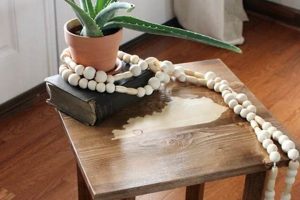
Creating customized furniture surfaces through the application of epoxy polymers has gained considerable traction. This process allows for the encapsulation of various decorative elements within a durable, transparent layer, transforming ordinary tables into unique statement pieces. For example, embedding natural materials such as wood, stones, or botanicals in the resin creates a personalized and visually appealing effect.
The appeal of constructing these surfaces lies in the potential for individual expression and the relatively low cost compared to purchasing pre-made, high-end furniture. Historically, resin applications were primarily confined to industrial or artistic settings. However, advancements in resin technology and the increasing availability of instructional resources have democratized the process, enabling hobbyists and homeowners to create professional-looking results. The benefits extend beyond aesthetics, offering increased durability and resistance to scratches and spills.
This discussion will explore the essential materials, techniques, and design considerations involved in successfully crafting a customized furniture surface using epoxy polymers. Topics include surface preparation, resin mixing and pouring, decorative element integration, and finishing techniques, providing a comprehensive overview of the entire process.
Essential Considerations for Resin Furniture Surface Creation
Achieving optimal results when crafting a customized furniture surface requires careful attention to detail and adherence to established best practices. The following guidelines provide essential information for successful project execution.
Tip 1: Surface Preparation is Paramount: Thoroughly clean and level the table’s surface before applying the resin. Any imperfections or contaminants will be visible in the final product, compromising the aesthetic and structural integrity.
Tip 2: Accurate Resin Measurement and Mixing: Adhere precisely to the manufacturer’s instructions regarding resin-to-hardener ratios. Incorrect proportions will result in improper curing, leading to a soft, tacky, or brittle finish.
Tip 3: Controlled Pouring Technique: Pour the mixed resin slowly and deliberately to minimize the formation of air bubbles. Use a heat gun or torch sparingly to remove any surface bubbles that do appear.
Tip 4: Gradual Layering for Depth: For projects involving embedded objects, pour the resin in thin, successive layers to prevent the objects from shifting or creating trapped air pockets. Allow each layer to partially cure before adding the next.
Tip 5: Temperature and Humidity Control: Maintain a stable temperature and low humidity during the curing process. Extreme fluctuations can affect the resin’s curing rate and potentially lead to cloudiness or cracking.
Tip 6: Dust and Debris Mitigation: Work in a clean, dust-free environment to prevent particles from settling on the surface of the wet resin. A dedicated workspace with proper ventilation is highly recommended.
Tip 7: Adequate Curing Time: Allow the resin to fully cure according to the manufacturer’s specified timeframe. Premature sanding or handling can damage the surface and compromise its durability.
By diligently following these guidelines, individuals can significantly enhance the quality and longevity of their customized furniture surface. Attention to detail throughout each stage of the process is critical for achieving a professional-grade result.
The subsequent sections will delve into specific design options and explore advanced techniques for creating unique and visually stunning furniture pieces.
1. Surface Preparation

Surface preparation is a foundational element in the successful execution of any project involving customized furniture surfaces. The direct correlation between adequate preparation and the quality of the finished product is undeniable. Insufficient preparation invariably leads to defects, compromising both the aesthetic appeal and structural integrity of the furniture. For instance, a table surface that has not been properly cleaned or sanded will exhibit poor resin adhesion, resulting in bubbling, peeling, or a cloudy finish. The presence of dust, grease, or previous coatings can impede the resin’s ability to bond effectively, leading to a structurally unsound and visually unappealing outcome.
The process of surface preparation encompasses several crucial steps: cleaning, sanding, and sealing. Cleaning removes contaminants, ensuring a pristine surface for resin application. Sanding provides a textured surface, promoting optimal resin adhesion. Sealing, particularly important for porous materials like wood, prevents air from escaping into the resin, which can cause bubbles. Failure to properly seal a wooden surface before resin application will almost certainly result in a flawed finish. Conversely, when each step of the surface preparation is executed meticulously, the resin can form a strong, uniform bond, resulting in a durable and aesthetically pleasing table surface.
In summary, surface preparation is not merely a preliminary step, but an integral component of the entire process. The time and effort invested in thorough preparation directly correlate with the quality and longevity of the finished furniture surface. Ignoring this crucial phase inevitably leads to subpar results and necessitates costly repairs or complete project failures, highlighting the practical significance of understanding and implementing proper preparation techniques.
2. Resin Selection

The selection of appropriate resin is a critical determinant in the successful creation of a customized furniture surface. Variations in resin formulations impact the final aesthetic, durability, and suitability for specific applications. Careful consideration of these factors is therefore paramount.
- Epoxy Resin Characteristics
Epoxy resins are frequently employed for table top creation due to their superior clarity, hardness, and resistance to scratching and water damage. Specific epoxy formulations, however, vary in viscosity, working time, and UV resistance. For example, a low-viscosity epoxy is often preferred for embedding intricate objects, as it facilitates better penetration and reduces air entrapment. Conversely, a thicker resin may be more suitable for creating self-leveling surfaces. The choice of epoxy resin should align with the intended design and functional requirements of the furniture piece.
- UV Resistance Considerations
Exposure to ultraviolet (UV) light can cause yellowing and degradation of some resin formulations. If the finished table surface will be exposed to direct sunlight, selecting a resin with UV inhibitors is essential. UV-resistant resins contain additives that minimize the harmful effects of UV radiation, preserving the clarity and color of the resin over time. Failure to account for UV exposure can result in premature discoloration and a diminished aesthetic appearance.
- Curing Time and Layering Techniques
Different resin types exhibit varying curing times, ranging from several hours to several days. The curing time dictates the layering technique that can be employed. Faster-curing resins allow for quicker project completion, but may limit the ability to work with intricate designs or multiple layers. Slower-curing resins provide more working time, facilitating complex embedding and layering processes, but require a longer period before the surface can be handled or used. The selected resin’s curing properties must be carefully considered in relation to the desired project complexity and timeframe.
- Safety and Handling Precautions
Resin systems contain chemicals that can pose health risks if mishandled. It is imperative to adhere to the manufacturer’s safety guidelines, including wearing appropriate personal protective equipment (PPE) such as gloves and respirators. Proper ventilation is also essential to minimize exposure to harmful fumes. Different resin types may have varying toxicity levels; therefore, selecting a resin with lower VOC (volatile organic compound) emissions can contribute to a safer working environment. Neglecting safety precautions can result in skin irritation, respiratory problems, and other adverse health effects.
The choice of resin fundamentally influences the final outcome of a customized furniture surface. By carefully evaluating the resin’s characteristics, UV resistance, curing time, and safety considerations, one can significantly enhance the aesthetic appeal, durability, and longevity of the finished piece, ensuring a successful and satisfying project.
3. Mixing Ratios

The success of any customized furniture surface project hinges critically on adhering to precise resin mixing ratios. These ratios, specified by the resin manufacturer, dictate the proportion of resin to hardener required to initiate and sustain the chemical reaction responsible for curing. Deviations from these recommended ratios can trigger a cascade of adverse effects, compromising the structural integrity and aesthetic appeal of the finished surface. For instance, an insufficient quantity of hardener may result in incomplete curing, leaving the resin soft, tacky, and prone to deformation. Conversely, an excess of hardener can accelerate the curing process, leading to premature hardening, cracking, and a brittle final product.
Consider a hypothetical scenario where a furniture builder, creating a river table, incorrectly measures the resin and hardener, using a 1:3 ratio instead of the specified 1:1. The resultant surface may initially appear acceptable, but over time, the areas with an imbalanced mix can exhibit discoloration, cloudiness, or even structural failure. These issues stem directly from the improper chemical reaction. Furthermore, the longevity of the surface is inherently reduced due to the instability introduced by the incorrect mixing ratio. Precise measurement, employing calibrated measuring cups or scales, is therefore non-negotiable to ensure the resin cures correctly, resulting in a durable and visually consistent furniture surface.
In summary, understanding and meticulously following the manufacturer’s recommended mixing ratios is paramount. Failure to do so introduces significant risks, undermining the investment in materials, time, and effort. While customization is a key element in creating these surfaces, strict adherence to the prescribed chemical parameters is essential to achieving a robust, aesthetically pleasing, and enduring result, highlighting the practical significance of this seemingly simple, yet critically important, step in the creation process.
4. Pouring Technique

Pouring technique is a critical determinant of the final quality and appearance of a customized furniture surface created with epoxy resins. The method employed directly influences the presence of air bubbles, the uniformity of the resin layer, and the overall aesthetic appeal of the finished piece. Inadequate pouring techniques can lead to surface imperfections, compromising both the visual appeal and the structural integrity of the furniture.
- Controlled Flow and Even Distribution
The objective is to achieve a consistent layer of resin across the entire surface. This requires a slow, steady pour, allowing the resin to self-level. Pours should begin at a central point and gradually expand outwards, minimizing the potential for air entrapment at the edges. For instance, when creating a “river table,” the resin must flow smoothly into the contours of the wood without creating voids or uneven depths. This controlled approach is vital for achieving a professional-grade result.
- Layering Strategies for Embedding Objects
When incorporating objects such as stones, shells, or decorative elements, layering techniques become essential. Pouring thin, successive layers allows for the gradual embedding of these objects, preventing them from shifting or creating trapped air pockets. Each layer should be partially cured before adding the next, ensuring that the objects remain securely positioned and that the resin fully encapsulates them. Failure to employ this layering approach can lead to uneven surfaces and visible defects.
- Bubble Mitigation and Removal Techniques
Air bubbles are a common challenge in resin application. Employing techniques such as pre-warming the resin, pouring slowly, and using a heat gun or propane torch can effectively mitigate bubble formation. The heat source should be applied carefully to the surface, causing the bubbles to rise and dissipate. Overheating, however, can damage the resin, so moderation is key. Consistent monitoring and proactive bubble removal are crucial for achieving a clear, flawless finish.
- Edge Management and Containment
Proper edge management is necessary to prevent resin from flowing over the sides of the table. Using masking tape, wooden barriers, or specialized molds can effectively contain the resin and create clean, defined edges. The chosen method should be compatible with the resin type and ensure a watertight seal. Failure to manage the edges properly can result in messy spills, uneven surfaces, and a compromised aesthetic.
The pouring technique directly impacts the final quality and appearance of a resin table surface. Mastery of controlled flow, layering strategies, bubble mitigation, and edge management are essential for creating professional-grade, customized furniture pieces. Consistent practice and attention to detail are critical for achieving flawless, durable, and visually stunning results.
5. Bubble Removal

The presence of air bubbles significantly detracts from the aesthetic and structural integrity of customized furniture surfaces created with epoxy resins. These imperfections, trapped within the cured resin matrix, scatter light and create visual discontinuities, diminishing the clarity and depth of the finished piece. Effective bubble removal is therefore a critical component in the execution of a successful project. The inclusion of decorative elements exacerbates the issue, as air can become trapped within the intricate details of embedded objects. For example, a river table incorporating rough-edged wood pieces is prone to bubble formation along the wood-resin interface if proper degassing techniques are not employed. The consequence is a cloudy, less visually appealing surface that fails to achieve the desired professional finish.
Several methods exist for mitigating and removing air bubbles during the resin application process. These include pre-warming the resin to reduce its viscosity, slow and deliberate pouring to minimize air entrapment, and the use of heat guns or propane torches to coax bubbles to the surface. Vibration techniques, achieved through the use of orbital sanders without abrasive paper, can also assist in dislodging trapped air. The selection of the appropriate bubble removal technique depends on the viscosity of the resin, the size and complexity of the project, and the nature of the embedded objects. Applying a heat source requires caution, as excessive heat can scorch or distort the resin. Understanding the limitations and potential drawbacks of each method is crucial for effective implementation.
In summary, the creation of high-quality, customized furniture surfaces necessitates a thorough understanding and skillful execution of bubble removal techniques. Air bubbles are a common but avoidable defect that can significantly compromise the final product. By implementing appropriate mitigation strategies and mastering effective removal methods, individuals can achieve professional-grade results, creating durable and visually stunning furniture pieces that meet or exceed expectations. Ignoring this aspect of the process invariably leads to diminished quality and a less satisfying outcome, underscoring the importance of bubble removal in the broader context of crafting customized furniture surfaces.
6. Curing Environment

The curing environment exerts a significant influence on the structural integrity and aesthetic outcome of projects involving customized furniture surfaces. Temperature, humidity, and air quality directly impact the chemical reactions within the resin as it transitions from liquid to solid. An unstable or uncontrolled environment can lead to defects such as cloudiness, cracking, or incomplete hardening, all of which compromise the final product. For example, a resin table top cured in a damp basement may exhibit a milky appearance due to moisture interference with the curing process. Similarly, fluctuating temperatures can induce stress within the resin matrix, potentially causing cracks over time. The selection of an appropriate curing environment, therefore, is not merely a procedural step, but a critical component of achieving a durable and visually appealing result.
The practical application of this understanding involves several key considerations. Maintaining a consistent temperature within the manufacturer’s specified range is paramount. This often necessitates the use of temperature-controlled spaces or supplemental heating/cooling devices. Humidity levels should be monitored and controlled to prevent moisture contamination. Ensuring adequate ventilation, while simultaneously preventing dust and debris from settling on the surface, presents a further challenge. For large-scale projects, the creation of a dedicated, environmentally controlled curing room may be necessary. Smaller projects can often be accommodated within enclosed spaces, such as modified storage containers or temperature-regulated workshops.
In summary, the curing environment represents a critical control point in the creation of customized furniture surfaces. By carefully managing temperature, humidity, and air quality, individuals can mitigate the risk of defects and enhance the overall quality of their projects. While the specific requirements may vary depending on the resin type and project scale, a thorough understanding of the environmental factors that influence curing is essential for achieving professional-grade results, linking directly to the success or failure of endeavors centered on customized furniture surfaces.
7. Finishing Touches

The creation of a customized furniture surface culminates in the application of finishing touches, a stage directly influencing the final aesthetic appeal, tactile quality, and long-term durability. The processes undertaken during this phase rectify minor imperfections, enhance the surface’s sheen, and provide protection against everyday wear and tear. A table top, for instance, may exhibit minor surface irregularities post-curing. Without proper finishing, these imperfections detract from the overall appearance and can compromise the surface’s ability to resist scratches or spills. Thus, the effectiveness of the preceding steps, including resin selection, pouring technique, and curing environment, is significantly amplified or diminished by the quality of the finishing touches.
Specific techniques employed during finishing include sanding, polishing, and the application of protective coatings. Sanding removes surface imperfections and prepares the surface for subsequent polishing. Progressively finer grits of sandpaper are used to achieve a smooth, uniform texture. Polishing enhances the clarity and luster of the resin, revealing the depth and detail of any embedded objects. Finally, a protective coating, such as a specialized resin sealant or a durable varnish, shields the surface from scratches, stains, and UV damage. A poorly applied coating can result in uneven sheen or visible brush strokes, negating the benefits of the preceding sanding and polishing efforts. Conversely, a skillfully applied coating provides a durable, aesthetically pleasing barrier, significantly extending the lifespan and enhancing the visual appeal of the resin table surface.
In summary, the finishing touches are not merely cosmetic enhancements but an essential component in the creation of customized furniture surfaces. They serve to refine the aesthetic qualities, improve the tactile experience, and enhance the long-term durability of the finished piece. Neglecting this final stage compromises the overall quality of the project, diminishing the return on investment in materials and labor. A thorough understanding of sanding, polishing, and coating techniques, coupled with careful execution, is therefore critical to achieving a professional-grade, lasting result, underscoring the integral role of finishing in the realm of diy resin table top ideas.
Frequently Asked Questions about Creating Custom Furniture Surfaces
The following addresses common inquiries regarding the process of crafting customized furniture surfaces. These questions are intended to provide clarity on frequently encountered challenges and misconceptions.
Question 1: Is specialized equipment required to construct a customized furniture surface?
While sophisticated equipment can enhance the efficiency and precision of the process, it is not strictly necessary. Basic tools such as measuring cups, mixing containers, stir sticks, sandpaper, and a heat gun or torch are typically sufficient for smaller projects. More complex endeavors may benefit from the use of power sanders, vacuum degassing chambers, and precision scales.
Question 2: What precautions should be taken when working with epoxy polymers?
Epoxy polymers contain chemicals that can cause skin irritation and respiratory issues. It is imperative to wear appropriate personal protective equipment, including gloves, eye protection, and a respirator, when handling these materials. Working in a well-ventilated area is also essential to minimize exposure to harmful fumes.
Question 3: How can air bubbles be effectively removed from the resin?
Air bubbles can be minimized through careful pouring techniques, pre-warming the resin, and the application of heat using a heat gun or torch. The heat causes the bubbles to rise to the surface and dissipate. Vibration techniques can also assist in dislodging trapped air. Multiple applications may be necessary to achieve a bubble-free finish.
Question 4: What type of surface preparation is required before applying resin?
Thorough surface preparation is crucial for optimal resin adhesion. The surface should be clean, dry, and free of any contaminants. Sanding the surface provides a textured profile for the resin to bond to. Porous materials may require sealing to prevent air from escaping into the resin and causing bubbles.
Question 5: How does the ambient temperature affect the curing process?
Temperature significantly influences the curing time and quality of the resin. High temperatures accelerate the curing process, while low temperatures slow it down. Maintaining a consistent temperature within the manufacturer’s recommended range is essential to ensure proper curing and prevent defects such as cloudiness or cracking.
Question 6: What are the common causes of resin surface imperfections?
Surface imperfections can result from various factors, including improper mixing ratios, inadequate surface preparation, air bubble entrapment, uneven pouring, and variations in temperature or humidity during curing. Careful attention to detail and adherence to best practices can minimize the occurrence of these imperfections.
These answers address frequently encountered questions regarding the construction of customized furniture surfaces. Adherence to these guidelines can contribute to more successful and satisfying project outcomes.
The subsequent section will explore advanced design considerations and techniques for creating truly unique and personalized furniture pieces.
In Summary
This discussion has explored critical aspects of creating customized furniture surfaces through the application of epoxy polymers, encompassing materials, techniques, and essential considerations. Proper surface preparation, accurate resin selection, precise mixing ratios, controlled pouring, bubble removal, and adherence to a stable curing environment have been identified as paramount for successful project execution. The long-term durability and aesthetic appeal of customized furniture surfaces are directly proportional to the diligence applied to each stage of the construction process.
Individuals are encouraged to approach customized furniture surface projects with careful planning and meticulous attention to detail. Mastery of these techniques yields durable and visually striking pieces. Furthermore, the informed application of these principles contributes to the longevity and value of the created furniture, transforming conventional pieces into personalized works of functional art. Future advancements in resin technology and design techniques may further refine the possibilities, but the core principles outlined herein will remain fundamental to the successful fabrication of lasting, customized furniture surfaces.