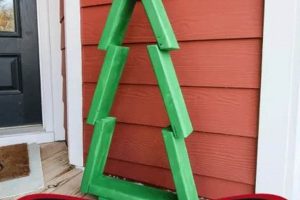
A self-assembled holiday centerpiece constructed from polyvinyl chloride (PVC) pipes represents an alternative approach to traditional evergreen trees. The structure typically involves cutting and connecting PVC pipes to form a conical or tiered framework, which can then be decorated with lights, ornaments, and other festive embellishments. As an illustration, one might use varying lengths of PVC pipe, joined with connectors, to create a skeletal tree form before adding decorative elements.
The creation of this type of holiday decor provides several advantages. It offers a cost-effective and reusable option compared to purchasing a natural or artificial tree annually. Furthermore, the inherent durability of PVC contributes to longevity, making it a sustainable choice. Historically, the use of alternative materials for holiday trees has emerged as a response to environmental concerns and a desire for personalized, unique decorations.
Subsequent sections will explore the various methods for constructing these holiday structures, including essential materials, step-by-step assembly guides, diverse design variations, and considerations for safe and effective illumination.
Construction Considerations for PVC Holiday Structures
This section outlines crucial guidance for successfully building a durable and aesthetically pleasing holiday structure from PVC materials. Adherence to these recommendations enhances the project’s outcome and lifespan.
Tip 1: Precise Measurement and Cutting: Accurate measurements of PVC pipe segments are paramount. Inconsistent lengths can lead to structural instability and a visibly lopsided final product. Utilize a measuring tape and a PVC pipe cutter or saw, ensuring clean, perpendicular cuts for secure connections.
Tip 2: Secure Joint Connections: The integrity of the structure relies on firm joints. Employ PVC cement or primer and cement combinations, following the manufacturer’s instructions precisely. Allow adequate curing time to establish a robust bond before proceeding with subsequent assembly stages.
Tip 3: Weight Distribution Management: Plan the design to evenly distribute the weight of decorations. Concentrated loads on specific branches or sections can cause bending or collapse. Reinforce weaker areas with additional supports or strategically position heavier ornaments closer to the central axis.
Tip 4: Weather Resistance for Outdoor Display: If the structure is intended for outdoor use, select UV-resistant PVC materials to prevent degradation from sunlight exposure. Furthermore, consider anchoring the base securely to prevent wind-related toppling.
Tip 5: Internal Wiring for Lighting: When incorporating electrical lighting, plan for internal wiring pathways during construction. This minimizes exposed wires and enhances the aesthetic appeal. Ensure all electrical components and wiring meet safety standards and are rated for outdoor use if applicable.
Tip 6: Surface Preparation for Painting or Decoration: Prior to applying paint or other decorative finishes, thoroughly clean and prime the PVC surface. This promotes optimal adhesion and longevity of the applied coating. Select paints or finishes specifically formulated for use on plastic materials.
These guidelines are essential for creating a structurally sound and visually appealing holiday decoration. Careful planning and meticulous execution contribute to a successful and long-lasting result.
The subsequent section will address the legal and safety considerations related to the construction and display of these holiday features.
1. Structure

The foundational element of any polyvinyl chloride (PVC) holiday structure is its structure. This encompasses the arrangement and connection of PVC pipes and fittings to create a load-bearing framework. The structure directly determines the overall shape, height, and stability of the tree. A poorly conceived structure may lead to instability, limiting the amount of decoration it can safely support, or it may result in an undesirable aesthetic outcome. For instance, if the base is too narrow relative to the height, the resulting structure becomes prone to toppling. Conversely, inadequate bracing or support within the framework can lead to sagging or bending under the weight of ornaments.
Successful construction necessitates a well-defined structural plan. This plan should specify the dimensions of individual PVC pipe segments, the type and number of connectors required, and the overall geometry of the tree. Consider a tiered structure where shorter pipe segments are used near the top and progressively longer segments form the lower tiers. This design mimics the shape of a traditional evergreen tree and distributes weight more effectively. Another practical application is the use of internal supports or cross-bracing within the PVC framework to enhance rigidity and prevent deformation. The design should also account for access points for wiring if lights are to be integrated, and for ease of assembly and disassembly for storage.
In summary, the structure is not merely a physical attribute but a critical determinant of the functionality, safety, and visual appeal of a PVC holiday tree. Understanding structural principles and applying them thoughtfully during the planning and construction phases is essential for creating a durable and attractive seasonal decoration. Overlooking structural considerations can compromise the entire project, negating the intended benefits of a cost-effective and reusable holiday display.
2. Stability

Stability is a paramount concern in the construction of self-assembled holiday structures from polyvinyl chloride (PVC). The inherent lightweight nature of PVC, while advantageous for handling, presents challenges in creating a structure capable of withstanding external forces and bearing the weight of decorations. A lack of stability compromises the safety, appearance, and longevity of the display.
- Base Design and Weight Distribution
The design of the base directly impacts the structure’s resistance to tipping. A wider base provides a lower center of gravity, increasing stability. Distributing the weight of decorations evenly across the tree’s branches mitigates the risk of concentrated loads causing imbalance. For instance, placing heavy ornaments near the base and lighter ornaments towards the top can significantly improve stability. The base should also be constructed from more substantial materials or weighted down to further enhance resistance to external forces.
- Joint Strength and Structural Integrity
The connections between PVC pipes are critical points of potential failure. Weak joints can lead to structural collapse, especially under the weight of decorations or exposure to wind. Employing appropriate PVC cement and ensuring proper curing times strengthens these connections. Additionally, internal supports or cross-bracing within the structure reinforces the frame and prevents bending or sagging. Regular inspection of these joints is necessary to identify and address any signs of weakening or detachment.
- Environmental Factors and Anchoring
External environmental conditions, such as wind, rain, or snow, exert forces that can destabilize the structure. For outdoor displays, anchoring the base to the ground is essential. This can be achieved through the use of stakes, weights, or a more permanent mounting system. Furthermore, selecting UV-resistant PVC materials minimizes degradation from sunlight exposure, ensuring long-term structural integrity. Assessing the prevailing weather conditions and adapting the design and anchoring accordingly is crucial for maintaining stability in outdoor environments.
- Material Selection and Load Capacity
The type and gauge of PVC pipe used in construction influence the structure’s overall load capacity. Thicker-walled pipes offer greater strength and resistance to bending, but also increase the weight of the structure. Balancing the need for structural integrity with ease of handling is a key consideration. Calculating the estimated weight of decorations and selecting materials with an appropriate load-bearing capacity is necessary to prevent structural failure. Overloading the structure can lead to deformation or collapse, compromising both safety and aesthetics.
In conclusion, the stability of a PVC holiday structure is a multifaceted issue that requires careful attention to base design, joint strength, environmental factors, and material selection. Addressing these considerations systematically ensures the creation of a safe, durable, and visually appealing display. Overlooking the importance of stability can negate the economic and aesthetic benefits of this alternative holiday decoration, resulting in potential hazards and compromised longevity.
3. Materials

The successful realization of a polyvinyl chloride (PVC) holiday structure hinges critically on the selection of appropriate materials. The properties of PVC pipe and connectors directly influence the structural integrity, aesthetic appeal, and longevity of the finished product. Inappropriate material choices can lead to instability, premature degradation, and an ultimately unsatisfactory decorative outcome. For instance, using thin-walled PVC pipe may result in bending or collapse under the weight of ornaments, whereas selecting non-UV-resistant pipe for outdoor use can cause discoloration and embrittlement over time, shortening its lifespan. Thus, understanding the specific characteristics of available materials and their suitability for the intended application is crucial.
Beyond the basic PVC pipe and connectors, other materials also contribute significantly to the project. Adhesives used to join the pipe segments must provide a strong and durable bond, capable of withstanding both physical stress and environmental exposure. Similarly, paints or decorative coatings must adhere properly to the PVC surface and resist fading or peeling. When incorporating lighting, electrical components must meet safety standards and be appropriately rated for indoor or outdoor use. The choice of these ancillary materials affects not only the visual appearance of the structure but also its safety and durability. Consider, for example, using outdoor-rated LED lights to minimize the risk of electrical hazards in wet conditions, or applying a specialized primer to PVC before painting to ensure long-lasting adhesion.
In summary, the materials employed in constructing a PVC holiday structure are not merely passive components, but rather active determinants of its overall success. Careful consideration of material properties, suitability for the intended application, and adherence to safety standards is essential for creating a durable, aesthetically pleasing, and long-lasting decorative piece. A comprehensive understanding of material science, coupled with practical application, transforms raw materials into a functional and visually appealing seasonal display, while ensuring its integrity and safety for years to come.
4. Decoration

Decoration represents a crucial phase in the realization of a polyvinyl chloride (PVC) holiday tree, transforming a bare structural framework into a visually engaging and festive display. The selection and application of decorative elements directly influence the aesthetic impact of the tree, reflecting personal preferences and contributing to the overall holiday ambiance. Without thoughtful decoration, the PVC structure remains a utilitarian object, failing to evoke the desired festive spirit. For instance, a PVC structure adorned with classic ornaments, warm white lights, and a traditional star topper creates a familiar and comforting holiday scene. Conversely, a structure decorated with modern, minimalist ornaments and multi-colored LED lights projects a contemporary aesthetic. The decorative choices, therefore, determine the tree’s visual identity and its ability to resonate with observers.
The process of decoration also necessitates consideration of practical factors, such as weight distribution and secure attachment. Heavy ornaments concentrated on a single branch can compromise the structural stability of the PVC framework, potentially leading to bending or collapse. Therefore, careful planning and even distribution of decorative elements are essential. Similarly, the method of attachment must be robust enough to withstand environmental conditions and prevent ornaments from falling, creating a safety hazard. Examples include using sturdy ornament hooks, zip ties, or adhesive strips to secure decorations firmly to the PVC pipes. The integration of lighting also demands careful attention, ensuring that wiring is concealed and safely routed to avoid potential electrical hazards. Internal wiring pathways built into the PVC structure facilitate the neat and secure integration of lighting elements.
In conclusion, decoration is not merely an aesthetic addendum but an integral component of a polyvinyl chloride holiday tree, transforming a functional structure into a meaningful festive symbol. Thoughtful selection, strategic placement, and secure attachment of decorative elements are essential for maximizing the visual impact, ensuring structural stability, and prioritizing safety. The decorative choices ultimately define the tree’s character and its ability to contribute to the overall holiday experience, bridging the gap between a bare structure and a cherished symbol of the season.
5. Safety
Safety constitutes a critical element in the creation and deployment of self-assembled holiday structures from polyvinyl chloride (PVC). These projects, while offering customizable and cost-effective alternatives to traditional trees, necessitate careful attention to potential hazards to ensure the well-being of individuals and property. Neglecting safety considerations can result in structural failures, electrical incidents, or fire risks, thereby negating the intended benefits of this decorative approach.
- Electrical Wiring and Lighting
The integration of electrical lighting into these PVC structures introduces potential hazards if not executed properly. Exposed wiring, faulty connections, or the use of non-weatherproof components can lead to electrical shock or short circuits. Implementing grounded outlets, using outdoor-rated lights for external displays, and ensuring all wiring is properly insulated and concealed minimizes these risks. For instance, running wiring through the interior of PVC pipes shields the connections from exposure and reduces the risk of damage or accidental contact.
- Structural Stability and Load Capacity
An unstable PVC tree poses a toppling hazard, particularly if subjected to external forces or overloaded with decorations. Ensuring a wide, weighted base and utilizing durable PVC pipe with appropriate wall thickness enhances structural integrity. Distributing the weight of ornaments evenly across the structure prevents localized stress that could lead to failure. Reinforcing connections with PVC cement and periodically inspecting the structure for signs of weakness mitigates the risk of collapse. A structure that collapses could cause physical injury or damage to surrounding objects.
- Fire Resistance and Material Selection
PVC, while not inherently flammable, can release toxic fumes when exposed to high heat. Avoiding the placement of the structure near open flames or heat sources is crucial. Selecting flame-retardant decorations and ensuring adequate ventilation in indoor settings minimizes the risk of fire hazards. It’s imperative to avoid overloading electrical circuits when using lights, and to regularly check for frayed wires or damaged components. For instance, consider using LED lights, which produce less heat than incandescent bulbs, reducing the risk of igniting nearby materials.
- Safe Cutting and Assembly Practices
The construction process itself involves using tools such as saws and PVC cutters, which pose a risk of injury if not handled correctly. Employing proper safety equipment, including eye protection and gloves, minimizes the risk of cuts or abrasions. Ensuring a stable work surface and following manufacturer’s instructions for tool operation are essential. Avoiding rushed or careless assembly practices reduces the likelihood of accidents. Disposing of PVC scraps properly also prevents potential hazards, such as tripping or puncture wounds.
Addressing safety concerns in the construction and utilization of PVC holiday trees ensures that these projects remain a safe and enjoyable expression of holiday creativity. By prioritizing electrical safety, structural integrity, fire resistance, and responsible assembly practices, individuals can minimize risks and create festive displays that enhance, rather than endanger, their surroundings. These precautions are crucial for transforming a potentially hazardous undertaking into a safe and rewarding holiday tradition.
6. Longevity
Longevity, in the context of self-constructed holiday decorations utilizing polyvinyl chloride (PVC), denotes the capacity of the structure to endure repeated use across multiple holiday seasons. This characteristic is often a primary motivator for choosing PVC over traditional evergreen or artificial trees, presenting a potentially more sustainable and economical approach to holiday dcor.
- Material Degradation Resistance
The inherent resistance of PVC to decay, rot, and insect infestation contributes significantly to its longevity. Unlike organic materials, PVC does not decompose over time, maintaining its structural integrity even when exposed to varying environmental conditions. The selection of UV-resistant PVC further mitigates degradation from sunlight exposure, preventing discoloration and embrittlement. This resilience ensures the structure can withstand prolonged outdoor use without significant deterioration.
- Structural Design and Joint Integrity
A robust structural design, characterized by stable joints and load-bearing capacity, is paramount for maximizing longevity. Well-engineered connections between PVC pipes, achieved through proper cementing techniques, prevent weakening or separation over time. Internal supports and cross-bracing reinforce the framework, preventing sagging or bending under the weight of decorations. Careful consideration of these factors ensures the structure maintains its shape and stability throughout its lifespan.
- Storage and Maintenance Practices
Proper storage and maintenance practices extend the operational lifespan of the PVC structure. Disassembling the tree into manageable components and storing them in a dry, protected environment prevents damage from moisture, extreme temperatures, or physical impact. Periodic cleaning removes dirt, debris, and potential contaminants that could accelerate degradation. Addressing minor repairs, such as tightening loose connections or touching up paint, prevents further deterioration and maintains the structure’s aesthetic appeal.
- Adaptability and Reconfigurability
The modular nature of PVC construction allows for adaptability and reconfigurability, extending the useful life of the materials. The structure can be modified to accommodate different decorative schemes, altered in size or shape, or repurposed for other applications beyond holiday displays. This flexibility reduces the need for replacement, promoting a more sustainable approach to seasonal decoration. The inherent versatility of PVC allows for creative modifications that can breathe new life into the structure, ensuring its continued relevance and aesthetic appeal.
These interlinked factors collectively determine the overall lifespan of a PVC holiday structure. By selecting appropriate materials, employing sound construction techniques, practicing responsible storage and maintenance, and leveraging the adaptability of PVC, individuals can create holiday displays that endure for many years, offering both economic and environmental benefits compared to less durable alternatives.
Frequently Asked Questions
The following questions address common inquiries and misconceptions regarding the construction and utilization of holiday structures crafted from polyvinyl chloride (PVC).
Question 1: What is the expected lifespan of a self-assembled holiday tree constructed from PVC?
The longevity of a PVC holiday structure depends on several factors, including the quality of materials used, construction techniques, storage conditions, and environmental exposure. Properly constructed and maintained structures can reasonably last for 10 years or more.
Question 2: Are there safety concerns associated with using PVC in holiday displays?
While PVC is generally safe, potential hazards exist, including electrical risks from lighting, structural instability leading to toppling, and potential fire hazards if placed near heat sources. Adhering to proper electrical wiring practices, ensuring a stable base, and keeping the structure away from open flames minimizes these risks.
Question 3: What are the primary advantages of using PVC over traditional evergreen trees?
PVC offers several advantages, including reusability, cost-effectiveness, customization potential, and resistance to decay. It provides a sustainable alternative to annually purchasing natural or artificial trees.
Question 4: Can PVC holiday structures be used outdoors?
PVC holiday structures can be utilized outdoors provided that UV-resistant PVC materials are used to prevent degradation from sunlight. Furthermore, the structure must be adequately anchored to withstand wind and other environmental factors.
Question 5: Is specialized knowledge or skills required to construct a holiday structure from PVC?
While basic construction skills are beneficial, specialized expertise is not essential. Clear instructions, careful measurement, and attention to detail are sufficient for constructing a structurally sound and aesthetically pleasing PVC holiday display.
Question 6: Are there limitations to the size or design of PVC holiday structures?
The size and design of PVC holiday structures are primarily constrained by material availability, structural stability, and practical considerations such as transportation and storage. While there are no absolute limits, excessively large or complex designs may require advanced engineering principles to ensure safety and durability.
In conclusion, PVC holiday structures offer a viable alternative to traditional decorations, presenting opportunities for creative expression, cost savings, and sustainable practices. However, thorough planning, attention to safety, and responsible construction methods are essential for maximizing the benefits and minimizing potential risks.
The subsequent section provides detailed step-by-step instructions for constructing a basic PVC holiday tree.
DIY PVC Christmas Tree
The preceding analysis has comprehensively explored the various facets of creating a diy pvc christmas tree. From foundational structural considerations to nuanced decorative techniques and critical safety protocols, the information presented aims to provide a thorough understanding of the process. The examination of materials, construction methods, and long-term viability contributes to a comprehensive perspective on this alternative approach to holiday decoration.
The construction of a diy pvc christmas tree represents a commitment to resourcefulness and personalized expression within established traditions. The careful application of the knowledge outlined herein will lead to the creation of a durable, aesthetically pleasing, and safe holiday centerpiece. It is incumbent upon the builder to prioritize safety and stability, ensuring a display that brings joy without compromising well-being.