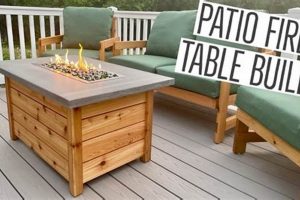
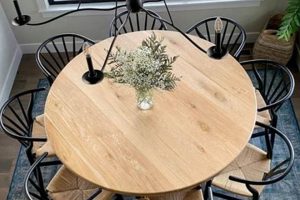
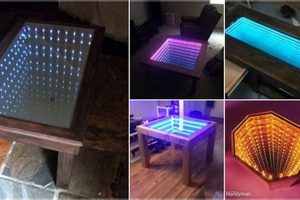
A self-assembled furniture piece, constructed primarily from layered wood sheets, offers a functional surface for various activities. These projects are typically undertaken by individuals seeking customized solutions or cost-effective alternatives to commercially manufactured furniture. Examples range from simple coffee surfaces to more complex dining structures, all sharing a common foundation in sheet material construction.
The appeal stems from several factors. It provides an accessible avenue for creative expression and personalized design. Using readily available materials and basic tools, individuals can craft furniture tailored to specific needs and aesthetics. Furthermore, it presents a budget-conscious option, often significantly less expensive than purchasing equivalent items. Historically, woodworking has been a valued skill, and these types of builds represent a modern continuation of that tradition, fostering self-reliance and resourcefulness.
The following sections will delve into essential aspects of creating such a piece. This includes material selection, appropriate construction techniques, finishing methods for enhanced durability and appearance, and design considerations for both aesthetic appeal and structural integrity. The goal is to provide a foundational understanding that enables successful project completion.
Essential Construction Considerations
Successfully fabricating a surface from layered wood sheets requires careful planning and execution. Attention to detail throughout the construction process contributes significantly to the final product’s durability, stability, and aesthetic appeal.
Tip 1: Material Selection: Prioritize high-grade plywood. Opt for void-free options to minimize imperfections and ensure structural integrity. Consider the intended use and environment when choosing between hardwood and softwood varieties. Thicker sheets are generally recommended for larger surfaces to prevent sagging.
Tip 2: Precision Cutting: Accurate cuts are crucial for proper assembly. Employ a circular saw with a fine-tooth blade or a table saw for straight lines. Utilize a jigsaw for curves and intricate shapes. Always measure twice and cut once to minimize errors.
Tip 3: Jointing Techniques: Select appropriate joining methods based on the design and structural requirements. Options include butt joints reinforced with screws or nails, rabbet joints for added strength, or more advanced techniques like dado joints or mortise and tenon joints for enhanced stability.
Tip 4: Secure Fastening: Use screws instead of nails whenever possible for greater holding power. Apply wood glue to all joints before fastening to create a stronger and more durable bond. Countersink screws to create a flush surface for finishing.
Tip 5: Edge Treatment: Raw plywood edges can be unsightly and prone to damage. Mitigate this by applying edge banding, solid wood trim, or filling the edges with wood filler and sanding smooth. This will enhance the finished appearance and protect the core layers.
Tip 6: Sanding and Preparation: Thorough sanding is essential for a smooth, even surface. Begin with a coarse grit sandpaper and gradually progress to finer grits. Pay particular attention to edges and corners. Remove all dust before applying any finish.
Tip 7: Finishing Applications: Apply a protective finish to enhance the appearance and protect the wood from moisture and wear. Options include varnish, polyurethane, paint, or oil-based finishes. Apply multiple thin coats, allowing each coat to dry completely before applying the next.
Adhering to these guidelines during the construction process will result in a more robust, visually appealing, and long-lasting piece. Careful attention to detail, from material selection to finishing applications, is paramount for achieving professional results.
With these tips in mind, the subsequent sections will explore specific design ideas and project examples, demonstrating the versatility and potential of this construction method.
1. Material Grade
The selection of plywood grade exerts a considerable influence on the structural integrity, aesthetic qualities, and longevity of any self-assembled surface constructed from layered wood sheets. Lower grades, characterized by voids, knots, and inconsistencies in veneer layers, compromise the material’s strength and dimensional stability. This can lead to sagging, warping, and premature failure of the structure under load. Conversely, higher grades, meticulously manufactured with fewer defects and consistent veneer thickness, provide superior strength, a smoother surface for finishing, and increased resistance to environmental factors. For instance, using construction-grade plywood for a dining surface intended for daily use would likely result in visible imperfections and a shortened lifespan compared to using cabinet-grade material.
Beyond structural considerations, material grade also dictates the ease and quality of finishing processes. Lower grades often require extensive filling, sanding, and patching to achieve a smooth, paintable surface, increasing labor and material costs. Higher grades, with their refined surfaces, require minimal preparation, resulting in a more professional and durable finish. Consider the example of a coffee surface: utilizing a high-grade sheet material allows for a clear coat finish to showcase the wood grain, while a lower grade would necessitate an opaque paint to conceal imperfections. The choice directly impacts the overall aesthetic and perceived value of the finished piece.
In summary, material grade represents a foundational decision point in any self-assembly project using layered wood sheets. Compromising on quality to reduce initial costs often leads to diminished structural performance, increased labor requirements, and a less satisfactory final product. Understanding the relationship between material grade and intended application is therefore paramount for ensuring both the functional adequacy and aesthetic success of the finished piece.
2. Joint Strength
Joint strength is a critical determinant of a durable and functional self-assembled surface utilizing layered wood sheets. Inadequate jointing techniques or insufficient adhesive application directly compromise the structural integrity, leading to instability, racking, and potential failure under load. This vulnerability stems from the layered composition of the material; relying solely on fasteners without proper joint preparation or adhesive reinforcement introduces stress concentrations, resulting in premature separation of the wood fibers.
For instance, a poorly constructed frame supporting a large surface will exhibit noticeable sagging and instability, especially if subjected to significant weight or lateral forces. Conversely, employing robust joinery methods, such as rabbet joints or dado joints, in conjunction with high-quality wood adhesive, distributes the load more evenly across the joint surface, enhancing its resistance to stress and deformation. Consider a self-constructed desk: butt joints secured only with screws may suffice for light use, but a heavier workload necessitates stronger joints like mortise and tenon or reinforced rabbet joints for long-term stability. Proper joint selection and execution are paramount for ensuring the longevity and safe usability of the finished product.
In conclusion, the significance of joint strength in self-assembled constructions using layered wood sheets cannot be overstated. Neglecting this aspect results in a structurally compromised surface susceptible to premature failure. Therefore, careful consideration of joint design, appropriate adhesive selection, and meticulous execution are essential for achieving a robust and enduring final product, ensuring it fulfills its intended function safely and reliably.
3. Surface Finish
The application of a surface finish represents a critical stage in the completion of any furniture piece crafted from layered wood sheets. It extends beyond mere aesthetic enhancement, serving as a functional barrier against environmental factors that can degrade the underlying material. Without an adequate finish, the exposed wood fibers are susceptible to moisture absorption, leading to warping, swelling, and ultimately, structural compromise. Furthermore, the finish provides protection against scratches, stains, and other forms of physical damage that detract from the overall appearance and reduce the lifespan of the construction. Consider, for example, a bare surface left unprotected in a kitchen environment. Spills and grease would quickly penetrate the wood, causing irreversible staining and promoting bacterial growth. A properly applied finish, such as polyurethane, creates a durable, impermeable layer that resists these threats, preserving both the functionality and the visual appeal.
The selection of a specific finish is dictated by several factors, including the intended use of the furniture, the desired aesthetic outcome, and the level of protection required. Oil-based finishes, such as varnish or tung oil, penetrate the wood fibers, enhancing the natural grain and providing a warm, traditional appearance. However, they offer limited resistance to moisture and require regular maintenance. Water-based finishes, on the other hand, provide excellent protection against moisture and are typically more durable and easier to clean. Paint offers the greatest versatility in terms of color and finish options but may conceal the wood grain entirely. The choice between these options hinges on a balance between aesthetic preferences and functional requirements. For a work surface in a garage, a durable, easy-to-clean finish like epoxy might be preferred, while a living room coffee surface could benefit from the aesthetic qualities of a carefully applied oil finish.
In summary, surface finishing is an indispensable element in the creation of a lasting and visually appealing furniture piece from layered wood sheets. Its protective properties safeguard the underlying material from environmental damage, while its aesthetic qualities enhance its overall appeal. The selection of an appropriate finish requires careful consideration of the intended use, desired aesthetic, and level of protection required. A well-chosen and properly applied finish not only prolongs the lifespan of the construction but also elevates its aesthetic value, transforming a simple structure into a durable and attractive element of the surrounding environment.
4. Edge Treatment
Edge treatment is a critical, often underestimated, component in the successful creation of any surface made from layered wood sheets. The raw edges of these materials expose the internal lamination, presenting both aesthetic and structural challenges that demand careful consideration. Proper edge treatment is essential for achieving a finished product that is both visually appealing and durable.
- Aesthetic Enhancement
Untreated edges reveal the layered construction, often considered visually unappealing. Edge treatment conceals this, providing a clean, finished look that complements the overall design. Options range from simple paint or veneer to more elaborate solid wood edging, each offering a different aesthetic impact. Consider a minimalist design where a sleek, painted edge maintains the clean lines, versus a rustic design enhanced by a solid wood edge that adds warmth and texture. This element transforms a utilitarian surface into a refined piece of furniture.
- Structural Integrity
Raw edges are particularly vulnerable to damage, such as chipping and delamination. Edge treatment provides a protective barrier, preventing moisture ingress and physical wear. This is particularly crucial in high-use areas or environments with fluctuating humidity levels. For instance, a kitchen island with exposed edges is prone to water damage from spills, while a desk subjected to constant friction from chair arms benefits from a robust, impact-resistant edge. This reinforcement extends the lifespan of the piece and maintains its structural stability.
- Safety Considerations
Sharp, untreated edges pose a potential safety hazard, particularly in households with children. Edge treatment softens these edges, reducing the risk of injury from accidental bumps or scrapes. This is particularly relevant for surfaces intended for use by children or in high-traffic areas. Rounded or beveled edges, achieved through sanding, routing, or the application of edge banding, contribute to a safer and more user-friendly design. Therefore, safety should factor heavily into edge treatment decisions.
- Material Compatibility
The choice of edge treatment should be compatible with the core material and the intended finish. Certain adhesives and finishes may not adhere properly to all edge treatments, leading to premature failure or an uneven appearance. Careful selection ensures a cohesive and long-lasting bond between the edge treatment and the core material. For example, solvent-based adhesives may damage certain plastic edge bandings, while water-based finishes may not properly seal raw wood edges. Compatibility ensures the entire surface ages gracefully and consistently.
In conclusion, edge treatment is not merely an afterthought, but an integral part of the design and construction process. It significantly impacts the aesthetic appeal, structural integrity, and safety of any self-made surface utilizing layered wood sheets. Careful selection and application of edge treatments transform a potentially rough and vulnerable surface into a refined and durable element. Ignoring this critical step compromises the overall quality and longevity of the furniture.
5. Leg Design
The design of the supporting legs is paramount to the stability, functionality, and aesthetic appeal of any self-constructed surface utilizing layered wood sheets. Leg design choices directly impact the weight-bearing capacity, overall style, and user experience of the finished furniture piece. Careful consideration must be given to material selection, leg placement, and attachment methods to ensure a robust and visually harmonious outcome.
- Structural Integrity and Load Distribution
Leg design directly influences the load-bearing capacity of the surface. Factors like leg material, thickness, and number of legs determine the amount of weight the surface can safely support. Poorly designed legs can lead to instability, sagging, or even catastrophic failure under load. A simple surface intended for light use might suffice with thin, angled metal legs, whereas a heavy dining table requires substantial wooden legs strategically positioned to distribute weight evenly across the frame. The connection between the legs and the tabletop is also crucial, requiring robust joinery or hardware to prevent separation under stress.
- Aesthetic Style and Visual Harmony
Leg design significantly contributes to the overall aesthetic of the surface. The style, shape, and finish of the legs can complement or contrast with the surface material, creating a specific visual impact. Sleek, minimalist metal legs impart a modern aesthetic, while turned wooden legs evoke a traditional or rustic style. The proportions of the legs relative to the tabletop are equally important, influencing the sense of balance and visual harmony. Overly thin legs may appear flimsy and unstable, while excessively thick legs can overwhelm the surface. Careful consideration of these aesthetic factors is essential for achieving a visually pleasing finished product.
- Material Selection and Durability
The choice of leg material directly affects the durability and longevity of the surface. Solid wood legs offer superior strength and stability compared to hollow metal legs or low-quality wood composites. However, solid wood is also more susceptible to moisture-related warping and cracking. Metal legs are generally more resistant to moisture and impact damage but may lack the warmth and visual appeal of wood. The selection of leg material should be based on a balance between structural requirements, aesthetic preferences, and environmental considerations. Furthermore, the finish applied to the legs plays a crucial role in protecting them from wear, scratches, and corrosion, extending their lifespan.
- Ergonomics and Usability
Leg design influences the ergonomic comfort and usability of the surface. The height of the legs determines the working height of the surface, which should be appropriate for the intended task. For example, a desk requires legs that are high enough to allow comfortable seating, while a coffee surface requires lower legs. The leg placement also affects the amount of legroom available underneath the surface. Legs positioned too close to the edges can restrict movement and create an uncomfortable user experience. Therefore, ergonomic considerations should be factored into the leg design process to ensure a functional and user-friendly finished product.
In conclusion, leg design is an indispensable consideration in the creation of a functional and aesthetically pleasing surface from layered wood sheets. By carefully considering factors such as structural integrity, aesthetic style, material selection, and ergonomics, it is possible to create legs that not only provide robust support but also enhance the overall beauty and usability of the finished product. The legs not only provide support but also greatly influence aesthetic and usability.
6. Structural Integrity
Structural integrity constitutes a foundational element in the successful construction of any surface from layered wood sheets. It directly influences the furniture piece’s ability to withstand applied loads, resist deformation, and maintain its intended form and function over time. The absence of sufficient structural integrity in these builds manifests as sagging, warping, joint failure, and, in extreme cases, complete collapse. These issues are attributable to several factors, including inadequate material selection, improper jointing techniques, insufficient support structures, and a lack of consideration for load distribution. The significance of structural integrity is exemplified in the construction of a dining surface. A surface constructed without adequate support or employing weak joints will likely exhibit noticeable deflection under the weight of dishes and diners, rendering it unsuitable for its intended purpose. Conversely, a well-designed surface, incorporating a robust frame, appropriately sized supports, and strong joints, will maintain its form and function for an extended period, providing a stable and reliable platform.
Achieving adequate structural integrity in self-assembled surfaces requires a thorough understanding of basic engineering principles and woodworking techniques. Material selection plays a critical role. Employing high-grade plywood with sufficient thickness is essential for resisting bending and deformation. Jointing techniques, such as rabbet joints or dado joints, provide greater strength and stability compared to simple butt joints. Reinforcing the edges of the plywood with solid wood edging can also enhance its resistance to impact damage and prevent delamination. Furthermore, the strategic placement of supports, such as aprons or stretchers, helps to distribute the load evenly across the surface, reducing stress concentrations and preventing sagging. The application of a durable finish protects the plywood from moisture absorption, further enhancing its structural stability over time. Consider the example of a workbench constructed from layered wood sheets. It must support heavy tools and materials without deformation. A design incorporating a robust frame, thick plywood sheeting, and strategically placed supports would be essential for achieving the required structural integrity.
In summary, structural integrity is not merely a desirable attribute but a fundamental requirement for the successful creation of any surface from layered wood sheets. It dictates the furniture piece’s ability to withstand applied loads, maintain its form, and function safely and reliably over time. By carefully considering material selection, jointing techniques, support structures, and load distribution, it is possible to achieve adequate structural integrity in self-assembled surfaces, ensuring their long-term durability and usability. Failure to prioritize structural integrity invariably leads to premature failure and dissatisfaction with the finished product.
Frequently Asked Questions
The following questions address common concerns and provide clarity on key aspects of constructing a surface from layered wood sheets.
Question 1: What is the optimal plywood thickness for a self-assembled surface?
The appropriate thickness depends on the intended use and dimensions of the surface. Thicker sheets (3/4 inch or greater) are generally recommended for larger surfaces or those expected to bear significant weight to minimize sagging. Smaller surfaces designed for lighter loads may suffice with thinner sheets (1/2 inch or 5/8 inch).
Question 2: How can plywood edges be effectively treated to prevent splintering and enhance aesthetics?
Several methods exist for treating edges. Edge banding, available in various materials like wood veneer, PVC, or ABS, provides a clean and durable finish. Alternatively, solid wood edging can be applied for a more substantial look. Filling the edges with wood filler and sanding smooth is another option, followed by priming and painting.
Question 3: What are the most suitable joinery methods for connecting plywood components?
Butt joints reinforced with screws and glue are a basic option. Rabbet joints offer increased strength and stability. Dado joints provide a recessed channel for a flush connection. Mortise and tenon joints, while more complex, offer exceptional strength. The choice depends on the structural requirements and skill level.
Question 4: Which types of finishes provide the best protection for plywood surfaces?
Polyurethane finishes offer excellent durability and resistance to scratches, stains, and moisture. Varnish provides a traditional look with good protection. Paint offers a wide range of color options but may require multiple coats for adequate coverage and durability. Oil-based finishes enhance the wood grain but offer less protection than polyurethane.
Question 5: How can the structural integrity of a large self-assembled surface be improved?
Adding a frame constructed from solid wood or metal provides significant reinforcement. Incorporating aprons or stretchers beneath the surface helps distribute weight and prevent sagging. Utilizing thicker plywood sheets also contributes to increased structural stability.
Question 6: What are the potential drawbacks of using lower-grade plywood in a self-assembled project?
Lower-grade plywood typically contains voids, knots, and inconsistencies in the veneer layers, compromising its strength and aesthetic appeal. This can lead to sagging, warping, and a less desirable finished appearance. Increased sanding and filling may be required to achieve a smooth surface.
Proper planning, material selection, and execution are crucial for a long-lasting piece. Adhering to sound construction principles ensures both functionality and aesthetic appeal in any project.
The subsequent sections will explore advanced design concepts and innovative techniques for creating unique and functional furniture pieces.
Conclusion
This exploration of the self-assembled layered wood sheet surface has highlighted the importance of careful material selection, sound construction techniques, and thoughtful design considerations. From optimizing joint strength to employing appropriate edge treatments and finishes, the successful realization of this project hinges on a comprehensive understanding of both the material properties and the intended application. Adherence to these principles ensures a durable, functional, and aesthetically pleasing outcome.
The creation of such a piece represents more than just a cost-effective alternative to commercially manufactured furniture; it embodies a commitment to resourcefulness, creativity, and personalized design. By embracing the challenges and opportunities inherent in this process, individuals can craft unique pieces that reflect their individual needs and aesthetic preferences. Continued innovation in materials and techniques will undoubtedly further expand the possibilities for this construction method, solidifying its position as a viable and rewarding approach to furniture creation.