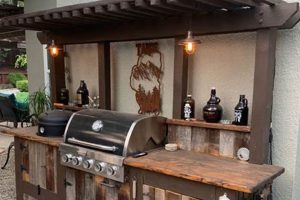
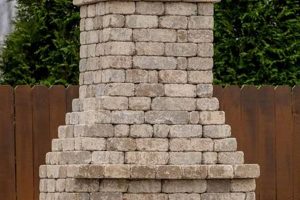
Construction of an open-air hearth using natural rock elements, performed by the homeowner or non-professional builder, characterizes a significant trend in outdoor living spaces. This construction usually involves a combination of fieldstone, flagstone, or manufactured stone veneer affixed to a structural framework designed to withstand high temperatures. As a practical example, consider a homeowner undertaking the project to create a backyard focal point for entertainment and relaxation, utilizing locally sourced materials and online tutorials for guidance.
The appeal of such a project stems from several factors, including cost savings compared to professional installation, increased property value, and the satisfaction derived from hands-on creation. Historically, outdoor fire features provided warmth and served as cooking areas. Contemporary interpretations often blend this functional legacy with aesthetic design, creating visually appealing structures that enhance the outdoor environment. Furthermore, a well-constructed outdoor hearth can extend the usability of outdoor spaces into cooler months, fostering social gatherings and enhancing the homeowner’s quality of life.
Subsequent sections will elaborate on essential aspects related to planning, design considerations, material selection, construction techniques, safety protocols, and the long-term maintenance necessary for ensuring the structural integrity and enduring beauty of these installations. This information aims to provide a comprehensive resource for individuals considering undertaking similar projects.
Essential Considerations for Stone Hearth Construction
Prior to commencing construction, careful consideration of several key factors is paramount to ensuring a safe, functional, and aesthetically pleasing result.
Tip 1: Site Selection: Rigorous assessment of the building site is crucial. Ensure compliance with local building codes and setback requirements. Avoid proximity to flammable materials, such as trees or overhanging structures. Evaluate prevailing wind patterns to minimize smoke nuisance.
Tip 2: Foundation Integrity: A solid foundation is fundamental to the structural stability of the fireplace. Construct a reinforced concrete pad extending below the frost line in regions subject to freezing temperatures. The foundation must be level and adequately sized to support the weight of the stone and firebox.
Tip 3: Firebox Design: The firebox should be constructed using fire-resistant materials, such as firebricks or refractory concrete. Proper dimensions and design, including a throat and smoke chamber, are essential for efficient draft and smoke containment.
Tip 4: Stone Selection and Preparation: Choose stone appropriate for outdoor use, resistant to weathering and thermal stress. Natural stone should be properly cleaned and prepared for adhesion. Manufactured stone veneer requires careful adherence to manufacturer specifications for installation.
Tip 5: Mortar Application: Employ a high-quality mortar specifically designed for masonry construction and outdoor use. Ensure proper mixing and application techniques to create strong and weather-resistant joints. Consider the aesthetic impact of mortar color and joint style.
Tip 6: Ventilation and Drainage: Incorporate adequate ventilation around the firebox to promote airflow and prevent overheating. Design the structure to facilitate proper drainage of rainwater and snowmelt, minimizing the risk of water damage and freeze-thaw deterioration.
Tip 7: Safety Features: Install a spark arrestor on the chimney to prevent embers from escaping. Consider adding a hearth extension made of non-combustible material to protect the surrounding area from sparks and heat. Maintain a readily accessible fire extinguisher nearby.
Adherence to these tips promotes the creation of a durable, safe, and aesthetically pleasing structure, enhancing outdoor living spaces for years to come.
The subsequent section will provide guidance on sourcing materials and tools required for the project.
1. Planning

Detailed planning is not merely a preliminary step in outdoor hearth construction; it constitutes the bedrock upon which a successful, safe, and aesthetically pleasing structure is erected. Insufficient planning often leads to costly errors, structural instability, and potential safety hazards.
- Site Assessment and Preparation
Thorough site assessment involves evaluating soil stability, drainage patterns, and proximity to combustible materials. Prior to any construction, the area must be properly excavated and leveled. For instance, neglecting to identify unstable soil can result in foundation settlement, compromising the integrity of the entire structure. Comprehensive site preparation directly affects the longevity and safety of the finished fireplace.
- Code Compliance and Permitting
Navigating local building codes and obtaining necessary permits are crucial aspects of planning. These regulations often dictate specific requirements regarding fireplace dimensions, chimney height, and setback distances from property lines. Failure to comply with these regulations can result in fines, construction delays, or even mandatory demolition. Therefore, understanding and adhering to local codes is essential for legal and safe construction.
- Design and Material Selection
A well-defined design incorporates both aesthetic preferences and functional considerations. This includes determining the overall dimensions of the fireplace, the type of stone to be used, and the layout of the firebox and chimney. Selection of appropriate materials, such as fire-resistant bricks for the firebox and weather-resistant stone for the exterior, ensures durability and longevity. A detailed design plan serves as a blueprint for the entire construction process, minimizing errors and ensuring a cohesive final product.
- Budgeting and Resource Allocation
Accurate budgeting is essential for managing project costs and preventing unforeseen expenses. This involves estimating the cost of materials, tools, and potential labor assistance. Proper resource allocation ensures that necessary materials are available when needed, preventing delays in the construction process. A well-defined budget allows for informed decision-making throughout the project, ensuring financial sustainability and preventing cost overruns.
The interrelatedness of these planning facets directly impacts the successful completion of an open-air hearth project. While aesthetic considerations are important, prioritizing code compliance and structural integrity ensures a safe and enduring outcome. Neglecting any of these planning stages can lead to significant challenges, emphasizing the necessity of comprehensive preparation before the first stone is laid.
2. Foundation
The foundation serves as the critical load-bearing element for any open-air stone hearth. Without a properly constructed foundation, the structural integrity of the entire fireplace is compromised, leading to potential hazards and premature failure. The significant weight of stone, mortar, and firebox materials necessitates a robust foundation capable of evenly distributing this load across the underlying soil. A poorly designed or inadequately constructed foundation can result in settling, cracking, and eventual collapse of the fireplace structure. Consider a scenario where a homeowner constructs a stone fireplace on a thin, unreinforced concrete slab; the uneven distribution of weight would likely cause the slab to crack, leading to instability in the fireplace itself. This highlights the direct cause-and-effect relationship between foundation integrity and fireplace longevity.
Foundation requirements vary based on soil conditions, local climate, and the overall size and design of the fireplace. In regions subject to freezing temperatures, the foundation must extend below the frost line to prevent heaving and cracking caused by soil expansion. The foundation typically consists of a reinforced concrete pad, the dimensions of which are determined by engineering calculations that account for the total weight of the fireplace and the bearing capacity of the soil. Furthermore, proper drainage around the foundation is essential to prevent water accumulation, which can weaken the soil and exacerbate frost heave. Real-world applications involve consulting with structural engineers to determine precise foundation specifications, ensuring compliance with local building codes and optimal performance.
In summary, the foundation represents an indispensable component of any open-air stone hearth construction. Its proper design and construction are directly linked to the fireplace’s structural stability, safety, and longevity. The challenges associated with foundation construction often involve understanding soil mechanics, adhering to building codes, and implementing appropriate drainage solutions. Recognizing the practical significance of a well-engineered foundation is crucial for any homeowner undertaking a project to construct a stone fireplace, emphasizing the importance of prioritizing this aspect to ensure a durable and aesthetically pleasing outdoor feature.
3. Materials

The selection of appropriate materials represents a pivotal determinant in the success and longevity of any do-it-yourself (DIY) outdoor stone fireplace project. The interplay between material choice and the finished structure is direct and consequential; inferior materials inevitably lead to premature deterioration, structural instability, and potential safety hazards. For instance, utilizing non-fire-resistant stone within the firebox itself will result in cracking and spalling under high heat, compromising the fireplace’s functionality and posing a risk of collapse. Similarly, the mortar used to bind the stones must withstand freeze-thaw cycles and high temperatures; otherwise, the joints will degrade, allowing water infiltration and ultimately leading to structural damage. Thus, a thorough understanding of material properties and their suitability for the specific demands of an outdoor fireplace is essential.
Material considerations extend beyond the core structural components to include the foundation, firebox lining, and chimney flue. The foundation typically requires reinforced concrete capable of supporting significant weight and resisting soil movement. The firebox must be lined with firebrick or refractory concrete, materials engineered to withstand extreme heat and direct flame exposure. The chimney flue, responsible for safely venting exhaust gases, should be constructed from stainless steel or clay liners designed for high-temperature applications. Furthermore, aesthetic considerations play a role in material selection; the type of stone chosen (e.g., fieldstone, flagstone, manufactured veneer) significantly impacts the overall visual appeal of the fireplace. The availability and cost of different materials also influence the feasibility and affordability of the DIY project. Therefore, material selection must be informed by a balance of performance, aesthetic, and economic factors.
In conclusion, the strategic selection of materials is not merely a detail but a foundational element of a successful DIY outdoor stone fireplace endeavor. Overlooking the importance of material properties and their suitability for the harsh outdoor environment can have dire consequences. Challenges in material selection often arise from balancing cost considerations with long-term durability and aesthetic preferences. Ultimately, a comprehensive understanding of material science and careful planning are paramount to achieving a safe, functional, and visually pleasing outdoor fireplace that will provide years of enjoyment. This emphasis on material selection reinforces the broader theme of meticulous preparation and informed decision-making as hallmarks of successful DIY projects.
4. Construction

The construction phase represents the practical implementation of planning, design, and material selection in the creation of a functional open-air stone hearth. It is during this phase that theoretical concepts translate into a tangible structure, demanding precision, adherence to safety protocols, and a thorough understanding of masonry techniques. The success of a DIY outdoor stone fireplace project hinges on the skillful execution of construction procedures.
- Foundation Laying
The initial step involves preparing and pouring the concrete foundation according to previously established dimensions and reinforcing specifications. This includes accurate leveling, proper curing time, and ensuring adequate load-bearing capacity. An example would be pouring a concrete pad with integrated rebar to support the weight of the stone structure above. Any deviation from established specifications at this stage compromises the structural integrity of the entire fireplace.
- Firebox Assembly
The firebox, the heart of the fireplace, requires meticulous assembly using fire-resistant materials like firebrick or refractory concrete. Proper dimensions and angles are crucial for efficient draft and heat reflection. This involves carefully cutting and mortaring the bricks to create a seamless and durable fire-resistant enclosure. An improperly constructed firebox can lead to inefficient burning, excessive smoke, and potential fire hazards.
- Stone Veneer Application
The application of stone veneer, whether natural or manufactured, constitutes the aesthetic component of the construction process. This requires careful selection and placement of stones to create a visually appealing and structurally sound exterior. Mortar joints must be consistently applied and properly tooled to ensure weather resistance and aesthetic uniformity. Incorrect mortar application can result in water penetration, freeze-thaw damage, and eventual structural failure of the veneer.
- Chimney and Flue Installation
The chimney and flue system is critical for safely venting exhaust gases from the firebox. This involves installing appropriate flue liners, ensuring proper chimney height, and incorporating a spark arrestor to prevent ember escape. Correct chimney design and installation are essential for efficient draft and the prevention of carbon monoxide buildup. Failure to properly install the chimney and flue poses significant safety risks to the surrounding environment and inhabitants.
These interconnected construction elements must be carefully coordinated to achieve a successful DIY outdoor stone fireplace. Each step builds upon the previous one, requiring a methodical approach and meticulous attention to detail. The effective execution of construction techniques, underpinned by sound planning and material selection, results in a durable, functional, and aesthetically pleasing outdoor feature. Conversely, shortcuts or deviations from established procedures can compromise the fireplace’s integrity and pose significant safety hazards, reinforcing the critical role of skilled construction in the project’s overall success.
5. Safety

Safety constitutes a paramount concern in the planning, construction, and operation of a do-it-yourself (DIY) outdoor stone fireplace. Neglecting safety protocols can result in serious injuries, property damage, and even fatalities. The inherent risks associated with fire, heavy materials, and structural instability necessitate a proactive and diligent approach to safety at every stage of the project.
- Fire Containment and Control
Effective fire containment mechanisms are crucial to prevent the spread of fire beyond the intended firebox. This involves proper firebox design, the use of fire-resistant materials, and the installation of a spark arrestor on the chimney. For example, inadequate firebox dimensions can lead to embers escaping and igniting nearby vegetation. Regular inspection and maintenance of these components are essential for sustained fire safety.
- Structural Stability and Integrity
Maintaining the structural integrity of the fireplace is vital to prevent collapses or falling debris. This necessitates a solid foundation, proper mortar application, and adherence to sound construction techniques. For instance, a poorly constructed foundation can lead to settling and cracking, compromising the stability of the entire structure. Periodic inspections for signs of instability are crucial for identifying and addressing potential hazards before they escalate.
- Material Handling and Personal Protective Equipment (PPE)
The handling of heavy stones and masonry materials poses significant risks of injury. Proper lifting techniques, the use of appropriate equipment, and the consistent wearing of PPE, such as gloves, safety glasses, and steel-toed boots, are essential for mitigating these risks. For example, failing to wear gloves can result in cuts and abrasions from sharp stone edges. Enforcing strict adherence to PPE guidelines is crucial for minimizing workplace accidents.
- Adherence to Building Codes and Regulations
Compliance with local building codes and fire safety regulations is non-negotiable. These regulations provide specific guidelines for fireplace construction, including setback distances from property lines, chimney height requirements, and fire safety standards. Failure to comply with these regulations can result in fines, construction delays, and potential liability in the event of an accident. Thorough research and adherence to all applicable codes are essential for ensuring a safe and legal construction project.
These safety facets are interconnected and interdependent, forming a comprehensive framework for risk mitigation in the context of DIY outdoor stone fireplaces. While the aesthetic appeal and functional benefits of an outdoor fireplace are undeniable, prioritizing safety ensures that these benefits are enjoyed responsibly and without compromising personal well-being or property security. The integration of safety protocols is not merely a recommendation but a fundamental imperative for any individual undertaking such a construction project.
Frequently Asked Questions
The following addresses common inquiries regarding the construction of open-air stone hearths by non-professional builders. It is intended to clarify prevalent misconceptions and provide information essential for safe and successful project completion.
Question 1: Is prior masonry experience required to undertake such a project?
While prior experience can be beneficial, it is not strictly mandatory. However, a thorough understanding of basic masonry principles and techniques is essential. Ample research, careful planning, and a willingness to learn are crucial substitutes for formal training.
Question 2: Are there specific stone types that are unsuitable for use in outdoor fireplaces?
Yes. Soft or porous stones, such as limestone or sandstone, are prone to weathering and damage from freeze-thaw cycles. Stones with high moisture content are also unsuitable due to the risk of cracking and spalling under high heat. Selecting dense, non-porous stone is paramount.
Question 3: What are the crucial considerations for ensuring proper ventilation in the firebox and chimney?
The firebox must be sized appropriately for the intended fuel load, with adequate air inlets to facilitate combustion. The chimney must have sufficient height and diameter to create a strong draft, effectively venting exhaust gases. Obstructions within the chimney must be avoided to maintain proper airflow.
Question 4: How does one determine the appropriate foundation depth for an outdoor fireplace?
Foundation depth is dictated by local frost line regulations and soil conditions. In regions with freezing temperatures, the foundation must extend below the frost line to prevent heaving and cracking. Consulting with a local building inspector or structural engineer is advisable to determine specific requirements.
Question 5: What safety precautions should be taken when operating an outdoor stone fireplace?
A spark arrestor must be installed on the chimney to prevent embers from escaping. A non-combustible hearth extension should be provided to protect the surrounding area from sparks and heat. A readily accessible fire extinguisher should be kept nearby. The fireplace should never be left unattended while burning.
Question 6: What are the essential maintenance tasks required to prolong the lifespan of an outdoor stone fireplace?
Regular cleaning of the firebox and chimney is necessary to remove ash and creosote buildup. Mortar joints should be inspected annually and repaired as needed to prevent water infiltration. The chimney should be professionally inspected periodically to ensure structural integrity and proper venting.
In summary, successful construction and safe operation necessitate attention to detail, adherence to building codes, and a commitment to ongoing maintenance.
The subsequent section will address legal and regulatory considerations associated with DIY outdoor stone fireplace construction.
DIY Outdoor Stone Fireplace
The preceding discussion has illuminated the multifaceted aspects of constructing a do-it-yourself open-air stone hearth. Key areas of focus included the criticality of meticulous planning, the structural importance of a robust foundation, the careful selection of appropriate materials, the precise execution of construction techniques, and the unwavering adherence to safety protocols. Each of these elements contributes significantly to the overall success, longevity, and safety of the finished structure. Successfully navigating these aspects requires dedication, research, and a commitment to best practices.
As prospective constructors deliberate embarking on such an endeavor, a thorough consideration of both the rewards and the responsibilities is paramount. While the allure of a personalized outdoor feature is undeniable, neglecting the foundational principles of sound construction can result in hazardous and costly outcomes. A considered approach, prioritizing safety and structural integrity, ensures that the completed project provides enduring value and enjoyment while mitigating potential risks. Therefore, a comprehensive understanding of the principles outlined herein is not merely advisable, but essential for any individual undertaking the construction of a diy outdoor stone fireplace.