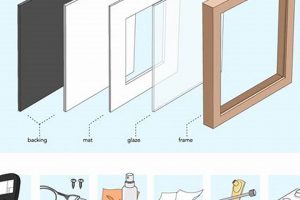
A do-it-yourself method for encasing and displaying an athletic shirt, often constructed using readily available materials and basic tools, allows individuals to create a personalized showcase for memorabilia. This contrasts with professionally manufactured display cases that may incur higher costs. For example, an individual might use a shadow box, foam board, and pins to mount and exhibit a cherished sports jersey.
Creating personalized athletic shirt displays offers several advantages. It provides a cost-effective alternative to purchasing pre-made frames, enabling individuals to tailor the presentation to their specific tastes and available space. Furthermore, the act of crafting the display oneself adds sentimental value, transforming a simple piece of sporting apparel into a unique work of art, reflecting personal achievements and memories. Historically, this approach mirrors the broader trend of customization and personalization within home dcor.
The following sections will delve into the various techniques, materials, and design considerations for constructing a custom display for an athletic shirt, offering guidance on achieving professional-looking results with do-it-yourself methods.
Displaying Athletic Shirts
Proper execution is essential for creating a visually appealing and structurally sound athletic shirt display. The following tips offer guidance for achieving optimal results.
Tip 1: Measure Accurately: Before commencing construction, precisely measure the shirt to determine the dimensions required for the backing board and frame. Inaccurate measurements can lead to a poorly fitting display.
Tip 2: Select Archival Materials: Utilize acid-free materials for the backing to prevent long-term degradation of the shirt fabric. Acidic materials can cause discoloration and weakening of fibers over time.
Tip 3: Ensure Proper Tension: When mounting the shirt, apply consistent tension to avoid sagging or wrinkling. Even tension contributes to a professional and aesthetically pleasing presentation.
Tip 4: Conceal Mounting Hardware: Prioritize concealing mounting hardware, such as pins or fasteners, to maintain an uncluttered and professional appearance. Strategic placement can minimize visibility.
Tip 5: Choose Appropriate Glazing: If utilizing a glass or acrylic cover, consider UV-protective glazing to prevent fading caused by sunlight exposure. UV protection helps preserve the shirt’s colors and integrity.
Tip 6: Secure Frame Construction: Ensure the frame is robust and securely assembled to prevent accidental detachment or damage. A stable frame provides long-term protection and support for the display.
Tip 7: Utilize Proper Lighting: When displaying the framed shirt, avoid direct sunlight and consider employing indirect or diffused lighting to enhance visibility without causing fading or damage.
Adhering to these tips will improve the quality and longevity of the athletic shirt display, ensuring it remains a valued piece of memorabilia for years to come.
The following sections will provide detailed instructions on specific construction techniques and design options to further enhance the display’s impact and presentation.
1. Material Selection
In the context of constructing a do-it-yourself athletic shirt display, material selection is a foundational element influencing both the presentation and long-term preservation of the garment. The materials chosen directly affect the display’s structural integrity, aesthetic appeal, and the shirt’s protection from environmental factors. For instance, utilizing an acidic backing board can lead to fabric discoloration and deterioration over time, whereas an acid-free alternative, such as archival-quality foam core, mitigates this risk. The choice of frame material wood, metal, or composite dictates the overall durability and aesthetic style of the display. Selecting appropriate adhesives or mounting hardware is also critical, as improper choices can cause staining or physical damage to the fabric.
Consider the practical example of selecting glazing for the display. Standard glass offers basic protection but lacks UV-filtering capabilities, potentially leading to fading of the shirt’s colors under prolonged exposure to sunlight. Conversely, UV-protective acrylic or glass provides a barrier against harmful ultraviolet rays, significantly extending the garment’s lifespan. Similarly, the choice of mounting methods pins, stitching, or specialized shirt holders impacts the visibility of the mounting mechanism and the potential for fabric distortion. Utilizing pins can be a cost-effective solution but requires careful placement to minimize visibility and prevent snagging. The selection of these components is therefore intertwined with the objective of creating a visually appealing and enduring display piece.
Ultimately, informed material selection is paramount for a successful do-it-yourself athletic shirt display. It necessitates a careful evaluation of each material’s properties, considering its potential impact on both the aesthetic presentation and the long-term preservation of the shirt. Overlooking this critical step can lead to premature degradation of the garment or a compromised visual outcome, undermining the effort invested in creating the display. Prioritizing archival-quality, durable, and aesthetically appropriate materials is therefore essential for achieving a lasting and visually compelling showcase.
2. Measurement Accuracy
Measurement accuracy represents a critical prerequisite for the successful construction of a do-it-yourself athletic shirt display. The dimensions derived from meticulous measurement directly dictate the fit and presentation of the shirt within the frame. Inaccurate measurements can lead to a display where the shirt is either compressed, causing undesirable wrinkling and potential fabric damage, or loosely fitted, resulting in sagging and a lack of visual appeal. The cause-and-effect relationship is direct: imprecise measurements beget a substandard finished product. For example, if the internal dimensions of the frame are smaller than the fully extended dimensions of the shirt, the forced compression can distort logos and create unsightly creases. Conversely, an oversized frame will fail to adequately showcase the shirt, diminishing its impact.
Beyond aesthetic considerations, measurement accuracy also plays a role in preservation. A properly fitted display minimizes stress on the fabric, preventing stretching or distortion that could accelerate wear. Consider the practical application of measuring the shirt’s shoulder width and length. These measurements determine the optimal placement and size of the backing board. If the backing board is too small, the shirt may be pulled tautly, increasing stress on the seams. If the board is too large, the shirt may bunch up, creating an uneven and unprofessional appearance. A precise understanding of these dimensions allows for the creation of a support system that evenly distributes the shirt’s weight, contributing to its long-term preservation. Furthermore, when incorporating additional elements like descriptive plaques or photographs, accurate measurements ensure these components are proportionally sized and positioned within the display.
In conclusion, measurement accuracy is not merely a procedural step but a foundational element for achieving a professional and enduring do-it-yourself athletic shirt display. The ramifications of neglecting this aspect extend beyond aesthetics, impacting the preservation and overall integrity of the displayed garment. Overcoming the challenges of taking precise measurements and applying them effectively is essential for realizing the full potential of the project and ensuring the shirt is showcased to its best advantage.
3. Mounting Technique
The selection and execution of an appropriate mounting technique are paramount in the construction of a do-it-yourself athletic shirt display. The method employed directly impacts both the visual presentation and the long-term preservation of the displayed garment. A poorly chosen mounting technique can detract from the overall aesthetic, while improper execution can inflict irreversible damage to the fabric.
- Pinning
Pinning involves securing the shirt to a backing board using pins. This method is relatively simple and cost-effective but carries the risk of puncturing the fabric, potentially creating permanent holes. Strategic pin placement, utilizing fine, rust-proof pins, is crucial to minimize visibility and prevent damage. For example, pins can be concealed along seams or within the collar to reduce their impact. The suitability of pinning depends on the delicacy of the fabric; more robust materials are better suited to this technique than delicate or vintage shirts.
- Stitching
Stitching entails manually sewing the shirt to the backing board, offering a more secure and less intrusive mounting option than pinning. This method requires skill and patience but allows for precise control over fabric tension and placement. Utilizing archival-quality thread is essential to prevent discoloration or degradation of the fabric over time. For instance, a conservator-grade cotton thread would be preferable to a synthetic thread that may break down and damage the shirt. Stitching is particularly well-suited for delicate or valuable shirts, providing a stable and discreet mounting solution.
- Adhesive Mounting
Adhesive mounting involves using specialized, acid-free adhesives to affix the shirt to the backing board. This method is generally discouraged due to the potential for irreversible damage to the fabric. Many adhesives can cause discoloration, staining, or weakening of fibers over time. However, certain archival-quality mounting films may be considered for specific applications, such as adhering small, non-critical areas of the shirt. Extreme caution and thorough testing are necessary before employing any adhesive mounting technique.
- Custom Shirt Forms
Custom shirt forms provide an alternative to direct mounting, offering a non-invasive method for displaying the shirt. These forms are typically constructed from acid-free materials and shaped to mimic the human torso, providing support and maintaining the shirt’s natural shape. The shirt is placed over the form, which is then secured within the display case. This technique minimizes stress on the fabric and allows for easy removal and cleaning of the shirt. For example, a custom-shaped foam form covered in archival fabric would provide a stable and protective base for displaying the jersey.
The choice of mounting technique in a do-it-yourself athletic shirt display is a critical decision, balancing ease of execution with the preservation and aesthetic presentation of the garment. While pinning offers a simple solution, stitching and custom shirt forms provide more sophisticated and less damaging alternatives for valuable or delicate shirts. The careful selection and skillful application of the chosen technique are essential for creating a visually compelling and enduring display.
4. Frame Construction
Frame construction constitutes a fundamental aspect of the do-it-yourself athletic shirt display. It dictates the structural integrity, aesthetic presentation, and protective capabilities of the final product. The method of frame construction directly influences the long-term preservation of the displayed garment and the overall visual impact of the piece.
- Material Selection and Durability
The selection of materialswood, metal, compositefundamentally impacts the frame’s durability and aesthetic appeal. For instance, solid hardwood offers robust support and a classic aesthetic, but it requires specialized tools and woodworking skills for precise construction. Conversely, lightweight aluminum provides a sleek, modern appearance and is easier to cut and assemble, but may lack the inherent strength of wood. The implications of material choice extend to the frame’s resistance to warping, moisture damage, and insect infestation, all factors that can compromise the integrity of the display over time.
- Joinery Techniques
Joinery techniquesmitering, rabbeting, dowelingdetermine the strength and visual seamlessness of the frame’s corners. Mitered corners, cut at 45-degree angles and joined to form a 90-degree angle, offer a clean, professional look, but require precise cutting and clamping to achieve a tight, gap-free seam. Rabbeted joints, where one piece of wood fits into a groove cut into another, provide a stronger and more stable connection. The choice of joinery directly affects the frame’s ability to withstand stress and maintain its shape over time, particularly in larger displays.
- Glazing Integration and Protection
The integration of glazingglass or acrylicinto the frame construction provides a protective barrier against dust, UV radiation, and physical damage. The method of securing the glazing within the frameusing clips, sealant, or a rabbeted channelimpacts the ease of access for cleaning and maintenance. UV-protective acrylic, while more expensive than standard glass, filters out harmful ultraviolet rays that can cause fading and deterioration of the displayed shirt. The glazing integration design influences the effectiveness of this protective barrier.
- Backing Board Support and Attachment
The method for supporting and attaching the backing boardwhere the shirt is mountedwithin the frame is crucial for stability and long-term support. The backing board can be secured using screws, staples, or adhesive, each method offering varying degrees of strength and permanence. Proper attachment ensures the backing board remains firmly in place, preventing sagging or shifting that could damage the displayed garment. The design of the backing board support directly contributes to the overall structural integrity of the do-it-yourself display.
These facets of frame construction are inextricably linked to the success of the do-it-yourself athletic shirt display. Each decision, from material selection to joinery techniques, impacts the structural integrity, aesthetic presentation, and protective capabilities of the final product. Understanding these interconnected elements is essential for achieving a lasting and visually compelling showcase.
5. Display Environment
The display environment exerts a considerable influence on the longevity and visual appeal of a do-it-yourself athletic shirt display. Environmental factors such as humidity, temperature, and light exposure directly affect the materials used in the display construction and the displayed garment itself. For example, elevated humidity levels can promote the growth of mold and mildew on the backing board and frame, potentially damaging the shirt. Fluctuations in temperature can cause expansion and contraction of materials, leading to warping or cracking of the frame. Direct sunlight exposure, particularly ultraviolet (UV) radiation, can cause fading and discoloration of the shirt’s fabric and inks. Therefore, a carefully considered display environment is not merely a matter of aesthetics but a crucial component of long-term preservation.
The strategic placement of the do-it-yourself athletic shirt display within a specific environment can mitigate potential risks. Avoiding direct sunlight by positioning the display away from windows reduces the likelihood of fading. Maintaining stable temperature and humidity levels, perhaps through the use of climate control systems, minimizes the risk of material degradation. Furthermore, the use of UV-filtering glazing, whether glass or acrylic, can provide an additional layer of protection against harmful radiation. Consider a scenario where a framed vintage jersey is placed in a basement with high humidity. The moisture can seep into the frame and backing, causing mold, corrosion of any metal parts, and fabric damage. In contrast, the same display in a climate-controlled living room with UV-filtering glazing and stable temperature levels would be far more likely to survive in good condition for an extended period.
In conclusion, the display environment is an integral element that significantly impacts the success and lifespan of a do-it-yourself athletic shirt display. By understanding the potential environmental risks and implementing proactive measures to mitigate them, individuals can ensure that their cherished sports memorabilia remains a visually appealing and well-preserved tribute for years to come. Overlooking this critical component can lead to premature degradation and a diminished return on the effort invested in constructing the display. Prioritizing a stable and protective environment is thus essential for maximizing the value and longevity of the do-it-yourself project.
6. Preservation Methods
The implementation of preservation methods is crucial for the long-term integrity and aesthetic quality of any athletic shirt encased within a do-it-yourself display. These methods encompass a range of techniques and materials designed to mitigate environmental factors and physical stresses that can degrade the shirt’s fabric, colors, and overall structure. The application of these methods is not merely an aesthetic consideration but a necessary safeguard against the inevitable passage of time and its deleterious effects.
- Archival-Quality Materials
The selection of archival-quality materials constitutes a cornerstone of preservation. Acid-free backing boards, for instance, prevent the migration of acids into the shirt’s fabric, thereby reducing the risk of discoloration and fiber weakening. Using such materials ensures the display itself does not contribute to the deterioration of the enshrined item. For example, replacing a standard cardboard backing with an acid-free foam core board can significantly extend the shirt’s lifespan within the display. This substitution is a proactive measure against long-term damage.
- UV Protection
Ultraviolet (UV) radiation is a primary cause of fading and color degradation in textiles. Implementing UV protection within the display, typically through the use of UV-filtering glazing, mitigates this risk. This glazing acts as a barrier, blocking harmful UV rays and preventing them from reaching the shirt’s surface. An example of this is the substitution of standard glass with UV-protective acrylic, a change that can dramatically reduce the rate of color fading in a displayed jersey exposed to ambient sunlight. Effective UV protection is indispensable for maintaining the shirt’s original vibrancy.
- Controlled Humidity and Temperature
Fluctuations in humidity and temperature can induce stress on the fabric, leading to warping, mildew growth, and other forms of damage. Maintaining a stable environment, either through climate control or strategic placement of the display, minimizes these risks. For example, avoiding placement in areas prone to dampness, such as basements or bathrooms, is essential. Furthermore, the use of desiccants within the display case can absorb excess moisture, creating a more stable and protective microclimate for the shirt. Environmental control is crucial for preserving textile artifacts.
- Proper Mounting Techniques
The method used to mount the shirt within the display can significantly impact its long-term condition. Techniques that minimize stress on the fabric, such as using custom-shaped forms or archival-quality mounting pins, are preferred. Avoidance of adhesives or excessive tension is critical to prevent stretching or distortion of the fabric. For example, stitching the shirt to the backing board using archival thread, rather than using potentially damaging adhesives, ensures the shirt is securely displayed without compromising its structural integrity. The chosen mounting technique directly contributes to the shirt’s sustained preservation.
The preservation methods outlined above represent a holistic approach to safeguarding athletic shirts displayed in do-it-yourself frames. These methods, when applied conscientiously, ensure that the displayed memorabilia retains its aesthetic appeal and structural integrity for generations to come. Neglecting these fundamental aspects can lead to irreversible damage, diminishing the value and significance of the enshrined artifact. Adherence to these principles is thus paramount for achieving a successful and enduring do-it-yourself project.
Frequently Asked Questions
The following section addresses common inquiries regarding the construction and maintenance of do-it-yourself athletic shirt displays. The information provided aims to clarify best practices and mitigate potential challenges encountered during the process.
Question 1: What type of backing board is most suitable for preserving an athletic shirt within a DIY display?
Archival-quality, acid-free foam core board is recommended. This material prevents the migration of acids into the shirt’s fabric, minimizing the risk of discoloration and fiber degradation over time. Standard cardboard is generally unsuitable due to its inherent acidity.
Question 2: How can fading caused by sunlight exposure be effectively minimized?
The integration of UV-filtering glazing, either glass or acrylic, is essential. This material blocks harmful ultraviolet radiation, which is a primary cause of fading in textiles. Furthermore, positioning the display away from direct sunlight sources is advisable.
Question 3: What mounting techniques are recommended to avoid damage to the shirt fabric?
Stitching with archival-quality thread or the use of custom-shaped shirt forms are preferred. These methods minimize stress on the fabric and prevent stretching or distortion. Adhesives should generally be avoided due to their potential to cause irreversible damage.
Question 4: How can the structural integrity of the frame be ensured for long-term support?
Selecting durable materials, such as solid hardwood or metal, and employing robust joinery techniques, such as mitering or rabbeting, are critical. Secure attachment of the backing board to the frame is also essential to prevent sagging or shifting.
Question 5: What steps should be taken to prevent moisture damage and mildew growth within the display?
Maintaining a stable humidity level and avoiding placement in damp environments, such as basements or bathrooms, are crucial. The use of desiccants within the display case can absorb excess moisture and create a more protective microclimate.
Question 6: How often should a DIY jersey frame be inspected and maintained?
Regular inspection, at least annually, is recommended. This includes checking for signs of fabric degradation, loose frame joints, or moisture accumulation. Gentle cleaning of the glazing and frame with appropriate materials should also be performed as needed.
Proper execution of a do-it-yourself athletic shirt display requires careful attention to material selection, construction techniques, and environmental factors. The adherence to best practices ensures both the aesthetic presentation and long-term preservation of the displayed garment.
The subsequent section will provide a detailed step-by-step guide to constructing a basic do-it-yourself athletic shirt display, incorporating the principles outlined in the previous sections.
DIY Jersey Frame
The preceding analysis has illuminated the critical considerations inherent in the construction of a do-it-yourself athletic shirt display. From material selection and measurement accuracy to mounting techniques, frame construction, environmental control, and preservation methods, each element significantly impacts the long-term integrity and visual appeal of the enshrined garment. The successful execution of a do-it-yourself jersey frame necessitates a meticulous and informed approach.
The decision to create a display for athletic memorabilia represents a commitment to preservation. Individuals embarking on this endeavor should recognize the importance of adhering to established best practices. Only through diligent application of these principles can the dual goals of aesthetic presentation and artifact conservation be effectively achieved, ensuring that cherished athletic shirts remain a lasting tribute for generations to come.