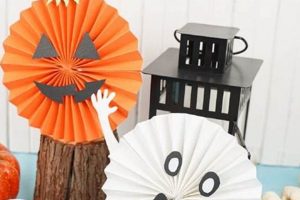
The creation of spectral figures using readily available materials to adorn spaces during the autumnal holiday is a common practice. These homemade specters range from simple cut-out shapes to complex, three-dimensional forms constructed from fabric, wire, or inflatables. An example includes suspending draped white sheets from trees to simulate floating apparitions.
Engaging in such crafting activities fosters creativity and resourcefulness. Furthermore, it offers an economical alternative to purchasing pre-made decorations, enabling individuals to personalize their holiday displays. Historically, incorporating representations of spirits into Halloween celebrations is rooted in cultural beliefs about the boundary between the living and the dead becoming thin during this period.
The following sections will explore various methods for producing these ephemeral embodiments, detailing materials needed, construction techniques, and potential customization options to enhance the overall aesthetic.
Crafting Haunting Specters
The following suggestions aim to enhance the execution and impact of self-made phantom ornaments. Careful consideration of these points will contribute to a more professional and visually appealing result.
Tip 1: Material Selection: Prioritize lightweight and weather-resistant fabrics, such as cheesecloth or nylon, to ensure durability and ease of suspension. Heavy materials may sag or be susceptible to damage from wind and rain.
Tip 2: Illumination Techniques: Incorporate strategically placed LED lights to create depth and dimension. Experiment with colored bulbs to evoke specific moods or emphasize certain features of the specter.
Tip 3: Secure Suspension Methods: Utilize sturdy, transparent fishing line or monofilament to suspend the creations. This minimizes visual distraction and ensures the ornament remains securely in place, even under moderate wind conditions.
Tip 4: Facial Feature Subtlety: Exercise restraint when adding facial features. Minimalist approaches, such as strategically placed black felt eyes, often prove more effective than elaborate, cartoonish designs.
Tip 5: Motion Integration: Explore incorporating mechanisms to introduce movement. A small, battery-operated fan placed inside the figure can create a realistic, floating effect.
Tip 6: Scale Considerations: Assess the available space and adjust the size of the creations accordingly. Overly large ornaments may overwhelm smaller areas, while diminutive figures may be lost in larger landscapes.
Tip 7: Safety Precautions: Ensure that all electrical components are weatherproofed and properly insulated. Position the creations away from pedestrian walkways to prevent accidental contact or entanglement.
Adhering to these guidelines promotes a polished and impactful presentation, elevating the overall aesthetic appeal of these spectral additions.
The concluding section will provide a comprehensive list of recommended resources for further exploration and inspiration regarding the crafting process.
1. Material Cost

The expense associated with materials directly influences the feasibility and scalability of creating spectral ornaments for the autumnal season. A constraint in financial resources often necessitates the selection of readily available and inexpensive items such as white bedsheets, repurposed fabrics, or discarded plastic bottles. The direct effect of low material cost is increased accessibility, allowing a broader segment of the population to participate in creating seasonal displays, irrespective of economic status. Conversely, access to more expensive materials, such as high-quality outdoor fabrics or specialized lighting components, often results in visually superior and more durable spectral figures, potentially increasing the longevity and overall impact of the seasonal display.
The importance of material cost extends beyond mere affordability; it also encourages ingenuity and resourcefulness. For example, individuals may utilize recycled materials like milk jugs or wire hangers to form the skeletal structure of ghost figures, thereby minimizing expenditure while simultaneously promoting environmentally conscious practices. Furthermore, cost-effective material choices influence the design and complexity of the ornament. Simple designs, like draping white fabric over inflated balloons, become a practical alternative to elaborate, multi-component constructions involving specialized equipment or techniques. The practical significance of understanding material cost lies in optimizing the balance between aesthetic appeal, durability, and affordability, facilitating informed decisions when planning and executing such decorative endeavors.
In summary, material costs form a fundamental consideration in DIY spectral decorations. While low costs facilitate broader participation and encourage resourcefulness, access to pricier materials can enhance visual impact and longevity. The ability to strategically balance these factors ensures successful ornament creation that aligns with both budgetary constraints and desired outcomes, ultimately contributing to an engaging and personalized seasonal ambiance. The challenge, therefore, rests in maximizing creative potential within established financial parameters.
2. Construction time

Construction time, representing the temporal resources required for completion, is a critical factor in the planning and execution of self-made seasonal spectral displays. The duration necessary to fabricate these ornaments directly impacts the feasibility of large-scale installations, the complexity of designs undertaken, and the overall satisfaction derived from the crafting process.
- Complexity of Design
Intricate designs, involving detailed patterns, multiple components, or specialized techniques, inherently demand a greater time investment. For example, a simple draped sheet ghost can be completed in minutes, while a multi-layered apparition with integrated lighting may require several hours or days. The relationship between design complexity and construction time directly affects project selection and management.
- Skill Level of the Creator
Novice crafters typically require significantly more time to complete a given project compared to experienced individuals. This increased duration stems from the need to learn new techniques, overcome unforeseen challenges, and rectify errors. A seasoned artisan may efficiently execute a design, whereas a beginner may encounter delays due to unfamiliarity with materials and methods.
- Available Resources and Tools
Access to appropriate tools and equipment significantly influences construction speed. Having tools like sewing machines, hot glue guns, and precision cutting instruments can drastically reduce the time needed for assembly. Conversely, relying solely on manual techniques can prolong the process, particularly for projects involving intricate details or repetitive tasks.
- Scale of Decoration
The number of spectral figures to be created directly affects the total time commitment. Producing a single ornament requires a manageable amount of time; however, fabricating a large ensemble of figures for extensive yard displays or event venues necessitates a considerable investment of temporal resources. This scalability aspect must be carefully considered during the planning phase.
The interplay of these facets highlights the practical importance of accurately estimating construction time. Failing to account for the time commitment associated with spectral ornament creation can lead to incomplete projects, rushed execution, or frustration with the overall process. Therefore, careful planning and realistic self-assessment are crucial for ensuring a satisfactory and enjoyable crafting experience.
3. Skill level
The aptitude of the individual undertaking the creation of spectral autumnal adornments directly influences the complexity, quality, and ultimate success of the endeavor. A foundational understanding of crafting techniques is pivotal in translating conceptual designs into tangible decorative elements.
- Basic Construction Techniques
Fundamental skills, such as cutting fabric, tying knots, and applying adhesives, serve as the bedrock for simple ghost decorations. An individual lacking proficiency in these areas may struggle to create even rudimentary designs. For example, a novice may find it difficult to neatly cut fabric for a draped ghost, resulting in a ragged and unappealing final product. Conversely, someone with experience in basic sewing can create more refined and durable decorations.
- Material Manipulation
The ability to effectively manipulate various materials is crucial for more intricate designs. For instance, creating a three-dimensional ghost from wire and fabric requires the skill to shape wire into a stable armature and then seamlessly attach fabric to the frame. Those unfamiliar with these techniques may find their creations lacking structural integrity or visual appeal. This skill extends to understanding the properties of different materials and selecting appropriate adhesives or fasteners.
- Understanding Spatial Relationships
The creation of realistic or visually compelling spectral figures often requires an understanding of spatial relationships and proportions. This is particularly relevant when crafting elaborate displays with multiple elements. An individual with a strong spatial sense can effectively arrange figures to create a dynamic and engaging scene. Someone lacking this skill may struggle to create a cohesive and balanced display.
- Troubleshooting and Problem-Solving
Regardless of skill level, unexpected challenges inevitably arise during the crafting process. The ability to troubleshoot problems and devise creative solutions is essential for successful completion. For example, a tear in the fabric or a malfunctioning light source may require inventive repairs or modifications to the original design. Adaptability and resourcefulness are key attributes for overcoming these obstacles.
The correlation between proficiency and output underscores the importance of selecting projects that align with the individual’s capabilities. While ambition is commendable, attempting overly complex designs without the requisite skills can lead to frustration and unsatisfactory results. A realistic assessment of one’s abilities is crucial for ensuring a rewarding and successful experience in crafting seasonal spectral decorations.
4. Visual impact

The success of self-constructed spectral figures for autumnal holiday adornment is fundamentally linked to their visual impact. The primary objective of these decorations is to create a specific atmosphere, often evoking a sense of unease, mystery, or playful fright. The degree to which these figures achieve this objective depends significantly on their design, execution, and placement. For instance, a well-executed spectral figure strategically placed in a dimly lit doorway can create a startling and memorable experience, whereas a poorly crafted or inappropriately positioned figure may fail to elicit the desired response.
The visual impact is influenced by several factors, including scale, form, and lighting. Large-scale spectral figures, such as those constructed from inflated materials or draped over entire structures, command attention and create a dramatic effect. The form of the figure, whether realistic or stylized, contributes to its overall aesthetic. A spectral figure with flowing lines and ethereal fabrics can convey a sense of otherworldliness, while a more angular and stark design may evoke a sense of menace. Furthermore, the strategic use of lighting, such as spotlights, colored bulbs, or integrated LED systems, can enhance the visual impact by creating shadows, highlighting textures, and adding an element of dynamism. Consider a scenario where a simple white sheet draped over a form is transformed into a compelling apparition through the addition of strategically placed blue and green lighting, creating an eerie and captivating display.
In conclusion, visual impact is a critical determinant of the effectiveness of self-fabricated spectral decorations. By carefully considering factors such as scale, form, and lighting, creators can maximize the emotional response elicited by their creations. The challenges in achieving strong visual impact lie in balancing artistic expression with practical considerations such as budget, skill level, and available space. Nonetheless, a keen understanding of the principles of visual design is essential for crafting spectral ornaments that effectively contribute to the desired autumnal ambiance.
5. Durability

Longevity is a critical consideration in the creation of seasonal spectral figures, particularly when these adornments are intended for outdoor display. The capacity of these objects to withstand environmental stressors directly impacts their usability and the overall value derived from the crafting effort.
- Material Selection and Weather Resistance
The choice of construction materials fundamentally dictates the ornament’s ability to endure exposure to weather elements. Selecting materials inherently resistant to moisture, wind, and ultraviolet radiation is paramount. For instance, using untreated cotton fabric for an outdoor spectral figure will likely result in rapid degradation and structural failure, whereas utilizing synthetic materials engineered for outdoor use can significantly extend the lifespan of the decoration.
- Structural Integrity and Design Considerations
The design of the spectral figure must account for potential stress points and vulnerabilities. Reinforcing joints and seams, implementing robust suspension mechanisms, and minimizing exposure to direct wind forces can enhance structural resilience. A spectral figure with a complex, unsupported design is inherently more susceptible to damage compared to a simpler, more streamlined structure. As an example, attaching lightweight internal supports will provide enhanced longevity than simply draping fabric on a form.
- Protective Coatings and Treatments
The application of protective coatings or treatments can further augment the ornament’s resistance to environmental factors. Waterproofing sprays, UV-resistant sealants, and anti-mildew agents can mitigate the damaging effects of moisture, sunlight, and biological growth. A coating of acrylic sealant, for example, may extend the longevity when deployed outdoors.
- Storage and Maintenance Practices
Proper storage and maintenance practices are crucial for preserving the integrity of spectral figures during periods of non-use. Storing the ornaments in dry, protected environments can prevent moisture damage, insect infestation, and fading. Regular cleaning and minor repairs can address any damage before it escalates. Inspecting all fastenings and fabric for signs of wear and tear is prudent.
These combined factors directly influence the overall durability of self-made spectral decorations, thereby impacting their long-term aesthetic appeal and economic viability. When selecting appropriate materials, construction methods, and preservation strategies, individuals enhance the resilience and extend the usable lifespan of their creations, maximizing the return on their creative investment. Ignoring longevity considerations leads to rapid degradation, requiring frequent replacement or repair, thus undermining the sustainability and value of the decorative effort.
6. Safety
The construction and deployment of self-fabricated spectral figures for seasonal adornment necessitates a rigorous evaluation of potential safety hazards. Mitigation of risks is paramount to preventing accidents and ensuring the well-being of both creators and observers. Neglecting safety protocols can result in injuries ranging from minor abrasions to severe electrical shocks or structural collapses.
- Electrical Hazards
The integration of electrical components, such as lighting systems, introduces the risk of electrocution or fire. Precautions should encompass the use of weatherproofed components, appropriate grounding techniques, and avoidance of overloading electrical circuits. An example includes ensuring that all outdoor electrical connections are protected from moisture and that extension cords are rated for outdoor use. Failure to adhere to these guidelines could result in short circuits, sparking, or electrical fires.
- Flammability
The selection of flammable materials, such as untreated fabrics or paper products, presents a significant fire hazard. Employing flame-retardant materials and maintaining a safe distance from open flames are critical preventive measures. For example, using fabrics treated with fire-retardant chemicals and avoiding the placement of decorations near candles or heat sources reduces the risk of accidental ignition. Ignoring flammability concerns can lead to rapid fire spread and potential property damage or injuries.
- Structural Instability
The construction of large or complex spectral figures requires careful attention to structural integrity to prevent collapses or falling debris. Reinforcing joints, securing suspension points, and conducting thorough stability tests are essential. For instance, utilizing sturdy supports and ensuring that all connections are securely fastened prevents the structure from collapsing under its weight or due to wind forces. A lack of structural stability poses a risk of injury to individuals in the immediate vicinity.
- Trip Hazards and Obstructions
The placement of spectral figures should minimize the risk of creating trip hazards or obstructions in walkways and thoroughfares. Ensuring adequate clearance, using highly visible markers, and avoiding the placement of decorations in areas with heavy foot traffic are crucial steps. As an illustration, anchoring the decorations to prevent movement and providing ample space around walkways reduces the likelihood of accidental falls or collisions. Failure to address trip hazards can result in personal injuries and potential liability issues.
The multifaceted nature of safety concerns underscores the importance of comprehensive risk assessment and proactive mitigation strategies in the creation and deployment of self-made spectral decorations. A commitment to prioritizing safety protocols not only minimizes the potential for accidents but also contributes to a more enjoyable and secure experience for all involved. The integration of these considerations is integral to responsible crafting practices.
7. Storage
The logistical considerations associated with maintaining seasonal specter adornments between periods of display warrant focused attention. Proper storage practices are essential for preserving the integrity, extending the lifespan, and optimizing the reusability of these crafted items. Neglecting appropriate storage protocols can result in damage, degradation, and the premature disposal of decorations, thereby negating the initial investment of time and resources.
- Space Allocation and Management
The dimensions and configuration of the allocated storage space directly influence the feasibility of retaining certain types of spectral figures. Large, bulky decorations may necessitate dedicated storage areas, whereas smaller, more compact items can be accommodated within existing storage infrastructure. For example, inflatable specters require significant deflated volume, impacting their storage practicality, while flat, foldable figures require nominal space.
- Environmental Protection and Climate Control
Exposure to adverse environmental conditions, such as excessive humidity, temperature fluctuations, and direct sunlight, can accelerate the degradation of materials used in the construction of spectral figures. Implementing climate control measures, such as dehumidification or temperature regulation, and shielding decorations from direct sunlight mitigates these risks. Storage within a damp environment may lead to mildew growth, while prolonged exposure to sunlight causes fabric fading and material embrittlement.
- Pest Control and Infestation Prevention
Storage environments can provide harborage for pests, such as insects and rodents, which may damage or destroy decorations. Implementing pest control measures, such as using sealed containers and deploying insect repellents, safeguards against infestation. Fabrics and organic materials used in the construction of spectral figures are particularly vulnerable to pest damage.
- Organization and Inventory Management
A systematic approach to organizing and cataloging stored spectral figures facilitates efficient retrieval and prevents damage during handling. Labeling containers, creating an inventory list, and implementing a rotation system ensures that decorations are easily accessible and that older items are utilized before newer ones. Unorganized storage can lead to damage and make it challenging to locate specific items when needed.
The aforementioned facets emphasize the significant interplay between proper storage techniques and the long-term viability of do-it-yourself spectral decorations. Through effective management of space, environment, pest control, and organization, individuals can significantly enhance the lifespan and usability of their crafted ornaments, thereby maximizing their investment and contributing to a sustainable approach to seasonal decoration.
Frequently Asked Questions
The following queries address common concerns and misconceptions regarding the creation and maintenance of spectral adornments for the autumnal holiday.
Question 1: What are the primary considerations when selecting materials for outdoor spectral figures?
Material selection for outdoor applications necessitates prioritizing weather resistance and durability. Fabrics should be resistant to moisture, ultraviolet radiation, and temperature fluctuations. Structural components should be capable of withstanding wind forces and potential physical impacts.
Question 2: How can electrical hazards be minimized when integrating lighting into spectral adornments?
Electrical safety requires the use of weatherproofed components, appropriate grounding techniques, and adherence to electrical codes. All connections should be protected from moisture, and circuits should not be overloaded. Regular inspections for frayed wires or damaged insulation are crucial.
Question 3: What are effective strategies for preventing damage from pests during the storage of spectral figures?
Pest control involves the use of sealed containers, insect repellents, and regular monitoring for signs of infestation. Fabrics and organic materials should be treated with pest-resistant coatings. Storage areas should be kept clean and dry to minimize the attraction of pests.
Question 4: How can the structural integrity of large or complex spectral figures be enhanced?
Structural reinforcement requires the use of robust supports, secure fastening mechanisms, and a design that distributes weight evenly. Joints should be reinforced, and materials should be selected based on their load-bearing capacity. Regular inspections for signs of stress or weakness are recommended.
Question 5: What are the best methods for cleaning and maintaining spectral figures?
Cleaning methods should be tailored to the specific materials used in the construction of the spectral figure. Gentle detergents and soft cloths are recommended for delicate fabrics. Abrasive cleaners or harsh chemicals should be avoided. Regular dusting and spot cleaning can prevent the accumulation of dirt and debris.
Question 6: How can the visual impact of self-fabricated spectral figures be maximized?
Maximizing visual impact involves careful consideration of scale, form, lighting, and placement. Scale should be appropriate for the viewing distance, form should be aesthetically pleasing, and lighting should create a dramatic effect. Placement should be strategic to draw attention and create the desired atmosphere.
In summary, the successful creation and maintenance of spectral adornments requires careful consideration of materials, safety, durability, and visual appeal. Adhering to best practices in these areas ensures a satisfying and aesthetically pleasing outcome.
The next section will provide a list of recommended resources for further exploration and learning about spectral decorations.
DIY Halloween Ghost Decorations
The preceding exploration of “diy halloween ghost decorations” has elucidated the critical factors influencing the successful creation, deployment, and maintenance of these seasonal adornments. Emphasis has been placed on material selection, construction techniques, visual impact, durability, safety protocols, and storage considerations. A comprehensive understanding of these elements contributes to a more informed and effective approach to crafting spectral figures for the autumnal holiday.
The information presented serves as a foundation for responsible and creative engagement in self-fabricated decoration. By prioritizing safety, longevity, and aesthetic appeal, practitioners can enhance the overall experience and ensure the lasting enjoyment of their handcrafted spectral figures. Continued exploration and innovation in this domain will undoubtedly yield further advancements in materials, techniques, and design, enriching the tradition of seasonal adornment for years to come.