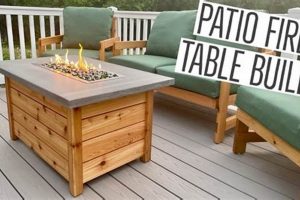
A do-it-yourself gas-fueled outdoor centerpiece involves constructing a table-like structure designed to house a fire element powered by natural gas or propane. This commonly includes a frame, often built from materials like wood, metal, or concrete, which supports a fire bowl or burner assembly. A typical example incorporates a decorative media, such as lava rock or fire glass, surrounding the burner to enhance its aesthetic appeal and distribute heat.
Such outdoor features provide warmth and illumination, extending the usability of patios and decks into cooler months. Historically, outdoor fireplaces were primarily permanent structures. The recent emergence of easily assembled and customizable alternatives offers increased flexibility and cost savings compared to professionally installed units, allowing homeowners to tailor designs to their specific needs and preferences.
The following sections will delve into the critical considerations for planning, constructing, and safely operating these outdoor heating features, including material selection, burner system requirements, gas line connections, and essential safety precautions.
Construction Considerations for Outdoor Gas-Fueled Centerpieces
The subsequent points provide critical guidance for constructing an outdoor gas-fueled centerpiece, emphasizing safety and performance.
Tip 1: Material Selection is Crucial. Utilize non-combustible materials for the immediate vicinity of the burner. Concrete, stone, or metal frames are preferable to wood, minimizing fire risk. If wood is incorporated, maintain a safe distance from the heat source and apply a fire-retardant coating.
Tip 2: Proper Ventilation is Essential. Ensure adequate ventilation within the table structure to prevent gas accumulation. This can be achieved through strategically placed openings or vents. Insufficient ventilation presents an explosion hazard.
Tip 3: Select a Certified Burner Kit. Employ a burner kit certified by a recognized testing laboratory (e.g., CSA, UL). Certified kits undergo rigorous testing to meet safety standards. Avoid using makeshift or uncertified burner components.
Tip 4: Gas Line Connections Demand Precision. Gas line connections must be performed by a qualified professional. Improper connections can result in gas leaks, posing a significant safety threat. Ensure all connections are leak-tested using a soap solution.
Tip 5: Incorporate a Shut-Off Valve. Integrate a readily accessible shut-off valve in the gas line. This allows for immediate termination of the gas supply in case of an emergency or maintenance. Locate the valve in a visible and easily reachable position.
Tip 6: Consider Drainage. Implement a drainage system to prevent water accumulation within the fire pit. Standing water can damage components and contribute to corrosion. Drill drainage holes in the base of the fire bowl or pit.
Tip 7: Account for Wind Conditions. Analyze prevailing wind patterns in the location. Consider incorporating wind guards or screens to prevent flames from being extinguished or blowing in undesirable directions. This enhances safety and user comfort.
Adherence to these guidelines significantly improves the safety and longevity of the gas-fueled outdoor centerpiece, contributing to a secure and enjoyable outdoor experience.
The following section will address advanced design principles and aesthetic enhancements for such structures.
1. Material Non-Combustibility
Material non-combustibility is a foundational safety requirement in the construction of a do-it-yourself gas fire table. The direct and prolonged exposure to open flame necessitates the use of materials that resist ignition and sustained burning. The selection of combustible materials, such as untreated wood, poses a significant fire hazard, potentially leading to property damage and personal injury. A direct cause-and-effect relationship exists: combustible materials near the burner will ignite, propagate fire, and create an unsafe environment. The importance of non-combustibility stems from its role in preventing accidental fires and ensuring the safe operation of the gas fire table.
For example, concrete is frequently employed in the construction of the table’s base and surrounding fire bowl due to its inherent non-combustible properties. Similarly, fire-rated brick or stone can be used to line the interior of the fire pit, providing an additional layer of protection. Metal frames, often constructed from steel or aluminum, offer structural support while maintaining non-combustible characteristics. Even decorative elements such as fire glass or lava rocks are chosen for their resistance to heat and flame. Conversely, the use of standard lumber or plastic components near the burner would constitute a dangerous design flaw.
In summary, the selection of non-combustible materials is not merely a recommendation but a critical safety imperative in the design and construction of a gas fire table. Its practical significance lies in mitigating fire risks, protecting users and property, and ensuring compliance with safety standards. Failure to prioritize non-combustibility can lead to catastrophic consequences, underscoring the need for meticulous material selection and adherence to established safety guidelines.
2. Burner Kit Certification
Burner kit certification is a non-negotiable requirement for safe and responsible construction of a do-it-yourself gas fire table. It represents independent verification that the burner assembly adheres to established safety and performance standards, mitigating inherent risks associated with gas-fueled appliances.
- Adherence to Industry Safety Standards
Certification, typically provided by organizations such as CSA or UL, signifies that the burner kit has undergone rigorous testing and meets established safety protocols. This testing covers aspects like gas leak prevention, flame stability, and resistance to thermal stress. Utilizing a certified burner kit provides assurance that the core component of the fire table will operate within acceptable safety parameters. For instance, a certified kit is evaluated for its ability to maintain a consistent flame even under fluctuating gas pressures.
- Component Quality and Compatibility
Certification extends to the individual components within the burner kit, ensuring they are manufactured to specified quality standards and are compatible with one another. This includes the burner itself, gas valves, regulators, and connectors. Certification verifies that these components are designed to function reliably as a system. Example: A certified gas valve is tested for its ability to completely shut off gas flow in the event of a malfunction.
- Proper Gas Pressure Regulation
Gas pressure regulation is a critical aspect of burner kit certification. The certification process verifies that the kit is equipped with a regulator capable of maintaining a consistent gas pressure to the burner, preventing over-pressurization and potential explosions. This ensures a stable and controlled flame. Consider that a certified regulator will maintain the specified gas pressure even with variations in the main gas supply.
- Mitigation of Liability
Utilizing a certified burner kit provides a degree of liability protection for the individual constructing the gas fire table. Should an incident occur, documentation of the certified kit demonstrates that reasonable precautions were taken to ensure safety. This can be a crucial factor in insurance claims and legal proceedings. Imagine a scenario where a fire occurs: using a certified kit shows due diligence in adhering to safety standards.
The integration of a certified burner kit into a do-it-yourself gas fire table is not merely a recommendation but a fundamental safety requirement. It offers assurance of adherence to industry standards, ensures component quality and compatibility, regulates gas pressure effectively, and mitigates potential liability. The absence of certification significantly elevates the risk of accidents and compromises the overall safety and reliability of the fire table.
3. Gas Line Integrity
Gas line integrity is paramount in the context of a do-it-yourself gas fire table, directly influencing operational safety and the prevention of hazardous conditions. Compromised gas lines present a significant risk of leaks, potentially leading to explosions or carbon monoxide poisoning. Strict adherence to established standards and meticulous installation practices are essential to maintaining gas line integrity.
- Material Compatibility and Standards Compliance
Gas lines must be constructed from materials specifically designed and certified for use with natural gas or propane. Common materials include black iron pipe, copper tubing (with appropriate fittings), or flexible gas connectors that meet ANSI standards. Incompatible materials can corrode or degrade over time, leading to leaks. The selection of materials that adhere to local codes and regulations is imperative.
- Proper Threading and Sealing Techniques
When connecting threaded pipe sections, the use of appropriate thread sealant is crucial. The sealant should be specifically formulated for use with gas lines and applied to the male threads before assembly. Over-tightening or under-tightening connections can compromise the seal and lead to leaks. All threaded connections must be leak-tested using a soap solution after assembly.
- Leak Detection and Remediation Procedures
A comprehensive leak test must be performed upon completion of the gas line installation. This involves applying a soap solution to all joints and connections and observing for the formation of bubbles, indicating a leak. If a leak is detected, the gas supply must be immediately shut off and the connection repaired or replaced. Regular inspections of the gas line are recommended to identify potential leaks or damage.
- Protection from Physical Damage and Environmental Factors
Gas lines should be protected from physical damage, such as impact or abrasion. This may involve encasing the gas line in a protective sleeve or conduit. Exposure to environmental factors, such as extreme temperatures or corrosive substances, can also degrade gas lines. Proper insulation or coating may be necessary to mitigate these risks. The location of the gas line should be carefully considered to minimize exposure to potential hazards.
Maintaining gas line integrity in a do-it-yourself gas fire table is not merely a procedural step but a critical safety consideration. The use of compliant materials, proper installation techniques, rigorous leak testing, and protection from physical damage are all essential elements in ensuring the safe and reliable operation of the fire table. Neglecting these aspects can have severe consequences, underscoring the need for meticulous attention to detail and adherence to established safety standards.
4. Ventilation Sufficiency
Ventilation sufficiency is a crucial element in the design and construction of any do-it-yourself gas fire table. Adequate ventilation mitigates the risks associated with gas leakage and ensures safe and efficient combustion, directly impacting user safety and the longevity of the structure.
- Prevention of Gas Accumulation
Propane and natural gas are heavier than air. In the event of a leak, gas can accumulate within the enclosed spaces of the fire table’s structure, creating a potential explosion hazard. Sufficient ventilation allows for the dissipation of any leaked gas, preventing dangerous concentrations from building up. For example, open-sided table designs or strategically placed vents near the base facilitate the escape of heavier-than-air gases.
- Safe Combustion and Oxygen Supply
Efficient combustion requires an adequate supply of oxygen. Insufficient ventilation can lead to incomplete combustion, resulting in the production of carbon monoxide, a colorless, odorless, and potentially lethal gas. Proper ventilation ensures a sufficient flow of oxygen to the burner, promoting complete combustion and minimizing the risk of carbon monoxide poisoning. As an example, a well-ventilated fire table will exhibit a clean, blue flame, while a poorly ventilated one may have a yellow, smoky flame, indicating incomplete combustion.
- Heat Dissipation and Component Protection
The burner unit generates considerable heat during operation. Sufficient ventilation helps to dissipate this heat, preventing overheating of the table’s structural components and extending their lifespan. Overheating can damage gas lines, valves, and other critical components, potentially leading to malfunctions or hazardous situations. Adequate airflow around the burner assembly helps to maintain safe operating temperatures. Consider a design where the burner housing has openings to allow heat to escape, preventing heat buildup.
- Minimizing Corrosion and Moisture Build-Up
Condensation and moisture can accumulate within the enclosed spaces of a fire table, particularly in humid climates or after rainfall. This moisture can contribute to corrosion of metal components and promote the growth of mold or mildew. Sufficient ventilation helps to dry out these spaces, preventing corrosion and maintaining the structural integrity of the fire table. Designing with drainage holes in conjunction with ventilation ensures a dry and safe environment for the internal components.
The facets of gas accumulation prevention, safe combustion promotion, heat dissipation and component protection and minimizing corrosion are all critical considerations for DIY gas fire table. The successful operation of a gas fire table hinges on effective ventilation strategies, ensuring both user safety and the longevity of the installation. Without careful attention to ventilation, the inherent risks associated with gas appliances are significantly amplified, potentially leading to dangerous and costly consequences.
5. Ignition System Reliability
Ignition system reliability is a cornerstone of safe and consistent operation in any do-it-yourself gas fire table. The ignition system initiates the combustion process, converting a potentially hazardous accumulation of gas into a controlled and visually appealing flame. A failure in the ignition system directly translates to an inability to ignite the gas, potentially resulting in the release of unburned fuel into the surrounding environment, creating an explosion risk. Therefore, a reliable ignition system is not merely a convenience but a fundamental safety requirement.
Several factors contribute to ignition system reliability in these installations. Piezoelectric igniters, commonly used in portable gas appliances, offer a simple and dependable spark generation mechanism. Electronic igniters, while potentially more complex, often provide more consistent and powerful sparks, particularly in adverse weather conditions. Protection of the ignition components from moisture and debris is critical; exposed wiring or corroded contacts can lead to intermittent or complete failure. Regular inspection and maintenance, including cleaning contacts and replacing worn components, are necessary to ensure continued reliability. For instance, a homeowner who neglects to clean debris from the ignition area after rainfall might find that the system fails to ignite on the next use.
In summary, ignition system reliability is inextricably linked to the safe and predictable functioning of a do-it-yourself gas fire table. The selection of a robust ignition system, coupled with diligent maintenance practices, directly mitigates the risks associated with gas leakage and ensures a consistently enjoyable and safe outdoor fire experience. Failure to prioritize ignition system reliability undermines the entire premise of controlled combustion and introduces unnecessary hazards into the environment.
6. Flame Height Regulation
Flame height regulation represents a crucial aspect of the design and operation of a do-it-yourself gas fire table, directly influencing safety, aesthetic appeal, and user comfort. The ability to control the height of the flame allows users to tailor the fire table’s output to specific needs and environmental conditions.
- Safety and Hazard Mitigation
Excessive flame height poses a direct safety risk, increasing the likelihood of accidental burns or ignition of nearby objects. Flame height regulation enables users to limit the flame to a safe and manageable level, minimizing these hazards. A properly regulated flame prevents it from extending beyond the confines of the fire bowl or table surface, reducing the risk of contact with flammable materials. For instance, during windy conditions, a user can decrease the flame height to prevent it from being blown erratically.
- Heat Output Control
Flame height is directly proportional to heat output; a taller flame generates more heat, while a shorter flame produces less. Flame height regulation allows users to adjust the heat output of the fire table to suit the ambient temperature and desired level of warmth. During cooler evenings, a higher flame provides ample heat, whereas a lower flame setting may be preferable on milder nights to create ambiance without excessive warmth. This adaptability enhances the fire table’s usability across a range of weather conditions.
- Aesthetic Customization
Flame height contributes significantly to the visual appeal of a gas fire table. The ability to adjust the flame allows users to create different visual effects, ranging from a subtle flickering glow to a dramatic and vibrant display. A lower flame height can create a more intimate and relaxing atmosphere, while a higher flame can serve as a focal point for social gatherings. The selection of decorative media, such as fire glass or lava rock, further enhances the aesthetic possibilities, complementing the regulated flame height.
- Gas Consumption Efficiency
Higher flame heights consume more gas than lower flame settings. Flame height regulation allows users to optimize gas consumption based on their desired level of heat and visual effect. By reducing the flame height when maximum heat output is not required, users can conserve fuel and extend the operating time of the fire table. This is particularly relevant when using propane tanks, where gas availability is finite. A user might choose a lower flame setting during late evening hours to conserve gas while maintaining a pleasant ambiance.
These multiple facets each contribute to how the diy gas fire table performs in a variety of areas. Flame height regulation is a fundamental design consideration, ensuring that the finished product is both aesthetically pleasing and easy to manage. Effective flame regulation is not merely an added feature but an essential component of a safe, efficient, and versatile outdoor heating solution.
7. Weather Resistance
Weather resistance constitutes a critical design parameter for any do-it-yourself gas fire table intended for outdoor use. The prolonged exposure to environmental elements necessitates careful material selection and construction techniques to ensure longevity, safety, and consistent performance. Failure to adequately address weather resistance can lead to premature degradation, functional impairments, and potential safety hazards.
- Corrosion Prevention in Metallic Components
Metallic components, such as burners, gas lines, and structural supports, are susceptible to corrosion from moisture, humidity, and atmospheric pollutants. Corrosion can weaken structural integrity, impair gas flow, and lead to potentially dangerous gas leaks. The use of corrosion-resistant materials, such as stainless steel or powder-coated aluminum, is essential. Protective coatings and regular maintenance, including cleaning and lubrication, can further mitigate corrosion risks. For instance, a carbon steel burner exposed to rain without a protective coating will exhibit rust within a relatively short period, compromising its functionality.
- Water Intrusion Mitigation in Enclosed Spaces
Water intrusion into enclosed spaces within the fire table can damage gas valves, ignition systems, and other critical components. Proper sealing of joints and connections is crucial to prevent water ingress. Drainage systems, such as weep holes, should be incorporated to allow any accumulated water to escape. Additionally, the use of water-resistant or waterproof materials for internal components provides an extra layer of protection. A fire table with inadequate sealing may experience ignition failures or gas valve malfunctions following heavy rainfall.
- UV Degradation Resistance in Exposed Surfaces
Exposed surfaces, particularly those constructed from polymeric materials, are vulnerable to degradation from ultraviolet (UV) radiation. UV exposure can cause fading, cracking, and embrittlement, compromising structural integrity and aesthetic appeal. The selection of UV-resistant materials and the application of UV-protective coatings can significantly extend the lifespan of these components. For example, a plastic control knob exposed to direct sunlight without UV protection will likely become brittle and discolored over time.
- Freeze-Thaw Cycle Resilience in Concrete and Masonry
Concrete and masonry components are susceptible to damage from freeze-thaw cycles, particularly in colder climates. Repeated freezing and thawing of moisture within the material can cause cracking and spalling, weakening the structure. The use of air-entrained concrete, which contains microscopic air bubbles that provide expansion space for freezing water, can improve freeze-thaw resistance. Sealing the surface with a water-repellent coating can further protect the material from moisture penetration. A concrete fire table without proper freeze-thaw protection may exhibit cracks and surface deterioration after several winters.
These facets are all critical when the DIY gas fire table is exposed to a variety of weather conditions. Incorporating robust weather resistance measures into the design and construction of a do-it-yourself gas fire table is not merely a cosmetic consideration but a fundamental requirement for ensuring long-term reliability, safety, and aesthetic integrity. Neglecting these considerations can result in premature failure, costly repairs, and potentially hazardous operating conditions.
Frequently Asked Questions
The following questions address common concerns and considerations regarding the construction and operation of do-it-yourself gas fire tables. These answers are intended to provide clear and concise guidance on relevant aspects of these outdoor features.
Question 1: What are the primary safety considerations when constructing a gas fire table?
The primary safety considerations encompass material selection, burner kit certification, gas line integrity, adequate ventilation, and ignition system reliability. Non-combustible materials must be used near the burner, and a certified burner kit is essential. Gas line connections require meticulous attention to prevent leaks, and sufficient ventilation mitigates gas accumulation risks. A reliable ignition system ensures controlled combustion.
Question 2: Is professional gas line installation required for a gas fire table?
Professional gas line installation is strongly recommended and may be legally mandated in certain jurisdictions. Improper gas line connections can result in hazardous leaks, posing a significant safety risk. A qualified professional possesses the necessary expertise and equipment to ensure a safe and compliant installation.
Question 3: What type of gas can be used in a gas fire table?
Gas fire tables are typically designed to operate with either natural gas or propane. The burner kit and gas line components must be specifically rated for the intended fuel type. Interchanging gas types without appropriate modifications can result in inefficient combustion and safety hazards.
Question 4: How often should a gas fire table be inspected and maintained?
Regular inspection and maintenance are crucial for ensuring the safe and reliable operation of a gas fire table. Inspect the gas lines, burner, and ignition system at least annually, and more frequently if the fire table is used extensively. Clean the burner and remove any debris that could obstruct gas flow or ignition. Address any signs of corrosion or damage promptly.
Question 5: What is the appropriate distance between a gas fire table and combustible materials?
Maintain a minimum clearance of 36 inches between the gas fire table and any combustible materials, such as wood decking, furniture, or foliage. Consult the manufacturer’s instructions for specific clearance requirements, as these may vary depending on the burner kit and table design. Larger clearances may be necessary in windy conditions.
Question 6: How is the gas supply shut off in case of an emergency?
A readily accessible shut-off valve must be installed in the gas supply line serving the fire table. This valve should be located in a visible and easily reachable position, allowing for immediate termination of the gas supply in the event of a leak, fire, or other emergency. Ensure that all users are familiar with the location and operation of the shut-off valve.
The construction and operation of a gas fire table necessitate strict adherence to safety guidelines and meticulous attention to detail. Consult with qualified professionals and local codes to ensure a safe and compliant installation.
The subsequent section will discuss common design errors and how to avoid them in the construction process.
Concluding Remarks on Outdoor Gas-Fueled Centerpieces
The preceding discussion has illuminated critical aspects of constructing a do-it-yourself gas fire table. Material selection, burner certification, gas line integrity, ventilation, ignition systems, flame control, and weather resistance are not merely suggestions but imperatives for safe and reliable operation. Deviations from established safety standards introduce unacceptable risks. Proper attention to these elements will ensure safety and a positive user experience.
The construction of an outdoor gas feature presents both opportunities and responsibilities. Careful planning, adherence to best practices, and respect for inherent hazards are vital to achieving a successful outcome. The commitment to safety ensures that such amenities enhance outdoor living without compromising well-being. Continued diligence in design and construction will further refine these outdoor features.