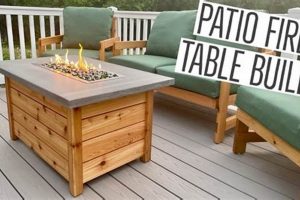
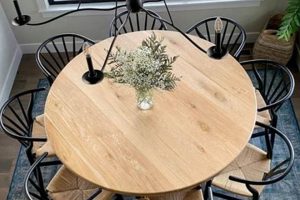
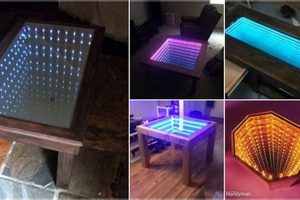
A do-it-yourself (DIY) gaming surface is a customized platform, often constructed at home, intended for tabletop games such as board games, role-playing games, miniature wargames, and card games. These surfaces can range from simple, easily assembled structures to complex, purpose-built creations incorporating features like recessed playing areas, integrated storage, and customizable lighting. An example includes a handcrafted wooden table with a removable felt surface and cup holders designed for regular board game sessions.
The construction of a personalized gaming area offers several advantages. It allows for a tailored experience, perfectly suited to the specific games played and the available space. This offers cost savings when compared to purchasing a pre-made professional table. Furthermore, the design and creation process can be a rewarding hobby, providing a sense of accomplishment and the opportunity to showcase individual craftsmanship. Historically, bespoke gaming surfaces have been a feature of dedicated gaming communities, reflecting the desire for enhanced and personalized gameplay.
The following discussion will explore various aspects of crafting such a gaming environment. Considerations will include materials selection, design principles, construction techniques, and potential modifications to enhance functionality and aesthetic appeal. We will also review the various benefits that are associated with their creation and maintenance.
Crafting a Superior Gaming Surface
The construction of a durable and functional gaming area requires careful planning and execution. The following recommendations are designed to guide the construction process and ensure a satisfactory outcome.
Tip 1: Prioritize Material Selection: The choice of materials directly impacts the stability, longevity, and aesthetic appeal of the finished product. Opt for hardwoods like oak or maple for the frame to ensure structural integrity. Medium-density fiberboard (MDF) offers a smooth, paintable surface for the tabletop.
Tip 2: Implement Precise Measurements: Accurate measurements are crucial for a well-fitted and functional design. Determine the optimal playing surface dimensions based on the games typically played. Account for any desired features, such as recessed areas or storage compartments, when calculating overall dimensions.
Tip 3: Incorporate a Recessed Playing Area: A recessed area provides a defined playing space and prevents game pieces from sliding off the edge. Construct the recess using wooden trim or molding, ensuring a seamless transition from the tabletop surface. Consider the depth of the recess to accommodate various game components.
Tip 4: Integrate Adequate Lighting: Sufficient illumination enhances visibility and minimizes eye strain during extended gameplay sessions. Install LED strip lighting around the perimeter of the playing surface or incorporate adjustable task lighting above the space. Ensure the lighting is dimmable to accommodate different ambient lighting conditions.
Tip 5: Ensure Structural Stability: A stable framework is essential for preventing wobbling or sagging. Reinforce the table legs and frame with corner braces or additional supports. Use wood glue and screws to create strong, durable joints.
Tip 6: Implement a Protective Surface Coating: Apply a durable finish to protect the tabletop surface from scratches, spills, and general wear and tear. Polyurethane or epoxy coatings provide a tough, resilient barrier. Consider a matte finish to minimize glare and improve visibility.
Tip 7: Consider Modular Design: Design modular components to allow for adaptable features and easier disassembly if necessary. This approach might include interchangeable play surfaces, or easily removable elements such as cupholders or organizers.
Adherence to these suggestions facilitates the creation of a custom gaming environment that enhances the playing experience and provides lasting enjoyment.
The subsequent sections will delve into advanced construction techniques and explore various customization options to further personalize the building of such a dedicated gaming area.
1. Dimensions and Space

The correlation between dimensions and available space is paramount in the context of a do-it-yourself gaming surface. The size of the playing area directly influences the types of games that can be accommodated. Insufficient dimensions restrict gameplay possibilities, while excessive dimensions may render the table impractical for the intended space. The available room for the table also dictates the feasible dimensions, ensuring it integrates functionally within the environment without obstructing movement or other activities. For instance, a dedicated miniature wargaming table typically requires a larger surface area than one designed primarily for card games or smaller board games.
The practical significance of understanding these spatial constraints is evident in the design process. Accurate measurements of the intended location are critical before construction begins. Consideration must be given to both the footprint of the table and the surrounding area, including chair placement and access points. A table designed without proper spatial awareness may prove unusable or require costly modifications. An example would be crafting a large, elaborate table only to find it obstructs doorways or creates a cramped, uncomfortable gaming environment.
In summary, appropriate dimensions are not merely a detail, but rather a foundational element in the successful creation of a DIY gaming surface. Challenges arise when spatial constraints are overlooked or underestimated. By thoroughly assessing the relationship between dimensions and space, a functional and enjoyable gaming environment can be achieved, effectively merging the table with its intended location.
2. Material Durability

Material durability is a critical determinant of the lifespan and functionality of a do-it-yourself gaming surface. The selected materials must withstand the rigors of regular use, including the impact of game components, potential spills, and general wear and tear. The choice of inappropriate materials can lead to premature degradation, undermining the investment of time and resources.
- Surface Hardness
The surface hardness of the tabletop material directly impacts its resistance to scratches and indentations. Softwoods, while aesthetically pleasing, are more susceptible to damage compared to hardwoods such as oak or maple. Laminates offer a compromise between cost and durability, providing a relatively scratch-resistant surface. A tabletop constructed from a low-hardness material may exhibit visible wear patterns within a short timeframe, diminishing its visual appeal and potentially affecting gameplay.
- Structural Integrity
The frame and support structure of the table must possess sufficient strength to bear the weight of the tabletop and any additional items placed upon it. Particleboard, while cost-effective, lacks the structural integrity of solid wood or metal framing. A structurally deficient frame may warp or sag over time, compromising the stability of the entire gaming surface and potentially leading to catastrophic failure under load.
- Resistance to Moisture
Gaming surfaces are susceptible to spills, humidity, and other forms of moisture exposure. Materials that readily absorb moisture, such as untreated wood or certain types of fiberboard, are prone to swelling, warping, and the growth of mold or mildew. Using moisture-resistant materials, such as marine-grade plywood or applying a waterproof sealant, is crucial for maintaining the longevity and hygiene of the playing surface.
- Fastener Strength
The strength and durability of the fasteners used to assemble the gaming surface are integral to its overall stability. Low-quality screws or nails may loosen over time, compromising the integrity of joints and connections. Employing high-quality screws, bolts, and wood glue ensures a secure and lasting assembly, preventing the table from becoming wobbly or unstable with repeated use.
The cumulative effect of these material characteristics significantly impacts the long-term performance of a self-made gaming area. A gaming surface constructed from durable materials will provide a stable, aesthetically pleasing, and functional environment for years to come, while a gaming surface constructed from subpar materials will quickly deteriorate, resulting in the need for costly repairs or replacements. Therefore, prioritizing material durability is an essential aspect of the design and construction process.
3. Integrated Features

The inclusion of integrated features significantly enhances the functionality and user experience of a do-it-yourself gaming surface. These features are designed to streamline gameplay, provide organized storage, and improve the overall aesthetic appeal. The absence of well-considered integrated features can diminish the gaming experience, leading to clutter, disorganization, and reduced player comfort. Therefore, the design and implementation of these features is a critical aspect of the crafting process.
Examples of integrated features include recessed dice rolling areas that minimize noise and prevent dice from scattering, cupholders designed to prevent spills on the playing surface, and card storage compartments that maintain game organization. Some designs incorporate integrated lighting systems to enhance visibility and create a more immersive atmosphere. Furthermore, modular designs that allow for customizable layouts and interchangeable game mats can significantly enhance versatility. The integration of power outlets for electronic gaming accessories or charging devices is also a practical consideration. A well-executed implementation of such features can transform a basic tabletop into a highly functional and enjoyable gaming environment.
However, the integration of these features also presents challenges. Careful planning and precise execution are essential to ensure they function correctly and seamlessly integrate with the overall design. Poorly designed or implemented features can detract from the aesthetic appeal and usability of the gaming area. Therefore, it is important to prioritize both functionality and aesthetics when incorporating integrated features. The successful inclusion of these features elevates the usability of the gaming surface, making it a more practical and enjoyable centerpiece for gaming activities.
4. Ergonomic Design

Ergonomic design, in the context of a do-it-yourself gaming surface, is the application of principles aimed at optimizing human well-being and overall system performance. It is not merely a matter of comfort; it directly impacts player engagement, reduces physical strain, and enhances the gaming experience. Considerations of ergonomic design are integral to the creation of a functional and sustainable gaming environment.
- Table Height and Posture
The height of the gaming surface is a critical factor in promoting proper posture and minimizing strain on the neck, shoulders, and back. An appropriately sized surface allows players to maintain an upright posture without slouching or hunching over. For instance, a table height that is too low can lead to chronic back pain, while a height that is too high can cause shoulder and neck tension. Ideally, the surface should be at a height that allows the forearms to rest comfortably at a 90-degree angle when seated. Adjustable-height tables can accommodate different player sizes and preferences, further enhancing ergonomic benefits.
- Reach and Accessibility
The layout of the playing surface and the placement of game components directly impact the ease with which players can reach and manipulate objects. Components that are located too far away require excessive stretching, increasing the risk of muscle strain. Conversely, components that are too close together can create a cluttered and uncomfortable playing environment. A well-designed layout optimizes reach distances, ensuring that all players have easy access to the necessary game elements. Consider a gaming surface with integrated storage compartments or strategically placed trays to improve accessibility and minimize reaching.
- Seating Comfort and Support
Prolonged gaming sessions require comfortable and supportive seating to minimize fatigue and promote sustained focus. Chairs with adjustable lumbar support and armrests are essential for maintaining proper posture and reducing back pain. The chair height should be adjustable to accommodate the table height, ensuring that the player’s feet are flat on the floor. The use of ergonomic chairs can significantly improve player comfort and reduce the risk of musculoskeletal disorders. In contrast, using poorly designed or uncomfortable seating can lead to discomfort, distraction, and decreased player engagement.
- Lighting and Visual Clarity
Adequate lighting is essential for minimizing eye strain and promoting visual clarity during gameplay. Insufficient lighting can force players to squint or strain their eyes, leading to headaches and fatigue. A well-lit playing surface, with adjustable brightness and direction, ensures that all game components are easily visible. Consider using dimmable LED lighting to reduce glare and create a more comfortable visual environment. Additionally, the use of anti-glare surfaces can further reduce eye strain and improve visual clarity, especially during long gaming sessions.
These considerations collectively influence the degree to which a DIY gaming surface facilitates a comfortable and sustainable gaming experience. Prioritizing ergonomic design is not merely a matter of luxury; it is a functional necessity that directly impacts player well-being and enhances the overall enjoyment of the activity. By integrating these principles into the design process, it is possible to create a gaming surface that is both functional and conducive to long-term physical health.
5. Aesthetic Customization

Aesthetic customization is an instrumental component in the design and construction of a do-it-yourself gaming surface, impacting its integration into the surrounding environment and reflecting the individual preferences of its users. The visual appeal of the surface can significantly influence the overall gaming experience, creating an immersive and personalized setting. Without careful consideration of aesthetic elements, the gaming surface risks appearing out of place or failing to meet the specific needs and desires of its owner. The selection of materials, colors, finishes, and decorative elements are all facets of aesthetic customization that contribute to the surface’s overall visual impact. For example, a gaming table intended for a steampunk-themed room might incorporate brass accents, dark wood finishes, and intricate gear-shaped details to achieve a cohesive and visually compelling design.
The practical application of aesthetic customization extends beyond mere visual appeal. A well-designed surface can enhance the gaming experience by creating a thematic backdrop that complements the games being played. For example, a surface designed for miniature wargaming might feature terrain elements, such as textured surfaces, built-in hills, and water features, to create a more realistic and immersive battlefield. Furthermore, aesthetic customization can be used to improve the usability of the gaming surface. The strategic placement of lighting, the integration of color-coded storage compartments, and the use of contrasting colors to highlight important features can all enhance the functionality of the surface and improve the overall gaming experience. This concept extends into personalization, wherein a custom logo or design is added for a personal touch.
In summary, aesthetic customization is a crucial element in the construction of a do-it-yourself gaming surface, influencing its integration into the environment, reflecting individual preferences, and enhancing the overall gaming experience. However, the successful implementation of aesthetic customization requires careful planning, attention to detail, and a thorough understanding of design principles. By prioritizing aesthetic considerations, the gaming surface can be transformed from a mere playing area into a visually appealing and functionally enhanced centerpiece for gaming activities.
Frequently Asked Questions
This section addresses common inquiries regarding the design, construction, and maintenance of self-assembled gaming surfaces, providing clear and concise answers to guide potential builders.
Question 1: What is the optimal size for a tabletop gaming surface?
The optimal size depends primarily on the types of games frequently played. A standard size of 4×6 feet accommodates most wargames and larger board games. However, smaller surfaces may suffice for card games or smaller board games, while larger tables might be necessary for elaborate miniature setups. Considerations should include available space and the number of players.
Question 2: What materials are recommended for a durable gaming surface?
Hardwoods, such as oak or maple, offer superior durability for the frame. Medium-density fiberboard (MDF) provides a smooth, paintable surface for the tabletop. A protective finish, such as polyurethane or epoxy, is essential for resisting scratches and spills. Metal framing is appropriate for more ambitious designs.
Question 3: How can the stability of the gaming surface be ensured?
Stability is achieved through a robust frame construction, utilizing strong joints and reinforcement measures. Corner braces, crossbeams, and sturdy legs are crucial. Proper fastening techniques, such as screws and wood glue, contribute to a stable and long-lasting structure.
Question 4: How is a recessed playing area constructed?
A recessed area is created by building a frame around the desired playing surface, typically using wooden trim or molding. The depth of the recess should accommodate game components. The edges of the recess can be finished with felt or other materials to protect game pieces.
Question 5: What are the best options for integrated lighting?
LED strip lighting is a popular choice for illuminating a gaming surface. It can be installed around the perimeter or beneath the tabletop to provide ambient or task lighting. Dimmable lighting offers flexibility to adjust brightness levels. The integration of task lighting is also feasible.
Question 6: How can a gaming surface be protected from spills and damage?
A durable, waterproof finish, such as polyurethane or epoxy, offers protection against spills and scratches. A removable playing surface or mat can also provide an additional layer of protection. Regular cleaning with appropriate cleaning solutions is essential for maintaining the surface.
In summary, the design and construction of a functional gaming surface requires careful consideration of size, materials, stability, and protective measures. These factors influence the longevity and enjoyment of the finished product.
The next section will explore advanced customization options for do-it-yourself gaming surfaces.
Conclusion
The preceding discussion has comprehensively examined the multifaceted aspects of crafting a do-it-yourself gaming table. From the crucial selection of durable materials to the implementation of ergonomic design principles and aesthetic customizations, this endeavor demands careful planning and precise execution. The integration of features, such as recessed playing areas and optimized lighting solutions, further enhances the functionality and overall gaming experience.
The construction of a personalized gaming surface represents a significant investment of time and resources, yet the resultant bespoke creation offers unparalleled customization and enduring value. Prospective builders are encouraged to meticulously consider their individual requirements, spatial constraints, and desired aesthetic outcomes prior to commencing the construction process. By embracing this approach, one can craft a dedicated gaming environment that promotes sustained engagement and enriches the overall tabletop gaming experience for years to come.