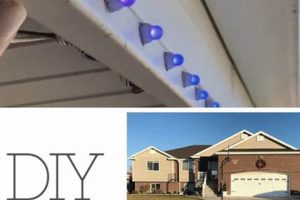
Creating personalized holiday illuminations allows for customization and a unique expression of festive spirit. Such projects involve assembling lighting displays from individual components or modifying existing strands to suit specific aesthetic preferences or spatial requirements. An example includes crafting custom-length LED strings with individually selected bulb colors and spacing.
The importance of these projects lies in the ability to tailor holiday decorations to individual tastes and architectural features, resulting in distinctive displays. Benefits extend to potential cost savings compared to purchasing pre-made, designer lighting. Furthermore, the process can foster creativity and provide a sense of accomplishment. Historically, homemade holiday decorations represent a long-standing tradition, evolving from simple candlelit trees to elaborate electrical displays.
The subsequent sections will explore various aspects of crafting custom seasonal lighting, including material selection, assembly techniques, safety considerations, and design inspiration. Detailed information will be provided to ensure successful and safe implementation of these projects.
Essential Guidelines for Crafting Holiday Illuminations
The following are vital considerations for those undertaking the creation of custom seasonal lighting displays. Adherence to these guidelines will promote safety and ensure a successful outcome.
Tip 1: Prioritize Safety Protocols. Always disconnect power sources before commencing any assembly or modification. Utilize surge protectors and ground fault circuit interrupters (GFCIs) to mitigate electrical hazards.
Tip 2: Select Appropriate Materials. Opt for weather-resistant components rated for outdoor use. Verify compatibility between light-emitting diodes (LEDs), wiring, and power supplies to prevent malfunctions or overheating.
Tip 3: Plan the Layout Meticulously. Pre-determine the placement and length of lighting strands. Accurately measure distances and account for voltage drop to maintain consistent brightness along the entire length.
Tip 4: Employ Secure Wiring Techniques. Use crimp connectors or solder joints, followed by heat shrink tubing, to ensure robust and weatherproof electrical connections. Avoid twisting wires together, as this creates unreliable connections.
Tip 5: Implement Proper Mounting Methods. Utilize clips, hooks, or fasteners designed for outdoor use to securely attach lighting strands to surfaces. Avoid using nails or staples that could damage wiring insulation.
Tip 6: Test Thoroughly Before Installation. Conduct a comprehensive test of the entire lighting system before permanently installing it. Verify that all lights are functioning correctly and that there are no electrical shorts.
Tip 7: Adhere to Local Codes. Research and comply with all local regulations regarding outdoor lighting and electrical installations. This may include restrictions on brightness levels or permitted installation methods.
By heeding these recommendations, individuals can create custom holiday lighting displays that are both visually appealing and safe. Proper planning, material selection, and execution are crucial for a successful project.
The concluding sections will offer design inspiration and address advanced techniques for creating unique and impressive lighting arrangements.
1. Safety Precautions

The integration of safety protocols is paramount when engaging in the creation of custom holiday illumination. These precautions mitigate risks associated with electrical hazards, preventing potential injury or property damage.
- Ground Fault Circuit Interrupter (GFCI) Utilization
GFCI outlets detect imbalances in electrical current, immediately cutting power to prevent electrical shock. Their implementation in outdoor circuits is crucial, particularly in damp or wet environments where the risk of electrocution is amplified. Failure to employ GFCIs can lead to severe injury or death in the event of a fault.
- Appropriate Wire Gauge Selection
Wire gauge determines the current-carrying capacity of electrical conductors. Using undersized wiring can result in overheating, insulation melting, and potential fire hazards. The appropriate wire gauge must be selected based on the total amperage draw of the lighting circuit. Local electrical codes specify minimum wire gauge requirements for outdoor lighting installations.
- Weather-Resistant Component Usage
Outdoor electrical components, including light sockets, connectors, and power cords, must be rated for outdoor use. These components are designed to withstand exposure to moisture, UV radiation, and temperature fluctuations. Non-weatherproof components can deteriorate rapidly, creating short circuits and shock hazards.
- Safe Ladder Practices
Installing or maintaining elevated lighting displays necessitates the use of ladders. Employing proper ladder safety techniques, such as maintaining three points of contact, ensuring stable footing, and avoiding overreaching, is essential to prevent falls. Failure to adhere to ladder safety protocols can result in serious injuries.
These precautions are indispensable for ensuring the safe and enjoyable creation of customized holiday lighting. Neglecting these safety measures can transform a festive activity into a dangerous situation with potentially severe consequences. Diligent adherence to established safety standards is vital for all stages of the design, assembly, and installation processes.
2. Material Selection

Material selection represents a critical determinant in the success, longevity, and safety of holiday illumination projects. The choice of components, including light-emitting diodes (LEDs), wiring, connectors, and power supplies, directly influences the performance characteristics and operational lifespan of the lighting display. Inappropriate material selection can lead to premature failure, increased energy consumption, or, in extreme cases, electrical hazards. For example, utilizing non-weatherproof wiring in an outdoor application will result in corrosion, short circuits, and potential fire risks. The correlation is causative: materials dictate function and safety.
The practical significance of understanding material properties is exemplified by the increasing popularity of LED-based lighting. While initially more expensive, LEDs offer significant advantages in terms of energy efficiency, lifespan, and durability compared to traditional incandescent bulbs. Selecting LEDs with appropriate color temperatures and brightness levels allows for tailoring the aesthetic appearance of the lighting display to specific preferences. Furthermore, the choice of power supplies with appropriate voltage and current ratings ensures stable operation and prevents overloading the electrical circuit. Failure to select components with compatible specifications can result in flickering lights, reduced brightness, or complete system failure.
In conclusion, material selection is a foundational element in the construction of custom holiday illumination. Careful consideration of component specifications, environmental conditions, and safety standards is paramount for achieving a successful and durable lighting display. The informed selection of materials not only enhances the aesthetic appeal of the lighting arrangement but also ensures safe and reliable operation throughout the holiday season. Challenges related to sourcing high-quality components and understanding technical specifications can be mitigated through diligent research and consultation with knowledgeable suppliers.
3. Power Source

The power source is a fundamental element in the successful implementation of custom seasonal lighting displays. Its selection dictates the functionality, safety, and operational longevity of the entire system. A properly specified power source ensures consistent illumination, prevents electrical hazards, and optimizes energy efficiency.
- Voltage Compatibility
LEDs and other lighting components operate at specific voltage levels. The power source must deliver the correct voltage to ensure proper functionality. Utilizing an incorrect voltage can lead to reduced brightness, component failure, or even electrical hazards. For instance, connecting a 12-volt LED string to a 24-volt power supply will likely result in immediate burnout, whereas under-powering the string may cause diminished brightness. The appropriate voltage is a critical specification.
- Amperage Capacity
The power source must provide sufficient amperage to meet the total current demand of all connected lighting components. Underestimating the amperage capacity can result in flickering lights, overheating, or system failure. The total amperage draw should be calculated by summing the amperage requirements of each individual LED or lighting element in the circuit. The power source amperage rating should exceed the calculated demand by a reasonable safety margin, typically 10-20%.
- Power Supply Type
Different types of power supplies exist, including AC-DC converters and DC-DC converters. The selection depends on the type of lighting components used and the available power source. Many holiday lighting displays utilize LEDs that require a DC power source. In such cases, an AC-DC converter is necessary to transform standard household AC voltage into the appropriate DC voltage. Choosing the correct converter type and ensuring compatibility with the lighting components is crucial for proper operation.
- Weather Resistance
For outdoor installations, the power source must be weather-resistant to protect against moisture, rain, and snow. Enclosed power supplies with appropriate IP ratings are recommended for outdoor applications. Exposing a non-weather-resistant power supply to the elements can lead to corrosion, electrical short circuits, and potential fire hazards. The appropriate IP rating should be selected based on the level of environmental exposure.
In summary, the power source is a crucial component in custom holiday illumination. Proper selection based on voltage compatibility, amperage capacity, power supply type, and weather resistance is essential for ensuring safe, reliable, and aesthetically pleasing lighting displays. Neglecting these considerations can lead to system malfunctions, electrical hazards, and diminished visual appeal. Careful planning and attention to detail in the power source selection process will contribute significantly to the success of the holiday lighting project.
4. Wiring Techniques

Wiring techniques are integral to the successful and safe creation of custom holiday illumination. The integrity of electrical connections directly impacts the functionality, longevity, and safety of the lighting display. Improper wiring can lead to flickering lights, short circuits, overheating, and potential fire hazards. Consequently, a thorough understanding of appropriate wiring methods is paramount.
- Series vs. Parallel Wiring
Series wiring connects components along a single path. If one component fails, the entire circuit is broken. Parallel wiring provides multiple paths for current flow. If one component fails, the remaining components continue to function. Series wiring is often used for low-voltage applications where consistent current is desired. Parallel wiring is preferred for higher-voltage applications and greater redundancy. Example: A string of lights where one bulb failure causes the entire string to go out is wired in series. Choosing the appropriate wiring configuration influences the overall reliability of holiday lighting displays.
- Wire Gauge and Current Capacity
Wire gauge denotes the diameter of the wire, which directly correlates with its current-carrying capacity. Using wire of insufficient gauge for the current demand can result in overheating and insulation failure. Local electrical codes specify minimum wire gauge requirements for various applications. Example: Connecting a high-amperage LED array to thin-gauge wire could lead to overheating and potential fire. Selecting the correct wire gauge based on the total current load is essential for safety.
- Splicing and Connection Methods
Proper splicing techniques ensure secure and reliable electrical connections. Twisted wire connections are unreliable and prone to failure. Crimp connectors, solder joints, and wire nuts are common methods for creating secure connections. Heat shrink tubing can be used to insulate and protect connections from moisture and corrosion. Example: Using a wire nut to connect two wires, followed by wrapping the connection with electrical tape, provides a relatively secure and insulated connection. The choice of splicing method directly impacts the longevity and safety of the wiring.
- Insulation and Weatherproofing
Insulation protects wires from short circuits and electrical shock. Outdoor wiring requires weather-resistant insulation to withstand exposure to moisture, UV radiation, and temperature fluctuations. Waterproof connectors and enclosures can further enhance the protection of electrical connections. Example: Using outdoor-rated electrical tape to seal a connection helps prevent moisture ingress and corrosion. Proper insulation and weatherproofing are critical for the safe and reliable operation of outdoor holiday lighting displays.
Effective wiring techniques are foundational to crafting durable, safe, and visually appealing holiday illumination displays. The discussed facets, from selecting the wiring configuration to ensuring proper insulation, are critical components of a successful installation. Adherence to established electrical safety standards and meticulous attention to detail are paramount in mitigating potential hazards and maximizing the longevity of the lighting system.
5. Display Design

Display design, in the context of constructing personalized holiday lighting, functions as the blueprint that translates creative vision into a tangible illuminated arrangement. Its relevance extends beyond mere aesthetics, encompassing spatial considerations, electrical load management, and structural integrity.
- Spatial Arrangement and Density
Spatial arrangement dictates the distribution of lights across a given area. Density, measured as lights per unit area, influences the perceived brightness and visual texture. A sparse arrangement might highlight architectural features, while a dense configuration creates a saturated glow. Example: A tightly packed string of lights outlining a window versus a single strand draped loosely across a porch railing each presents a distinct visual impact.
- Color Palette and Sequencing
Color palette selection establishes the overall mood and thematic coherence of the display. Sequencing, or the programmed changes in light color or intensity, introduces dynamic visual elements. Monochromatic schemes evoke elegance, while polychromatic displays offer vibrancy. Sequencing can range from simple on/off cycles to complex patterns of color transitions. Example: A static display of warm white lights projecting a traditional feel, contrasted by a programmable RGB LED matrix creating dynamic animations.
- Focal Points and Hierarchy
Focal points draw the viewer’s attention to specific areas or elements within the display. Hierarchy refers to the relative prominence of different elements, guiding the viewer’s gaze. Strategic placement of brighter or more visually complex elements can create a focal point. Example: Spotlighting a decorated wreath on the front door, making it a primary focus within a larger display. These elements guide visual interpretation.
- Power Distribution and Safety Considerations
Effective display design integrates power distribution management to avoid overloading circuits and minimize voltage drop across lighting strands. Consideration of weather resistance, secure mounting techniques, and compliance with local electrical codes are crucial safety elements. Example: Dividing a large display into multiple circuits, each powered by a separate power supply, to prevent overloading a single circuit. Proper planning enhances safety.
The integration of spatial considerations, color palettes, focal point creation, and safe power distribution within display design elevates holiday lighting from simple illumination to intentional artistic expression. Each element, when thoughtfully applied, contributes to a cohesive and visually compelling aesthetic. The application of these facets represents the difference between a haphazard arrangement and a thoughtfully executed holiday display.
6. Weatherproofing

Weatherproofing is a critical determinant in the functionality and longevity of custom-built holiday lighting. Outdoor seasonal displays are inherently exposed to environmental elements, including precipitation, temperature fluctuations, and ultraviolet (UV) radiation. The absence of effective weatherproofing measures directly precipitates equipment malfunction, electrical hazards, and premature degradation of components. For instance, moisture ingress into electrical connections leads to corrosion, short circuits, and potential fire risks. Therefore, weatherproofing is not merely a desirable attribute but an essential component for safe and sustained operation.
Practical application necessitates the selection of materials specifically rated for outdoor use. Examples include utilizing wiring with UV-resistant jackets, employing weatherproof connectors and enclosures, and applying sealant to protect exposed connections. Furthermore, mounting methods should account for wind load and snow accumulation to prevent structural damage and exposure of electrical components. Consider a custom-built lighting display where standard indoor-rated extension cords are used for outdoor connections. Prolonged exposure to rain and snow would inevitably result in insulation breakdown, short circuits, and a potential safety hazard. In contrast, a display constructed with outdoor-rated wiring and waterproof connectors would withstand environmental stresses and maintain operational integrity.
The understanding and implementation of robust weatherproofing techniques present ongoing challenges, primarily due to the diverse range of environmental conditions and the complexity of electrical systems. However, addressing these challenges is paramount to ensuring the safe and reliable operation of seasonal displays. Ultimately, effective weatherproofing contributes not only to the longevity of the lighting system but also to the safety of individuals and property, underscoring its significance within the context of constructing holiday illumination.
7. Mounting Options

Mounting options constitute a critical component of the design and implementation of custom holiday lighting. The method of attachment directly influences the aesthetic appeal, safety, and longevity of such displays. Inadequate or inappropriate mounting can result in drooping strands, exposed wiring, potential damage to structures, and increased risk of electrical hazards. For example, employing staples or nails to secure lighting directly to building siding can compromise weatherproofing, introduce pathways for moisture intrusion, and create a fire risk due to potential damage to wire insulation. Correct mounting secures the lights properly and ensures that it functions for longer time.
Effective mounting solutions require careful consideration of several factors, including the type of surface, the weight of the lighting strands, and prevailing weather conditions. Common mounting techniques include utilizing clips designed for gutters and shingles, adhesive hooks for smooth surfaces, and zip ties for securing lights to trees and bushes. Each option possesses distinct advantages and limitations. Gutter clips provide a non-invasive attachment method but may not be suitable for all gutter profiles. Adhesive hooks offer versatility but can lose adhesion in extreme temperatures or when exposed to moisture. Zip ties are inexpensive and readily available but can damage delicate branches or wires if over-tightened. An appropriate selection of mounting hardware ensures secure and inconspicuous attachment.
The understanding of suitable mounting options is therefore essential for constructing custom holiday lighting displays that are both visually appealing and structurally sound. Improper mounting methods can lead to safety hazards, property damage, and a diminished aesthetic impact. Integrating appropriate mounting hardware and techniques represents a critical step in the overall design process, ensuring the successful and sustained illumination of holiday decorations. Challenges regarding specialized hardware requirements and varying installation environments highlight the need for careful planning and informed decision-making throughout the project lifecycle.
Frequently Asked Questions
The following addresses common inquiries concerning the creation and implementation of personalized holiday illumination projects. This information aims to clarify misconceptions and provide essential guidance.
Question 1: What fundamental safety precautions must be observed when constructing custom seasonal lighting displays?
Electrical safety is paramount. Disconnecting power sources before initiating any work, utilizing Ground Fault Circuit Interrupters (GFCIs) in outdoor circuits, and employing wiring and components rated for outdoor use are essential to mitigate electrical hazards.
Question 2: How does wire gauge selection impact the functionality and safety of homemade holiday lighting?
Wire gauge dictates the current-carrying capacity of electrical conductors. Selecting an insufficient wire gauge for the anticipated current load can result in overheating, insulation failure, and potential fire risks. Local electrical codes specify minimum wire gauge requirements.
Question 3: What factors should be considered when selecting a power source for custom holiday lighting displays?
Voltage compatibility, amperage capacity, power supply type (AC-DC or DC-DC converter), and weather resistance are essential considerations. The power source must deliver the correct voltage and amperage to the lighting components while being protected from environmental elements.
Question 4: Why are weatherproofing techniques crucial for outdoor seasonal lighting installations?
Weatherproofing protects electrical components from moisture, UV radiation, and temperature fluctuations. Inadequate weatherproofing can lead to corrosion, short circuits, and premature component failure, compromising both functionality and safety.
Question 5: What are the primary benefits of utilizing LED lighting in homemade holiday displays?
LEDs offer superior energy efficiency, extended lifespan, and enhanced durability compared to traditional incandescent bulbs. They consume less power, reducing energy costs, and exhibit greater resistance to breakage, contributing to a more sustainable and reliable lighting system.
Question 6: How does display design influence the overall aesthetic impact of custom holiday lighting?
Display design incorporates spatial arrangement, color palette selection, focal point creation, and power distribution management. Thoughtful design transforms a simple arrangement of lights into a cohesive and visually compelling aesthetic, enhancing the overall impact of the holiday decorations.
The information presented underscores the importance of prioritizing safety, selecting appropriate materials, and employing sound design principles when engaging in the creation of personalized holiday illumination. Adherence to these guidelines contributes to a safe, aesthetically pleasing, and enduring seasonal display.
The concluding section offers design inspiration and advanced techniques for creating unique and impressive lighting arrangements.
Concluding Remarks on DIY Christmas Lights
This exploration of DIY Christmas lights has elucidated essential considerations for constructing personalized holiday displays. Key points encompass stringent safety protocols, judicious material selection, appropriate wiring techniques, and the integration of design principles to achieve both aesthetic appeal and operational reliability. Weatherproofing and secure mounting further contribute to the longevity and safety of these installations.
The construction of DIY Christmas lights provides an opportunity to create unique and personalized holiday displays, such endeavors demand careful planning and meticulous execution. A commitment to safety, adherence to electrical codes, and a thorough understanding of materials and techniques are paramount. With diligence and informed decision-making, individuals can craft stunning displays that illuminate the holiday season for years to come.