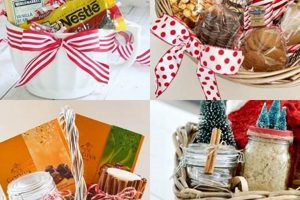
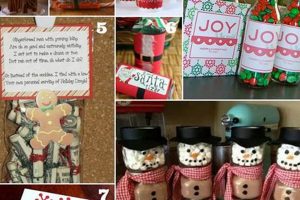
Handcrafted presents designed and made for kids during the holiday season embody thoughtfulness and personalization. These encompass a wide range of items, from simple drawings and painted rocks to more elaborate creations like hand-sewn stuffed animals, wooden toys, or custom-designed clothing. The essence lies in the giver investing time and effort into creating something unique for the recipient.
The value of creating such presents extends beyond mere material worth. This practice fosters creativity and resourcefulness in the gift-giver. Furthermore, the recipients often cherish these items more profoundly due to their unique and personal nature, often seeing them as symbols of love and connection rather than simply commodities. Historically, the tradition of gifting hand-made items dates back to times when commercially produced goods were scarce, highlighting the ingenuity and care within communities.
The subsequent sections will explore specific ideas, resources, and techniques for crafting memorable and engaging presents suitable for a range of ages and skill levels. Consideration will be given to safety, material selection, and personalization options, providing a guide for those wishing to embark on this rewarding endeavor.
Crafting Thoughtful Hand-Made Presents for Children
The following offers insights into optimizing the creation of thoughtful, hand-made presents intended for young recipients. Adhering to these suggestions can significantly enhance both the crafting experience and the present’s overall impact.
Tip 1: Prioritize Safety: Conduct thorough risk assessments related to materials, processes, and intended applications. Sharp edges, loose parts, or toxic substances must be scrupulously avoided. Select age-appropriate projects that match the child’s developmental stage and capabilities.
Tip 2: Align Projects with Interests: Research and incorporate themes, characters, or activities that the recipient genuinely enjoys. This increases the likelihood that the present will be valued and utilized. Observing their play habits and asking subtle questions can provide valuable insights.
Tip 3: Emphasize Personalization: Incorporate individualized elements, such as the child’s name, favorite colors, or personalized artwork. This establishes a deeper connection and imbues the present with sentimental value.
Tip 4: Focus on Durability: Employ robust construction techniques and high-quality materials to ensure the present withstands regular use. Reinforcing seams, using sturdy adhesives, and selecting weather-resistant finishes are recommended.
Tip 5: Consider Functionality: Design projects with practical applications. Items that encourage play, learning, or organization are often more appreciated than purely decorative objects. Examples include personalized storage bins, educational games, or interactive toys.
Tip 6: Document the Process: Take photographs or videos of the present being crafted. This can be presented alongside the gift, adding an additional layer of sentimental value and providing insight into the effort invested.
Tip 7: Encourage Recipient Participation: When appropriate, involve the child in the creation process. This can foster a sense of ownership and creativity, transforming the gift into a shared experience.
The application of these principles ensures that hand-made presents are not only aesthetically pleasing but also safe, durable, and deeply meaningful for the recipient. Such gifts demonstrate a level of care and attention that commercially produced items often lack.
The subsequent discussion will address specific project ideas and the necessary steps for bringing these creations to fruition.
1. Safety Standards
Adherence to established safety standards constitutes a critical element in the creation of hand-made holiday presents for children. Failure to comply with these standards can lead to injuries, health complications, or other adverse effects. The causal relationship between unsafe gifts and potential harm necessitates a proactive approach to safety considerations throughout the design and construction process. For instance, poorly constructed toys with small, detachable parts pose a choking hazard for infants and toddlers, emphasizing the importance of rigorous testing and secure assembly.
Material selection significantly impacts safety; the use of non-toxic paints, fabrics, and adhesives is paramount. Examples include selecting lead-free paints, flame-retardant fabrics, and adhesives compliant with relevant safety regulations. Furthermore, design flaws, such as sharp edges or easily breakable components, can lead to cuts, abrasions, or puncture wounds. Therefore, rounding edges, reinforcing weak points, and conducting thorough stress tests are essential measures. The practical significance of understanding these principles lies in preventing potential harm and ensuring that the created present promotes enjoyment rather than posing a safety risk.
In summation, integrating safety standards into the crafting process is not merely a regulatory formality but a fundamental ethical responsibility. The challenges associated with sourcing safe materials and implementing rigorous quality control measures are outweighed by the imperative to protect children from preventable harm. By prioritizing safety, creators of hand-made holiday presents can contribute to a positive and secure experience for the recipient, upholding the spirit of the holiday season. The absence of vigilance can result in dangerous goods, contrary to the purpose of gift-giving.
2. Material Selection

Material selection directly impacts the safety, durability, and overall suitability of hand-made holiday presents intended for children. The connection between these factors is causal: the chosen materials dictate the gift’s physical properties and potential hazards. For example, selecting a brittle plastic for a toy car directly increases the likelihood of breakage and the creation of sharp fragments. The importance of appropriate material selection rests on preventing harm and ensuring the gift’s longevity. Ignoring this component can render the present useless or, worse, dangerous. The choice of materials directly affects the perceived value, playability, and environmental impact of the gift.
Practical applications of informed material choices involve considering factors such as non-toxicity, durability, and sustainability. Non-toxic materials, such as water-based paints and organic cotton, are essential for minimizing health risks. Durability is achieved through selecting robust materials appropriate for the intended use; for instance, using hardwood for a rocking horse frame ensures its structural integrity. Sustainable materials, such as recycled cardboard or sustainably harvested wood, reduce the environmental footprint. Furthermore, the textural properties of the material influence a child’s sensory experience; soft fabrics for stuffed animals or smooth wood for building blocks enhance tactile engagement. Each choice creates an opportunity to tailor the gift to both the child and the environment.
In conclusion, conscientious material selection is paramount in the creation of holiday presents. The challenge lies in balancing cost, availability, and the specific properties required for the intended project. Overlooking this aspect compromises the gift’s potential and introduces avoidable risks. By prioritizing informed material choices, creators can ensure the resulting presents are safe, engaging, and sustainable, thereby aligning with the true spirit of thoughtful gift-giving. This careful assessment transforms raw materials into expressions of care and concern, making the present far more than just a purchased item.
3. Age Appropriateness

The concept of age appropriateness is a critical consideration in the design and creation of hand-made holiday presents for children. The developmental stage of the recipient directly dictates the suitability and safety of the present, impacting both its utility and potential risks. A disconnect between the gift’s design and the child’s capabilities or understanding can lead to frustration, disinterest, or even physical harm. This requires a careful assessment of cognitive, motor, and emotional development when selecting or adapting any project.
- Cognitive Development and Complexity
A child’s cognitive abilities dictate the level of complexity the present can incorporate. For instance, a complex puzzle may frustrate a toddler with limited problem-solving skills, while a very simple toy might bore an older child. A hand-made educational game should align with the child’s current knowledge and cognitive development, such as creating a matching game using familiar images for a preschooler or a more challenging logic puzzle for a middle school student. Failure to align with cognitive ability may result in the gift being disregarded or, worse, creating a feeling of inadequacy in the child.
- Motor Skills and Dexterity Requirements
Fine motor skills are another crucial factor. Presents requiring precise hand movements, such as detailed model kits or intricate craft projects, are not suitable for young children who have not yet developed the necessary dexterity. A simpler project, such as painting a pre-cut wooden shape, provides a more manageable and enjoyable experience. The size and weight of the present should also be considered; heavy or unwieldy objects can be difficult and potentially dangerous for younger children to handle. Successful hand-made gifts take into account the physical capabilities of the child.
- Emotional Maturity and Content Sensitivity
A child’s emotional maturity should guide the selection of themes and content. A present that evokes fear, anxiety, or confusion is inappropriate, regardless of its educational value or craftsmanship. For example, presents that feature complex narratives or abstract concepts should be reserved for older children who possess the emotional maturity to understand and process them. Additionally, the presence of culturally sensitive or potentially controversial elements should be carefully evaluated to ensure they align with the child’s upbringing and values.
- Safety Hazards and Supervision Needs
Age appropriateness is intrinsically linked to safety. Hand-made presents must be free from potential hazards, such as small parts that could be swallowed, sharp edges, or toxic materials. Even seemingly innocuous items may present risks if they are not designed with the child’s safety in mind. Young children require close supervision when playing with any toy, but particularly with hand-made presents, where quality control may not be as rigorous as with commercially manufactured products. Clear instructions and warnings should be provided, emphasizing the need for adult supervision and safe handling practices.
In summary, age appropriateness is not merely a guideline but a foundational principle in the creation of thoughtful and safe hand-made holiday presents for children. By carefully considering the cognitive, motor, emotional, and safety aspects, creators can ensure that their gifts are not only enjoyable but also contribute positively to the child’s development. The absence of this consideration can lead to disappointment, frustration, or, in the worst-case scenario, physical harm. A present thoughtfully tailored to the child’s age and abilities becomes a valuable and cherished item, demonstrating a level of care and attention that far surpasses commercially produced alternatives.
4. Personalization Options
The integration of personalization options into hand-made holiday presents for children significantly enhances their sentimental value and recipient engagement. The act of personalization transforms a generic item into a unique expression of care and attention, fostering a stronger emotional connection between the giver and the recipient. The causal link between personalization and enhanced gift appreciation necessitates a deliberate consideration of these options during the crafting process. Real-life examples include custom-embroidered names on blankets, hand-painted portraits on wooden toys, or personalized storybooks featuring the child as the main character. The importance of these options lies in tailoring the present to the child’s individual preferences and creating a lasting memory.
Practical applications of personalization options extend beyond mere aesthetics. A personalized learning toy, such as an alphabet puzzle with the child’s name on each piece, can promote early literacy skills while fostering a sense of ownership. A custom-designed cape, adorned with the child’s favorite superhero emblem, encourages imaginative play and self-expression. The addition of hand-written notes or drawings further amplifies the present’s sentimental value, providing a tangible reminder of the giver’s love and effort. These examples illustrate how personalization can transform ordinary items into cherished keepsakes that resonate deeply with the recipient.
In conclusion, the strategic incorporation of personalization options is a vital component in the creation of meaningful hand-made holiday presents for children. The challenge lies in identifying and implementing personalized elements that align with the child’s interests and developmental stage, while also reflecting the giver’s unique relationship with the recipient. By prioritizing personalization, creators can transform simple items into treasured symbols of love and connection, thereby enriching the holiday experience. The impact of these personalized gifts often extends far beyond the immediate joy of unwrapping, creating lasting memories and strengthening bonds between individuals.
5. Durability Testing

Durability testing constitutes a crucial yet frequently overlooked element in the creation of do-it-yourself (DIY) children’s Christmas gifts. It is the systematic evaluation of a crafted item’s ability to withstand anticipated usage conditions, thereby ensuring safety and longevity. The absence of adequate durability testing can lead to premature product failure, posing potential hazards to the recipient and undermining the intended value of the gift.
- Material Strength Evaluation
This facet involves assessing the resistance of materials used in the gift’s construction to forces such as tension, compression, and impact. For example, a hand-sewn stuffed animal should undergo seam-strength testing to prevent tearing, while a wooden toy requires impact resistance evaluation to ensure it can withstand drops and collisions. Neglecting this aspect can result in structural failure during normal play, potentially exposing children to small parts or sharp edges.
- Fastener Security Assessment
Fasteners, including buttons, snaps, and screws, are integral to many DIY gifts. The security of these fasteners must be rigorously assessed to prevent detachment under stress. Testing might involve applying tensile force to simulate pulling or tugging, ensuring that the fasteners remain securely attached. Inadequate fastener security poses a choking hazard to young children and compromises the structural integrity of the gift.
- Finish Resistance Evaluation
Paints, varnishes, and other finishes applied to DIY gifts must exhibit resistance to wear, abrasion, and chemicals (such as saliva). Testing involves subjecting the finish to simulated use conditions, such as repeated rubbing or exposure to moisture. Failure to use durable and non-toxic finishes can lead to chipping, peeling, or the release of harmful substances, posing health risks to the child.
- Simulated Use Testing
This involves subjecting the completed gift to conditions that mimic typical use, including repeated play, exposure to temperature variations, and prolonged contact with moisture. Such testing can reveal weaknesses or vulnerabilities that might not be apparent through component-level testing. For instance, a hand-knitted scarf might be subjected to repeated stretching and washing to assess its resistance to deformation and fading. This process identifies potential issues before the gift is presented, allowing for corrective action and minimizing the risk of disappointment or injury.
The integration of comprehensive durability testing practices into the DIY gift-making process significantly enhances the overall quality, safety, and longevity of the finished product. While not always feasible to conduct laboratory-grade testing, implementing practical, at-home assessment methods can provide valuable insights into the gift’s robustness and potential vulnerabilities. This proactive approach demonstrates a commitment to safety and quality, transforming the DIY gift from a mere craft project into a carefully considered and enduring token of affection.
6. Skill Requirements
The creation of DIY children’s Christmas gifts presupposes a spectrum of skills that directly influences the quality, safety, and overall success of the undertaking. The causal relationship between adequate skill and desirable outcomes is evident: insufficient skill leads to poorly executed gifts that may be aesthetically unappealing, functionally deficient, or, in extreme cases, hazardous. Consider, for example, a poorly sewn stuffed animal with weak seams; a child’s vigorous play could easily result in its disintegration, potentially creating choking hazards. Therefore, the assessment and acquisition of appropriate skills represent a critical preliminary step.
Practical applications of this understanding involve matching project complexity to the skill level of the craftsperson. Novices might commence with simple sewing projects such as pillowcases or felt toys, progressing to more intricate designs as proficiency increases. Similarly, individuals with woodworking experience could undertake more ambitious projects like building a rocking horse, while beginners might focus on assembling pre-cut wooden kits. Moreover, resourcefulness in skill acquisition is essential; online tutorials, instructional books, and community workshops offer accessible avenues for learning new techniques. Attention to detail, patience, and a willingness to learn from mistakes are indispensable attributes. Furthermore, seeking guidance from experienced crafters can circumvent common pitfalls and improve the final product.
In summary, the successful creation of DIY children’s Christmas gifts hinges on a realistic appraisal of one’s skills and a commitment to acquiring the necessary expertise. The challenges associated with skill gaps can be overcome through diligent learning, practice, and mentorship. By prioritizing skill development, individuals can transform raw materials into cherished gifts that embody not only thoughtfulness but also competence and care. The resulting presents will not only be well-received but will also stand as testaments to the dedication and effort invested in their creation.
Frequently Asked Questions
The following addresses common inquiries and misconceptions surrounding the creation of handcrafted holiday presents intended for young recipients. Clarity on these points ensures a more informed and effective crafting process.
Question 1: Are handcrafted presents inherently more economical than store-bought gifts?
The economic advantage is not guaranteed. Material costs, the time invested, and the potential for errors can collectively impact the final expense. The primary benefits reside in personalization and the expression of care, rather than cost savings.
Question 2: Is specialized equipment essential for producing high-quality handcrafted presents?
Specialized tools are not always necessary. Many projects can be completed with basic household items and readily available materials. Complexity should align with available resources and existing skill sets.
Question 3: How can creators ensure the safety of hand-made presents intended for infants and toddlers?
Strict adherence to safety standards is paramount. Small parts that pose choking hazards must be avoided. Non-toxic materials should be selected, and all construction should be robust to prevent breakage or disintegration.
Question 4: What is the optimal timeframe for commencing handcrafted present projects?
Early planning and preparation are advisable. Procrastination can lead to rushed work, compromising quality and increasing the risk of errors. Sufficient time should be allocated for design, material acquisition, construction, and quality control.
Question 5: How can creators effectively incorporate personalization into handcrafted presents?
Personalization can be achieved through various methods, including custom embroidery, hand-painted artwork, and personalized narratives. The key is to align the personalization with the child’s interests and developmental stage, creating a meaningful and cherished item.
Question 6: What recourse exists if a completed handcrafted present proves unsatisfactory?
Remedial action depends on the nature of the defect. Minor imperfections can often be corrected. However, significant flaws may necessitate starting anew. A thorough quality control process can minimize the likelihood of such outcomes.
In summary, creating handcrafted presents involves careful planning, skilled execution, and a unwavering commitment to safety. The potential rewards, in terms of personalization and heartfelt expression, outweigh the associated challenges.
The following section will explore the environmental implications of crafting custom presents for children.
Conclusion
This exploration of “diy children’s christmas gifts” has illuminated several critical facets of this practice. It has emphasized safety considerations, material selection, age appropriateness, personalization options, the imperative of durability testing, and the essential role of skill requirements. The endeavor transcends mere cost savings, highlighting the creation of meaningful and individualized items that foster stronger emotional connections.
The creation of hand-made presents represents a deliberate act of care and creativity within an increasingly commodified world. Its continued practice reinforces the value of resourcefulness, thoughtful giving, and the creation of lasting memories. Individuals are encouraged to embrace the challenges and rewards associated with this craft, enriching both the giver’s experience and the recipient’s joy. The creation of unique, safe, and personalized items is an investment for the future and represents a move toward a world where gift giving represents more than just a transaction.