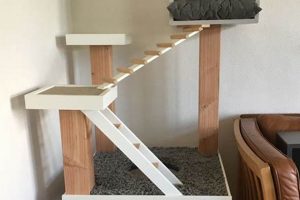
The construction of feline enrichment structures utilizing corrugated fiberboard presents a cost-effective and readily accessible method for providing domestic cats with stimulating environments. Such structures offer opportunities for climbing, scratching, and resting, catering to innate feline behaviors. For example, a multi-tiered structure created from stacked and reinforced cardboard boxes can serve as both a climbing frame and a comfortable observation platform.
Providing these structures is important due to their positive impact on feline physical and mental well-being. They provide essential outlets for natural behaviors, potentially reducing destructive scratching of furniture and promoting exercise. Historically, simple cardboard boxes have been recognized by cat owners as providing comfort and security for their pets, leading to the evolution of more elaborate, purpose-built structures utilizing this material.
The subsequent discussion will explore techniques for designing and building stable, aesthetically pleasing, and safe feline enrichment structures using corrugated fiberboard. Considerations will include material selection, structural reinforcement, and customization options to meet the individual needs and preferences of both the cat and the owner.
Construction Tips for Feline Enrichment Structures
Effective creation of feline enrichment structures necessitates careful planning and execution. Adherence to established best practices enhances structural integrity and ensures feline safety and engagement.
Tip 1: Prioritize Structural Stability: The foundation must be robust. Employ thicker, multi-layered corrugated fiberboard for the base. Reinforce joints with high-strength adhesive and strategically placed fasteners to prevent collapse.
Tip 2: Select Appropriate Materials: Opt for unprinted, unbleached corrugated fiberboard whenever possible to minimize potential exposure to inks and dyes. Ensure the cardboard is free from staples or other potentially hazardous inclusions.
Tip 3: Incorporate Scratching Surfaces: Integrate sections of tightly wound sisal rope or corrugated fiberboard arranged vertically to encourage scratching behavior. This protects furniture from feline clawing.
Tip 4: Design for Climbing and Exploration: Structures should feature varying levels and accessible pathways between them. Consider the feline’s physical capabilities when determining jump heights and platform sizes.
Tip 5: Ensure Feline Safety: All edges and corners should be smoothed or covered to prevent injury. Avoid using small, detachable components that could pose a choking hazard.
Tip 6: Facilitate Easy Cleaning: Design the structure to allow for periodic cleaning. Surfaces should be easily accessible for wiping or vacuuming to maintain hygiene.
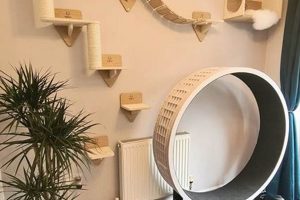
Tip 7: Observation Post Placement: Integrate elevated platforms to leverage the feline’s natural inclination for observation. Position these vantage points strategically to provide visual access to areas of interest, such as windows.
Tip 8: Gradual Introduction: Introduce the structure to the feline gradually. Use catnip or familiar scents to encourage initial exploration and positive association.
By implementing these recommendations, the resulting structure offers an inviting and functional environment for feline enrichment and activity. Prioritizing structural soundness and feline safety is paramount.
The subsequent discussion will address aesthetic customization and integration of this type of structure within the home environment.
1. Stability
Within the context of feline enrichment structures fabricated from corrugated fiberboard, stability is a paramount consideration. The inherent properties of corrugated fiberboard, while offering benefits in terms of cost and accessibility, necessitate careful attention to structural design to ensure a stable and secure platform for feline activity. Failure to adequately address stability can result in structural collapse, potentially causing injury to the animal and negating the intended purpose of providing enrichment. For instance, a multi-tiered structure constructed with insufficient reinforcement at the base will be prone to tipping, especially when subjected to the dynamic forces of a cat jumping or climbing.
Achieving stability in these structures requires strategic reinforcement and thoughtful material selection. Thicker grades of corrugated fiberboard should be employed for load-bearing elements, particularly at the base and support columns. Internal bracing, implemented with additional layers of cardboard or wooden dowels, distributes weight more evenly and prevents buckling under pressure. Adhesives, selected for their high shear strength and compatibility with cardboard, are crucial for bonding joints and creating a unified structural unit. Real-world examples demonstrate the effectiveness of these techniques. Structures utilizing interlocking designs, combined with ample adhesive, have proven to withstand significant weight and repeated use, providing a safe and engaging environment for felines.
In conclusion, stability represents a fundamental engineering challenge in creating functional and safe feline enrichment structures from corrugated fiberboard. Addressing this challenge requires a meticulous approach to design, material selection, and construction techniques. A stable structure not only ensures the safety of the animal but also maximizes the lifespan and effectiveness of the enrichment device, highlighting the critical link between structural integrity and the overall success of such projects.
2. Durability
Within the realm of do-it-yourself feline enrichment structures utilizing corrugated fiberboard, durability represents a critical factor influencing the long-term viability and overall value proposition of such projects. The inherent limitations of cardboard as a construction material necessitate a strategic approach to design and fabrication to maximize the lifespan of the structure and ensure its continued utility.
- Material Selection and Reinforcement
The grade and composition of the corrugated fiberboard directly impact the structure’s resistance to wear and tear. Multi-layered, high-density cardboard offers superior strength and resilience compared to single-ply alternatives. Reinforcement techniques, such as internal bracing with wood or additional layers of cardboard, augment the structure’s load-bearing capacity and prevent premature collapse. For example, utilizing cardboard tubes as central support pillars significantly enhances vertical load resistance.
- Surface Treatment and Protection
Cardboard is susceptible to moisture damage and degradation from feline scratching. Applying a sealant or protective coating can mitigate the effects of moisture and enhance the surface’s resistance to abrasion. Sisal rope wrapping, a common feature in commercial cat trees, provides a durable and cat-friendly scratching surface, diverting clawing behavior away from the underlying cardboard structure.
- Joint Construction and Adhesive Selection
The integrity of the joints connecting individual cardboard components is crucial for overall structural stability and longevity. Utilizing robust joining methods, such as interlocking tabs and slots in combination with high-strength adhesives, ensures a durable and secure bond. The selection of adhesive is critical; water-resistant and non-toxic options are preferred to prevent joint failure and potential harm to the animal.
- Design for Repair and Replacement
Even with diligent construction techniques, certain components of a corrugated fiberboard structure may succumb to wear and tear over time. Designing the structure with modularity in mind facilitates the easy replacement of damaged sections, extending the overall lifespan of the unit. A design allowing easy replacement of scratching posts or platform surfaces increases the durability of the structure overall.
Addressing durability concerns through strategic material selection, reinforcement, surface treatment, and design considerations is essential for creating feline enrichment structures that offer both cost-effectiveness and long-term utility. While corrugated fiberboard may not possess the inherent longevity of more durable materials, thoughtful construction techniques can significantly extend the lifespan of these structures, providing a sustainable and engaging environment for domestic felines.
3. Safety
Within the construction of feline enrichment structures utilizing corrugated fiberboard, safety constitutes a non-negotiable imperative. The inherent characteristics of the material necessitate meticulous attention to design and execution to mitigate potential hazards and ensure the well-being of the animal.
- Structural Integrity and Stability
A structurally unsound structure poses a direct threat to feline safety. Instability can result in collapse, leading to potential injury. Reinforcement of load-bearing components and secure joining methods are crucial. Examples include utilizing thicker grades of cardboard for the base and incorporating internal bracing to prevent tipping. The absence of these measures compromises the structure’s ability to withstand feline activity, creating a hazardous environment.
- Material Toxicity and Sharp Edges
The composition of the cardboard itself presents potential risks. Inks, adhesives, and other treatments may contain toxic substances harmful if ingested. The use of untreated, unbleached cardboard minimizes this risk. Furthermore, exposed edges and corners can cause lacerations or punctures. Careful sanding, covering with fabric, or the application of edge protectors mitigates these hazards.
- Protruding Fasteners and Small Parts
Fasteners, such as staples or nails, used in construction can pose a significant safety risk if they protrude from the surface. These can cause scratches, puncture wounds, or become dislodged and ingested. Similarly, small, detachable parts, such as decorative elements, present a choking hazard. Careful selection and secure attachment of fasteners and the elimination of small, detachable components are essential.
- Entrapment and Accessibility
The design of the structure must preclude the possibility of feline entrapment. Enclosed spaces should be adequately sized to allow for easy entry and exit, preventing the animal from becoming trapped or suffocated. Jump heights and platform spacing should be appropriate for the feline’s physical capabilities, avoiding situations that might lead to falls or injuries. For example, an excessively high platform without adequate intermediate steps presents a potential fall hazard.
The integration of these safety considerations is not merely an optional addendum but a fundamental prerequisite for the responsible construction of feline enrichment structures from corrugated fiberboard. A failure to prioritize safety can transform a well-intentioned project into a source of potential harm for the intended recipient, underscoring the ethical obligation to adhere to rigorous safety standards throughout the design and construction process.
4. Engagement
Feline engagement, within the context of do-it-yourself enrichment structures constructed from corrugated fiberboard, represents the degree to which the structure effectively elicits and sustains the cat’s interest and interaction. A high level of engagement is paramount to the success of the enrichment strategy, as it directly correlates with the fulfillment of the cat’s behavioral needs and the mitigation of potential behavioral problems.
- Variety of Stimuli
Engagement is significantly enhanced by the incorporation of diverse stimuli within the structure. Varying textures, such as sisal rope, carpet remnants, or smooth cardboard surfaces, cater to different tactile preferences. Visual stimulation can be achieved through strategically placed openings offering views of the surrounding environment, or by incorporating moving elements such as hanging toys. The inclusion of multiple levels and varying heights provides opportunities for climbing and exploration, further stimulating the cat’s natural curiosity. A structure offering only a single, uniform surface is less likely to sustain the cat’s interest over time.
- Mimicking Natural Behaviors
Structures that facilitate the expression of innate feline behaviors are inherently more engaging. Scratching is a fundamental feline behavior that serves both to maintain claw health and to mark territory. The incorporation of dedicated scratching surfaces, such as vertical cardboard panels or sisal-wrapped posts, directly addresses this need. Climbing and perching behaviors are similarly instinctive. Structures featuring multiple levels and elevated platforms provide opportunities for observation and secure resting spots, mirroring the feline’s natural inclination to seek out vantage points.
- Novelty and Adaptability
Feline engagement is not static; prolonged exposure to the same stimuli can lead to habituation and a decline in interest. Introducing novelty through periodic rearrangement of the structure, the addition of new toys, or the modification of existing elements can effectively re-engage the cat’s attention. Modular designs, allowing for easy reconfiguration of the structure, provide a flexible means of maintaining novelty. Furthermore, incorporating interactive elements, such as treat puzzles or hidden compartments, can stimulate the cat’s cognitive abilities and sustain interest.
- Placement and Environmental Integration
The location of the enrichment structure within the home environment significantly impacts its effectiveness in promoting engagement. Structures placed in high-traffic areas, or near windows offering views of the outside world, are more likely to attract the cat’s attention. Integrating the structure with existing feline resources, such as feeding stations or resting areas, can further enhance its appeal. A structure placed in an isolated or underutilized area is less likely to be utilized by the cat, regardless of its inherent design features.
The sustained success of any do-it-yourself feline enrichment structure hinges on its ability to effectively engage the cat’s interest and cater to its behavioral needs. A multifaceted approach, incorporating diverse stimuli, facilitating natural behaviors, maintaining novelty, and carefully considering environmental integration, is essential for creating structures that provide lasting enrichment and contribute to the overall well-being of the domestic feline. Structures failing to address these aspects are likely to be ignored, negating the time and resources invested in their construction.
5. Cost-Effectiveness
The appeal of creating feline enrichment structures from corrugated fiberboard is significantly influenced by the economic advantages offered compared to commercially available alternatives. The material’s inherent low cost, coupled with readily accessible construction methods, positions it as a financially prudent option for cat owners.
- Material Acquisition
Corrugated fiberboard is widely available from various sources, including recycling streams, retail packaging, and direct purchase in bulk. The cost of acquiring sufficient material for a substantial structure is typically a fraction of the price of commercially manufactured cat trees. For example, repurposing discarded cardboard boxes eliminates material costs entirely, requiring only minimal investment in adhesives and fasteners.
- Tool and Skill Requirements
Construction requires minimal specialized tools or skills. Basic cutting tools, such as utility knives or scissors, are generally sufficient for shaping the cardboard. Adhesive application can be achieved with readily available glue guns or construction adhesives. The simplicity of the construction process reduces the need for professional assistance or specialized expertise, further minimizing overall costs. Instructions and design templates are widely available online, facilitating ease of construction.
- Customization and Adaptability
The cost-effectiveness of corrugated fiberboard structures is enhanced by their inherent adaptability. The material can be readily customized to fit specific spatial constraints or feline preferences. The ability to tailor the structure to individual needs eliminates the need to purchase multiple commercial units to address varied requirements. Modular designs further enhance adaptability, allowing for reconfiguration or expansion as needed, thus optimizing the initial investment.
- Longevity and Replacement Costs
While not as durable as some commercially available materials, the low cost of corrugated fiberboard allows for relatively frequent replacement of damaged or worn components without significant financial burden. The ability to easily repair or replace individual sections extends the overall lifespan of the structure while maintaining cost-effectiveness. This approach contrasts with the expense associated with repairing or replacing entire commercial cat trees.
In summary, the cost-effectiveness of constructing feline enrichment structures from corrugated fiberboard stems from a combination of readily available and inexpensive materials, minimal tool and skill requirements, inherent customization capabilities, and the ease of repair or replacement. These factors collectively contribute to a financially sustainable approach to providing stimulating and engaging environments for domestic felines.
6. Customization
Customization is a pivotal element in the domain of corrugated fiberboard feline enrichment structures, allowing owners to tailor the environment precisely to their individual cat’s needs and preferences and to integrate the structure seamlessly within the existing home aesthetic. The adaptability of the material permits adjustments in size, shape, and feature set that are often unattainable with commercially produced options. This ability directly influences feline engagement and the overall success of the enrichment strategy. For example, a cat with mobility limitations may benefit from a structure with lower platforms and gently sloping ramps, while an energetic cat may thrive on a taller structure with more challenging climbing elements.
The practical applications of customization extend beyond mere dimensional adjustments. The incorporation of specific scratching surfaces, such as varying textures of cardboard or sisal rope, can be targeted to the cat’s preferred scratching style. The strategic placement of viewing platforms, oriented toward windows or areas of interest, can maximize the structure’s appeal. Furthermore, the aesthetic integration of the structure within the home is facilitated by the ability to select colors, patterns, and finishes that complement existing decor. Owners might choose to cover the cardboard with fabric remnants that match their furniture, effectively camouflaging the structure and making it a more visually appealing addition to the living space.
In summation, customization represents a key advantage of creating corrugated fiberboard feline enrichment structures. It enables the creation of environments that are not only stimulating and engaging for the cat but also aesthetically harmonious within the home. While challenges exist in achieving professional-grade finishes, the benefits of tailored design and personalized feature sets outweigh these limitations, establishing customization as a cornerstone of successful DIY projects in this domain. The importance of this aspect ensures the long-term use of the structure.
Frequently Asked Questions
The following addresses common inquiries regarding the construction, maintenance, and safety of feline enrichment structures crafted from corrugated fiberboard.
Question 1: What is the recommended grade of corrugated fiberboard for optimal structural integrity?
Multi-layered, heavy-duty corrugated fiberboard is advisable, particularly for load-bearing elements such as the base and support columns. Single-ply cardboard lacks the requisite strength to withstand sustained feline activity.
Question 2: How can the structure be effectively protected from feline scratching?
Integration of dedicated scratching surfaces is essential. Vertical panels of tightly wound sisal rope or densely corrugated cardboard provide suitable outlets for natural scratching behavior, diverting it from the underlying structure and furniture.
Question 3: What adhesives are safe for use in constructing these structures?
Non-toxic, water-resistant adhesives are crucial to avoid potential harm to the animal and to ensure structural integrity. Solvent-based adhesives should be avoided due to potential off-gassing and toxicity concerns.
Question 4: How can the structure be cleaned and maintained?
Regular vacuuming is recommended to remove loose debris and fur. Surfaces can be wiped down with a damp cloth and mild detergent. Avoid harsh chemicals or abrasive cleaners that may damage the cardboard or pose a health risk to the feline.
Question 5: Is it necessary to seal or treat the cardboard to prevent moisture damage?
Sealing the cardboard with a non-toxic sealant can enhance its resistance to moisture and extend its lifespan. However, ensure the sealant is fully cured and odorless before allowing the feline to interact with the structure.
Question 6: How can the stability of the structure be ensured, particularly for larger or multi-tiered designs?
A wide base and strategic internal bracing are essential for stability. Weight distribution should be carefully considered, and the structure should be placed on a level surface. Additional reinforcement, such as anchoring the structure to a wall, may be necessary for taller designs.
Adherence to these recommendations promotes both the structural integrity and the safety of feline enrichment structures, contributing to a positive and stimulating environment for domestic cats.
The subsequent section will explore design considerations for maximizing feline engagement with these structures.
Conclusion
This exposition has detailed the multifaceted aspects of constructing feline enrichment structures from corrugated fiberboard. From ensuring structural stability and feline safety to maximizing engagement and maintaining cost-effectiveness, the critical considerations for successful implementation have been thoroughly explored. The adaptability of these “diy cat tree cardboard” projects allows for customization tailored to individual feline needs and home environments.
The construction of “diy cat tree cardboard” structures represents a responsible and creative avenue for enhancing the well-being of domestic felines. Continued refinement of designs, materials, and construction techniques will further elevate the potential of this approach to provide stimulating and safe environments for companion animals. Commitment to rigorous safety standards and a comprehensive understanding of feline behavior remain paramount for responsible and effective implementation.