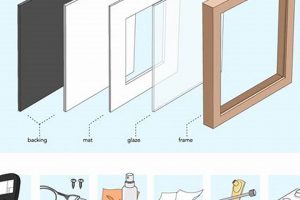
A self-constructed illumination system designed to enhance the visibility and aesthetic appeal of a displayed image or artwork. This involves creating a frame that incorporates a light source, typically LED-based, behind the displayed item, casting light through it or around its edges. An example would be assembling a wooden frame, installing LED strip lights within, and then mounting a translucent print or photograph in front of the light source.
This practice allows for personalized display options, granting control over light intensity, color temperature, and overall design. This offers a cost-effective alternative to commercially manufactured illuminated displays, particularly beneficial for those seeking custom sizes or unique artistic effects. Historically, similar concepts were applied in theater lighting and early photographic displays, adapted now for personal and decorative applications.
The subsequent sections will delve into material selection, construction techniques, lighting options, and various approaches to achieving desired visual results in building personalized illuminated displays.
Construction and Illumination Guidance
The following guidelines provide essential considerations for successful construction and optimal illumination of a custom-built backlit display.
Tip 1: Frame Material Selection: Prioritize lightweight and rigid materials such as aluminum or select hardwoods to ensure structural stability and ease of handling. Material choice influences the overall weight and durability of the finished project.
Tip 2: Light Source Selection: Evaluate various LED options including strip lights, panels, and individual modules based on desired brightness, color temperature, and energy consumption. Lower wattage, higher lumen output LEDs offer optimal efficiency.
Tip 3: Diffusion Layer Implementation: Employ a diffusion material, such as acrylic or frosted film, between the light source and the displayed image. This step ensures uniform light distribution, mitigating hotspots and enhancing visual clarity.
Tip 4: Power Supply Considerations: Select a power supply compatible with the voltage and current requirements of the chosen LEDs. A constant voltage power supply is recommended for consistent light output and component longevity.
Tip 5: Ventilation Provision: Integrate ventilation into the design to dissipate heat generated by the LEDs. Adequate ventilation helps prevent overheating, extending the lifespan of the light source and safeguarding the display.
Tip 6: Image Mounting Method: Use non-acidic adhesives or mounting techniques to prevent damage to the displayed image over time. Ensure the image is securely and evenly mounted to avoid warping or distortion when illuminated.
Tip 7: Wiring and Electrical Safety: Adhere to all applicable electrical codes and safety standards during wiring and component installation. Grounding exposed metal parts is essential for user safety.
Adherence to these guidelines promotes a well-constructed, visually appealing, and safe illuminated display. Careful planning and execution contribute to a successful outcome.
The subsequent section addresses advanced techniques for further refinement and customization of illuminated displays.
1. Frame Material

The selection of frame material is a critical consideration in the construction of a self-assembled illuminated display, directly influencing its structural integrity, aesthetic appeal, and overall longevity. The properties of the chosen material impact aspects ranging from weight distribution and light reflection to ease of fabrication and resistance to environmental factors.
- Structural Integrity and Load-Bearing Capacity
The frame must provide adequate support for the light source, diffusion layer, and displayed image, preventing warping or deformation over time. Hardwoods like maple or oak offer significant strength, suitable for larger displays or heavier components. Conversely, lighter materials such as aluminum or certain plastics are preferable for smaller, portable units, minimizing overall weight while maintaining sufficient rigidity. Inadequate structural support can lead to component failure and compromised visual presentation.
- Light Reflection and Diffusion Characteristics
The interior surface of the frame may be utilized to enhance light distribution. Materials with reflective properties, such as white-painted wood or polished aluminum, can maximize light output and uniformity within the display. Conversely, dark or non-reflective materials can absorb light, potentially reducing brightness and creating uneven illumination. The choice depends on the desired aesthetic and the characteristics of the chosen light source.
- Workability and Fabrication Ease
The ease with which a material can be cut, shaped, and joined significantly impacts the complexity of the construction process. Softwoods like pine are easier to cut and fasten than hardwoods, making them suitable for simpler designs. Aluminum profiles offer precision and modularity but may require specialized tools for cutting and joining. The chosen material should align with the builder’s skill level and available tools.
- Environmental Resistance and Durability
The frame material should withstand environmental conditions to which the display will be exposed. For indoor use, wood or plastic may suffice. However, for outdoor applications or locations with high humidity, weather-resistant materials like aluminum or treated wood are essential to prevent corrosion, warping, or degradation. Inadequate protection can lead to premature failure and costly repairs.
The interplay between these factors underscores the importance of carefully considering frame material. By aligning material properties with the specific requirements of the illuminated display, constructors can achieve optimal structural performance, aesthetic appeal, and long-term durability, ultimately contributing to a successful and visually compelling project.
2. Light Source

The light source is a foundational element in a self-assembled illuminated display, directly determining its brightness, color accuracy, and overall visual impact. The selection of an appropriate light source significantly affects the quality of the displayed image and the energy efficiency of the system. For instance, employing low-quality LEDs may result in uneven illumination, color distortion, and a reduced lifespan, thereby diminishing the display’s aesthetic appeal and increasing maintenance requirements. In contrast, selecting high-quality LEDs with a consistent color temperature and high lumen output ensures a uniform and visually accurate representation of the displayed image.
Different light sources offer varying advantages and disadvantages in the context of illuminated displays. LED strip lights provide flexibility in terms of placement and shape, allowing them to be easily integrated into custom frame designs. LED panels offer a more uniform light distribution, minimizing the risk of hotspots or uneven illumination. Cold cathode fluorescent lamps (CCFLs), while less energy-efficient than LEDs, can provide a bright and even light source for larger displays. The choice depends on the size and design of the frame, the desired level of brightness, and considerations regarding energy consumption and heat dissipation. Practical examples include utilizing dimmable LED strips in art displays to control luminance, or LED panels in retail advertising for even and appealing presentation.
Understanding the relationship between the light source and the quality of the self-assembled illuminated display is critical for achieving desired visual outcomes. Challenges include managing heat generated by the light source, ensuring uniform light distribution, and selecting a power supply compatible with the chosen light source. The proper selection and implementation of a light source ensures optimal illumination, extending the display’s lifespan and enhancing its visual impact, contributing to a compelling and professional finished product.
3. Diffusion Quality

Diffusion quality, in the context of self-assembled illuminated displays, denotes the measure of uniformity and consistency in light distribution across the viewing surface. Insufficient diffusion results in visible hotspots, banding, or uneven brightness, diminishing the aesthetic appeal of the displayed image. High-quality diffusion, conversely, yields a smooth, consistent illumination, presenting the image in an optimal manner. This attribute is not merely cosmetic; it influences the perceived clarity, color accuracy, and overall impact of the displayed content. For example, a photograph exhibited in an illuminated frame with poor diffusion may exhibit distracting bright spots, distorting the intended artistic expression. In contrast, effective diffusion enhances the image, creating a visually pleasing and professional display.
Materials employed as diffusers vary in their effectiveness. Frosted acrylic sheets are commonly used due to their ability to scatter light while maintaining a reasonable level of transmission. Diffuser films, applied to clear acrylic or glass, offer a thinner and more flexible alternative. The selection depends on the required level of diffusion, the available space within the frame, and the desired light transmission. A practical application of selecting the correct diffuser material might be where an illuminated advertisement requires high light transmission; a lightly frosted acrylic would be chosen. However, if a photographic print with subtle gradients is displayed, a heavily frosted diffuser film would prevent banding from the LED light source.
Proper selection and implementation of diffusion materials are crucial for achieving the desired effect in self-assembled illuminated displays. Insufficient attention to diffusion quality can negate the benefits of a high-quality image and light source. By carefully considering the properties of available diffusers and tailoring their application to the specific needs of the project, builders can significantly enhance the visual impact and overall quality of their illuminated displays. Ultimately, optimizing diffusion contributes to a finished product that is both aesthetically pleasing and functionally effective.
4. Power Supply

The power supply serves as the essential energy conduit for a self-assembled illuminated display, dictating its operational stability and performance. Its function is to convert standard mains voltage (or other input power) into a stable, regulated voltage suitable for the light source, typically LEDs. An improperly specified power supply can lead to component damage, erratic illumination, or complete system failure. For instance, if LEDs designed for 12V are connected to a 24V supply, they will likely overheat and fail prematurely. Conversely, an undersized power supply will be unable to deliver sufficient current, resulting in dim or inconsistent lighting. The power supply’s selection represents a foundational decision in the design and construction process, directly impacting the overall reliability and lifespan of the display.
Practical applications of power supply considerations are evident in various illuminated display scenarios. In small-scale projects, such as picture frames, compact AC-DC adapters with a specific voltage and current rating are commonly employed. Larger displays, like those used in retail advertising, may necessitate the use of enclosed power supplies capable of delivering higher wattage and featuring built-in protection circuits. When constructing a display with addressable LEDs, which require precise voltage and current control for dynamic lighting effects, a dedicated constant current power supply is often preferred. Understanding the specific power requirements of the chosen light source and selecting a compatible power supply ensures consistent operation and prevents potential damage to the LED components.
In summary, the power supply constitutes a critical, often overlooked, element in the realization of a self-assembled illuminated display. Its proper selection and implementation are paramount for achieving optimal brightness, consistent color rendering, and prolonged system lifespan. Addressing the potential challenges of voltage regulation, current limiting, and heat dissipation inherent in power supply design contributes to the creation of a robust and visually compelling display. Failure to adequately consider the power supply requirements can compromise the entire project, resulting in a diminished aesthetic experience and potential safety hazards.
5. Image Mounting

Image mounting represents a crucial step in the construction of a self-assembled illuminated display. The method by which the image is affixed to the frame influences its visual presentation, long-term preservation, and the overall structural integrity of the assembly.
- Adhesive Selection and Application
The choice of adhesive is paramount. Acid-free adhesives are essential to prevent chemical degradation of the image over time, mitigating discoloration or embrittlement. Application techniques must ensure uniform adhesion, avoiding air bubbles or uneven distribution that can create visual imperfections when backlit. Inappropriate adhesives, such as those containing solvents, can damage the image, rendering it unusable. Proper selection safeguards the longevity of the displayed artwork.
- Mechanical Retention Methods
Mechanical retention, utilizing clips, brackets, or retaining frames, provides a non-adhesive alternative. These methods offer the advantage of reversibility, allowing for easy image replacement or repositioning. However, careful design is necessary to ensure the retaining elements do not obstruct the viewing area or cast shadows when the display is illuminated. The mechanical design must distribute pressure evenly to prevent warping or distortion of the image, particularly with larger formats.
- Tensioning and Support Structures
For flexible substrates like fabric or thin films, tensioning is critical to maintain a flat, wrinkle-free surface. Specialized frames incorporate tensioning mechanisms, such as springs or adjustable bars, to stretch the material tautly. Adequate support structures are necessary to prevent sagging or bowing of the substrate, especially in larger displays. Insufficient tensioning results in a visually unappealing presentation, detracting from the overall aesthetic.
- Environmental Considerations
The mounting method must account for environmental factors such as temperature and humidity. Fluctuations can cause expansion and contraction of the image and frame, potentially leading to stress on the adhesive or mechanical fasteners. Materials selected for both the image and mounting components should exhibit similar coefficients of thermal expansion to minimize these effects. Inadequate consideration of environmental factors can result in long-term degradation and eventual failure of the mounting system.
Each facet of image mounting impacts the success of a self-constructed illuminated display. Proper adhesion, retention, tensioning, and environmental awareness contribute to a visually appealing, long-lasting, and structurally sound final product, enhancing the value and impact of the displayed image.
6. Electrical Safety

Electrical safety is a paramount concern in the creation and operation of a do-it-yourself (DIY) backlit frame. The integration of electrical components, such as light-emitting diodes (LEDs) and power supplies, necessitates adherence to established safety protocols to mitigate the risk of electrical shock, fire, and equipment damage.
- Grounding and Insulation
Effective grounding of exposed metal components and comprehensive insulation of electrical connections are critical. Grounding provides a path for fault currents, minimizing the potential for electrical shock in case of insulation failure. Insulation prevents unintended contact with live conductors. A practical example is the use of double-insulated wiring within the frame to reduce the risk of shorts. Improper grounding or insufficient insulation can lead to hazardous conditions, particularly in environments with high humidity.
- Overcurrent Protection
Fuses or circuit breakers must be incorporated into the design to protect against overcurrent conditions. These devices interrupt the flow of electricity in the event of a short circuit or overload, preventing overheating and potential fires. Selecting appropriate fuse or breaker ratings, matched to the specifications of the power supply and LEDs, is essential. The absence of overcurrent protection can result in catastrophic failure and significant safety risks.
- Voltage and Current Compatibility
Ensuring compatibility between the power supply, LEDs, and any control circuitry is fundamental. Mismatched voltage or current ratings can cause component failure, reduced lifespan, or hazardous operating conditions. For example, connecting a 12-volt LED strip to a 24-volt power supply will likely result in overheating and burnout. Careful review of component datasheets and adherence to manufacturer specifications are necessary to avoid these issues. Incompatible components are likely to present immediate danger.
- Wiring Practices and Enclosure Integrity
Proper wiring techniques, including secure connections and strain relief, are vital for preventing loose connections and potential shorts. Wires should be appropriately sized for the current they will carry. Enclosing electrical components within a non-conductive housing minimizes the risk of accidental contact. An example is encasing the power supply in a plastic enclosure to prevent unintended contact with live terminals. Substandard wiring or inadequate enclosure can create a significant safety hazard, especially in accessible areas.
The aforementioned facets of electrical safety are not merely guidelines; they are essential safeguards in the creation of a DIY backlit frame. Neglecting these considerations can lead to serious injury or property damage. Prioritizing electrical safety ensures the creation of a reliable and safe illuminated display.
Frequently Asked Questions
This section addresses commonly encountered inquiries regarding the design, construction, and safe operation of self-assembled illuminated displays.
Question 1: What is the anticipated lifespan of an LED light source used in such a project?
The lifespan of LEDs varies depending on manufacturing quality, operating conditions, and heat management. Reputable LEDs, properly cooled and operated within their specified parameters, can achieve operational lifespans of 50,000 hours or more. Overdriving LEDs or inadequate heat sinking will significantly reduce their longevity.
Question 2: Which materials are ill-advised for frame construction due to flammability concerns?
Materials such as untreated softwoods, polystyrene foam, and certain textiles pose heightened fire risks and are generally unsuitable. Materials must exhibit flame-retardant properties or be treated with fire-retardant coatings to minimize potential hazards.
Question 3: What is the optimal distance between the LED light source and the diffusion layer to achieve even illumination?
The optimal distance depends on the intensity and dispersion angle of the LEDs, along with the properties of the diffusion material. Empirical testing is recommended to determine the minimum distance necessary to eliminate hotspots while minimizing light loss. As a general guideline, a distance of 2-5 cm is often effective for LED strip lights.
Question 4: How does ambient temperature affect the performance and lifespan of LEDs within an illuminated display?
Elevated ambient temperatures exacerbate heat buildup within the LEDs, accelerating degradation and reducing lifespan. Adequate ventilation or heat sinking is critical to maintain optimal operating temperatures. Operation in high-temperature environments necessitates derating the LED current to mitigate thermal stress.
Question 5: What safety precautions are essential when working with electrical components in a DIY illuminated frame project?
Adherence to established electrical safety practices is paramount. Grounding exposed metal parts, using insulated wiring, incorporating overcurrent protection, and ensuring voltage and current compatibility are crucial. Disconnecting power before making any electrical connections or modifications is mandatory.
Question 6: What is the recommended method for dissipating heat generated by the LED light source within a confined frame?
Heat dissipation can be achieved through several methods, including the use of heat sinks attached to the LEDs, ventilation openings in the frame, and conductive materials to transfer heat away from the LEDs. Active cooling, such as small fans, may be necessary in high-power applications.
Proper material selection, construction techniques, and adherence to safety protocols are crucial for a functional and safe illuminated display.
The following sections address troubleshooting common issues and advanced customization options.
Conclusion
The preceding sections detailed the considerations inherent in constructing a do-it-yourself (DIY) illuminated display, encompassing material selection, light source characteristics, diffusion techniques, power supply requirements, image mounting methodologies, and electrical safety imperatives. Mastering these elements constitutes the foundation for a successful endeavor.
The integration of these principles empowers individuals to craft custom illuminated displays, tailored to specific aesthetic preferences and functional needs. Continued exploration and refinement of these techniques will undoubtedly lead to further innovation and enhanced visual experiences. The pursuit of optimized construction practices is essential for ensuring safety and longevity.