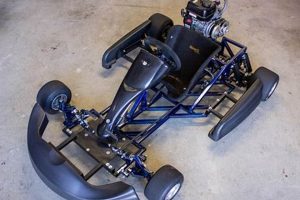
Components enabling the transformation of a gasoline-powered vehicle into one propelled by electricity are available for purchase. These collections typically contain an electric motor, battery pack, motor controller, and associated hardware necessary for adapting an internal combustion engine automobile to electric operation. The assembly and integration of these components are generally performed by the vehicle owner or a qualified mechanic.
The adoption of vehicular electrification holds potential benefits, including reduced reliance on fossil fuels and diminished emissions. Converting existing cars provides a pathway for individuals to participate in sustainable transportation without procuring entirely new electric vehicles. Historically, such endeavors were niche pursuits, but increasing interest in environmental consciousness and technological advancements have fostered wider accessibility.
The subsequent sections will delve into the considerations involved in selecting appropriate hardware, the installation process, safety protocols, and potential performance characteristics resulting from modifying a conventional vehicle to electric power. These aspects provide a holistic understanding of the practicalities and implications of pursuing this vehicular modification.
Essential Considerations for Electric Vehicle Retrofitting
The process of adapting an existing gasoline-powered vehicle to electric propulsion requires careful planning and execution. The following points offer guidance to ensure a successful and safe transformation.
Tip 1: Assess Vehicle Suitability: Evaluate the donor vehicle’s structural integrity and overall condition. Vehicles with compromised frames or extensive rust may not be suitable for conversion. Consider the vehicle’s weight distribution, as battery placement will significantly impact handling.
Tip 2: Define Performance Goals: Determine desired range, top speed, and acceleration characteristics. These parameters will influence the selection of motor, battery pack, and controller specifications. Accurately projecting these needs is crucial for cost-effective component selection.
Tip 3: Battery Selection is Paramount: Research different battery chemistries (e.g., Lithium-ion, LiFePO4) and their associated energy density, lifespan, and safety characteristics. The battery pack’s voltage should be compatible with the chosen motor and controller. Consider thermal management solutions to maintain optimal battery performance and longevity.
Tip 4: Motor and Controller Matching: Select an electric motor and controller combination with sufficient power output for the vehicle’s weight and intended use. Ensure the controller can handle the motor’s voltage and current demands. Opt for a reputable manufacturer with established support resources.
Tip 5: Wiring and Safety Protocols: Implement robust wiring practices with appropriate gauge wires and secure connections. Install a reliable fuse and circuit breaker system to protect against electrical overloads and short circuits. Prioritize high-voltage safety precautions during all stages of the conversion process.
Tip 6: Documentation and Compliance: Maintain detailed records of all components used, wiring diagrams, and modifications made to the vehicle. Research and comply with local regulations and inspection requirements pertaining to electric vehicle conversions. Proper documentation facilitates future maintenance and potential resale.
Tip 7: Professional Consultation: Consult with experienced electric vehicle conversion specialists or engineers. Their expertise can provide valuable insights, prevent costly errors, and ensure the project adheres to best practices and safety standards.
Adherence to these guidelines will significantly enhance the likelihood of a successful vehicle electrification project. Thorough preparation and meticulous execution are essential for achieving the desired performance and ensuring the safety and reliability of the converted vehicle.
The subsequent discussion will focus on potential challenges encountered during the implementation phase and strategies for mitigating such obstacles.
1. Component Compatibility

Effective integration of disparate systems represents a central challenge in transforming a gasoline-powered vehicle into an electric one. The successful operation of this modified vehicle hinges on the harmonious interaction between each constituent part. This is especially critical when the parts are collected piece meal for the “diy electric car conversion kit”.
- Motor and Controller Synchronization
The electric motor and its corresponding controller must be precisely matched in terms of voltage, current, and operating characteristics. Incompatibility can lead to reduced performance, overheating, or outright failure of either component. For instance, a motor demanding higher voltage than the controller can provide will underperform and potentially sustain damage.
- Battery Management System (BMS) Integration
The BMS monitors and regulates the battery pack’s voltage, current, and temperature. It must communicate effectively with the motor controller to prevent overcharging, over-discharging, and thermal runaway. An improperly integrated BMS can lead to reduced battery lifespan, performance degradation, and increased safety risks.
- Wiring Harness Compatibility
The wiring harness must be appropriately sized to handle the current demands of the electric motor, controller, and other high-voltage components. Inadequate wiring can result in voltage drops, increased resistance, and potential fire hazards. The selection of connectors and wiring materials should adhere to established automotive standards.
- Mechanical Adaptation
The electric motor must be mechanically compatible with the vehicle’s existing drivetrain. This often requires custom adapter plates or modifications to the transmission or axle. Improper mechanical adaptation can lead to vibration, misalignment, and premature wear of drivetrain components.
The selection of components necessitates rigorous consideration of their operational parameters and interdependencies. Errors in selection or integration can undermine the overall efficiency, safety, and reliability of the converted vehicle. Therefore, meticulous planning and verification are paramount.
2. Battery Energy Density

Battery energy density is a crucial parameter dictating the viability and practicality of projects aimed at converting conventional vehicles to electric propulsion. It directly influences the vehicle’s range, weight, and overall performance characteristics. The selection of a battery with appropriate energy density is therefore a c
ritical decision in the planning stages of an electric vehicle conversion.
- Range Maximization
Higher energy density translates directly to greater driving range for a given battery pack size and weight. This is paramount for ensuring the converted vehicle meets practical transportation needs. For example, a battery with 200 Wh/kg will provide significantly longer range than one with 100 Wh/kg, assuming the same pack weight. The desired range influences the total battery capacity required, subsequently affecting vehicle payload capacity.
- Weight Implications
Lower energy density necessitates a larger and heavier battery pack to achieve the same range. This increased weight negatively impacts vehicle handling, acceleration, and energy efficiency. Furthermore, the added weight may require modifications to the vehicle’s suspension and chassis to maintain safe operating parameters. Achieving a favorable power-to-weight ratio is dependent on utilizing batteries with high energy density.
- Cost Considerations
Generally, batteries with higher energy density command a premium price. The trade-off between range, weight, and cost must be carefully evaluated. Lower energy density batteries might present an initial cost saving, but their increased weight and reduced range could lead to increased operational costs and diminished overall utility. A comprehensive cost-benefit analysis is therefore recommended.
- Technological Advancements
Ongoing research and development efforts are continually pushing the boundaries of battery energy density. Emerging battery chemistries promise significant improvements in energy density, potentially enabling longer range and lighter weight electric vehicle conversions in the future. Keeping abreast of these advancements is essential for optimizing the performance and longevity of the converted vehicle.
The selection of battery technology is deeply intertwined with the overall success of converting a gasoline-powered vehicle to electric power. Balancing the factors of range, weight, cost, and technological maturity is a critical element in creating a functional and efficient electric vehicle conversion.
3. Motor Power Rating

The motor power rating serves as a cornerstone in the design and implementation of vehicular transformations, impacting performance metrics and overall feasibility. The selection of an electric motor with an appropriate power rating is fundamental to achieving the desired performance characteristics and operational capabilities.
- Acceleration and Performance
The electric motor’s power rating directly influences the vehicle’s acceleration capabilities and its ability to maintain speed under varying load conditions, such as inclines or with passengers. A motor with insufficient power will result in sluggish acceleration and reduced hill-climbing ability. Conversely, an excessively powerful motor may introduce unnecessary weight and potentially compromise energy efficiency. The conversion’s success is intrinsically linked to selecting a motor that aligns with the targeted performance profile.
- Torque Delivery
Torque, closely related to power, is crucial for overcoming initial inertia and maintaining momentum. Electric motors are known for their ability to deliver high torque at low speeds, but the motor’s power rating dictates the maximum torque output. A higher power rating enables the motor to sustain higher torque levels across a broader speed range, contributing to improved responsiveness and driveability. The selection process should include evaluating the motor’s torque curve to ensure it meets the demands of the intended application.
- Energy Consumption
The motor’s power rating correlates with its energy consumption. A higher-powered motor will generally consume more energy, especially under demanding driving conditions. While a more powerful motor may provide superior performance, it can also lead to reduced range and increased battery drain. Optimizing the motor’s power rating is therefore essential for balancing performance with energy efficiency. Proper selection contributes to achieving a viable balance between performance and energy efficiency for the modified vehicle.
- Component Sizing and Integration
The motor’s power rating dictates the sizing of other essential components, such as the motor controller, wiring harness, and battery pack. A higher-powered motor requires a more robust controller and wiring system to handle the increased current demands. Similarly, the battery pack must be sized appropriately to provide sufficient energy to power the motor without exceeding its discharge limits. Careful coordination is necessary to ensure compatibility and optimal performance of the entire electric propulsion system.
Therefore, the selection of an electric motor with the optimal power rating is paramount. Accurate assessment of performance requirements, energy efficiency targets, and component compatibility is vital for realizing the intended goals. Through comprehensive consideration, a practical and effective vehicular transformation can be achieved.
4. Safety System Integrity

The practice of converting internal combustion engine vehicles to electric propulsion necessitates stringent adherence to safety protocols, particularly concerning electrical isolation and circuit protection. The integrity of these safety systems is of paramount importance due to the high voltages and currents involved. Any failure in these systems can lead to severe consequences, including electrical shock, fire, and component damage. Therefore, proper design, implementation, and testing of safety features are non-negotiable aspects of vehicular electrification. Example: Use of high voltage fuse, high voltage wire, orange color wire cover. Without this basic component it can cause safety issue that might fatal.
Specifically, within the realm of do-it-yourself vehicular electrification, maintaining safety system integrity presents a unique set of challenges. Unlike professionally manufactured electric vehicles, conversions often involve integrating components from various sources, potentially leading to compatibility issues and unforeseen electrical behaviors. For instance, the integration of a battery management system (BMS) is crucial to prevent overcharging or over-discharging, but if not correctly integrated it may cause unexpected behavior. It is imperative that individuals undertaking these conversions possess the necessary knowledge and expertise to design and implement robust safety measures, or seek guidance from qualified professionals.
In conclusion, while the appeal of converting existing vehicles to electric power offers a potentially cost-effective and environmentally conscious alternative to purchasing new electric vehicles, it is imperative that individuals recognize the critical role of safety system integrity. Comprehensive design, careful implementation, and regular verification of these systems are essential for ensuring the safe and reliable operation of the converted vehicle. Ignoring these facets exposes individuals and surrounding entities to unnecessary hazards, therefore, is avoided.
5. Vehicle Suitability
The successful integration of a do-it-yourself electric car conversion hinges critically on the selection of an appropriate donor vehicle. Vehicle suitability encompasses factors such as structural integrity, existing weight distribution, and available space for the new electric drivetrain components. A vehicle with significant corrosion or a compromised frame may not provide a safe or reliable platform for conversion, leading to structural instability and potential component failure. Conversely, a robust and well-maintained vehicle offers a solid foundation, facilitating a more straightforward and predictable conversion process. The initial assessment of the vehicles condition directly influences the long-term viability and safety of the electrified system.
Specific examples illustrate this connection. A lightweight sports car might offer improved performance due to lower overall weight after conversion, but its limited space could restrict battery pack size and therefore reduce driving range. Conversely, a larger sedan or SUV may provide ample room for batteries and components, but its increased weight could necessitate a more powerful (and costly) motor to maintain acceptable performance. The original design and purpose of the vehicle exert considerable influence on the trade-offs involved in balancing range, performance, and component selection. A careful evaluation of these factors is essential to avoid significant performance compromises or unforeseen engineering challenges.
In summary, vehicle suitability is an indispensable consideration when undertaking an electric vehicle conversion. Neglecting this aspect can lead to increased project complexity, higher costs, and potentially unsafe operating conditions. A thorough assessment of the donor vehicles structural integrity, weight distribution, and available space is crucial for selecting appropriate components and ensuring a successful and safe transformation. Prioritizing vehicle suitability at the outset mitigates risks and enhances the likelihood of a functional and reliable electric vehicle conversion.
6. Regulatory Compliance
The intersection of altering a vehicle’s propulsion system and adherence to governmental standards constitutes a significant facet of vehicular transformations. Regulatory compliance dictates permissible modifications, emission standards, and safety requirements that must be satisfied following an electric conversion. Failure to conform to these regulations can result in legal penalties, vehicle impoundment, and difficulties in obtaining insurance coverage. These standards may vary significantly by jurisdiction, requiring thorough investigation prior to commencing the conversion. For example, some regions mandate specific battery safety certifications or require inspections to verify adherence to electrical safety codes. The lack of verifiable conformance can result in significant expenditure for re-engineering or legal contestations.
Compliance extends beyond simple adherence to established guidelines; it embodies a commitment to ensuring the safety of both the vehicle’s operator and the general public. Modifications affecting vehicle handling, braking, or structural integrity are subject to stringent evaluation to prevent potential hazards. Further complicating this, registration of a converted vehicle may necessitate providing detailed documentation of all modifications, including schematics of the electrical system, component specifications, and proof of compliance with applicable safety standards. The level of detail required for such documentation underscores the importance of meticulous record-keeping throughout the conversion process. An incomplete or inaccurate documentation can lead to registration rejection, requiring additional effort to correct or even undo a part of work that may not be possible, or incur a significant fee.
In essence, regulatory compliance constitutes an integral component of electric vehicle conversions. Ignoring these directives can result in severe legal and financial ramifications, undermining the project’s intended benefits. A comprehensive understanding of local and national regulations, coupled with meticulous documentation and adherence to safety protocols, represents a crucial element of successful and legally sound vehicular electrification. These procedures provide framework to prevent the potential legal trouble and ensure that electrified vehicle meets all existing requirements.
Frequently Asked Questions
This section addresses common inquiries regarding the process of modifying a conventional automobile for electric propulsion. The following information aims to clarify practical considerations and potential challenges.
Question 1: Is prior automotive experience required to undertake a do-it-yourself electric car conversion?
A foundational understanding of automotive mechanics and electrical systems is highly recommended. While not strictly mandatory, a lack of familiarity with these domains can significantly increase the complexity and potential safety risks associated with the conversion process. Consulting with experienced professionals is advised for individuals lacking relevant expertise.
Question 2: What is the typical cost associated with converting a gasoline-powered vehicle to electric operation?
The expense varies substantially based on factors such as component quality, battery capacity, and the complexity of the conversion. A conservative estimate ranges from $5,000 to $20,000 USD. Battery packs typically represent the most significant cost component. Thorough budgeting and component selection are critical for managing project expenditures.
Question 3: How does converting to electric propulsion impact vehicle range?
The achievable range is directly correlated with the capacity of the battery pack installed. Factors such as driving habits, vehicle weight, and environmental conditions also influence range. Careful planning is essential to ensure the battery capacity aligns with anticipated driving needs.
Question 4: What safety considerations are paramount during a do-it-yourself electric car conversion?
High-voltage safety protocols are of utmost importance. Working with improperly insulated or connected high-voltage components can pose a significant electrocution risk. Utilizing appropriate safety equipment, such as insulated gloves and tools, and adhering to established electrical safety practices are essential. Disconnecting the battery pack is advised when not actively working on the high-voltage system.
Question 5: Will converting a vehicle to electric operation void its original manufacturer’s warranty?
Yes, any modifications to the vehicle, including an electric conversion, will typically void the manufacturer’s warranty. The original manufacturer is not responsible for issues arising from alterations to the vehicle’s design or components. Thoroughly consider the implications of warranty invalidation prior to commencing the conversion.
Question 6: What documentation is necessary when converting a vehicle to electric propulsion?
Comprehensive documentation is essential for regulatory compliance and future maintenance. This includes detailed schematics of the electrical system, specifications of all components used, and records of all modifications made to the vehicle. Maintaining thorough documentation facilitates i
nspections, registration, and troubleshooting.
These inquiries represent a subset of the considerations involved in vehicular electrification. Careful planning, adherence to safety protocols, and a realistic assessment of project costs are essential for a successful conversion.
The subsequent section will explore advanced topics related to optimizing performance and extending the lifespan of converted electric vehicles.
Concluding Remarks
The preceding discussion has explored diverse facets of transitioning a conventional automobile to electric power through component collections. The evaluation encompassed component selection, safety considerations, regulatory compliance, and potential performance characteristics. It is evident that successful application requires diligent planning, technical proficiency, and adherence to established safety protocols. The pursuit of this undertaking necessitates a comprehensive understanding of electrical and mechanical systems, as well as a realistic assessment of project costs and resource allocation.
As technology advances and the demand for sustainable transportation solutions intensifies, vehicular electrification remains a compelling avenue. Prospective implementers are urged to approach this endeavor with thorough preparation, prioritizing safety and regulatory compliance. The future viability of this transportation mode hinges on responsible implementation and ongoing technological refinement. Pursuing it with informed diligence enhances the likelihood of a successful and environmentally conscious outcome.