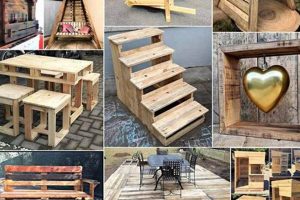
Constructing storage solutions and decorative items from unfinished lumber boxes offers a cost-effective and customizable approach to organization and aesthetics. These projects typically involve assembling pre-cut or self-sourced wooden components into a desired configuration, often followed by sanding, staining, painting, or other embellishments to achieve a personalized finish. For example, individuals might transform repurposed containers into bookshelves, coffee tables, or vertical gardens.
The popularity of creating items in this manner stems from several factors, including the accessibility of materials, the potential for cost savings compared to purchasing finished goods, and the satisfaction of crafting a unique item. Historically, wooden containers have served a fundamental role in storage and transport, and their modern iteration as crafting components allows for a blend of practicality and creative expression. The resulting objects can reflect individual style and address specific storage or display needs within a home or business.
The following sections will delve into the specific techniques, materials, and design considerations relevant to successful construction and finishing, providing a detailed guide for undertaking projects of this type. Key areas of focus will include wood selection, joinery methods, finishing options, and creative applications, all contributing to a comprehensive understanding of how to create functional and visually appealing pieces.
Tips for Projects Using Unfinished Lumber Boxes
Successful projects utilizing unfinished lumber boxes require careful planning and execution. These tips provide guidance on achieving optimal results, focusing on structural integrity and aesthetic appeal.
Tip 1: Material Selection is Paramount: Prioritize selecting wood free from excessive knots or warping. The wood’s grade directly impacts the project’s structural stability and the ease of finishing. Consider kiln-dried lumber for interior applications to minimize dimensional changes over time.
Tip 2: Proper Joinery Ensures Longevity: Employ appropriate joinery techniques such as screws, nails, or wood glue to create secure connections. Pre-drilling pilot holes prevents splitting, especially when working with hardwoods. Choose fasteners appropriate for the wood’s density and the intended load.
Tip 3: Sanding is Essential for a Smooth Finish: Thoroughly sand all surfaces before applying any finish. Start with a coarser grit sandpaper (e.g., 80-grit) to remove imperfections and progressively move to finer grits (e.g., 220-grit) for a smooth surface. Remove all sanding dust prior to finishing.
Tip 4: Strategic Finishing Enhances Durability and Aesthetics: Select a finish appropriate for the intended use. Options include paint, stain, varnish, and polyurethane. Apply multiple thin coats for a more durable and even finish, allowing sufficient drying time between coats.
Tip 5: Reinforce Structural Weak Points: Evaluate the intended load and reinforce any areas of concern. Adding corner brackets or additional bracing can significantly improve the structure’s stability and prevent premature failure, particularly for projects intended to support heavy items.
Tip 6: Consider Functionality During Design: Before commencing construction, consider the intended purpose and user interaction with the piece. Incorporating features like handles, dividers, or drawers can enhance the item’s practicality and user-friendliness.
Tip 7: Prioritize Accurate Measurements: Accurate measurements are crucial to project success. Double-check all measurements and cuts to ensure that the component pieces fit together properly. Use a precision measuring tool for optimal accuracy.
Adhering to these principles enhances the overall quality and longevity of projects created from unfinished lumber boxes. Thoughtful material selection, robust construction methods, and appropriate finishing techniques yield functional and aesthetically pleasing results.
The subsequent section will examine the diverse applications and innovative design possibilities achievable through projects using unfinished lumber boxes, showcasing their versatility and creative potential.
1. Wood Selection

Wood selection represents a foundational decision in projects involving the assembly and modification of unfinished wooden containers. The species chosen directly impacts the container’s structural integrity, longevity, and suitability for its intended purpose. For instance, using softwood, such as pine, for a container intended to support heavy items risks structural failure due to the material’s inherent lower density and resistance to compression. Conversely, a hardwood like oak, while offering superior strength, may be unnecessarily costly and difficult to work with for lightweight decorative applications. The selection process necessitates careful consideration of the container’s anticipated load, environmental exposure, and desired aesthetic.
The type of wood also influences the finishing process. Softwoods tend to absorb stain unevenly, requiring pre-treatment with a wood conditioner to ensure a uniform color. Hardwoods, due to their tighter grain, often accept stain more consistently but may require more effort during sanding and preparation. Furthermore, the presence of knots, grain patterns, and natural imperfections in the wood impacts the overall visual appeal of the finished container. Repurposed lumber introduces additional considerations, such as the presence of old fasteners, existing finishes, and potential damage, all of which require mitigation during the preparation phase. Successful projects often hinge on selecting a wood species that balances cost-effectiveness, workability, and suitability for the intended application.
In summary, wood selection is not merely a preliminary step but a critical determinant of the overall success and durability of projects utilizing unfinished wooden containers. The material’s inherent properties dictate its structural capabilities, influence the finishing process, and contribute significantly to the container’s final aesthetic. A thorough understanding of wood species characteristics and their interaction with various treatments is essential for crafting durable and visually appealing pieces. The choices made at this stage resonate throughout the project lifecycle, impacting both the ease of construction and the long-term performance of the container.
2. Joinery Method

The selection and execution of appropriate joinery methods are paramount to the structural integrity and longevity of any creation using unfinished wooden containers. The connection between method of assembly and the object’s stability is direct: inadequate joinery results in weakened structures prone to failure under stress or load. For example, a container assembled using only nails at the corners, without the reinforcement of glue or interlocking joints, will likely separate over time, especially if subjected to frequent movement or weight.
Various joinery options exist, each with differing levels of complexity and strength. Butt joints, while simple to execute, offer minimal resistance to racking forces and are best suited for purely decorative containers with little structural demand. Lap joints, where one piece overlaps another, provide increased surface area for adhesive bonding and offer improved stability. Mortise and tenon joints, characterized by a projecting tenon fitting into a corresponding mortise, represent a stronger option, particularly useful for containers intended to bear substantial weight or withstand significant stress. The choice of joinery method should align with the intended use and the expected demands placed on the finished object. For instance, containers repurposed as seating or storage for heavy items necessitate robust joinery techniques to ensure user safety and prevent structural collapse. Miter joints, offering clean, aesthetically pleasing corners, often require reinforcement with splines or biscuits to enhance their strength, as the end-grain bonding surface is inherently weak. Using pocket screws, especially for beginners, can be a good choice due to its strength and can be easily assembled.
In summation, the selection of a suitable joinery method is not merely an aesthetic consideration but a critical engineering decision. The chosen technique directly dictates the container’s ability to withstand stress, resist deformation, and maintain its structural integrity over time. A thorough understanding of the strengths and limitations of various joinery options, coupled with careful execution, is essential for creating durable and functional pieces from unfinished wooden containers. Ignoring this connection can result in unstable, unsafe, and ultimately unsatisfactory results. Addressing the right joinery from the beginning makes a high potential for a sturdy and visually appealing structure.
3. Sanding Technique
Surface preparation through sanding is a crucial stage in projects involving unfinished wooden containers, significantly influencing the quality and appearance of the final product. Proper sanding removes imperfections, creates a smooth surface for finishing, and ensures optimal adhesion of paints, stains, or sealants. A poorly sanded surface can result in uneven finishes, visible scratches, and reduced durability.
- Grit Progression and Abrasive Selection
The systematic progression through different sandpaper grits is essential for achieving a flawless surface. Starting with a coarse grit (e.g., 80-grit) removes significant imperfections and levels the surface, followed by progressively finer grits (e.g., 120-grit, 180-grit, 220-grit) to refine the surface and eliminate scratches left by the previous grit. Selecting the appropriate abrasive material is equally important; sandpaper with aluminum oxide is suitable for general sanding, while silicon carbide sandpaper is preferred for wet sanding or working with finishes. Using the correct grit sequence and abrasive material prevents excessive material removal and ensures a uniform surface texture.
- Sanding Direction and Grain Orientation
Sanding with the grain is critical for minimizing scratches and achieving a smooth finish. Sanding against the grain can create visible scratches that are difficult to remove, especially on softwoods. Maintaining a consistent sanding direction, parallel to the wood grain, ensures a uniform surface texture and minimizes the risk of cross-grain scratches. When sanding edges or corners, careful attention is required to avoid rounding over sharp edges, which can detract from the overall aesthetic. Employing techniques like using a sanding block or guiding the sandpaper along the edge helps maintain the desired profile.
- Sanding Tools and Techniques
Various sanding tools are available, each suited for different tasks and surface areas. Hand sanding is ideal for small areas, intricate details, and achieving a controlled finish. Power sanders, such as orbital sanders or belt sanders, are more efficient for larger surfaces but require careful handling to avoid uneven sanding or gouging. Proper sanding technique involves applying consistent pressure, maintaining a flat sanding surface, and overlapping each pass to ensure complete coverage. Regularly cleaning the sandpaper or sanding pad prevents clogging and maintains optimal sanding efficiency.
- Dust Control and Safety Precautions
Sanding generates significant amounts of dust, which can be harmful if inhaled. Proper dust control is essential for protecting the user’s health and maintaining a clean working environment. Wearing a dust mask or respirator is crucial for preventing inhalation of fine particles. Using a vacuum cleaner or dust collection system to remove dust from the surface and surrounding area further minimizes exposure. Sanding in a well-ventilated area also helps to reduce dust concentration. Safe sanding practices prevent respiratory irritation and ensure a more comfortable and productive working experience.
In conclusion, sanding technique, encompassing grit progression, sanding direction, tool selection, and dust control, significantly impacts the outcome of projects involving unfinished wooden containers. Implementing appropriate sanding practices yields a smooth, flawless surface that enhances the appearance and durability of the finished product. Prioritizing these elements ensures a professional finish and contributes to the overall success of the project.
4. Finishing Choice

The selection of a suitable finish for a wooden crate directly influences its aesthetic appeal, durability, and functionality. The chosen finish acts as a protective barrier against moisture, UV radiation, and physical abrasions, thus extending the crate’s lifespan. The wrong finishing choice can lead to premature degradation, discoloration, or structural damage. For example, a crate intended for outdoor use and finished with an interior-grade varnish will likely suffer from cracking and peeling due to its inability to withstand the elements. Conversely, a crate designed for storing delicate items may benefit from a non-toxic, low-VOC finish to prevent chemical off-gassing and potential damage to its contents.
The desired aesthetic also significantly influences the finishing decision. Options range from clear sealants that highlight the natural wood grain to opaque paints that provide complete coverage and color customization. Stain is commonly used to alter the wood’s tone while allowing the grain pattern to remain visible. Each option necessitates specific preparation techniques and application methods. For example, staining requires thorough sanding to ensure even penetration and color distribution, while painting may involve priming to improve adhesion and prevent bleed-through. Consider a wooden crate intended for use as a rustic display piece; a distressing technique combined with a matte varnish might be chosen to achieve the desired aged appearance. Conversely, a crate used for organizing children’s toys might be painted with a durable, semi-gloss enamel for easy cleaning and resistance to wear.
Ultimately, the finishing choice represents a critical step in the creation process. It is the culmination of functional and aesthetic considerations, directly impacting the crate’s performance and visual appeal. A well-informed decision, based on the intended use, environmental factors, and desired aesthetic, is essential for maximizing the value and longevity of any wooden crate creation. Neglecting the importance of the finish can negate the benefits of careful wood selection and precise joinery, resulting in a product that falls short of its intended purpose.
5. Structural Reinforcement
Structural reinforcement is a critical consideration in the construction and modification of wooden crates, directly impacting their load-bearing capacity, stability, and overall lifespan. Insufficient reinforcement can lead to premature failure, particularly when the crate is subjected to heavy loads or frequent handling. The absence of proper support mechanisms, such as corner bracing or internal dividers, can result in deformation or collapse under stress. For instance, a crate constructed from thin lumber and lacking reinforcement is unlikely to withstand the weight of books or tools, rendering it unsuitable for practical storage purposes. The addition of strategically placed supports, however, redistributes the load and enhances the crate’s ability to bear weight without compromising its structural integrity.
Common methods of structural reinforcement include the application of metal brackets at joints, the insertion of wooden cross-members, and the use of adhesives to augment mechanical fasteners. Corner brackets provide resistance against racking forces, preventing the crate from distorting under lateral pressure. Internal dividers not only compartmentalize the storage space but also contribute to the crate’s rigidity, preventing bowing or sagging of the sides or bottom. High-strength adhesives, when used in conjunction with screws or nails, create a more robust bond between components, increasing the overall strength of the assembly. Consider a repurposed crate intended for use as a coffee table; without adequate reinforcement, the legs may buckle under the weight of objects placed on the surface. Reinforcing the legs with metal brackets and adding a solid bottom panel distributes the load more evenly and ensures the table’s stability.
In conclusion, structural reinforcement is an indispensable element in the design and construction of durable and functional wooden crates. The selection of appropriate reinforcement techniques depends on the intended use, load requirements, and aesthetic considerations. Implementing these techniques effectively enhances the crate’s capacity to withstand stress, resist deformation, and provide reliable storage or support for its intended purpose. Neglecting structural reinforcement compromises the crate’s longevity and functionality, potentially leading to unsafe conditions or premature failure. Prioritizing the selection of structural support makes projects a more reliable and effective one.
6. Functional Design
Functional design, in the context of wooden crates, refers to the deliberate arrangement of features and construction choices to optimize usability and fulfill a specific purpose. It moves beyond mere aesthetics, prioritizing the effectiveness and practicality of the crate for its intended function. Incorporating functional design principles ensures that a crafted wooden crate is not only visually appealing but also efficient and convenient to use.
- Load-Bearing Capacity and Structural Integrity
A fundamental aspect of functional design is ensuring the crate can safely bear the anticipated load. This involves selecting appropriate wood thickness, incorporating reinforcement measures (e.g., corner bracing, internal supports), and employing robust joinery techniques. A crate intended for heavy tools requires significantly more structural integrity than one designed for lightweight decorative items. This careful consideration prevents deformation, collapse, and potential injury.
- Accessibility and Ergonomics
Functional design also encompasses ease of access and ergonomic considerations. Depending on the intended use, features such as handles, hinged lids, or sliding drawers can enhance user convenience. The placement and size of these features should be carefully considered to optimize accessibility and minimize strain. For example, a crate used for storing frequently accessed items might benefit from a hinged lid for quick and easy access, while handles can facilitate transportation and maneuverability.
- Adaptability and Modularity
A well-designed wooden crate can often be adapted or modified to suit changing needs. Modular designs, allowing crates to be stacked or interconnected, provide flexibility and expandability. Features such as removable dividers or adjustable shelves can further enhance the crate’s versatility. This adaptability extends the crate’s useful life and reduces the need for replacement, promoting sustainability.
- Environmental Considerations and Material Selection
Functional design principles also encompass environmental responsibility. Selecting sustainable materials, such as reclaimed wood or FSC-certified lumber, minimizes the crate’s environmental impact. Employing non-toxic finishes and adhesives ensures user safety and reduces potential health hazards. Furthermore, designing for disassembly and recyclability promotes responsible end-of-life management, reducing waste and conserving resources.
These facets of functional design are intricately linked in the creation of efficient and purposeful wooden crates. The consideration of load-bearing capacity, accessibility, adaptability, and environmental impact collectively contributes to a crate that is not only aesthetically pleasing but also highly functional and sustainable. Prioritizing functional design principles enhances the value and longevity of projects, ensuring that the finished product effectively meets its intended purpose while minimizing environmental impact.
Frequently Asked Questions
This section addresses common inquiries and misconceptions regarding the construction, modification, and utilization of wooden crates. The information provided aims to offer clarity and guidance for achieving successful and durable outcomes.
Question 1: What is the best type of wood to use for wooden crates?
The optimal wood selection depends on the intended use and load-bearing requirements. Softwoods, such as pine, are suitable for lightweight decorative applications. Hardwoods, like oak or maple, offer greater strength and durability for heavier loads. Pressure-treated lumber is recommended for outdoor applications to resist rot and insect infestation.
Question 2: How can wooden crates be effectively reinforced to support heavier loads?
Reinforcement strategies include the addition of corner brackets, internal supports (cross-members), and the use of high-strength adhesives in conjunction with mechanical fasteners (screws or nails). Distributing the load evenly across the crate’s structure is crucial for maximizing its weight-bearing capacity.
Question 3: What are the key steps to ensure a smooth finish on wooden crates?
Achieving a smooth finish requires a multi-stage sanding process, starting with a coarse grit sandpaper to remove imperfections, followed by progressively finer grits to refine the surface. Sanding with the grain is essential to minimize scratches. The application of a wood conditioner can improve stain absorption, particularly on softwoods.
Question 4: What are the recommended methods for preventing wooden crates from warping or cracking?
To minimize warping and cracking, select kiln-dried lumber, which has a lower moisture content. Apply a sealant or finish to protect the wood from moisture absorption and environmental changes. Avoid exposing the crate to extreme temperature fluctuations or direct sunlight.
Question 5: What safety precautions should be observed when working with tools to construct wooden crates?
Appropriate safety measures include wearing safety glasses to protect the eyes from flying debris, using a dust mask or respirator to prevent inhalation of wood dust, and operating power tools in accordance with manufacturer instructions. A well-ventilated workspace is essential to minimize exposure to dust and fumes.
Question 6: How can wooden crates be effectively customized for specific storage needs?
Customization options include adding dividers, shelves, drawers, or hinged lids to create specialized storage compartments. Painting, staining, or applying decorative finishes allows for personalization and integration with existing decor. Consider the size and shape of the items to be stored when designing the crate’s internal configuration.
In summary, these answers provide essential considerations for individuals engaging in projects involving wooden crates. By addressing wood selection, reinforcement, finishing, safety, and customization, they offer guidance for achieving durable, functional, and aesthetically pleasing results.
The subsequent section will delve into the innovative design possibilities for wooden crates, showcasing their versatility and creative applications in various settings.
DIY Wooden Crate
This exploration has dissected the elements critical to successful diy wooden crate projects. Wood selection, joinery methods, surface preparation, finishing, structural reinforcement, and functional design have been examined in detail. Each aspect contributes to the final product’s durability, aesthetic appeal, and utility. A thorough understanding of these principles enables the creation of robust and visually pleasing items.
The application of this knowledge extends beyond mere construction. Skillful creation empowers individuals to address practical storage needs and express personal artistic vision. Mastery of the diy wooden crate fosters self-sufficiency and potentially provides a platform for creative expression, highlighting the tangible benefits of thoughtful craftsmanship. Further pursuit of advanced techniques and exploration of innovative designs can yield both functional and aesthetically valuable results.