Creating custom presentation solutions for artistic endeavors, often involving the construction or modification of enclosures to enhance and protect visual works, represents a popular practice. This involves selecting materials, employing construction techniques, and applying finishing touches to produce a display element tailored to the specific dimensions and aesthetic of the artwork. For example, an individual might construct a shadow box to showcase a three-dimensional sculpture or repurpose reclaimed wood to surround a painted canvas.
The creation of bespoke enclosures offers several advantages. It allows for complete control over the visual presentation, ensuring the artwork is displayed in a manner that complements its style and subject matter. Furthermore, it can provide cost savings compared to purchasing pre-made options, particularly when dealing with unusual dimensions. Historically, crafting custom display solutions was a necessity prior to the mass production of standardized sizes, reflecting a tradition of resourceful creativity.
The subsequent sections will delve into specific methods and materials employed in the production of custom artwork enclosures, explore techniques for achieving professional-quality results, and offer guidance on selecting the appropriate approach for various types of artistic expression.
Crafting Bespoke Artwork Enclosures
The following recommendations provide valuable insights for achieving superior results when designing and constructing custom presentation solutions for visual works.
Tip 1: Material Selection is Paramount. Choosing appropriate materials is crucial to both the aesthetic and structural integrity. Consider the artwork’s medium, weight, and desired visual effect when selecting wood, metal, or alternative components. Archival-quality materials are recommended for preserving valuable artwork.
Tip 2: Precise Measurements are Indispensable. Accurate measurements are essential to avoid errors and ensure a snug fit. Measure the artwork multiple times and account for any necessary allowances, such as those for glazing or mounting hardware.
Tip 3: Employ Secure Joinery Techniques. Utilize strong and reliable joinery methods, such as mitered corners reinforced with splines or pocket-hole joinery, to create a durable and stable structure. The chosen technique should be appropriate for the selected materials and intended weight load.
Tip 4: Prioritize a Smooth Finish. A well-executed finish enhances the overall appearance and provides protection against environmental factors. Sand surfaces meticulously, apply appropriate primers, and use high-quality paints, stains, or varnishes for a professional look.
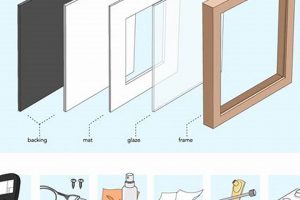
Tip 5: Consider Glazing Options Carefully. When glazing is required, select the appropriate type of glass or acrylic based on the artwork’s needs. UV-resistant options are recommended for protecting sensitive artwork from fading. Consider non-glare options to reduce reflections.
Tip 6: Hardware Placement Matters. Strategically position hanging hardware to ensure the finished piece hangs securely and evenly. Use appropriate weight-rated hardware and ensure it is properly anchored to the support structure.
Tip 7: Backing and Sealing for Preservation. Employ a backing material that protects the artwork from dust, insects, and environmental contaminants. Seal the enclosure to minimize the ingress of moisture and pollutants.
These tips collectively contribute to the creation of visually appealing and structurally sound enclosures that effectively enhance and safeguard artistic creations.
The subsequent section will address common challenges encountered during the creation of custom display solutions and offer troubleshooting strategies.
1. Material Selection

The selection of materials stands as a foundational element in the successful execution of custom artwork enclosures. The chosen materials directly influence not only the aesthetic presentation but also the structural integrity and long-term preservation of the framed artwork. Thoughtful consideration is therefore paramount.
- Durability and Longevity
The selected materials must possess adequate durability to withstand environmental factors and the passage of time. For instance, hardwoods such as oak or maple offer superior resistance to warping and cracking compared to softer woods like pine. Archival-quality materials, including acid-free matboards and UV-protective glazing, are essential for preserving delicate artwork. Neglecting durability can result in deterioration and diminished aesthetic appeal over time.
- Aesthetic Compatibility
The materials should complement the artwork’s style and subject matter. A rustic, reclaimed wood enclosure might be suitable for a landscape painting, while a sleek, minimalist metal design could better suit a contemporary abstract piece. The color, texture, and finish of the materials should harmonize with the artwork to create a cohesive visual presentation. A mismatch can detract from the artwork’s impact and create a discordant aesthetic.
- Structural Integrity and Weight
The material must be strong enough to support the artwork’s weight and dimensions. Heavier artwork may necessitate the use of denser, more robust materials such as hardwood or reinforced metal. The joinery methods employed must also be appropriate for the selected material and anticipated weight load. Inadequate structural support can lead to collapse or damage to the artwork.
- Workability and Cost
The materials should be readily workable with available tools and skills. Some materials, such as certain metals or exotic woods, may require specialized equipment or techniques. Cost is also a significant factor, and the choice of materials should be balanced against budgetary constraints. More affordable materials can be utilized effectively with careful planning and skilled craftsmanship, while premium materials may offer superior performance and aesthetic appeal at a higher cost.
In summation, mindful selection in material choices forms a critical part of crafting bespoke artwork enclosures. These choices directly relate to the artwork’s appearance, protection, and lasting value. Successful integration of materials in custom art framing demonstrates the project’s planning and skill, enhancing its overall presentation.
2. Precise Measurements

Accurate dimensional assessment is paramount in the creation of custom artwork enclosures. Deviations from correct specifications can compromise the structural integrity, aesthetic appeal, and protective function of the finished piece, rendering the effort and resources expended in its construction ineffectual.
- Ensuring a Proper Fit
Accurate dimensions are essential for ensuring the artwork fits securely within the enclosure. Measurements must account for the artwork’s height, width, and depth, as well as any necessary allowances for matting, glazing, or mounting hardware. Inaccurate measurements can result in the artwork being too loose, causing it to shift or rattle within the enclosure, or too tight, potentially damaging the artwork. For example, a painting measured imprecisely may require forceful manipulation to fit within its enclosure, leading to tears or creases.
- Maintaining Structural Integrity
Precision in measurements directly impacts the structural stability of the frame. Accurate cuts and joinery are contingent upon precise dimensional data. If the components are not cut to the exact specifications, the frame may be weak, uneven, or prone to collapse. Imagine constructing a mitered corner using inaccurate angles: the resulting joint would be weak and visually unappealing, compromising the overall integrity of the frame.
- Achieving Desired Aesthetics
Dimensional accuracy contributes significantly to the visual harmony and professional appearance of the finished artwork enclosure. Consistent and precise measurements ensure that all lines are straight, angles are accurate, and the overall proportions are pleasing to the eye. A frame with uneven sides or mismatched corners will detract from the artwork’s presentation and project an unprofessional image. Consider the visual impact of a shadow box with misaligned components, detracting from the presentation’s focal point.
- Optimizing Material Usage
Careful measurement minimizes material waste and reduces the overall cost of the project. Precise planning and cutting ensure that materials are used efficiently, avoiding unnecessary scraps and offcuts. Conversely, inaccurate measurements can lead to wasted materials, increased expenses, and potential delays in completing the project. Fabricating an incorrectly sized piece of frame molding results in unusable offcuts that add to project costs.
The foregoing demonstrates that precise measurements are not merely a procedural detail, but a fundamental prerequisite for successfully crafting bespoke artwork enclosures. Accuracy in dimensioning directly influences the functionality, aesthetics, and economic viability of the final presentation.
3. Joinery Techniques

The structural integrity and aesthetic refinement of custom artwork enclosures are fundamentally dependent on the application of appropriate joinery techniques. These methods dictate how individual components are connected to form a cohesive and durable framework, impacting both the longevity and visual appeal of the finished piece.
- Mitered Corners
Mitered corners, created by joining two pieces of material at a 45-degree angle, are a common technique employed in picture construction. This method produces a clean, seamless appearance, concealing the end grain of the materials. Accurate miter cuts and strong adhesive or mechanical fasteners are essential to ensure the joint’s strength and prevent separation over time. Imperfect miters result in unsightly gaps and structural weaknesses.
- Butt Joints
Butt joints, formed by simply abutting two surfaces together, represent a more basic joinery method. While easier to execute, butt joints generally lack the strength of other techniques and often require reinforcement through the use of screws, dowels, or metal fasteners. This method is often seen in more utilitarian or rustic frame designs where the exposed end grain is considered an aesthetic element.
- Rabbet Joints
Rabbet joints involve creating a recess or groove along the edge of one piece of material, into which another piece is inserted. This provides increased surface area for adhesion and mechanical fastening, resulting in a stronger joint. Rabbet joints are commonly used to secure the artwork and glazing within the enclosure, providing a secure and visually appealing method of containment.
- Mortise and Tenon Joints
Mortise and tenon joints, a traditional woodworking technique, involve fitting a projecting tenon from one piece of material into a corresponding mortise or hole in another. This method offers exceptional strength and durability, particularly when combined with adhesive. Mortise and tenon joints are often used in high-end or heirloom-quality artwork enclosures where longevity and robust construction are paramount.
The choice of joinery technique is contingent upon factors such as the materials used, the desired aesthetic, and the anticipated stress on the structure. Employing the correct method, executed with precision, is critical to crafting custom artwork enclosures that are both visually appealing and structurally sound.
4. Finishing Processes

Finishing processes are integral to the creation of aesthetically pleasing and durable custom artwork enclosures. These procedures, applied subsequent to construction, enhance the visual appearance, protect the underlying materials, and contribute significantly to the long-term preservation of the framed artwork.
- Surface Preparation
Surface preparation encompasses sanding, filling imperfections, and applying primers. Sanding creates a smooth, uniform surface, essential for achieving an even finish. Filling imperfections, such as nail holes or wood grain irregularities, ensures a flawless appearance. Primers create a stable base for subsequent coatings, promoting adhesion and preventing absorption of the topcoat. For instance, applying a wood filler to knot holes in pine before priming and painting results in a professional-quality finish, preventing the knots from bleeding through the paint over time. Neglecting surface preparation can lead to uneven color distribution, visible blemishes, and premature degradation of the finish.
- Color Application
Color application involves the selection and application of paints, stains, or dyes. Paints provide opaque coverage, allowing for a wide range of color options and finishes, from matte to high gloss. Stains penetrate the wood, enhancing the natural grain and adding depth of color. Dyes offer translucent color, allowing the wood’s grain to remain visible while adding subtle hues. The choice of color and application technique should complement the artwork and the surrounding environment. For example, a dark stain on an oak frame might complement a traditional landscape painting, while a bright, modern paint color might enhance a contemporary abstract piece. Inconsistent color application can result in an unprofessional and distracting appearance.
- Protective Coatings
Protective coatings, such as varnishes, lacquers, and sealants, provide a barrier against environmental factors, including moisture, UV radiation, and abrasion. Varnishes offer a durable, glossy finish that protects against scratches and spills. Lacquers provide a fast-drying, hard finish that is resistant to chemicals and solvents. Sealants protect against moisture penetration, preventing warping and decay. For example, applying a UV-resistant varnish to a wood frame can protect it from fading and discoloration caused by sunlight. Failure to apply protective coatings can lead to damage and deterioration of the artwork enclosure.
- Detailing and Refinement
Detailing and refinement encompass processes such as polishing, waxing, and antiquing. Polishing enhances the sheen and smoothness of the finish. Waxing provides additional protection and enhances the luster of the surface. Antiquing techniques, such as distressing or applying glazes, can add character and depth to the finish. For instance, applying a dark glaze to the recesses of a carved frame can accentuate the details and create a sense of age and history. Neglecting detailing and refinement can result in a lackluster or incomplete appearance.
The careful application of finishing processes significantly contributes to the creation of custom artwork enclosures that are both aesthetically pleasing and functionally durable. These steps ensure that the finished piece not only complements the artwork it houses but also provides long-lasting protection and visual appeal.
5. Display Aesthetics

Display aesthetics, referring to the visual characteristics and overall impression presented by an artwork enclosure, exerts a direct and measurable influence on the perception and appreciation of the artwork itself. In the context of custom artistic enclosures, display aesthetics transcends mere functionality, becoming an integral component of the artwork’s presentation. The design choices made during the creation of a custom enclosure, including the selection of materials, color palettes, textures, and overall form, actively shape how the artwork is viewed and interpreted. For example, a minimalist frame constructed from neutral-toned materials might enhance the perceived simplicity and elegance of a modern abstract painting, while an ornate, gilded frame could emphasize the historical significance and grandeur of a classical portrait.
The successful integration of display aesthetics within custom artwork presentation requires a thorough understanding of visual principles, including balance, proportion, contrast, and harmony. The enclosure should not compete with the artwork for attention but rather serve as a complementary element that enhances its qualities. Furthermore, the enclosure’s design should take into account the surrounding environment and the intended viewing context. A frame designed for a brightly lit gallery might not be suitable for a dimly lit private residence. The practical application of this understanding involves careful consideration of the artwork’s style, subject matter, and intended message, as well as the characteristics of the display space. By meticulously addressing these factors, creators can craft custom presentation solutions that effectively showcase and protect artistic creations.
In summation, display aesthetics constitute a critical consideration in the creation of custom presentation solutions for visual works. It is directly linked to the overall impact and interpretation of the artwork itself. Challenges in achieving optimal display aesthetics often arise from neglecting the principles of visual design or failing to consider the interplay between the enclosure, the artwork, and the surrounding environment. A comprehensive understanding of display aesthetics, coupled with meticulous attention to detail, ensures that custom artwork enclosures effectively enhance and preserve the artistic value of the pieces they contain.
Frequently Asked Questions About Custom Artwork Enclosures
This section addresses common inquiries regarding the design, construction, and application of custom display solutions for visual works.
Question 1: Is specialized equipment required for creating custom artistic enclosures?
The necessity of specialized equipment is contingent upon the complexity of the project and the materials utilized. Basic projects employing wood may require saws, measuring tools, and fastening devices. More advanced projects involving metal or intricate joinery might necessitate specialized machinery.
Question 2: What are the primary considerations when selecting glazing materials for artwork protection?
The selection of glazing materials should prioritize UV protection to mitigate fading, shatter resistance for safety, and clarity to maintain optimal visibility. Considerations should also be given to weight and potential for glare.
Question 3: How can one ensure the structural integrity of a custom-built artwork enclosure?
Structural integrity is ensured through the application of sound joinery techniques, the selection of appropriate materials based on weight and dimensions, and the use of reinforcement measures where necessary. Regular inspection for signs of stress or degradation is advisable.
Question 4: What are the recommended practices for preserving artwork within a custom enclosure?
Preservation practices include the use of archival-quality materials, the creation of a sealed environment to minimize exposure to pollutants, and the maintenance of stable temperature and humidity levels. Regular inspection for signs of damage or deterioration is also recommended.
Question 5: How can cost be effectively managed when constructing custom presentation solutions?
Cost management strategies include careful material selection, precise measurement to minimize waste, and the exploration of alternative materials or construction techniques without compromising quality or structural integrity.
Question 6: What are the key differences between using wood versus metal for custom artwork enclosures?
Wood offers aesthetic warmth and workability but may be susceptible to environmental factors. Metal provides superior strength and durability but may require specialized tools and techniques for fabrication. The choice depends on the desired aesthetic, structural requirements, and available resources.
These FAQs address fundamental concerns related to creating custom presentation solutions for visual works, providing a foundational understanding for those engaged in this practice.
The subsequent section will address common pitfalls and challenges in custom artwork enclosure projects.
Frame DIY Art
This discourse has explored the multifaceted nature of crafting custom presentation solutions for artistic works. It has underscored the importance of material selection, precise measurements, appropriate joinery techniques, meticulous finishing processes, and a keen understanding of display aesthetics. These elements, when thoughtfully integrated, culminate in enclosures that not only protect and preserve artwork but also enhance its visual impact.
As the realm of artistic expression continues to evolve, so too must the methods employed to showcase and safeguard these creations. The ability to construct bespoke presentation solutions provides artists and curators with unparalleled control over the visual narrative, ensuring that each piece is presented in its most compelling light. Continued innovation and refinement within the domain of frame diy art will undoubtedly contribute to the enduring appreciation and preservation of artistic heritage.