A structure created at home, typically from readily available materials, designed to hold and display a printed image. For instance, wood, metal, or even cardboard can be fashioned into a surround for a favorite piece of art, photograph, or informational graphic.
Constructing enclosures for wall decor provides a cost-effective and personalized method of presentation. This approach allows for customization of size, style, and materials to perfectly complement the artwork and the surrounding environment. Historically, individuals have employed self-made display solutions to enhance and protect prized visual materials, often as a practical alternative to commercially produced options.
Subsequent sections will detail the various materials suitable for such a project, outline essential construction techniques, and explore diverse aesthetic styles that can be achieved through resourceful craftsmanship.
Guidance for Handcrafting Picture Displays
The following points offer insight into maximizing the quality and longevity of a handcrafted enclosure for visual artwork.
Tip 1: Material Selection: Choose materials appropriate for the intended environment and artwork weight. Consider moisture resistance and structural integrity to prevent warping or damage over time. For instance, select kiln-dried wood over green wood to minimize dimensional changes.
Tip 2: Accurate Measurement: Precision is paramount. Measure the artwork meticulously to ensure a snug, protective fit within the fabricated structure. Account for any desired border or overlap to prevent misalignments or cutting errors.
Tip 3: Secure Fastening: Employ robust joining techniques to ensure the long-term stability of the enclosure. Wood glue, screws, or nails should be selected based on the material and joint type. Reinforce corners for added durability, especially with larger formats.
Tip 4: Surface Preparation: Properly prepare all surfaces prior to finishing. Sanding smooths imperfections and creates a receptive surface for paints, stains, or sealants. This step enhances the aesthetic appeal and prolongs the finish’s lifespan.
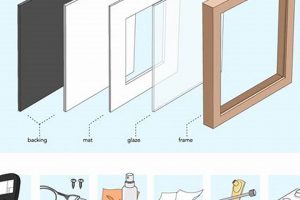
Tip 5: Protective Backing: Include a rigid backing board to support the artwork and protect it from dust and damage. Acid-free foam core or archival cardboard are preferable options to prevent degradation of the displayed piece.
Tip 6: Hanging Hardware: Select appropriate hanging hardware based on the weight of the completed structure and the wall type. Ensure secure attachment to prevent accidental falls or damage to the wall surface. D-rings and picture wire offer adjustability and stability.
Tip 7: Leveling Considerations: When mounting, utilize a level to ensure the display is perfectly aligned. Slight adjustments can significantly improve the overall aesthetic impression and prevent visual distractions.
Adhering to these guidelines enhances the longevity and visual impact of self-made displays, ensuring proper preservation and presentation of valued artwork.
The subsequent section will address specific construction techniques and aesthetic considerations for achieving diverse visual styles.
1. Material Selection
Material selection forms a cornerstone of handcrafted artwork enclosures, directly influencing structural integrity, aesthetic appeal, and longevity. The choice of materials extends beyond mere availability, requiring careful consideration of functional and visual properties.
- Wood Type
The selection of wood dictates the frame’s durability and visual character. Hardwoods like oak or maple provide strength and resistance to wear, suitable for larger or frequently handled displays. Softwoods such as pine offer affordability and ease of workability but may require additional surface protection. Wood choice impacts both the functional lifespan and the perceived value of the finished product.
- Metal Composition
Metal options, including aluminum or steel, offer alternatives emphasizing modern aesthetics and structural strength. Aluminum provides lightweight corrosion resistance, ideal for humid environments. Steel delivers superior strength and can be finished with various coatings to achieve specific visual effects or prevent rust. Metal choices present challenges regarding joining techniques and require specialized tools.
- Alternative Synthetics
Synthetic materials like acrylic or PVC present options for cost-effectiveness and moisture resistance. Acrylic offers transparency for protective glazing, while PVC provides a lightweight, water-resistant frame structure. These materials often require specialized adhesives and cutting tools, and their long-term durability may differ from traditional materials.
- Adhesive Properties
The adhesive used in joint construction significantly affects the enclosure’s stability. Wood glues, epoxy resins, or specialized construction adhesives must be selected based on material compatibility and joint type. Improper adhesive selection leads to joint failure and structural instability, compromising the overall quality and lifespan of the handcrafted display.
These facets demonstrate that material selection is more than a rudimentary decision; it is a critical determinant of a project’s success. Appropriate material selection ensures structural integrity, aesthetic alignment, and long-term viability of handcrafted artwork enclosures, underscoring the importance of informed choices in the construction process.
2. Joint Construction
The integrity of a handcrafted enclosure for artwork hinges significantly on the methods employed for joint construction. This aspect dictates structural stability and long-term durability. Inadequately constructed joints can lead to separation, warping, or complete failure of the framework, jeopardizing the displayed artwork. For instance, a butt joint, where two pieces of material are simply attached end-to-end, offers minimal strength compared to a mortise-and-tenon joint, which interlocks the pieces for enhanced stability. Therefore, joint construction constitutes a critical component in creating a lasting and visually appealing presentation.
Several factors influence the selection of appropriate joint construction techniques. The type of material, the dimensions of the enclosure, and the intended aesthetic all play a role. For example, a metal structure may necessitate welding or the use of specialized fasteners, whereas a wooden build can utilize wood glue, screws, dowels, or more complex joinery methods. A larger or heavier piece of artwork requires stronger joints to distribute weight effectively and prevent sagging. The choice of joint also impacts the visual appeal; a seamless miter joint offers a cleaner, more refined look compared to a basic overlapping joint.
In summary, joint construction is an indispensable element in the successful creation of self-made displays. Careful consideration of materials, dimensions, and aesthetics, coupled with the selection of appropriate and robust joining techniques, ensures a durable, visually pleasing, and protective enclosure for valued artwork. Addressing the challenges inherent in joint constructionsuch as achieving precise angles, ensuring proper adhesion, and maintaining structural integritycontributes directly to the overall quality and longevity of the finished product. This understanding aligns with the broader theme of thoughtful and resourceful craftsmanship in home dcor.
3. Surface Finishing
Surface finishing significantly influences both the aesthetic appeal and the longevity of a structure designed to encase and display visual artwork. This process encompasses a range of techniques aimed at protecting the material from environmental factors, enhancing its visual characteristics, and preparing it for prolonged use. The quality of this finishing directly impacts the perceived value and durability of the self-made presentation solution. For instance, an unfinished wooden structure is vulnerable to moisture absorption, leading to warping and potential decay, whereas a properly sealed and finished structure resists these effects and maintains its structural integrity for an extended period. Similarly, a structure with a rough, uneven surface detracts from the displayed artwork, while a smooth, professionally finished surface enhances its visual impact.
Various methods can be employed to achieve the desired finish. Painting offers a broad range of color options and levels of sheen, allowing for customization to complement the artwork and the surrounding environment. Staining enhances the natural grain of wood, providing a warm and inviting aesthetic. Sealing protects the material from moisture and UV damage, extending its lifespan. The choice of method should align with the material used and the intended aesthetic. For example, a structure built from reclaimed wood may benefit from a clear sealant to protect it while preserving its rustic character, while a structure made from MDF might require priming and painting to achieve a smooth, uniform finish.
Effective surface finishing is a critical step in the construction of durable and visually pleasing display structures. It provides protection against environmental damage, enhances the aesthetic appeal, and contributes to the overall perceived value of the finished product. Neglecting this step can compromise the structural integrity and visual impact, diminishing the value of both the structure and the artwork it contains. Therefore, proper planning and execution of surface finishing techniques are essential for achieving professional-quality results.
4. Artwork security
The preservation of displayed material constitutes a primary function of any enclosure, especially those constructed at home. Self-made structures must safeguard the artwork from physical damage, environmental factors, and potential theft. A failure in design or construction can result in irreversible harm to the contents. For instance, the absence of a rigid backing board can cause warping or creasing of posters, while inadequate sealing exposes them to moisture, leading to discoloration or mold growth. Similarly, flimsy hanging mechanisms increase the risk of the structure falling, resulting in both enclosure and artwork damage. Artwork security, therefore, exists as a non-negotiable component of successful handcrafting endeavors.
Effective methods for ensuring the protection of displayed items include the selection of archival-quality materials for backing boards and mounting. Acid-free foam core or museum board minimizes the risk of chemical degradation over time. Secure fastening mechanisms, such as locking hardware or tamper-evident screws, deter unauthorized removal. The inclusion of UV-filtering glazing mitigates fading caused by sunlight exposure. Proper sealing of the enclosure prevents the ingress of dust, insects, and moisture. These measures contribute significantly to the longevity and preservation of the displayed artwork.
In summary, integrating security considerations into the design and construction phases is essential for a diy enclosure. Failure to prioritize artwork security undermines the purpose of the structure and exposes valuable items to potential damage or loss. By employing appropriate materials, construction techniques, and security measures, individuals can create protective and aesthetically pleasing display solutions, thereby safeguarding their artwork for future enjoyment. This understanding underpins the importance of meticulous planning and execution in the realm of handcrafting projects.
5. Hanging method
The means by which a self-made enclosure for artwork is affixed to a wall directly influences its stability, visual presentation, and the safety of its surroundings. An improperly chosen or executed hanging method can lead to structural failure, resulting in damage to both the display and the displayed artwork, as well as potential injury. A light structure utilizing a single, small nail on drywall, for instance, risks detachment if the artwork’s weight exceeds the nail’s capacity. Conversely, a heavy structure requires robust hardware, such as D-rings and picture wire, combined with secure wall anchors to distribute weight effectively and prevent slippage or collapse. Therefore, careful consideration of the hanging method is paramount in the design and implementation of any constructed display solution.
Several factors dictate the appropriate hanging approach. The weight of the structure and artwork is the primary consideration. The wall type whether drywall, plaster, or masonry necessitates different types of anchors and fasteners. The desired aesthetic also plays a role; concealed hanging systems offer a cleaner look but may require more complex installation. For example, a large, wooden structure containing a framed photograph would necessitate heavy-duty D-rings attached to the frame’s vertical supports, connected by picture wire to a robust hook secured to a wall stud. Alternatively, for lighter displays, adhesive hanging strips may suffice, provided they are rated for the structure’s weight and are applied to a clean, smooth surface. The choice involves balancing aesthetic preferences with practical requirements for stability and security.
In summary, the hanging method is an integral component of a successful handmade enclosure. It directly affects the structural integrity, visual presentation, and safety of the display. By carefully assessing weight, wall type, aesthetic preferences, and security needs, individuals can select and implement hanging solutions that ensure long-term stability and prevent potential damage or injury. This comprehensive approach underscores the importance of thorough planning and execution in all aspects of construction projects, particularly those involving wall-mounted displays.
6. Cost efficiency
The appeal of creating enclosures for printed images stems significantly from budgetary considerations. Purchasing pre-made displays often incurs substantial costs, particularly for custom sizes or specialized materials. Constructing these displays offers an alternative, allowing individuals to leverage readily available or repurposed resources. A direct cause is the reduction in expenses associated with labor markups and retail overhead. For instance, utilizing reclaimed wood and basic hardware yields a display for a fraction of the price compared to similar products available commercially. This underscores the practical importance of cost efficiency as an intrinsic component of the do-it-yourself approach.
Cost reductions are further amplified by the control over material selection. Individuals can opt for less expensive alternatives, such as pine instead of oak, or acrylic instead of glass. Furthermore, the ability to repurpose existing materials, such as dismantling old structures to harvest wood or metal, further diminishes expenses. An example is an individual crafting displays from discarded shipping pallets, transforming waste into functional and aesthetically pleasing presentation solutions. This resourcefulness not only reduces expenses but also promotes environmental sustainability. Careful planning and material sourcing are paramount to maximizing economic benefits.
In summary, constructing displays offers a tangible path to cost savings through reduced labor costs, flexible material selection, and the potential for repurposing existing resources. While demanding effort and skill, this approach allows for customization while significantly lowering expenses compared to purchasing comparable commercial products. The understanding and application of cost-efficient strategies directly contribute to the viability and attractiveness of the do-it-yourself approach to artwork presentation.
Frequently Asked Questions
The subsequent section addresses common inquiries regarding construction of enclosures for posters and related visual artwork.
Question 1: What materials are most suitable for constructing a durable and aesthetically pleasing structure for an image?
Wood, metal, and certain durable plastics offer suitable options. The choice depends on the desired aesthetic, structural requirements, and budget. Wood provides a classic look and is relatively easy to work with, while metal offers a modern aesthetic and increased durability. Plastics offer cost-effective and moisture-resistant alternatives.
Question 2: How can one ensure the artwork is securely held within the structure without causing damage?
Employing acid-free backing boards, archival-quality mounting tape, and secure retaining clips minimizes the risk of damage. Avoid adhesives that may react with the artwork’s surface. Ensure the artwork is properly supported to prevent sagging or warping over time.
Question 3: What tools are essential for constructing these structures at home?
A saw (hand saw, miter saw, or circular saw), measuring tape, level, drill, screwdriver, sandpaper, and appropriate safety gear are essential. Depending on the chosen material, specialized tools such as a metal cutter or plastic adhesive applicator may be required.
Question 4: How does one achieve a professional-looking finish on a handcrafted display?
Proper surface preparation, including sanding and priming, is critical. Apply multiple thin coats of paint or sealant, allowing each coat to dry thoroughly before applying the next. Consider using professional-grade finishing products for enhanced durability and aesthetic appeal.
Question 5: What are the key considerations for selecting an appropriate hanging method?
The weight of the structure and artwork, the wall type, and the desired aesthetic must be considered. For heavier items, use D-rings and picture wire attached to wall studs or appropriate wall anchors. For lighter items, adhesive hanging strips may suffice, provided they are rated for the item’s weight.
Question 6: How can the overall cost be minimized while still achieving a quality outcome?
Utilize reclaimed or repurposed materials, shop around for the best prices on new materials, and carefully plan the project to minimize waste. Consider simpler designs and construction techniques to reduce labor and material requirements.
Adhering to these best practices ensures a successful display construction, achieving both aesthetic satisfaction and material preservation.
The subsequent section offers a concluding summary of the topics discussed.
diy poster frame
This exposition has addressed the construction of structures intended to encase and present printed images, outlining key aspects such as material selection, joint construction, surface finishing, artwork security, hanging methods, and cost efficiency. Emphasis has been placed on the importance of careful planning and execution to ensure both aesthetic appeal and the long-term preservation of the displayed artwork. The information provided serves as a guide for individuals seeking to create customized display solutions as alternatives to commercially available options. diy poster frame is suitable to deliver an affordable and artistic expression.
The information discussed throughout indicates a commitment to resourceful craftsmanship. The careful application of these principles will lead to functional displays that are in accordance with budgetary constraints. Continual refinement of skills and exploration of new materials will further enhance the possibilities within this domain, promoting both artistic expression and practical problem-solving.