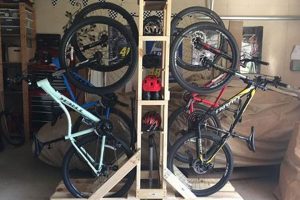
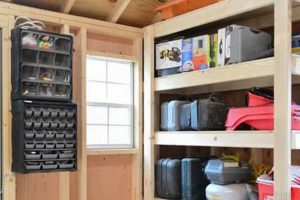
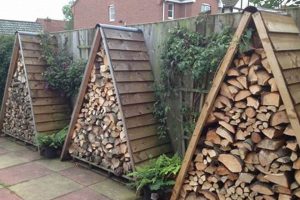
The concept involves creating customized organizational systems for gardening implements and outdoor equipment using readily available materials and individual ingenuity. For example, repurposing wooden pallets into wall-mounted racks or constructing shelves from reclaimed lumber to house shovels, rakes, and pruning shears exemplifies the approach.
Effective outdoor equipment organization reduces clutter, extends the lifespan of tools through proper care, and enhances accessibility, thereby improving overall gardening and yard maintenance efficiency. Historically, resourceful individuals have employed similar methods to manage resources and optimize workspace in various contexts, adapting available materials to meet specific storage requirements.
This approach necessitates careful planning, selection of appropriate materials based on durability and environmental considerations, and adherence to safe construction practices. Subsequent sections will explore specific design ideas, material options, and construction techniques relevant to realizing effective solutions.
Tips for Effective Outdoor Equipment Organization
Implementing a well-designed organizational system is crucial for preserving equipment and maximizing workspace efficiency. The following tips provide guidance on creating functional and durable solutions.
Tip 1: Assess Inventory and Space. Begin by conducting a thorough inventory of all gardening tools and outdoor equipment to determine storage needs. Evaluate available space, considering both horizontal and vertical dimensions, to identify optimal locations for organizational systems.
Tip 2: Prioritize Durable Materials. Select materials resistant to weather elements such as moisture, sunlight, and temperature fluctuations. Treated lumber, galvanized steel, and durable plastics are suitable options for constructing storage structures.
Tip 3: Incorporate Vertical Storage Solutions. Maximize limited space by utilizing vertical storage methods. Wall-mounted racks, pegboards, and shelving units effectively organize long-handled tools and smaller items, freeing up floor space.
Tip 4: Implement Secure Tool Retention Mechanisms. Employ hooks, clamps, and brackets designed to securely hold tools in place, preventing accidental falls and potential damage. Ensure that these mechanisms are appropriately sized and rated for the weight of the equipment.
Tip 5: Design for Accessibility and Ergonomics. Arrange equipment in a manner that prioritizes easy access and reduces strain during retrieval and storage. Consider the frequency of use and place frequently used items in readily accessible locations.
Tip 6: Provide Weather Protection. Shield stored tools from direct exposure to rain and sunlight. Covered storage structures or protective tarps can significantly extend the lifespan of sensitive equipment.
Tip 7: Implement a Labeling System. Clearly label storage compartments and containers to facilitate efficient organization and retrieval. Consistent labeling minimizes time spent searching for specific items.
Tip 8: Conduct Regular Maintenance. Periodically inspect the organizational system for signs of wear or damage. Repair or replace damaged components promptly to maintain the system’s structural integrity and prevent potential hazards.
Adopting these tips promotes a well-organized and efficient outdoor workspace, extending the lifespan of valuable tools and enhancing overall yard maintenance productivity.
The subsequent section will delve into specific design examples and step-by-step instructions for constructing practical storage solutions.
1. Material Selection

Material selection represents a critical decision point in the development of custom outdoor equipment organization systems. The chosen materials directly influence the system’s durability, longevity, and resistance to environmental factors.
- Weather Resistance
Material’s ability to withstand outdoor conditions, such as rain, sunlight, and temperature fluctuations, is paramount. Untreated wood, for example, is susceptible to rot and insect infestation, rendering it unsuitable for prolonged outdoor use. Conversely, pressure-treated lumber, galvanized steel, or certain durable plastics offer enhanced protection against the elements. Real-world applications include using composite decking boards for shelving due to their resistance to moisture and fading or utilizing powder-coated steel for tool racks to prevent rust.
- Structural Integrity
The material’s load-bearing capacity and resistance to deformation under stress are essential for ensuring the stability and safety of the equipment organization system. A shelf constructed from thin, flexible plastic may buckle under the weight of heavy tools, while a properly reinforced wooden frame or a steel structure can provide adequate support. An example is using thick plywood or solid wood for constructing shelving units designed to hold heavy items like bags of fertilizer or power tools.
- Cost-Effectiveness
Material cost is a significant factor, particularly for large-scale or complex organization systems. Balancing durability and affordability is crucial for optimizing the overall value. Reclaimed wood, while aesthetically pleasing, may require significant preparation and treatment, potentially offsetting its initial cost advantage. Conversely, inexpensive plastics may degrade rapidly under UV exposure, necessitating frequent replacements. Example: Utilizing readily available and affordable concrete blocks for a simple, ground-level storage platform.
- Aesthetic Considerations
While functionality is paramount, the visual appeal of the storage system contributes to the overall aesthetics of the outdoor space. Material choice can reflect individual preferences and complement the existing landscape design. Natural wood finishes offer a rustic charm, while painted metal or plastic can provide a more modern look. Example: Staining a wooden tool shed to match the house’s exterior or using brightly colored plastic bins for a playful, organized storage solution.
The selection of materials for custom outdoor equipment organization directly impacts the system’s long-term performance and utility. Careful consideration of weather resistance, structural integrity, cost-effectiveness, and aesthetic considerations is essential for creating a durable, functional, and visually appealing solution that effectively manages outdoor equipment and enhances the overall outdoor environment.
2. Spatial Efficiency

Spatial efficiency, in the context of custom outdoor equipment organization, refers to the strategic maximization of available storage area. Inadequate spatial planning within a yard tool storage system precipitates clutter, restricted access, and potential damage to equipment. A direct consequence of poor spatial design is the underutilization of available volume, leading to inefficient organization and increased difficulty in locating and retrieving necessary tools. For example, a storage shed filled with haphazardly stacked items prevents the effective utilization of its vertical space, resulting in a significantly reduced storage capacity. This understanding underscores the critical need for thoughtful spatial planning as a core component of custom-built organizational systems.
The implementation of spatial efficiency principles often involves adopting vertical storage solutions, such as wall-mounted racks and shelving units, to free up valuable floor space. Furthermore, multi-purpose designs, where a single structure serves multiple storage functions, can significantly enhance spatial utilization. For instance, a workbench incorporating integrated drawers and shelves provides both a workspace and organized storage for tools and supplies. The strategic placement of storage units in underutilized areas, such as beneath staircases or along fence lines, can further optimize available space and minimize clutter. Effective layout design, accounting for the dimensions of each tool and the frequency of its use, allows for creating tailored compartments and maximizing the storage potential within a given footprint.
In summary, spatial efficiency represents a key determinant of the effectiveness of custom outdoor equipment organization. Prioritizing spatial planning through the implementation of vertical storage, multi-purpose designs, and strategic placement is paramount for maximizing storage capacity, enhancing accessibility, and minimizing clutter. The challenge lies in carefully assessing individual storage needs and adapting designs to the specific characteristics of the available space. By addressing these factors, custom solutions can effectively transform chaotic outdoor areas into organized and functional workspaces.
3. Weather Protection

Weather protection constitutes a fundamental consideration in the design and construction of outdoor equipment storage systems. Exposure to environmental elements, such as precipitation, sunlight, and temperature fluctuations, can significantly degrade stored tools and equipment, leading to premature failure and increased replacement costs. Therefore, incorporating robust weather protection measures is crucial for maximizing the lifespan and functionality of both the storage structure and its contents.
- Moisture Mitigation
The ingress of moisture, whether through rain, snow, or condensation, poses a significant threat to metallic tools, leading to rust and corrosion. Wooden components can experience rot and decay. Employing waterproof roofing materials, sealed seams, and adequate ventilation systems is essential for minimizing moisture accumulation within the storage structure. For example, utilizing a sloped roof design with overlapping shingles or installing a moisture barrier beneath the flooring can effectively prevent water damage.
- UV Radiation Shielding
Prolonged exposure to ultraviolet (UV) radiation from sunlight can degrade plastic and rubber components, causing them to become brittle and crack. Furthermore, UV exposure can fade painted surfaces and weaken certain types of wood. Implementing UV-resistant materials, such as UV-stabilized plastics or paints with UV inhibitors, and providing shading through roof overhangs or awnings can mitigate the damaging effects of sunlight. An example would be using a canvas cover over exposed equipment to reduce direct sunlight exposure.
- Temperature Regulation
Extreme temperature fluctuations can contribute to material expansion and contraction, potentially leading to structural stress and damage. Furthermore, excessive heat can damage sensitive electronic components within power tools. Insulating the storage structure and providing adequate ventilation can help moderate internal temperatures and minimize the risk of heat-related damage. White or reflective roofing materials can also reduce heat absorption. For instance, installing ventilation ports near the roof line facilitates airflow and reduces heat buildup.
- Wind Resistance
High winds can pose a significant threat to lightweight storage structures, potentially causing them to topple or sustain structural damage. Anchoring the storage structure securely to the ground or a solid foundation is essential for resisting wind forces. Implementing bracing and reinforcement measures can further enhance structural stability. An example: securing a small shed to a concrete slab or using ground anchors to prevent it from being blown over.
The integration of effective weather protection measures is paramount for ensuring the long-term performance and durability of custom outdoor equipment storage systems. By addressing the specific challenges posed by moisture, UV radiation, temperature fluctuations, and wind, storage structures can effectively safeguard valuable tools and equipment, extending their lifespan and reducing the need for costly replacements. The design of effective weather protection depends on the climate and geographic location.
4. Ergonomic Design

Ergonomic design, when integrated into custom outdoor equipment organization, directly influences user safety, comfort, and efficiency. Poorly designed storage solutions often necessitate awkward postures, excessive reaching, and repetitive movements, increasing the risk of musculoskeletal injuries. The absence of ergonomic considerations negatively impacts the user’s ability to access and manage tools effectively, leading to decreased productivity and potential physical strain. For example, a storage rack positioned too high requires users to reach overhead, potentially causing shoulder or back injuries, while a system lacking designated spaces forces users to bend and lift tools from the ground repetitively, increasing the risk of lower back pain. Therefore, the application of ergonomic principles in designing these systems is paramount for minimizing physical stress and optimizing user well-being.
Specific ergonomic considerations include adjustable shelving to accommodate various tool sizes and user heights, placement of frequently used items within easy reach, and incorporation of handles or grips for secure tool handling. Designing storage solutions to minimize bending and lifting is also crucial; for example, incorporating tool holders at waist height or utilizing wheeled carts for transporting heavier items. Furthermore, proper lighting can enhance visibility and reduce the need for strained postures when accessing tools. Real-world applications involve constructing tool racks with angled slots to facilitate easy retrieval and prevent tools from slipping, using padded handles on wheelbarrows to reduce hand fatigue, and strategically positioning lights to illuminate storage areas effectively.
In summary, ergonomic design is not merely an aesthetic consideration in custom outdoor equipment storage but a functional imperative for safeguarding user health and maximizing efficiency. Failure to address ergonomic principles leads to increased risk of injury, decreased productivity, and potential long-term physical strain. Implementing adjustable features, optimizing tool placement, and minimizing bending and lifting are key strategies for creating ergonomic storage solutions. The challenge lies in integrating these ergonomic principles into the design process, thereby ensuring that storage systems support user well-being and facilitate safe and efficient outdoor work practices.
5. Tool Accessibility

Tool accessibility, in the context of custom outdoor equipment organization, is a critical determinant of efficiency and safety. The ease with which tools can be located, retrieved, and returned to their designated storage locations directly influences the time required for yard maintenance tasks and the potential for workplace accidents. A well-designed storage system prioritizes convenient access to tools, minimizing unnecessary movement and reducing the risk of injury.
- Visibility and Identification
Clear visibility of stored tools, facilitated by open shelving, labeled compartments, or transparent containers, allows for rapid identification and retrieval. This reduces the time spent searching for specific implements and minimizes frustration. A well-lit storage area further enhances visibility, particularly during early morning or late evening hours. Example: Utilizing a pegboard system with silhouettes of tools painted behind them allows for immediate identification of missing items and ensures proper placement.
- Proximity and Frequency of Use
Tools used most frequently should be stored within easy reach, minimizing the need for bending, reaching, or climbing. Organizing tools based on their frequency of use optimizes workflow and reduces physical strain. Example: Storing shovels and rakes near the garden entrance for immediate access during planting or weeding activities, while less frequently used items are stored on higher shelves or in more remote locations.
- Ergonomic Placement
Positioning tools at appropriate heights and angles promotes ergonomic handling and reduces the risk of musculoskeletal injuries. Heavy tools should be stored at waist height to minimize lifting strain, while long-handled tools should be positioned vertically to prevent tripping hazards. Example: Constructing a storage rack with angled slots that allow tools to be easily slid in and out without requiring excessive bending or twisting.
- Security and Organization
A system that promotes secure tool retention prevents tools from falling, becoming damaged, or being misplaced. Designated storage locations for each tool, whether through hooks, clamps, or individual compartments, ensures that items are readily available when needed and discourages haphazard storage practices. Example: Implementing a locking mechanism for power tools to prevent unauthorized use and ensuring that sharp tools are stored in protective sheaths or containers.
The factors described directly influence the effectiveness of custom-built storage solutions. Optimizing tool accessibility, through improved visibility, ergonomic placement, and secure organization, streamlines yard maintenance activities and reduces the risk of accidents. DIY solutions must prioritize these considerations to maximize the benefits of creating a custom storage system, transforming a disorganized space into a functional and efficient workspace.
6. Structural Integrity
Structural integrity is a paramount consideration in the construction of systems for outdoor equipment. The ability of a structure to withstand applied loads and environmental stressors directly influences its safety, longevity, and functionality. Implementing sound engineering principles and selecting appropriate materials are crucial for ensuring the stability and reliability of yard equipment storage solutions.
- Material Selection and Load Capacity
The choice of materials dictates the load-bearing capacity of the structure. Untreated lumber, for instance, is unsuitable for supporting heavy tools due to its susceptibility to rot and insect infestation. Pressure-treated lumber, galvanized steel, or reinforced composites offer superior strength and resistance to degradation. Example: A shelving unit constructed from thin particleboard will likely fail under the weight of multiple power tools, whereas a solid wood or steel frame provides adequate support.
- Joint Construction and Fastener Selection
The method of joining structural components significantly impacts the overall strength of the storage system. Weak joints, such as those held together solely by small nails, are prone to failure under stress. Employing robust joinery techniques, such as mortise-and-tenon joints or reinforced metal brackets, and selecting appropriate fasteners, such as screws or bolts, are essential for creating durable connections. Example: A shed frame constructed with poorly fastened joints is vulnerable to collapse in high winds, whereas a frame with properly secured and reinforced joints can withstand significant forces.
- Foundation Stability and Ground Anchoring
The stability of the foundation is crucial for preventing the storage structure from shifting, settling, or toppling. A properly prepared foundation, whether a concrete slab or a gravel base, provides a level and stable platform for the structure. In areas prone to high winds or seismic activity, ground anchoring systems, such as driven stakes or concrete footings, are necessary to secure the structure to the ground. Example: A storage shed built directly on bare soil is susceptible to settling and moisture damage, whereas a shed built on a concrete slab or gravel base remains stable and protected from ground moisture.
- Bracing and Reinforcement
Strategic bracing and reinforcement can significantly enhance the structural integrity of the storage system, particularly for larger or more complex designs. Diagonal bracing, cross-bracing, and gussets provide additional support and prevent racking or deformation. Example: A wooden storage rack can be reinforced with diagonal braces to prevent it from swaying or collapsing under load, while a metal frame can be strengthened with welded gussets at critical joints.
These elements are essential for DIY solutions to successfully create a durable and safe storage area. Neglecting these aspects of structural design and construction increases the risk of system failure, posing a threat to both stored equipment and users. Therefore, careful planning, attention to detail, and adherence to sound construction practices are paramount for ensuring the long-term performance and safety of any system.
Frequently Asked Questions Regarding Outdoor Equipment Organization
The following addresses common inquiries and concerns surrounding the design, construction, and maintenance of custom yard tool storage systems.
Question 1: What constitutes the most durable material for constructing outdoor tool storage?
Pressure-treated lumber, galvanized steel, and certain durable plastics exhibit superior resistance to environmental factors, including moisture, sunlight, and temperature fluctuations. The selection should align with budgetary constraints and aesthetic preferences, bearing in mind the specific performance characteristics of each material.
Question 2: How can vertical space be maximized in a limited storage area?
Vertical storage solutions, such as wall-mounted racks, pegboards, and shelving units, effectively utilize vertical space, freeing up valuable floor area. Strategic placement and adjustable configurations further optimize space utilization.
Question 3: What measures can be implemented to protect stored tools from weather damage?
Employing waterproof roofing materials, sealed seams, and adequate ventilation systems minimizes moisture accumulation. UV-resistant coatings and shading mechanisms mitigate the damaging effects of sunlight. Securing the structure to the ground or a solid foundation enhances wind resistance.
Question 4: How can ergonomic principles be incorporated into the design of a tool storage system?
Adjustable shelving, strategic tool placement, and the incorporation of handles or grips promote ergonomic handling and reduce the risk of musculoskeletal injuries. Minimizing bending and lifting is also a critical consideration.
Question 5: How can tool accessibility be optimized within a storage system?
Clear visibility of stored tools, organization based on frequency of use, and ergonomic placement enhance accessibility. Designated storage locations for each tool facilitate efficient retrieval and discourage haphazard storage practices.
Question 6: What are the essential considerations for ensuring the structural integrity of a storage system?
Selecting appropriate materials for their load-bearing capacity, employing robust joinery techniques, and providing a stable foundation are crucial for ensuring structural integrity. Bracing and reinforcement measures further enhance stability and prevent deformation.
The answers provided aim to offer clarity on key aspects of outdoor equipment organization, enabling informed decision-making during the design and implementation process.
The subsequent section explores specific design examples and step-by-step instructions for creating functional solutions.
DIY Yard Tool Storage
The preceding discussion has explored various facets of , from material selection and spatial efficiency to weather protection, ergonomic design, tool accessibility, and structural integrity. Each element contributes to the overall functionality and longevity of custom-built systems intended for managing outdoor equipment. Effective implementation of these principles yields an organized, efficient, and safe workspace, thereby extending the lifespan of valuable tools and enhancing productivity.
The design and construction of custom solutions represent an investment in both equipment maintenance and personal well-being. Careful consideration of individual needs, coupled with adherence to sound construction practices, will result in a system that provides lasting value. The ongoing maintenance and adaptation of systems ensures continued relevance and effectiveness in evolving outdoor spaces.