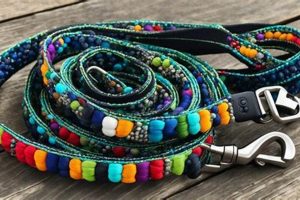
The creation of a canine restraint from paracord through a do-it-yourself approach is a popular crafting activity. This involves utilizing strong, lightweight nylon rope, often referred to as parachute cord, to construct a functional and aesthetically customizable lead for domesticated canines. For instance, individuals may braid or weave multiple strands of paracord together to achieve the desired length and strength of the lead, incorporating hardware such as metal clips and rings for secure attachment to a dog’s collar.
Constructing such items offers several advantages. It provides a cost-effective alternative to commercially produced leads, allowing for personalization in terms of color, design, and length. The inherent durability of paracord ensures a robust and long-lasting product suitable for various dog sizes and activity levels. Furthermore, the practice connects to a broader history of crafting and resourcefulness, where individuals create functional items from readily available materials.
The subsequent discussion will delve into the specific techniques and materials required for crafting durable and visually appealing canine restraints. This encompasses knotting methods, hardware selection, and considerations for safety and canine comfort, providing a comprehensive guide for those interested in pursuing this practical craft.
Practical Considerations for Paracord Dog Leash Creation
The following are essential considerations when undertaking the construction of a canine restraint using paracord. Adherence to these guidelines will contribute to a safer and more durable finished product.
Tip 1: Material Selection: Employ genuine paracord, specifically Type III (550 paracord), which is rated to withstand a minimum tensile strength of 550 pounds. Inferior cords may not possess the necessary strength for larger or more active dogs.
Tip 2: Knot Security: Prioritize secure knotting techniques. The use of square knots, barrel knots, and back splices is recommended to prevent slippage and ensure the integrity of the leash under stress. Consider employing additional securing measures such as melting the ends of the paracord to prevent fraying.
Tip 3: Hardware Quality: Select high-quality metal hardware, including swivel clips and D-rings, made from stainless steel or other corrosion-resistant materials. Regularly inspect hardware for signs of wear or damage and replace components as needed.
Tip 4: Leash Length: Determine an appropriate leash length based on the dog’s size and intended use. A standard length for general walking is approximately four to six feet. Shorter leashes are suitable for training or close control, while longer leashes may be appropriate for off-leash activities in designated areas.
Tip 5: Handle Comfort: Design the handle for ergonomic comfort. A braided or woven handle provides a more comfortable grip than a single strand of paracord. Consider incorporating padding or a wider braid to reduce strain on the hand during extended use.
Tip 6: Regular Inspection: Conduct regular inspections of the completed leash for signs of wear, fraying, or damage. Replace the leash immediately if any compromised areas are detected.
Tip 7: Reinforcement Strategies: Implement reinforcement techniques at stress points, such as where the leash connects to the hardware. Additional knots or wrappings can significantly enhance the overall strength and durability of the leash.
By adhering to these guidelines, individuals can create robust, reliable, and aesthetically pleasing canine restraints. These practices promote both the safety and the well-being of the animal.
The subsequent sections will explore advanced techniques and design variations applicable to canine restraint construction, furthering the exploration of this practical craft.
1. Strength and Durability

The intrinsic value of a self-constructed canine restraint is directly proportional to its strength and durability. In the context of paracord applications, these attributes are paramount to ensuring the safety and control of the animal. A leash constructed with inadequate strength may fail under stress, potentially leading to escape or injury. Durability, referring to the leash’s resistance to wear and tear, determines its lifespan and the long-term reliability of the construction. For instance, a leash employed daily with a large, active breed necessitates a robust construction, featuring securely tied knots and high-tensile strength paracord. Failure to prioritize these elements negates the cost-effectiveness and personalization advantages typically associated with do-it-yourself projects.
The selection of appropriate paracord and hardware directly influences the strength and durability of the finished product. Type III paracord, commonly rated for 550 pounds of static load, is generally accepted as a minimum standard for canine leashes. However, the specific type and diameter may need to be increased depending on the size and temperament of the dog. Metal hardware, such as clips and D-rings, should be selected based on load-bearing capacity and resistance to corrosion. Implementing reinforcement techniques at critical stress points, such as the handle and the clip attachment, enhances overall durability. Example, reinforcing the knot areas where the leash connects to the clip hardware with extra wraps of paracord or adhesive can significantly increase the connection’s lifespan.
In summary, strength and durability are not merely desirable characteristics, but fundamental requirements for a reliable self-constructed canine restraint. The practical significance of understanding this connection is manifested in the creation of a safer, more functional, and longer-lasting product. While aesthetic considerations are valid, they should never supersede the core principles of strength and durability. The challenge lies in balancing personalization with the inherent need for a robust and dependable restraint.
2. Knotting Techniques

The success of any do-it-yourself paracord canine restraint hinges critically on the knotting techniques employed. Knot selection directly influences the leash’s overall strength, durability, and safety. Poorly executed knots are a primary cause of leash failure, potentially leading to the uncontrolled release of the animal. For instance, a loosely tied square knot or an improperly cinched overhand knot will gradually unravel under stress, compromising the leash’s integrity. Therefore, proficiency in diverse knotting methods is not merely a cosmetic consideration, but a fundamental requirement for responsible leash construction. The application of appropriate techniques translates directly into a secure and reliable product.
Specific knotting techniques, such as the cobra braid, king cobra braid, and various barrel knots, offer varying degrees of strength and aesthetic appeal. The cobra braid, a relatively simple technique, provides a balance between strength and ease of execution, making it suitable for novice crafters. More advanced techniques, such as the king cobra braid, offer increased thickness and strength, making them suitable for larger or more active dogs. Barrel knots, used to create loops or secure hardware, require precision and careful tightening to prevent slippage. Furthermore, understanding the proper method for melting and fusing the ends of the paracord is crucial to prevent fraying, thus extending the lifespan of the leash. Example of, Melting the ends with a lighter and pressing the hot end againt the leash itself preventing each strand to fray during constant use.
In conclusion, mastery of knotting techniques is indispensable for effective self-construction of canine restraints from paracord. The chosen techniques dictate the leash’s capacity to withstand stress and resist degradation over time. Though aesthetic preferences are valid, the practical requirements of safety and reliability must take precedence. A thorough understanding of knotting principles, combined with meticulous execution, ensures a finished product that meets or exceeds commercially available alternatives, safeguarding both the animal and the handler. The challenges of choosing the right knot and how to properly execute it will ensure the safety and the durability of the canine leash.
3. Hardware Integration

Hardware integration represents a critical aspect of successful “paracord dog leash diy” projects. The selection and secure attachment of metal components, such as swivel clips and D-rings, directly influence the leash’s functionality, safety, and longevity. Inferior hardware or inadequate attachment methods can compromise the leash’s integrity, potentially leading to failure under stress. For example, a swivel clip constructed from low-grade steel may fracture under the strain exerted by a large dog, resulting in loss of control. Therefore, careful consideration must be given to the quality and method of integration of these elements during the construction phase. This understanding is practically significant, affecting both the reliability of the leash and the safety of the animal.
Practical applications of sound hardware integration principles include selecting components rated to withstand significant tensile forces, exceeding the anticipated load exerted by the dog. Employing techniques such as securely looping paracord through D-rings and reinforcing the connection with multiple wraps and secure knots enhances the attachment strength. Furthermore, regularly inspecting hardware for signs of wear or corrosion is essential for maintaining the leash’s reliability. Specifically, stainless steel hardware is often preferred due to its resistance to corrosion, particularly in environments with high humidity or exposure to salt water. Proper integration involves not only the selection of durable materials but also the precise execution of attachment methods to prevent loosening or detachment over time. For instance, adding a turk’s head knot around the area where the clip connects to the braided paracord improves both grip strength and aesthetics.
In conclusion, hardware integration is not merely an ancillary consideration in “paracord dog leash diy,” but an integral component that dictates the leash’s overall performance. Challenges arise in balancing cost-effectiveness with the need for high-quality, durable hardware. However, prioritizing quality and employing proper integration techniques ultimately contributes to a safer and more reliable product. The effectiveness of the hardware integration can make or break the “paracord dog leash diy”.
4. Length Customization

In the context of “paracord dog leash diy,” length customization assumes paramount importance, enabling the creation of canine restraints tailored to specific needs and preferences. The capacity to adjust the length of a leash directly impacts its utility across diverse scenarios and for various canine breeds. This adaptability distinguishes self-made leashes from mass-produced alternatives, affording owners greater control and flexibility.
- Training Applications
Shorter leashes, typically ranging from four to six feet, facilitate close control and focused training exercises. Such lengths are particularly advantageous for teaching commands such as “heel” or navigating crowded environments. A shorter lead minimizes the dog’s ability to wander, promoting attentiveness and responsiveness during training sessions. The ability to specify the precise length during construction is a key benefit.
- Recreational Walking
Standard walking leashes, generally six to eight feet in length, offer a balance between freedom and control. This length allows the dog sufficient space to explore while maintaining proximity to the handler. Customization enables the selection of a length that aligns with the dog’s gait and the typical walking environment, optimizing both comfort and safety.
- Long-Line Applications
Extended leashes, exceeding ten feet, serve specific purposes such as recall training or controlled off-leash activities in designated areas. These long lines provide the dog with a greater range of movement while still maintaining a connection to the handler, facilitating safe exploration and reinforcing recall commands. The ability to construct a long line from paracord allows for a durable and easily manageable restraint.
- Multi-Dog Handling
Custom leash lengths can be essential when walking multiple dogs simultaneously. The ability to create leashes of varying lengths prevents tangling and allows for individual control of each animal. Adjusting the leash length to match the dogs’ temperaments and walking styles promotes a more harmonious and manageable experience. This level of control is hardly attainable with commercial dog leashes, and only possible through paracord leash diy
The foregoing examples illustrate the significance of length customization in “paracord dog leash diy.” The adaptability afforded by self-construction enables the creation of canine restraints precisely tailored to individual needs and preferences. This feature enhances the leash’s functionality, promoting both the safety and well-being of the animal. Length customization transcends mere aesthetic considerations, serving as a practical tool for responsible pet ownership and effective training.
5. Handle Ergonomics

Handle ergonomics, in the context of paracord dog leash construction, represents a crucial factor influencing user comfort and control. The design and execution of the handle directly impact the strain experienced by the handler’s hand and wrist during leash use. A poorly designed handle can lead to discomfort, fatigue, and even injury, particularly during extended walks or with dogs prone to pulling. This understanding is directly connected to the efficacy of the “paracord dog leash diy” initiative, as it determines the practical usability and long-term appeal of the self-constructed item. For instance, a handle consisting of a simple loop of tightly braided paracord, lacking sufficient width or padding, will concentrate pressure on the hand, reducing comfort and potentially causing blisters or chafing. Proper handle design mitigates these issues, ensuring a more positive and sustainable user experience. The relationship between ergonomic design and handle practicality is essential to promote the long-term use of the paracord canine leash.
Practical application of ergonomic principles in “paracord dog leash diy” includes employing wider braids or incorporating padding materials within the handle construction. A wider braid distributes pressure more evenly across the hand, reducing strain. Padding, such as foam or additional layers of paracord, further enhances comfort by cushioning the grip. Additionally, varying the weave pattern to create a textured surface can improve grip and prevent slippage, particularly in wet or humid conditions. For example, weaving a section of softer, thicker cord within the handles core can absorb the impact of a sudden tug, minimizing the jarring effect on the hand. The incorporation of a handle length appropriate for the user and intended use is also key, as shorter handles can limit range of motion while excessively long handles can be cumbersome.
In summary, handle ergonomics is an indispensable element of successful “paracord dog leash diy”. The challenges inherent in designing a comfortable and functional handle necessitate careful consideration of materials, construction techniques, and user-specific needs. Prioritizing ergonomic design not only enhances the user experience but also promotes the long-term viability of self-constructed leashes as a practical and sustainable alternative to commercially available products. The comfort of the human user affects the dog leash positively, thus making it one of the most important areas to have a great design to be effective.
6. Aesthetic Choices

Aesthetic choices form an integral, though often secondary, component of “paracord dog leash diy” projects. While functionality and durability remain paramount, the ability to customize the visual appearance of a leash contributes significantly to its appeal and personalization. These choices encompass a range of considerations, including color combinations, braiding patterns, and the integration of decorative elements. The impact of aesthetic decisions manifests in the creation of a leash that reflects both the owner’s personal style and the dog’s unique character. For instance, the selection of vibrant colors may align with an owner’s preference for bold design, while the incorporation of specific braiding techniques can enhance the leash’s visual texture and complexity. Ultimately, the successful execution of aesthetic choices elevates the homemade leash beyond a purely functional item, transforming it into a personalized accessory.
Practical application of aesthetic principles within “paracord dog leash diy” involves considering the interplay between color, texture, and pattern. Color selection can be employed to coordinate with the dog’s coat, the owner’s attire, or simply to create a visually striking contrast. Braiding patterns, such as the cobra weave, king cobra weave, or Solomon bar, offer varying levels of complexity and visual appeal. The inclusion of decorative elements, such as beads, charms, or reflective tape, can further enhance the leash’s aesthetic value and improve visibility in low-light conditions. For example, using two different shades of paracord when executing a cobra braid can create an attractive spiraling visual effect. The challenge is to make wise aesthetic choices without compromising the structural integrity of the leash and the main goal which is safety and control.
In conclusion, aesthetic choices play a significant role in “paracord dog leash diy,” contributing to the leash’s overall appeal and personalization. Balancing these aesthetic considerations with the functional requirements of strength, durability, and safety presents a unique challenge. However, successful integration of visual design elements can transform a utilitarian item into a reflection of personal style and canine companionship. While aesthetic customization enhances the product’s value, it remains secondary to the core functional requirements of a reliable canine restraint. Proper design of aesthetic choices improve the canine leash.
Frequently Asked Questions
The following addresses common inquiries regarding the construction of canine restraints utilizing paracord in a do-it-yourself capacity. These questions aim to clarify aspects of safety, materials, and construction techniques.
Question 1: What type of paracord is most suitable for canine leash construction?
Type III paracord, often referred to as 550 paracord, is generally recommended. This classification denotes a minimum tensile strength of 550 pounds, providing adequate support for most dog breeds. Lower-rated cords may compromise the leash’s integrity and are therefore discouraged.
Question 2: How are knots selected to ensure maximum leash strength?
Knots selected for canine leash construction must possess inherent stability and resistance to slippage under load. Square knots, barrel knots, and variations of the cobra braid are commonly employed. Proper execution and tightening are critical to achieving the desired strength. Melted ends must always be integrated to prevent fraying.
Question 3: What are the key considerations when choosing hardware for a paracord dog leash?
Hardware, including swivel clips and D-rings, must be constructed from durable, corrosion-resistant materials such as stainless steel. Load ratings should exceed the anticipated stress exerted by the dog. Regular inspection for wear and tear is essential to maintain safety.
Question 4: How does leash length impact functionality and safety?
Leash length should be determined based on intended use and the dog’s size and temperament. Shorter leashes, typically four to six feet, are suitable for training or navigating crowded areas. Longer leashes, exceeding six feet, offer greater freedom during recreational walks. Length customization allows for optimization of both control and comfort.
Question 5: What steps can be taken to enhance handle comfort and prevent injury?
Handle comfort can be improved through the use of wider braids, padding materials, and textured surfaces. These features distribute pressure more evenly across the hand, reducing strain and preventing slippage. Ergonomic design is critical for long-term usability and injury prevention.
Question 6: How frequently should a self-constructed paracord dog leash be inspected for signs of wear?
Regular inspection is crucial for maintaining the safety and integrity of a self-constructed canine leash. Inspections should be conducted before each use, focusing on knots, hardware, and the overall condition of the paracord. Any signs of wear, fraying, or damage necessitate immediate repair or replacement.
Adherence to these guidelines contributes to the creation of safer, more durable, and more reliable canine restraints. The proactive application of sound construction principles promotes responsible pet ownership and enhances the safety of both the animal and the handler.
The subsequent section will delve into the discussion, highlighting examples of different designs.
Conclusion
The preceding exploration of “paracord dog leash diy” has elucidated the multifaceted considerations involved in crafting reliable canine restraints. Emphasis has been placed on material selection, knotting techniques, hardware integration, length customization, handle ergonomics, and aesthetic choices. Each of these elements contributes to the overall functionality, safety, and durability of the finished product. A thorough understanding of these principles is essential for individuals undertaking the construction of such items.
The creation of a paracord dog leash requires diligence and a commitment to quality. While the process offers opportunities for personalization and cost savings, it demands a careful approach to ensure the well-being of the animal. Readers are encouraged to approach this endeavor with prudence, prioritizing safety and reliability above all else. The pursuit of this project contributes to a tradition of resourcefulness and responsible pet ownership. Consider the potential outcomes and choose to craft an item that ensures control and safety.