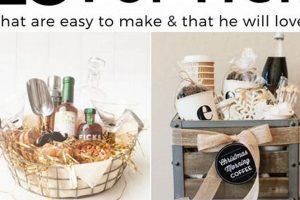
The construction of personalized alcoholic beverage-themed presents involves assembling curated collections of items, often featuring a bottle of wine as the centerpiece. These assemblages can include gourmet foods, specialized glassware, and other related accessories, all chosen to complement the wine and enhance the recipient’s tasting experience. For example, a red wine-centric package might contain a Cabernet Sauvignon, artisanal cheeses, dark chocolate, and a corkscrew set.
Such handcrafted present arrangements offer numerous advantages. They allow for a high degree of personalization, demonstrating thoughtfulness and catering directly to the recipient’s preferences. Compared to pre-made options, they can be more cost-effective, especially when sourcing items individually. Historically, the practice of gifting food and drink has signified goodwill and celebration across cultures, with personalized versions adding a layer of intimacy and care.
The following sections will explore specific strategies for creating memorable and impactful curated beverage-centered gift packages, encompassing theme selection, item sourcing, presentation techniques, and considerations for various occasions.
Tips for Crafting Exceptional Wine Gift Arrangements
This section provides essential advice for assembling impressive and well-received wine gift arrangements. Attention to detail in planning and execution is crucial for delivering a memorable and impactful present.
Tip 1: Theme Selection: Establish a cohesive theme that resonates with the recipient’s preferences. For instance, a “Italian Night” theme could include a bottle of Chianti Classico, pasta, pesto, and biscotti. A clearly defined theme elevates the presentation and demonstrates thoughtfulness.
Tip 2: Prioritize Quality over Quantity: Select a few high-quality items rather than filling the basket with numerous inexpensive items. A well-chosen wine, accompanied by a single artisan cheese and gourmet crackers, will be more appreciated than a collection of mediocre products.
Tip 3: Consider the Recipient’s Tastes: Research the recipient’s preferred wine varietals and flavor profiles. If uncertain, opt for a versatile and widely appreciated wine such as Pinot Noir or Sauvignon Blanc. Avoid selecting wines based solely on personal preference.
Tip 4: Pay Attention to Presentation: The visual appeal of the arrangement significantly impacts the recipient’s impression. Use attractive baskets, tissue paper, ribbons, and cellophane to create a polished and professional look. Securely arrange items to prevent shifting during transport.
Tip 5: Include Necessary Accessories: Provide essential accessories, such as a corkscrew, wine stopper, or appropriate glassware, to enhance the recipient’s enjoyment of the wine. These thoughtful additions demonstrate attention to detail and practicality.
Tip 6: Consider Temperature Control: If the gift basket includes perishable items like cheese or chocolate, consider including a small ice pack or insulated container to maintain appropriate temperatures during transport, especially in warmer climates.
Tip 7: Add a Personal Touch: Include a handwritten card expressing personalized sentiments. This simple gesture adds a personal touch and elevates the overall gifting experience. Avoid generic pre-printed cards.
Following these guidelines ensures the creation of impressive and thoughtful wine gift arrangements, suitable for a variety of occasions and recipients. Careful planning and execution demonstrate consideration and enhance the overall gifting experience.
The subsequent sections will delve into specific occasion-based considerations and provide additional resources for sourcing materials and inspiration.
1. Wine Selection

The selection of wine constitutes a foundational element in the creation of customized alcoholic beverage-themed gifts. The quality, varietal, and overall character of the chosen wine significantly influence the perceived value and appropriateness of the entire package. Thoughtful wine selection demonstrates consideration and enhances the gifting experience.
- Varietal Appropriateness
Selecting a wine varietal that aligns with the recipients known preferences is paramount. Knowledge of whether the individual favors red, white, or ros wines, as well as their preferred styles (e.g., dry vs. sweet), guides the selection process. For instance, presenting a bold Cabernet Sauvignon to someone who predominantly enjoys light-bodied Pinot Noir may diminish the gift’s impact. Understanding flavor profiles ensures the wine resonates with the recipient’s palate.
- Occasion and Seasonality
The occasion for which the gift is intended and the prevailing season should inform wine selection. A sparkling wine, such as Prosecco or Champagne, is often appropriate for celebratory events like anniversaries or promotions. Conversely, a rich, full-bodied red wine may be more suitable for colder months or formal gatherings. Considering seasonality ensures the wine aligns with the recipient’s current preferences and the overall atmosphere of the event.
- Budget Considerations
Establishing a budget for the wine itself is critical, as this impacts the overall value of the gift. While expensive wines may seem inherently impressive, a carefully selected, moderately priced wine can be equally appreciated if it aligns with the recipient’s tastes and the occasion. Balancing cost with quality ensures the wine represents good value and avoids overspending or sacrificing quality.
- Pairing Potential
Consider the potential for pairing the wine with complementary food items within the gift basket. Selecting a wine that harmonizes with cheeses, chocolates, or other gourmet snacks elevates the overall experience. A versatile wine that pairs well with a variety of flavors broadens the potential for enjoyment and demonstrates careful curation. For example, a crisp Sauvignon Blanc pairs well with goat cheese and seafood, while a Merlot complements dark chocolate and grilled meats.
The convergence of varietal appropriateness, occasion-based selection, budgetary considerations, and pairing potential defines the effectiveness of wine selection in curated alcoholic beverage-centered gifts. These elements should be strategically aligned to create a cohesive and memorable gifting experience.
2. Complementary Items

The selection of complementary items within a crafted beverage-centered package significantly enhances the overall gifting experience. These additions serve to augment the flavors and enjoyment derived from the central wine selection, transforming a simple gift into a curated sensory experience. Thoughtful selection of complementary items requires consideration of flavor profiles, practical usability, and aesthetic appeal.
- Food Pairings
The inclusion of food items specifically designed to complement the chosen wine elevates the tasting experience. Cheeses, chocolates, crackers, and charcuterie items that harmonize with the wine’s flavor profile are frequently incorporated. For example, a Cabernet Sauvignon may be paired with aged cheddar or dark chocolate, while a Sauvignon Blanc complements goat cheese or seafood. The selection of appropriate food pairings underscores the thoughtfulness of the gift.
- Wine Accessories
Practical wine accessories enhance the usability and appreciation of the gift. Corkscrews, wine stoppers, aerators, and specialized glassware are functional additions that demonstrate attention to detail. High-quality accessories suggest a commitment to providing a complete and enjoyable experience for the recipient. The inclusion of appropriate glassware, such as stemware designed for specific varietals, can further enhance the aroma and flavor perception of the wine.
- Gourmet Condiments and Spreads
The inclusion of gourmet condiments and spreads can provide a nuanced tasting experience. Jams, mustards, olives, and tapenades that complement the wine’s characteristics add complexity and variety to the tasting experience. These additions allow the recipient to experiment with different flavor combinations and discover new pairings. Selecting condiments with high-quality ingredients and artisanal production methods further elevates the gift.
- Decorative Elements
Aesthetic elements such as ribbons, decorative tissue paper, and personalized tags contribute to the visual appeal of the gift. These details enhance the presentation and create a more polished and professional look. Thoughtful color coordination and arrangement of items within the basket contribute to the overall impression and demonstrate attention to detail. The visual appeal of the gift significantly impacts the recipient’s initial perception and appreciation.
The deliberate integration of appropriate food pairings, functional wine accessories, complementary condiments, and aesthetic embellishments transforms a wine gift from a simple offering into a curated and memorable experience. This thoughtful approach demonstrates consideration for the recipient’s enjoyment and elevates the overall value of the present.
3. Basket Assembly

The physical composition and arrangement of items within a crafted alcoholic beverage gift directly impact the perceived value and overall presentation. Basket assembly, therefore, represents a critical stage in the creation of personalized alcoholic beverage-themed gifts. A poorly assembled basket, despite containing high-quality components, can diminish the overall impression, while a well-executed assembly enhances the perceived value and demonstrates careful attention to detail. For example, a bottle of premium wine surrounded by haphazardly placed snacks and accessories conveys a lack of care, whereas the same items arranged artfully within a structured basket create a more sophisticated and appealing presentation.
Effective basket assembly involves several key considerations. Structural integrity is paramount; items should be securely positioned to prevent shifting during transport. This may necessitate the use of filler materials, such as tissue paper or packing peanuts, to stabilize the contents. Visual balance is also crucial. Arranging items of varying heights and textures creates visual interest and prevents a monotonous appearance. For instance, placing taller items at the back of the basket and shorter items in the front allows all components to be visible and accessible. Color coordination further enhances the aesthetic appeal; selecting items with complementary colors creates a cohesive and harmonious presentation. The placement of the wine bottle, as the central element, should be carefully considered to ensure it is prominently displayed and securely held in place.
Ultimately, the objective of skilled basket assembly is to transform individual components into a unified and aesthetically pleasing gift. This requires careful planning, attention to detail, and a consideration of both structural and visual elements. Challenges may arise in balancing the desire for visual appeal with the need for practical functionality. However, by prioritizing structural integrity, visual balance, and color coordination, the process contributes significantly to the success of the final product, ensuring it is not only well-received but also leaves a lasting positive impression.
4. Occasion Specificity

The success of a customized beverage-centered gift hinges significantly on its appropriateness for the specific occasion. Occasion specificity, therefore, assumes a critical role in determining the thoughtfulness and perceived value of the presentation. The connection between the event being celebrated and the components of the customized alcoholic beverage gift dictates its relevance and impact. Generic gifts, lacking a connection to the specific context, often fail to resonate effectively. For example, presenting a somber, full-bodied red wine typically associated with contemplative evenings as a congratulatory gift for a lively graduation celebration may prove misaligned, diminishing its perceived thoughtfulness. The selection of both the wine and the accompanying items must reflect the nature and tone of the occasion.
The practical application of occasion specificity is multifaceted. Celebratory occasions, such as anniversaries or promotions, often warrant the inclusion of sparkling wines or champagnes accompanied by gourmet chocolates or celebratory treats. Sympathetic occasions, such as condolences or expressions of gratitude, might call for milder, comforting wines paired with soothing elements like herbal teas or calming candles. Seasonal occasions, like holidays or birthdays, demand consideration of current climate and culinary preferences. For instance, a festive holiday gift may incorporate spiced wines or seasonal treats like gingerbread or cranberry sauce. Ignoring these nuances diminishes the significance of the gift and its potential for appreciation.
Consideration of “Occasion Specificity” elevates gifts. From selecting appropriate wines to pairing them with fitting foods and accessories, and aligning packaging with theme, crafting beverage baskets requires careful planning and personalization. Occasion-focused personalization ensures the gesture resonates deeply, reinforcing its thoughtfulness.
5. Presentation Style

Presentation style in the context of curated alcoholic beverage gifts significantly influences the recipient’s initial perception and overall appreciation. The visual and tactile aspects of the presentation augment the intrinsic value of the contents, transforming a collection of items into a cohesive and memorable offering. A well-executed presentation demonstrates thoughtfulness and elevates the entire gifting experience.
- Basket Selection and Structure
The choice of basket or container dictates the structural foundation of the presentation. Wicker baskets, wooden crates, and decorative boxes each convey distinct aesthetic qualities. The size and shape of the container should accommodate the selected items while maintaining visual balance. Structural integrity is paramount; the container should be sturdy enough to support the weight of the contents and prevent shifting during transport. The arrangement of items within the container should create visual interest and facilitate easy access.
- Color Coordination and Thematic Consistency
The strategic use of color enhances the visual appeal of the presentation. Coordinating colors of tissue paper, ribbons, and decorative elements with the wine label and complementary items creates a cohesive and harmonious aesthetic. Thematic consistency reinforces the overall message of the gift. For example, a rustic-themed package might incorporate natural materials like burlap and twine, while a sophisticated presentation might utilize elegant ribbons and metallic accents.
- Layering and Arrangement Techniques
The technique of layering items within the container adds depth and visual interest. Placing taller items at the back and shorter items in the front allows all components to be visible. Strategic use of filler materials, such as tissue paper or shredded paper, elevates items and creates volume. The arrangement should be visually balanced, with items strategically positioned to create a sense of harmony and order. Utilizing triangular or asymmetrical arrangements adds dynamism to the presentation.
- Personalization and Finishing Touches
Personalized elements elevate the presentation and demonstrate thoughtfulness. Handwritten cards, customized tags, and engraved accessories add a personal touch. Finishing touches, such as sealing the basket with cellophane and tying it with a decorative ribbon, create a polished and professional look. The inclusion of a small, unexpected element, such as a wine charm or a decorative ornament, can further enhance the recipient’s delight.
Consideration of basket selection and structure, color coordination, layering techniques, and personalized elements ensures a visually appealing and memorable presentation style. These elements collectively contribute to the perceived value and thoughtfulness of the crafted beverage gift. The investment in presentation enhances the overall gifting experience and leaves a lasting positive impression.
Frequently Asked Questions About Wine-Themed Gift Package Construction
The following addresses common inquiries related to the creation and customization of wine-centered gift packages. Understanding these points enhances the crafting and reception of such gifts.
Question 1: What factors determine appropriate wine selection for gift packages?
Wine selection should be guided by the recipient’s preferences, the occasion, and the intended food pairings. Prioritize varietals known to be enjoyed by the recipient. Consider seasonal appropriateness and the formality of the event. Select wines that complement the flavors of included food items.
Question 2: What non-wine items most effectively complement beverage-centered gifts?
Appropriate accompaniments include gourmet cheeses, artisanal crackers, high-quality chocolates, and relevant accessories like corkscrews or specialized glassware. Items should enhance the wine’s flavors or facilitate its enjoyment.
Question 3: How should budget constraints influence the selection of materials?
Budget limitations necessitate prioritizing quality over quantity. Invest in a smaller number of high-quality items rather than a large assortment of inexpensive options. Explore cost-effective alternatives and consider sourcing items from local producers.
Question 4: What are the essential elements of visually appealing gift presentation?
Effective presentation incorporates color coordination, balanced arrangement, and thematic consistency. Utilize appropriate containers, such as baskets or decorative boxes, and enhance the visual appeal with ribbons, tissue paper, and personalized tags.
Question 5: How does occasion specificity impact gift package construction?
The occasion dictates the appropriateness of the wine and accompanying items. Celebratory occasions may warrant sparkling wines and celebratory treats, while somber occasions may call for milder wines and comforting elements.
Question 6: What safety considerations are paramount when transporting wine-themed gift packages?
Securely arrange items to prevent shifting during transport. Protect fragile items, such as glassware, with appropriate padding. Consider temperature control for perishable items, especially during warmer months.
Careful consideration of these elements contributes to the creation of thoughtful and well-received gifts. Balancing quality, appropriateness, and presentation enhances the overall gifting experience.
The subsequent section will address alternative gift themes and customization strategies.
Conclusion
The preceding analysis has explored the multifaceted process of crafting personalized alcoholic beverage-themed gifts. The creation of diy wine gift baskets requires thoughtful consideration of wine selection, complementary item pairings, basket assembly techniques, occasion-specific appropriateness, and presentation style. Attention to each of these elements significantly impacts the perceived value and overall success of the gift.
The ability to construct curated beverage-centered gifts represents a valuable skill, enabling the creation of thoughtful and personalized presents for various occasions. Continued refinement of these crafting techniques ensures the delivery of impactful and memorable gifting experiences, and may foster the appreciation of finer points of wines and gourmet food pairings.

![Unique DIY Birthday Gifts for Mom [+Easy Ideas] | The DIY Hub: Creative Crafts, Repairs & Life Hacks](https://craftingdiycenter.com/wp-content/uploads/2025/07/th-3149-300x200.jpg "Unique DIY Birthday Gifts for Mom [+Easy Ideas] The DIY Hub: Creative Crafts, Repairs & Life Hacks")