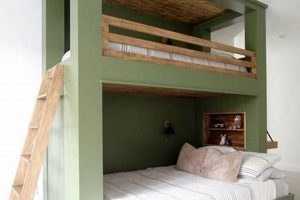
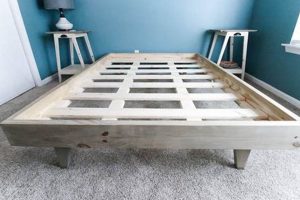
A structure elevating a standard single sleeping platform, often referred to as a “twin,” to create usable space beneath, is typically achieved through self-assembly. These elevated beds are commonly constructed using readily available materials and tools, representing a cost-effective and customizable solution for optimizing limited square footage. An example includes a child’s bedroom where the bed is raised to allow for a study area or play space underneath.
The significance of this type of bed lies in its ability to maximize floor space, particularly valuable in smaller living environments. The historical context reveals an evolution from simple bunk bed designs to more elaborate and aesthetically pleasing elevated structures. The benefits extend beyond space optimization, offering opportunities for personalized design, fostering creativity in construction, and providing a sense of accomplishment for the builder. The adaptability to specific needs and preferences enhances its appeal.
The following sections will delve into critical aspects of constructing this space-saving furniture item, encompassing design considerations, material selection, safe building practices, and various methods for customization.
Construction Tips for a Twin Loft Bed
This section provides essential advice for individuals undertaking the construction of an elevated single-size sleeping platform, focusing on safety, stability, and structural integrity.
Tip 1: Prioritize Safety in Design: Adherence to established safety guidelines is paramount. Rails of sufficient height (at least 14 inches above the mattress) are essential to prevent falls. The ladder or stairs must be securely attached and designed for ease of use, accommodating users of varying ages and abilities. Consider incorporating a gradual incline for safer climbing.
Tip 2: Select Appropriate Materials: Lumber selection directly impacts the bed’s structural integrity. Opt for high-quality hardwoods like maple or oak, or construction-grade softwood such as pine, ensuring they are free from knots or defects that could compromise strength. Pressure-treated lumber may be considered for outdoor applications or environments with high humidity, but its use in interior applications should be carefully considered due to potential off-gassing.
Tip 3: Employ Robust Joinery Techniques: The strength of the joints is crucial for the bed’s stability. Employ robust joinery methods such as mortise and tenon joints, dovetail joints, or reinforced screw connections. Using metal brackets and corner braces can enhance the overall stability, particularly in high-stress areas. Glue all joints with a high-quality wood glue designed for structural applications.
Tip 4: Ensure Proper Weight Distribution: The design should account for the anticipated weight load, including the mattress and occupant(s). Reinforce the frame and support structure to distribute the weight evenly across the entire structure. Calculate the load-bearing capacity of each component to avoid potential failures.
Tip 5: Thoroughly Inspect All Connections: Upon completion of the construction, conduct a thorough inspection of all connections, ensuring that screws are tightened, bolts are secure, and joints are properly aligned. Test the bed’s stability by applying weight and observing for any signs of weakness or instability. Re-tighten connections as needed after initial use.
Tip 6: Consider Floor Compatibility: Account for the type of flooring on which the bed will rest. Uneven flooring can compromise stability. Adjust the leg heights to ensure the frame is level and supported evenly. Use floor protectors to prevent damage to the flooring surface.
These tips serve as a foundational guide for the construction of a secure and reliable elevated sleeping area. Adherence to these principles promotes safety and ensures longevity of the structure.
The subsequent section will explore potential customization options and aesthetic considerations in crafting the loft bed.
1. Structural Integrity
The concept of Structural Integrity forms the bedrock upon which the safety and longevity of a “diy twin loft bed” are established. It dictates the bed’s capacity to withstand applied loads and maintain its intended shape and function over time. Neglecting this aspect can lead to catastrophic failure, posing significant safety risks.
- Material Selection and Load-Bearing Capacity
The type and grade of lumber used directly correlate with the bed’s ability to bear weight. Softwoods like pine offer cost-effectiveness but may require larger dimensions to achieve sufficient strength. Hardwoods such as maple provide superior load-bearing capacity in smaller profiles. Understanding the wood’s allowable bending stress and modulus of elasticity is critical to calculate safe load limits. For example, a poorly chosen pine board might deflect excessively or even break under the combined weight of the mattress and occupant.
- Joint Design and Execution
The methods used to connect the individual components of the bed are pivotal for structural integrity. Simple butt joints, while easy to execute, offer minimal resistance to racking forces. Mortise and tenon joints, dovetail joints, and properly reinforced screw connections provide significantly greater strength and stability. Insufficiently strong joints will lead to wobbling, creaking, and eventual failure. An example is a loft bed constructed with only butt joints and screws, which would quickly become unstable and potentially collapse with repeated use.
- Fastener Selection and Application
The type, size, and spacing of fasteners (screws, bolts, nails) influence the overall strength of the connections. Using undersized screws or applying them at excessive intervals compromises the joint’s integrity. Pre-drilling pilot holes prevents wood splitting and ensures proper screw engagement. Using construction adhesives in conjunction with mechanical fasteners further enhances joint strength. A common mistake is using drywall screws, which are brittle and prone to snapping under shear stress, instead of robust wood screws designed for structural applications.
- Bracing and Reinforcement
Implementing bracing elements, such as diagonal supports or gussets, adds significant rigidity to the overall structure. These elements resist racking forces and prevent the frame from deforming under load. Reinforcing critical joints with metal brackets or corner braces further enhances stability. An example would be adding diagonal bracing to the ladder supports to prevent lateral movement and ensure a stable climbing surface.
These facets underscore the importance of meticulous planning and execution when constructing a “diy twin loft bed.” A thorough understanding of structural principles and adherence to sound building practices are essential for creating a safe and durable structure that provides years of reliable use. Compromising on structural integrity, even for cost savings or ease of construction, introduces unacceptable safety risks.
2. Space Optimization
The fundamental purpose of a “diy twin loft bed” directly correlates with space optimization, representing the primary driver behind its design and construction. Raising the sleeping platform vertically creates a significantly larger usable area on the floor below. This is particularly relevant in smaller bedrooms, apartments, or dormitories where square footage is limited. The cause is spatial constraint, and the effect is the creation of versatile space beneath the bed. Space optimization’s importance stems from its ability to improve functionality and reduce clutter in confined living areas, transforming previously underutilized vertical space into a practical asset. For example, a student might construct one in their dorm to accommodate a desk and study area, or a parent might build one to allow for a play area in a child’s room.
The practical application of space optimization principles in constructing these beds involves careful consideration of the dimensions of the available area. Measurements must be precise to ensure the loft bed fits comfortably without obstructing doorways or windows. Furthermore, the design must account for the vertical clearance required for activities beneath the bed. Beyond the basic creation of open space, additional optimization can be achieved through integrated storage solutions. Shelves, drawers, or even small closets can be incorporated into the bed’s frame, further enhancing its functionality. A well-designed structure can maximize the functionality of a small room by more than doubling the usable floor area.
In summary, space optimization is the defining characteristic and core benefit. It directly influences the design parameters, driving the construction of a “diy twin loft bed”. The challenge lies in effectively utilizing the gained space beneath while adhering to safety standards and ergonomic considerations. This integrated approach transforms limited square footage into a more functional and organized living environment. This highlights the practical significance of understanding the relationship between spatial design and bed construction.
3. Safety Railings
The implementation of safety railings on a “diy twin loft bed” is not merely an aesthetic consideration but a critical safety imperative. The elevated nature of the sleeping platform inherently presents a fall hazard, particularly during sleep or in moments of disorientation. The absence of adequately designed and constructed safety railings directly causes an increased risk of injury, ranging from minor bruising to severe trauma. The effectiveness of safety railings depends on adherence to established height standards and the elimination of gaps through which a body could potentially pass. For instance, numerous documented cases detail injuries sustained from falls attributed to insufficient railing height or excessive spacing between railing components.
The connection between safety railings and bed construction is integral; the railing system is not an optional add-on but a fundamental component of the overall design. Proper design requires careful consideration of the intended user’s age and physical abilities. Railing height should be sufficient to prevent accidental roll-over during sleep, typically exceeding the thickness of the mattress. Furthermore, the attachment method must ensure structural integrity, preventing detachment under force. Practical applications involve utilizing robust fastening systems and regularly inspecting the railing’s stability. A common best practice involves using continuous railing segments, minimizing weak points and potential failure locations.
In summation, safety railings are indispensable for mitigating the inherent risks associated with a “diy twin loft bed.” Understanding their importance and implementing appropriate design and construction techniques is crucial for ensuring the safety and well-being of the bed’s occupant. The absence of adequate railings transforms a potentially beneficial space-saving solution into a considerable safety hazard. Regulatory guidelines and safety standards should be consulted during the design and implementation phase. The integration of safe railing systems underscores a responsible and conscientious approach to construction.
4. Ladder Design
Ladder design is inextricably linked to the overall functionality and safety of a “diy twin loft bed”. The ladder provides the primary means of accessing the elevated sleeping platform, directly influencing the user’s ability to utilize the bed effectively. A poorly designed ladder can be a significant impediment, hindering access and increasing the risk of falls. For instance, a ladder with excessively steep steps or inadequate handholds poses a challenge for users, particularly children or individuals with limited mobility. The cause of difficulty in accessing the loft bed is a poorly executed ladder design, and the effect is a reduction in the bed’s usability and an increased potential for accidents.
Effective ladder design necessitates considering several key factors. Step spacing must be consistent and appropriate for the intended users. Steps that are too far apart or too close together can disrupt the user’s rhythm and increase the risk of stumbling. Handrails are crucial for providing stability and support during ascent and descent. The angle of the ladder relative to the bed also plays a significant role; a steeper angle minimizes the footprint but increases the difficulty of climbing. An example includes a ladder with a 70-degree angle, which while saving space, demands more strength and coordination than a ladder with a 60-degree angle. Furthermore, the materials used in ladder construction must be sufficiently strong to withstand repeated use and weight-bearing loads. The ladder should be securely attached to the loft bed frame to prevent wobbling or detachment.
In summary, ladder design is an indispensable component in constructing a functional and safe “diy twin loft bed.” Its proper execution directly contributes to the bed’s usability and minimizes the risk of accidents. Ignoring the principles of ergonomic design and structural integrity can result in a ladder that is either difficult to use or poses a significant safety hazard. Thus, careful planning and attention to detail are essential when designing and constructing the ladder for a loft bed, as it directly affects the user experience and safety.
5. Customization
The aspect of customization significantly enhances the appeal and practicality of a “diy twin loft bed.” It transcends basic functionality, allowing for personalization to meet specific needs, aesthetic preferences, and spatial constraints. This adaptability distinguishes the project from mass-produced furniture, aligning it with individual requirements.
- Integrated Storage Solutions
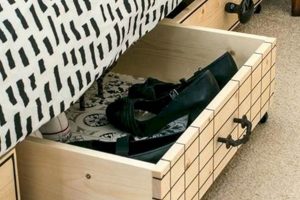
Customization frequently involves incorporating storage elements directly into the loft bed’s structure. Drawers, shelves, or even small closets can be seamlessly integrated into the frame, maximizing space utilization. This design feature is particularly beneficial in smaller rooms, providing efficient storage for clothing, books, or other personal items. For example, a loft bed designed for a child’s room might include built-in toy storage, while one in a student’s dorm could feature shelving for textbooks.
- Aesthetic Personalization
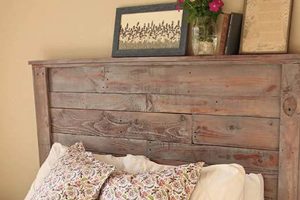
The visual appearance of a “diy twin loft bed” offers extensive customization possibilities. Paint color, stain type, and decorative elements can be chosen to complement the existing room dcor. Furthermore, personalized touches, such as carved details or custom-built headboards, can add a unique character to the bed. This ensures that the loft bed integrates harmoniously with the user’s individual style and preferences. Examples of aesthetic customization may include themed paint schemes for children’s rooms or the incorporation of reclaimed wood for a rustic aesthetic.
- Adaptable Workspace Configuration
The space beneath a loft bed offers an ideal area for a customized workspace. This can range from a simple desk and chair setup to a more elaborate arrangement with integrated lighting and ergonomic features. The dimensions and layout of the workspace can be tailored to the specific needs of the user, whether it be for studying, crafting, or pursuing hobbies. For example, a design student might incorporate a large drafting table and ample storage for art supplies, while a remote worker might prioritize an ergonomic chair and multiple monitors.
- Accessibility Modifications
Customization can extend to improving the accessibility of the loft bed for users with specific needs. This might involve modifying the ladder design to incorporate wider steps or handrails, or even adding a ramp for individuals with mobility limitations. These modifications ensure that the loft bed remains a safe and accessible sleeping solution for users of all abilities. For instance, a ladder could be replaced with a staircase featuring shallower steps and sturdy handrails for elderly users or those with joint pain.
These customization options underscore the versatility and adaptability of a “diy twin loft bed”. The ability to tailor the design to specific needs and preferences enhances its value and practicality. This contrasts sharply with mass-produced furniture, which often lacks the flexibility to accommodate individual requirements. The integration of these customized elements transforms the loft bed from a mere sleeping structure into a functional and personalized space within the home.
Frequently Asked Questions
The following section addresses common inquiries regarding the design, construction, and safety considerations associated with constructing an elevated single sleeping platform.
Question 1: What is the minimum ceiling height required for a safe and functional loft bed?
The minimum recommended ceiling height is generally 8 feet. This allows for adequate headroom above the mattress, preventing occupants from feeling claustrophobic. This also provides sufficient space for comfortable sitting and movement on the bed. Measure the available height before initiating construction.
Question 2: What type of lumber is best suited for constructing a durable loft bed frame?
Hardwoods such as maple, oak, or poplar provide superior strength and stability. Construction-grade softwoods, such as pine or fir, may be utilized, but require careful selection for minimal knots and reinforcement. Treated lumber is required for outdoor applications.
Question 3: How can a ladder be designed to maximize safety and ease of use?
Ladder safety can be enhanced by incorporating a gradual incline, wide steps with a non-slip surface, and sturdy handrails. Ensure secure attachment to the bed frame. Consider a staircase as an alternative, especially for younger children.
Question 4: What are the key safety features to incorporate into the design?
Essential safety features include guardrails of sufficient height (at least 14 inches above the mattress), a secure ladder or staircase, and a robust frame construction capable of supporting the anticipated weight. Routine inspections and maintenance are also crucial.
Question 5: What are the potential code compliance issues to consider?
Local building codes may regulate the construction and installation of loft beds, particularly in rental properties. These regulations may pertain to the height of the bed, the size and placement of egress windows, and the structural integrity of the construction. Verify local requirements before starting work.
Question 6: How can the space beneath the loft bed be best utilized?
The space beneath the loft bed can be adapted for various purposes, including a study area, a storage area, or a seating area. Consider the dimensions of the available space and the specific needs of the occupant when planning the layout. Proper lighting and ventilation are important.
The construction of a “diy twin loft bed” requires careful planning and attention to safety. Adherence to established construction principles and local building codes is essential for ensuring a safe and functional structure.
The subsequent section will explore the resources to plan “diy twin loft bed.”
Conclusion
This examination has elucidated the diverse considerations inherent in the construction of a “diy twin loft bed.” Structural integrity, space optimization, safety features, ladder design, and customization options each contribute to the overall functionality and safety. These elements demand careful planning and execution to ensure a durable and secure elevated sleeping structure.
Responsible construction of a “diy twin loft bed” necessitates adherence to established building practices, safety regulations, and a thorough understanding of material properties. Prioritizing these factors contributes to a safe, space-efficient, and personalized sleeping solution, ultimately enhancing the usability of limited living spaces. The success of this project rests on the builder’s commitment to diligence and informed decision-making.