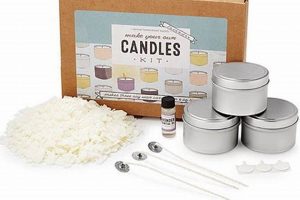
A collection of pre-selected ingredients and tools designed for crafting cleansing bars at home, it typically contains items such as oils, lye (sodium hydroxide), molds, fragrances, and colorants, alongside instructions for their safe and effective use. A common example involves a set including olive oil, coconut oil, a silicone mold, lavender essential oil, and a detailed guide on the saponification process.
The value of these sets lies in their convenience and accessibility, particularly for individuals new to the craft. They eliminate the need for extensive research on sourcing compatible materials and calculating precise ratios. Historically, the creation of these personal care items was a complex process passed down through generations. These kits democratize the activity, making it easier for anyone to experiment and create customized products.
Following this overview, subsequent sections will delve into the components commonly found within these sets, explore the chemical reaction underlying the transformation of ingredients, detail safety precautions essential for successful operation, and provide guidance on selecting a suitable option based on individual needs and preferences.
Essential Guidance for Utilizing Soap Making Sets
The subsequent recommendations aim to optimize the experience and ensure safety when working with premade sets for creating cleansing bars.
Tip 1: Adhere Strictly to Instructions: Deviation from provided guidance can result in ineffective product formation or, more critically, chemical burns due to improper handling of lye.
Tip 2: Prioritize Safety Equipment: Protective eyewear, gloves, and long sleeves are non-negotiable. Lye is caustic and can cause severe skin and eye damage. Ensure adequate ventilation during the mixing process.
Tip 3: Precisely Measure Ingredients: Accurate measurement is crucial for successful saponification. Use a digital scale to ensure precise ratios of oils, water, and lye. Inaccurate proportions can lead to either an overly alkaline or an overly oily final product.
Tip 4: Understand the Saponification Process: Familiarize oneself with the chemical reaction occurring during production. This knowledge enhances understanding and allows for better troubleshooting.
Tip 5: Carefully Select Oils: Different oils impart distinct properties to the final product. Research the characteristics of each oil provided in the set (e.g., coconut oil for hardness, olive oil for mildness) to understand their contribution.
Tip 6: Master the Trace Stage: Achieving the correct trace, a thickening of the mixture indicating saponification, is critical. A too-thin trace can result in separation, while an overly thick trace makes pouring and molding difficult. Sets with pre-calculated recipes minimize this risk.
Tip 7: Allow Adequate Curing Time: Following molding, allow sufficient curing time (typically 4-6 weeks) for excess water to evaporate and saponification to complete. This results in a harder, longer-lasting, and milder bar.
By diligently following these recommendations, the user can maximize both safety and the quality of the final product created using a prepared cleansing bar production set.
The following section will discuss common problems encountered during the production process and offer solutions to overcome them.
1. Ingredients' Quality

The quality of components directly influences the safety, effectiveness, and overall satisfaction derived from the utilization of a soap making collection. Compromised or substandard materials can negatively affect the final product’s properties, potentially leading to skin irritation or a failure to achieve the desired cleansing effect.
- Base Oil Purity
The purity of base oils, such as olive, coconut, or palm oil, impacts the lather, moisturizing properties, and hardness of the bar. Adulterated oils may contain impurities that affect saponification and create an inferior end product. For instance, using rancid olive oil can result in a bar with an unpleasant odor and reduced shelf life.
- Lye Concentration and Purity
Lye (sodium hydroxide) is the catalyst for saponification. Impurities or inconsistent concentrations can disrupt the chemical reaction, leading to incomplete saponification. This can result in a caustic, unsafe product that causes chemical burns. High-quality lye with a known concentration is crucial for predictable and safe results.
- Fragrance and Colorant Composition
The quality of fragrances and colorants impacts both aesthetics and safety. Synthetic fragrances and colorants may contain allergens or irritants that can cause adverse skin reactions. Natural essential oils and plant-derived colorants generally offer a safer alternative, although individual sensitivities should still be considered. Inexpensive, mass-produced fragrances may also lack the true scent profile of their natural counterparts.
- Additives and Their Source
Additives, such as herbs, clays, or exfoliants, contribute to the final products properties. Contaminated additives can introduce bacteria or other harmful substances, negating any potential benefits. Sourcing additives from reputable suppliers who provide quality control measures is essential to ensure safety and efficacy. For example, using clay contaminated with heavy metals can pose a health risk.
The selection of a comprehensive set that prioritizes high-quality ingredients is paramount for a successful and safe soap-making venture. Diligence in verifying component quality, understanding their properties, and implementing appropriate safety protocols will mitigate risks and ensure a desirable final product.
2. Safety Precautions
The crafting of personal cleansing bars via these sets necessitates stringent adherence to safety protocols. The inherent chemical processes and potentially hazardous materials require careful handling to prevent injury and ensure a safe environment.
- Lye Handling Procedures
Lye, or sodium hydroxide, is a corrosive substance essential for saponification. Improper handling can result in severe chemical burns. Safety dictates the use of protective eyewear, gloves, and long sleeves when working with lye. It must be added to water slowly, stirring constantly to prevent splashing and minimize heat generation. The mixture should always be added to water, never the reverse, to avoid a potentially explosive reaction. For example, if lye splashes onto skin, immediate rinsing with copious amounts of water for at least 15 minutes is crucial.
- Ventilation and Workspace Preparation
The saponification process can release irritating fumes. Adequate ventilation is paramount to prevent respirat
ory distress. A well-ventilated workspace minimizes the concentration of airborne irritants. Furthermore, the work surface should be protected with non-porous material to prevent spills from damaging the underlying area. All unnecessary items should be removed from the workspace to minimize distractions and potential hazards. For instance, a dedicated workspace away from food preparation areas is advisable. - Temperature Monitoring
The chemical reaction between lye and oils generates heat. Uncontrolled temperature increases can lead to the mixture boiling over or even igniting. Monitoring temperature with a reliable thermometer is critical. Maintaining the mixture within a safe temperature range, typically between 100-120F (38-49C), ensures a stable and controlled reaction. Overheating can cause discoloration and alter the properties of the resulting bar.
- Storage of Materials and Finished Product
Raw materials, especially lye, must be stored in airtight, clearly labeled containers, out of reach of children and pets. Finished bars require proper curing to complete the saponification process and evaporate excess water. During curing, the bars should be placed on a well-ventilated rack, away from direct sunlight and extreme temperatures. Improper storage can lead to degradation of the ingredients, spoilage of the finished product, or accidental ingestion of hazardous materials.
The integration of these safety measures is not merely a suggestion but a necessity when engaging with any collection designed for creating cleansing bars. Their rigorous application directly correlates with the minimization of risk and the maximization of a successful, injury-free crafting experience.
3. Saponification Process
The saponification process is the fundamental chemical reaction underlying the creation of all true soap, and its understanding is paramount for anyone utilizing a prepared soap crafting collection. This process dictates the transformation of fats or oils into soap and glycerin, and its successful execution is the key to achieving a usable and effective final product.
- The Chemical Reaction
Saponification involves the hydrolysis of triglycerides (fats or oils) by a strong base, typically sodium hydroxide (lye) for solid bars or potassium hydroxide for liquid ones. This reaction breaks the ester bonds in the triglyceride molecule, releasing fatty acid salts (soap) and glycerol. The reaction is exothermic, generating heat, which must be controlled for safety and optimal results. For instance, in a set featuring olive oil, the triglycerides in the oil react with lye to produce sodium oleate (a type of soap) and glycerol.
- Role of Lye Concentration
The concentration of lye is a critical factor in determining the completeness and effectiveness of saponification. Too little lye results in unsaponified oils, yielding a greasy and potentially irritating bar. Too much lye results in a caustic bar that can cause chemical burns. These sets often include pre-measured amounts of lye to simplify this critical step. An imbalance in lye concentration will result in product failure.
- The Significance of Trace
Trace refers to the point during mixing when the mixture emulsifies and thickens enough to leave a visible trail (or “trace”) when drizzled across the surface. Achieving the correct trace indicates that saponification is progressing adequately. In these premade sets, specific mixing instructions often guide users to recognize the visual cues associated with the desired trace. Premature or delayed molding following this stage will cause the final product to be a different consistency.
- Impact of Oil Selection
Different oils contribute unique properties to the finished bar. Coconut oil, for example, produces a hard bar with a strong lather, while olive oil contributes mildness and conditioning properties. Kits often contain a blend of oils designed to provide a balanced combination of characteristics. A carefully balanced blend of oils ensures the soap is not overly drying, overly hard, or otherwise unsuitable for its intended purpose.
In conclusion, a solid comprehension of the saponification process – the chemical reaction, lye concentration, achieving trace, and the impact of oil selection – directly correlates to the success of crafting bars with a premade collection. While these sets aim to simplify the process, neglecting the underlying chemistry can lead to unsatisfactory or even hazardous outcomes.
4. Molding Techniques
Proper shaping of the saponified mixture is a crucial step when using a DIY soap making kit. The molding process defines the final form of the cleansing bar and influences its usability and aesthetic appeal. Selecting the appropriate molding method and executing it correctly are essential for a successful outcome.
- Mold Material Selection
The choice of mold material significantly impacts the ease of releasing the cured bar and its final surface texture. Silicone molds, for example, offer flexibility and non-stick properties, facilitating effortless removal. Wood or plastic molds, however, often require lining with parchment paper or plastic wrap to prevent sticking. The thermal properties of the mold material also influence the cooling and curing process. Selecting an inappropriate material may cause issues such as the bar cracking during release or an uneven surface texture.
- Pouring Techniques and Air Bubble Reduction
The method of pouring the saponified mixture into the mold influences the uniformity and appearance of the final bar. A consistent, slow pour minimizes air bubble entrapment, resulting in a smoother surface. Tapping the mold gently after pouring helps to dislodge any trapped air. Layering different colored or scented mixtures requires careful pouring to prevent blending and achieve the desired aesthetic effect. Improper technique leads to inconsistencies in the final product.
- Mold Size and Shape Considerations
The dimensions and form of the mold determine the bar’s size, shape, and overall usability. Smaller molds are suitable for individual-use bars, while larger molds can be cut into multiple pieces. Intricate mold designs can add aesthetic appeal, but they may also present challenges in removing the cured bar without damage. Selecting a mold that aligns with the intended use and aesthetic preferences is essential. An undersized mold may not accommodate the entire batch, whereas an overly complex mold may result in breakage during removal.
- Curing Environment and its Impact on Molded Form
The environment during the curing process can impact the stability and integrity of the molded form. Excessive humidity can lead to the development of soda ash (a harmless but visually unappealing white powder) on the surface of the bar. Extreme temperature fluctuations can cause cracking or warping. Maintaining a stable, well-ventilated environment during curing helps to preserve the molded form and ensure a high-quality final product.
The application of appropriate molding techniques, encompassing material selection, pouring methods, size and shape considerations, and environmental control during curing, plays a pivotal role in realizing the full potential of
a DIY soap making kit. Mastery of these techniques contributes significantly to the creation of visually appealing and functionally effective cleansing bars.
5. Curing Time

The duration allotted for curing is an indispensable factor in the realm of crafting cleansing bars from premade sets. Curing time significantly influences the chemical completion of saponification and the overall quality of the resultant bar. The alkaline nature of freshly made soap, stemming from the lye used in saponification, necessitates a period of maturation. During this phase, excess water evaporates, resulting in a harder, longer-lasting product with a milder pH. Insufficient curing can lead to a product that is irritating to the skin due to residual alkalinity. For example, a bar not properly cured may feel slimy or cause a burning sensation upon use.
Adequate curing time also promotes a more uniform distribution of moisture and ingredients within the soap. This homogeneity contributes to consistent lathering and cleansing properties throughout the bar’s lifespan. In practice, neglecting the recommended duration, typically 4-6 weeks, can result in a bar that cracks easily, dissolves quickly, or lacks the desired fragrance intensity. The components within these sets are formulated with a specific curing period in mind; deviations from the recommended timeframe compromise the intended outcome. Moreover, for sets incorporating natural colorants or additives, curing allows these elements to fully integrate, enhancing their visual and functional contributions.
Therefore, understanding and adhering to recommended curing times is not merely a procedural step but a pivotal aspect of achieving a successful and safe outcome with cleansing bar sets. The process directly impacts the user’s experience, the bar’s efficacy, and its longevity. Challenges may arise in humid environments where evaporation is slower, necessitating longer curing periods. In summary, diligent attention to curing represents a critical link between the initial preparation and the final, usable product, ensuring that the effort invested in the production process yields a satisfactory result.
6. Fragrance Integration
The introduction of scents into crafted cleansing bars, achievable through the utilization of premade sets, represents a complex interplay between aesthetic customization and chemical compatibility. The selection and incorporation of fragrances necessitate careful consideration to ensure the final product aligns with intended sensory experiences while maintaining stability and safety.
- Essential Oil Selection
The utilization of essential oils offers a natural avenue for scenting cleansing bars. Essential oils, concentrated plant extracts, impart aroma and may contribute therapeutic properties. However, not all essential oils are suitable for bar applications. Some oils can accelerate oxidation, leading to rancidity, while others may cause skin irritation or discoloration. For example, citrus oils are known for their phototoxicity and should be used sparingly or avoided. Proper research and patch testing are imperative before incorporating any essential oil. The amount of essential oil used must also be calculated, as over-saturation can have negative effects.
- Fragrance Oil Considerations
Fragrance oils, synthetic aroma compounds, provide a broader range of scent profiles and often exhibit greater stability in the saponification process. However, the composition of fragrance oils can be complex and may include allergens or irritants. Reputable suppliers provide information on the chemical makeup of their fragrance oils, allowing bar makers to make informed choices. The pH stability and potential for acceleration of trace are critical considerations. Phthalate-free fragrance oils are often preferred due to health concerns associated with phthalates.
- Incorporation Timing and Techniques
The timing of fragrance addition significantly impacts its retention in the finished bar. Adding fragrance oils or essential oils too early in the saponification process can result in their evaporation due to the heat generated by the reaction. Incorporation at light trace, when the mixture has thickened slightly but is still pourable, is generally recommended. Gentle stirring ensures even distribution without overmixing, which can disrupt the saponification process. For example, adding the fragrance right before pouring the mixture into the mold will have a good impact on the final product.
- Scent Blending and Complementary Notes
The creation of a balanced and appealing scent requires an understanding of aroma profiles and complementary notes. Top notes provide the initial impression, middle notes form the body of the scent, and base notes provide longevity and depth. Blending fragrances thoughtfully can create a more complex and sophisticated aroma. For example, combining lavender (a middle note) with lemon (a top note) and sandalwood (a base note) can create a well-rounded scent profile. Incompatibility between fragrance oils can lead to undesirable odors or discoloration.
In summation, effective scent integration into handcrafted bars, achievable through the proper selection of essential oils or fragrance oils, controlled incorporation techniques, and thoughtful scent blending, enhances the overall product experience. Thorough research, careful planning, and adherence to safety guidelines are imperative for achieving a stable, aesthetically pleasing, and safe finished product derived from prepared crafting sets.
7. Recipe Adherence
The scrupulous following of specified formulations constitutes a cornerstone of successful creation utilizing prepared cleansing bar crafting sets. Deviations from established ratios and procedures can precipitate unintended chemical reactions, impacting the final product’s safety, efficacy, and aesthetic properties. Precise execution, therefore, transcends mere instruction-following, representing a fundamental aspect of responsible and effective practice.
- Ingredient Ratios and Saponification
Accurate proportions of oils, lye, and liquids are paramount for complete saponification, the chemical process transforming oils into bars. Imbalances in these ratios can lead to either a lye-heavy bar, which is caustic and potentially harmful, or an oil-rich bar, which is greasy and ineffective. These pre-calculated recipes minimize the risk of such errors. For instance, a recipe specifying a precise amount of lye for a given volume of coconut oil ensures complete reaction and avoids residual unreacted lye.
- Order of Ingredient Addition
The sequence in which ingredients are combined directly influences the saponification process and the uniformity of the final product. Adding lye to water, rather than water to lye, prevents a potentially explosive reaction. Introducing fragrance oils or additives at a specific stage, often after trace has been achieved, ensures their even distribution and prevents their degradation from the heat of saponification. A common example is the addition of colorants after the initial mixture has cooled slightly to prevent uneven c
olor distribution. - Temperature Control and Reaction Stability
Maintaining specific temperature ranges during mixing and curing is critical for stability and the prevention of undesirable outcomes. Overheating the mixture can cause discoloration, separation, or even combustion. Insufficient heat can impede saponification, resulting in a soft or unstable bar. Most instructions recommend using a thermometer to maintain temperatures within a specified range. An example is keeping the mixture between 100F and 120F to prevent separation.
- Mixing Times and Trace Achievement
The duration and intensity of mixing directly influence the progression of saponification and the attainment of trace, the point at which the mixture emulsifies and thickens. Under-mixing can result in separation, while over-mixing can lead to a grainy texture. Recipes typically specify approximate mixing times and visual cues for recognizing trace. A well-mixed mixture will leave a visible trail on the surface when drizzled, indicating that it is ready for pouring into molds.
The adherence to the provided recipe within the context of the set is not merely a recommendation, but a prerequisite for achieving a safe, effective, and aesthetically pleasing final product. Each parameter, from ingredient ratios to mixing times, is carefully calibrated to ensure optimal results. Deviation from these established guidelines introduces an element of unpredictability, potentially compromising the integrity and usability of the handcrafted bar.
Frequently Asked Questions
The following section addresses common inquiries and misconceptions regarding the use of prepared soap creation sets. The information provided aims to clarify aspects of safety, process, and expected outcomes.
Question 1: Is the use of lye in these kits inherently dangerous?
Lye, or sodium hydroxide, is a necessary component for saponification. While corrosive in its raw form, when handled according to provided instructions and safety precautions, the risk is minimized. The lye reacts with the oils, transforming them into cleansing bar, and no free lye should remain in the finished product when the process is executed correctly. The potential for harm exists with improper handling; therefore, strict adherence to safety guidelines is mandatory.
Question 2: Can these sets be used to create hypoallergenic cleansing bars?
The suitability of a bar for individuals with sensitivities depends entirely on the ingredients selected. While some sets may incorporate gentler oils and natural additives, the term “hypoallergenic” cannot be guaranteed without individual ingredient verification. Individuals with known allergies should meticulously review the components list and perform a patch test before full use.
Question 3: What is the shelf life of cleansing bars created using these kits?
The longevity of bars is influenced by the oils used, the curing process, and storage conditions. Generally, a well-cured bar, crafted with stable oils and stored in a cool, dry environment, can last for one to two years. Rancidity can occur if unstable oils are used or if the bar is exposed to excessive heat or humidity.
Question 4: Why is curing time necessary?
The curing process allows for the completion of saponification and the evaporation of excess water. This results in a harder, longer-lasting bar with a milder pH. Premature use of uncured bars can lead to irritation and rapid dissolution.
Question 5: Can fragrances be added freely to these formulations?
The type and amount of fragrance must be carefully considered. Certain essential oils or fragrance oils can accelerate trace, alter the bar’s color, or cause skin irritation. Always adhere to the recommended fragrance dosage provided in the set’s instructions and verify the compatibility of the fragrance with the overall formulation.
Question 6: What causes a cleansing bar to develop a white powdery coating?
The white powdery substance is often soda ash, a harmless byproduct of saponification. It forms when unsaponified lye reacts with carbon dioxide in the air. While aesthetically unappealing, soda ash does not affect the bar’s functionality. It can be minimized by ensuring adequate curing conditions and covering the bars during the initial stages of curing.
In summary, successful utilization hinges on understanding the chemical processes involved, adhering to safety protocols, and carefully selecting ingredients based on individual needs and preferences.
The subsequent section will delve into a comparative analysis of various sets available on the market, considering factors such as ingredient quality, included tools, and user experience.
DIY Soap Making Kit
The preceding sections have comprehensively explored the facets of the DIY soap making kit, encompassing ingredient quality, safety precautions, the saponification process, molding techniques, curing time, fragrance integration, and the critical importance of recipe adherence. A thorough understanding of these elements is paramount for successful and safe creation.
The utilization of a pre-packaged soap crafting collection presents both opportunities for creative expression and potential risks. Prospective users should meticulously evaluate the included components, rigorously adhere to safety guidelines, and maintain a commitment to understanding the underlying chemical transformations. Informed and responsible engagement will yield satisfying results, while negligence may lead to hazardous outcomes.