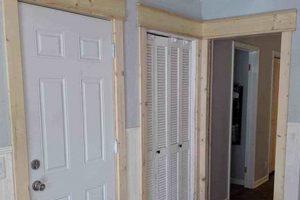
The construction of swinging doors, reminiscent of those found in establishments of the Old West, offers an opportunity for personalized home improvement. These doors, typically characterized by a double-action hinge allowing movement in both directions and a partial height that leaves the upper portion of the doorway open, can be fabricated using readily available materials and basic woodworking tools. An example would be the creation of such a door to separate a kitchen from a dining area, adding a unique visual element to the home.
The appeal of self-made swinging doors lies in the ability to customize dimensions, materials, and finishes to precisely match existing dcor and spatial requirements. This approach can yield cost savings compared to purchasing pre-made units. Historically, these doors provided a functional solution for managing traffic flow while maintaining an open and accessible environment. Their contemporary usage often emphasizes aesthetic appeal and the creation of a distinct architectural feature within a residential or commercial space.
The following sections will detail the materials required, the construction process, hinge selection considerations, finishing techniques, and safety precautions necessary for successfully building and installing custom swinging doors.
Construction Insights
Considerations and methods to optimize the creation of swinging doors are outlined below.
Tip 1: Material Selection. Opt for hardwoods such as oak or maple for enhanced durability and resistance to warping. Softwoods like pine may be suitable for cost-effectiveness, but require careful sealing and finishing to prevent damage.
Tip 2: Precise Measurements. Accurately measure the doorway opening to ensure proper door swing and prevent binding. Account for hinge placement and necessary clearances along the top, bottom, and sides.
Tip 3: Hinge Selection. Choose double-action hinges rated for the weight and dimensions of the constructed doors. Consider adjustable hinges for fine-tuning alignment after installation.
Tip 4: Frame Construction. Employ robust joinery techniques, such as mortise-and-tenon or dowel joints, to create a rigid and stable frame. Ensure all corners are square and accurately aligned.
Tip 5: Panel Infill. Select appropriate panel materials, such as wood panels, metal sheets, or decorative inserts. Securely fasten the infill to the frame using screws, adhesives, or other suitable methods.
Tip 6: Finishing Techniques. Apply multiple coats of sealant, primer, and paint or stain to protect the wood and enhance the aesthetic appearance. Sand lightly between coats for a smooth and professional finish.
Tip 7: Hardware Installation. Install appropriate handles, pulls, or decorative hardware that complements the overall design. Ensure secure attachment to withstand repeated use.
Adhering to these insights yields durable and visually appealing swinging doors, effectively enhancing interior spaces.
The succeeding section presents considerations for ensuring the safe assembly and use of these doors.
1. Precise measurements
The correlation between accurate dimensions and the successful construction of swinging doors is critical. Deviations from required measurements invariably lead to functional deficiencies, aesthetic flaws, and potential safety hazards. An undersized door panel will result in unsightly gaps, ineffective closure, and a compromise in privacy, if desired. Conversely, an oversized panel can cause binding within the frame, impeding smooth operation and potentially damaging the hinge mechanisms.
Consider a scenario where a doorway width is measured imprecisely, resulting in door panels that are too wide. Upon installation, these panels will not swing freely, creating excessive friction and strain on the hinges. This can lead to premature hinge failure, door warping, and potentially pose a hazard if the doors become difficult to open or close quickly in an emergency. Similarly, inaccurate height measurements impact the overall appearance. Uneven gaps at the top or bottom detract from the aesthetic integrity of the installation and can compromise the doors’ ability to effectively block drafts or sound.
In summary, precise measurements serve as the foundation upon which the functionality, durability, and aesthetic value of swinging doors are built. Neglecting this essential step can lead to a cascade of problems, ultimately requiring rework, replacement parts, or a complete re-fabrication of the door system. Diligence in measurement is therefore not merely a suggestion, but a prerequisite for achieving a satisfactory and lasting outcome.
2. Wood selection
The selection of appropriate wood constitutes a critical element in the successful fabrication of swinging doors. The chosen material directly impacts the doors’ structural integrity, longevity, aesthetic qualities, and overall performance. An informed decision necessitates a thorough understanding of various wood properties and their suitability for this specific application.
- Hardwood vs. Softwood
Hardwoods, such as oak, maple, and cherry, offer superior density and resistance to wear and tear, making them ideal for high-traffic areas. Their inherent strength minimizes warping and provides a robust framework for the doors. Softwoods, including pine and fir, present a more cost-effective alternative but are generally less durable and more susceptible to dents and scratches. While suitable for lower-demand applications, softwoods require careful finishing to enhance their protective properties. The choice between hardwood and softwood should be based on the intended usage, budget constraints, and desired aesthetic.
- Grain Pattern and Appearance
The grain pattern significantly influences the visual appeal of the doors. Straight-grained woods, like poplar, offer a uniform and clean aesthetic, while figured woods, such as curly maple or burlwood, introduce unique and intricate patterns. The selection of grain pattern should align with the overall design theme and the desired level of visual interest. Furthermore, consider the wood’s natural color and its compatibility with existing decor. Staining or painting can alter the appearance, but the underlying grain pattern will remain visible, influencing the final result.
- Moisture Content and Stability
The moisture content of the wood is a crucial factor affecting its dimensional stability. Wood that is not properly seasoned or dried is prone to warping, shrinking, or expanding in response to changes in humidity. Kiln-dried lumber is recommended for door construction, as it minimizes the risk of these problems. Local climate conditions should also be considered when selecting wood. In humid environments, opting for species with better moisture resistance can prolong the lifespan of the doors.
- Workability and Finishing
The ease with which wood can be worked and finished is a practical consideration. Certain woods are easier to cut, shape, and sand than others. Woods with a fine and even texture generally accept stains and paints more uniformly, resulting in a smoother and more professional finish. Consider the available woodworking tools and skills when selecting wood. If intricate details or complex joinery are planned, choosing a wood that is relatively easy to work with can simplify the construction process.
In summary, careful deliberation of wood species, grain pattern, moisture content, and workability will ensure the creation of durable, aesthetically pleasing, and functional swinging doors. These considerations must be balanced to suit project-specific requirements, budget limitations, and the desired longevity of the final product.
3. Hinge Hardware
The selection and implementation of appropriate hinge mechanisms are paramount to the functionality and longevity of swinging doors. These components dictate the range of motion, load-bearing capacity, and overall operational reliability of the assembly. A comprehensive understanding of available hinge types and their respective characteristics is therefore essential for successful construction.
- Double-Action Spring Hinges
These hinges, specifically designed for swinging doors, allow movement in both directions and incorporate a spring mechanism for automatic closure. The spring tension is often adjustable, enabling customization of the closing force. Selection should be based on the door’s weight and dimensions to ensure smooth and controlled operation. Inadequate spring tension can result in incomplete closure, while excessive tension can cause premature wear or difficulty in opening the doors.
- Gravity Hinges
Gravity hinges rely on the weight of the door to return it to a closed position. These hinges are typically less complex than spring hinges but require precise installation to function correctly. The door must be properly balanced and aligned to ensure a consistent and reliable closing action. These are less common for swinging doors requiring a more forceful or reliable closure.
- Butt Hinges with Closers
Standard butt hinges can be combined with separate door closer mechanisms to achieve a similar effect to spring hinges. This approach offers greater flexibility in terms of closure speed and damping. The door closer can be adjusted to control the closing force and prevent slamming, enhancing safety and reducing noise. This approach can be more complex to install and requires careful coordination between the hinge and closer components.
- Material Considerations
Hinges are available in various materials, including steel, stainless steel, and brass. Steel hinges offer strength and durability but are susceptible to corrosion in humid environments. Stainless steel provides excellent corrosion resistance and is suitable for both interior and exterior applications. Brass hinges offer aesthetic appeal and good corrosion resistance, often employed in decorative installations. The selection of hinge material should consider the environmental conditions and the desired aesthetic of the swinging doors.
The correct choice and proper installation of hinge hardware directly correlate to the performance and lifespan of the doors. Consideration of door weight, frequency of use, environmental factors, and desired aesthetic is critical for optimizing hinge selection. Properly specified and installed hinges will ensure smooth operation, reliable closure, and long-term durability, ultimately contributing to the overall success of the project.
4. Frame joinery
Frame joinery, referring to the methods used to connect the individual components of a door frame, plays a critical role in the structural integrity and aesthetic quality of self-constructed swinging doors. The longevity and functionality of these doors depend significantly on the robustness of the joints.
- Mortise and Tenon Joints
This traditional woodworking joint, involving a projecting tenon fitting snugly into a mortise (a hole or recess), offers exceptional strength and resistance to racking forces. In the context of swinging doors, mortise and tenon joints are ideally suited for connecting the stiles (vertical frame members) and rails (horizontal frame members), particularly in heavier door designs. Their use ensures that the frame remains square and stable over prolonged use, minimizing the risk of sagging or warping.
- Dowel Joints
Dowel joints, employing cylindrical pins (dowels) inserted into precisely aligned holes in adjacent frame members, provide a simpler alternative to mortise and tenon joints. While not as inherently strong, dowel joints can be reinforced with adhesive and are well-suited for lighter door designs. Accurate drilling and precise alignment are essential for achieving a tight and reliable connection. The number and diameter of dowels should be carefully considered based on the dimensions and weight of the door panels.
- Pocket Hole Joinery
This method involves drilling angled holes into one frame member and securing it to an adjacent member with screws. Pocket hole joinery offers a relatively quick and straightforward assembly process, particularly beneficial for those with limited woodworking experience. However, the exposed screw heads require concealing with plugs or filler for a more aesthetically pleasing finish. While suitable for lighter-duty doors, pocket hole joinery may not provide sufficient strength for heavy or frequently used swinging door applications.
- Miter Joints
Miter joints, where frame members are cut at a 45-degree angle to form a corner, create a visually appealing seamless transition. However, miter joints are inherently weak and require reinforcement, typically through the use of splines (thin pieces of wood inserted into slots cut across the joint) or metal fasteners. In swinging door construction, miter joints are best reserved for decorative elements or non-load-bearing sections, such as upper panels. Their use in structural frame connections necessitates careful reinforcement to prevent joint failure.
Ultimately, the selection of appropriate frame joinery techniques significantly influences the durability and aesthetic longevity of swinging doors. A proper understanding of the strengths and limitations of each joint type, along with meticulous execution, contributes directly to the successful realization of a functional and visually pleasing design.
5. Panel design
Panel design constitutes a critical element in the aesthetic and functional considerations of self-constructed swinging doors. The selection and implementation of appropriate panel configurations directly influence the doors’ visual impact, structural integrity, and sound dampening capabilities.
- Material Selection and Visual Impact
The choice of panel material significantly affects the doors’ overall appearance. Solid wood panels offer a traditional aesthetic, while glass or metal inserts can introduce contemporary elements. For instance, a solid oak panel evokes a rustic ambiance, whereas frosted glass panels promote privacy while allowing light transmission. The selected material must complement the surrounding decor and align with the intended design style. The visual impact is further influenced by the panel’s texture, color, and finish, demanding careful consideration to achieve a cohesive design.
- Panel Construction and Structural Integrity
Panel construction impacts the structural stability of the door assembly. Floating panels, set within a frame with allowance for expansion and contraction, mitigate warping and cracking caused by humidity changes. Raised panels, with contoured edges, add visual depth but require precise joinery. The construction method should be chosen to ensure long-term durability and prevent panel distortion, particularly in environments with fluctuating temperature and humidity levels. Proper panel joinery to the frame is essential for the doors’ structural integrity.
- Acoustic Properties and Sound Dampening
The density and composition of panel materials influence the doors’ ability to dampen sound transmission. Solid wood panels provide better sound insulation compared to thin or hollow panels. The addition of soundproofing materials, such as mass-loaded vinyl or acoustic foam, can further enhance sound dampening capabilities. For example, a solid core door with sound-dampening panels is suitable for spaces requiring enhanced privacy and noise reduction. The acoustic properties of the panels contribute significantly to the overall ambience of the surrounding environment.
- Decorative Elements and Customization
Panel design offers extensive opportunities for customization and the incorporation of decorative elements. Carved panels, inlaid designs, and decorative hardware can add unique character to the doors. For instance, custom-etched glass panels can display personalized artwork or branding. The selection of decorative elements should be carefully considered to avoid overwhelming the overall design and ensure a harmonious integration with the surrounding space. Customization allows for the creation of swinging doors that reflect individual preferences and enhance the aesthetic identity of the interior.
In essence, panel design represents a synthesis of aesthetic and functional considerations, playing a crucial role in the overall success of self-constructed swinging doors. The meticulous selection of materials, construction methods, and decorative elements results in a door that not only serves its practical purpose but also contributes significantly to the visual and acoustic environment of the space it occupies. For instance, a rustic-themed room might benefit from reclaimed wood panels with wrought iron accents, while a modern space would be more aptly complemented by sleek, minimalist panels constructed from metal or frosted glass.
6. Surface finishing
Surface finishing is inextricably linked to the long-term viability and aesthetic appeal of swinging doors constructed through DIY efforts. The processes involved in surface finishing, such as sanding, sealing, and applying protective coatings, directly influence the wood’s resistance to environmental factors like moisture and ultraviolet radiation. For example, unfinished pine doors in a high-humidity environment are prone to warping and fungal growth, necessitating prompt treatment with a suitable sealant. Surface finishing is not merely a cosmetic consideration but a functional necessity ensuring longevity.
The selection of finishing materials also impacts the doors’ susceptibility to scratches and abrasions inherent in high-traffic areas. Applying multiple coats of polyurethane, for instance, creates a durable, protective layer that withstands repeated contact and reduces the likelihood of damage. Conversely, inadequate or improper finishing can result in premature wear and tear, leading to costly repairs or replacements. Furthermore, surface treatments can dramatically alter the perceived aesthetic, allowing for seamless integration into diverse interior designs ranging from rustic to contemporary. This customization empowers individuals to achieve a specific look and feel that enhances the overall ambiance of the space where the doors are installed.
In summation, the relationship between surface finishing and self-assembled swinging doors is pivotal. The selection of appropriate finishing techniques and materials directly affects both the structural integrity and visual appeal. The challenges in effective finishing include choosing the right products, implementing them correctly, and maintaining the finish over time. Mastery of surface finishing techniques is therefore indispensable for those undertaking such projects, enabling them to create durable, aesthetically pleasing, and long-lasting swinging doors that meet both functional and aesthetic requirements.
7. Safe installation
The secure and stable integration of self-assembled swinging doors within a defined architectural space is paramount to ensuring user safety and preventing structural compromise. Neglecting safety protocols during the installation process can result in significant hazards, including door collapse, injury due to improper swing, and potential damage to surrounding structures.
- Load-Bearing Considerations
Assessment of the structural capacity of the existing doorframe and surrounding wall is crucial. The weight of the swinging doors must be adequately supported to prevent sagging or detachment. Reinforcements, such as additional framing members or the use of heavier-duty mounting hardware, may be necessary, particularly in older structures where the original framing may be compromised. For instance, affixing heavy oak doors to a plasterboard wall without adequate bracing poses a significant risk of collapse.
- Proper Hinge Mounting
The secure attachment of hinges to both the door frame and door panels is essential for smooth and reliable operation. Using screws of insufficient length or diameter can result in hinge failure and door detachment. It is imperative to employ screws that penetrate deeply into solid wood and to pre-drill pilot holes to prevent splitting. Additionally, hinge placement should be strategically determined to distribute the load evenly and minimize stress on individual mounting points.
- Clearance and Swing Radius
Ensuring adequate clearance for the doors to swing freely without obstruction is a critical safety consideration. The swing radius must be free of obstacles, such as furniture or protruding objects, to prevent collisions and potential injury. The doors should also be installed with sufficient clearance at the top and bottom to prevent binding or rubbing against the floor or door frame. This is particularly important in environments where the flooring may be uneven or subject to expansion and contraction.
- Compliance with Building Codes
All installations must adhere to local building codes and safety regulations. This may include requirements for fire-rated doors, emergency egress, and accessibility standards. Failure to comply with these regulations can result in legal penalties and potential safety hazards. Thorough research of applicable codes is essential prior to commencing any installation work. Permits may be necessary depending on the scope of the project.
The aforementioned safety aspects are indispensable for realizing self-constructed swinging doors that are both aesthetically pleasing and structurally sound. Disregarding these precautions can yield a final product that compromises safety and necessitates costly remediation. Careful planning, adherence to best practices, and thorough inspection are crucial components of a safe and successful DIY project.
Frequently Asked Questions
The following section addresses common inquiries and misconceptions regarding the self-assembly of swinging doors. It aims to provide clear, concise answers based on practical experience and accepted woodworking principles.
Question 1: Is specialized carpentry experience required for construction?
While advanced carpentry skills are not strictly mandatory, a foundational understanding of woodworking techniques, including accurate measuring, cutting, and joinery, is highly recommended. Projects will necessitate careful execution and attention to detail.
Question 2: What is the anticipated cost of materials for a typical swinging door project?
Material costs are heavily influenced by the choice of wood, hardware, and finishing products. Projects employing premium hardwoods and high-end hinges will inevitably incur greater expenses than those utilizing more economical alternatives.
Question 3: How does the weight of the chosen wood impact hinge selection?
The weight of the door panels is a critical factor in selecting appropriate hinges. Insufficient hinge capacity can lead to premature wear, sagging, or even complete failure. Hinge manufacturers typically provide weight ratings that should be carefully considered.
Question 4: What safety precautions should be observed during the construction process?
Eye protection, respiratory protection, and appropriate clothing are crucial when cutting, sanding, or applying finishes. Power tools should be operated in accordance with manufacturer guidelines, and a well-ventilated workspace is recommended.
Question 5: Are specific tools necessary for achieving professional-quality results?
While basic hand tools can be utilized, employing power tools such as a table saw, miter saw, and power sander will significantly enhance accuracy and efficiency, resulting in a more refined final product.
Question 6: How should surface finishes be maintained to ensure long-term durability?
Regular cleaning with mild soap and water is generally sufficient for maintaining the appearance of finished doors. Periodic application of wax or polish can provide added protection and enhance the luster of the surface.
These answers provide foundational knowledge for the project. However, individuals should conduct thorough research and consult with experienced carpenters as needed.
The subsequent section discusses troubleshooting common problems.
DIY Saloon Doors
This exploration has underscored the multi-faceted nature of constructing saloon-style swinging doors. From initial material selection to the critical final touches of surface finishing and hinge installment, success hinges upon adherence to precision, safety, and informed decision-making. Emphasis has been placed on the interplay between structural considerations, material properties, and aesthetic choices, all contributing to the creation of a functional and visually cohesive element. A thorough assessment of individual skill levels and available resources is paramount, ensuring that the project aligns with capabilities and expectations.
The successful implementation of saloon-style swinging doors enhances interior design while potentially introducing unique challenges. Continuous diligence and adherence to best practices ensure the durability of the architectural element. The final installation serves as a test of skill and foresight, resulting in an aesthetically pleasing and practical addition to any space.