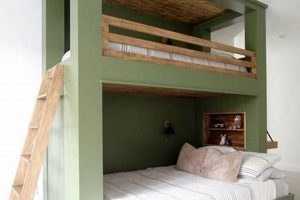
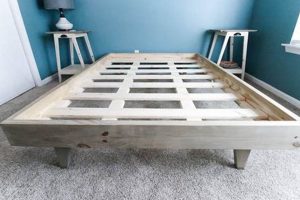
A raised sleeping platform integrated with a work surface beneath represents a space-saving furniture solution. This configuration typically involves elevating a bed frame to create vertical clearance, allowing for the placement of a desk, storage, or other functional area in the resulting lower space. The construction of such a structure can be undertaken as a do-it-yourself project, enabling customization to specific room dimensions and individual needs.
Such an arrangement offers significant advantages, particularly in smaller living spaces where maximizing available area is essential. It allows for the consolidation of sleeping and working functions into a single footprint, freeing up floor space for other activities. Historically, elevated beds have been used in various settings to conserve space, and the modern adaptation incorporating a desk builds upon this principle by integrating contemporary lifestyle needs. The benefits extend to affordability, as self-construction can often be more economical than purchasing pre-fabricated furniture.
Subsequent sections will delve into detailed planning considerations, material selection guidelines, step-by-step building instructions, and safety precautions relevant to constructing this type of furniture project. Furthermore, various design options and customization techniques will be explored to facilitate a tailored final product.
Construction Tips for a Space-Optimizing Sleeping and Work Area
The following recommendations are intended to guide the successful construction of a vertical sleeping and workspace configuration, emphasizing structural integrity and efficient use of resources.
Tip 1: Precise Measurement is Paramount: Prior to commencing construction, accurate measurement of the intended space is critical. Account for ceiling height, floor dimensions, and any existing architectural features that may impact the structure’s placement. Inaccurate measurements can lead to structural instability or incompatibility with the room.
Tip 2: Material Selection Impacts Longevity: Choose lumber with sufficient load-bearing capacity, considering the weight of the bed, the occupant, and any additional weight applied to the desk. Hardwoods, such as maple or oak, offer superior strength and durability compared to softwoods like pine.
Tip 3: Employ Robust Joinery Techniques: Secure connections are essential for ensuring structural stability. Utilize joinery methods such as mortise and tenon, dovetail joints, or reinforced screw connections. Supplement these with appropriate wood glue designed for structural applications.
Tip 4: Prioritize Safety Railings: Implement safety railings around the perimeter of the sleeping platform to prevent accidental falls. Railings should be of sufficient height, generally a minimum of 14 inches above the mattress surface, and constructed with sturdy materials.
Tip 5: Desk Integration Should Be Ergonomic: Design the desk area with ergonomic principles in mind. Ensure adequate legroom and a comfortable working height. Consider adjustable features to accommodate different users.
Tip 6: Secure Ladder Placement: The ladder or staircase providing access to the bed should be firmly attached to the structure and angled for safe ascent and descent. Ensure adequate clearance around the ladder for unimpeded movement.
Tip 7: Apply a Protective Finish: After construction, apply a durable finish to protect the wood from moisture, wear, and potential damage. Select a non-toxic finish suitable for indoor use.
Adherence to these guidelines promotes a structurally sound, safe, and functionally optimized sleeping and workspace environment. Careful planning and meticulous execution are key to a successful outcome.
The next section will outline potential design variations and aesthetic considerations to personalize the structure to individual preferences.
1. Space Optimization
The impetus behind constructing a combined elevated sleeping platform and work surface often stems from the need to maximize limited spatial resources. Space optimization, in this context, is not merely a desirable outcome but a foundational requirement. The direct effect of implementing this design is the freeing of floor area that would otherwise be occupied by separate bed and desk units. The vertical stacking of functions inherently increases usable square footage within a confined environment.
Consider a small apartment where a traditional bed consumes a significant portion of the living area. Replacing this with an elevated sleeping arrangement creates a zone beneath the bed suitable for a desk, thereby enabling work or study activities without encroaching on the remaining living space. This strategy is particularly relevant in urban environments where living space is often at a premium. The strategic implementation of this type of construction transforms formerly underutilized vertical space into a valuable asset.
Ultimately, the success of any combined elevated sleeping and work area relies heavily on the degree to which it effectively optimizes space. Challenges may arise in ensuring accessibility, adequate lighting, and ventilation within the confined zones. Nevertheless, a well-executed design yields substantial improvements in spatial efficiency and functionality. The key takeaway is that the project’s feasibility hinges on its capacity to solve space constraints effectively.
2. Structural Integrity
The inherent safety and longevity of any elevated sleeping platform integrated with a work surface are directly contingent upon its structural integrity. This principle dictates that the structure must withstand the anticipated loads and stresses imposed upon it during normal use, ensuring the stability and safety of the user.
- Load-Bearing Capacity
The selection of materials and construction techniques must account for the combined weight of the bed frame, mattress, occupant(s), and any items stored on the desk or shelving. Insufficient load-bearing capacity can lead to structural failure, resulting in collapse or instability. For example, using under-sized lumber or inadequate joinery methods can compromise the ability of the structure to support the intended weight. Proper calculations and material selection are, therefore, paramount.
- Joint Strength and Stability
The points at which individual components are joined together represent critical areas of potential weakness. Strong and stable joints are essential for distributing loads evenly and preventing movement or deformation. Examples of effective joint types include mortise and tenon joints, dovetail joints, and properly reinforced screw connections. Conversely, poorly constructed joints can lead to racking, loosening, or complete failure of the structure.
- Material Properties and Selection
The inherent properties of the chosen materials significantly influence structural integrity. Wood density, grain orientation, and moisture content all contribute to the material’s strength and stability. For instance, hardwoods generally offer superior strength compared to softwoods. It is imperative to select materials that are free from defects, such as knots or cracks, which can compromise their structural integrity. Furthermore, considerations should be made about the long-term durability of selected materials. Improper selection may result in premature decay or structural weakening.
- Bracing and Reinforcement
Strategic bracing and reinforcement can significantly enhance the overall structural integrity of the elevated sleeping platform. Diagonal bracing, for example, provides lateral stability and prevents racking. Reinforcements at critical stress points, such as corners or load-bearing supports, can distribute weight more effectively and prevent localized failure. A lack of adequate bracing and reinforcement can lead to instability and an increased risk of collapse. This is especially applicable if the structure is taller than it is wide.
The aforementioned aspects of structural integrity collectively determine the safety and lifespan of the combined elevated sleeping and work area. Neglecting any of these factors can have severe consequences. Comprehensive planning, meticulous execution, and a thorough understanding of engineering principles are, therefore, essential for a structurally sound outcome. The success of a project that combines elevated sleep areas and work surfaces is dependent on sound planning and careful execution to ensure overall functionality and user safety.
3. Safety Regulations
Adherence to established safety regulations is paramount when undertaking the construction of an elevated sleeping platform combined with a work surface. These regulations are designed to mitigate potential hazards and ensure the well-being of occupants. Failure to comply with relevant safety standards can result in serious injuries or even fatalities.
- Building Codes and Permits
Many jurisdictions require building permits for the construction of structures exceeding a certain height or size. Compliance with local building codes ensures that the design and construction methods meet minimum safety standards. Non-compliance can result in fines, mandatory modifications, or even demolition of the structure. It is incumbent upon the builder to research and adhere to applicable building codes and obtain necessary permits prior to commencing construction.
- Guardrail Height and Design
Safety regulations typically specify minimum guardrail heights and design requirements to prevent accidental falls from the elevated sleeping platform. Insufficient guardrail height or inadequate spacing between guardrail components can pose a significant fall hazard. Compliance with these regulations necessitates careful consideration of guardrail dimensions, material strength, and attachment methods. Regulations might specify infill requirements to prevent children from climbing and falling over the guardrail.
- Ladder/Stairway Safety
The means of access to the elevated sleeping platform must comply with safety regulations pertaining to ladder or stairway design. This includes requirements for tread depth, riser height, handrail placement, and overall stability. Non-compliant ladders or stairways can increase the risk of slips, trips, and falls. Consideration should be given to user age and physical capabilities when selecting a means of egress and access.
- Material Flammability
Safety regulations may restrict the use of highly flammable materials in the construction of the elevated sleeping platform. This is to minimize the risk of fire and ensure adequate time for evacuation in the event of a fire. Flame-retardant treatments or the selection of inherently fire-resistant materials may be required to comply with these regulations. Ignoring these guidelines poses significant risk in residential environments.
The integration of these safety facets into the design and construction process is non-negotiable. Diligence in adhering to applicable safety regulations, thorough inspection, and a commitment to safe construction practices are essential for creating a safe and functional elevated sleeping platform with integrated work surface. Local ordinances can vary significantly. It is crucial to verify compliance with the jurisdiction in which the build is occurring.
4. Ergonomic Design
Ergonomic design principles are critically important when constructing a combined elevated sleeping platform and work surface. Such design considerations directly impact the user’s physical well-being, comfort, and productivity within the workspace. Neglecting ergonomic factors can lead to discomfort, musculoskeletal issues, and reduced efficiency.
- Work Surface Height and Adjustability
The height of the work surface should allow the user to maintain a neutral posture, with elbows bent at a 90-degree angle and shoulders relaxed. A work surface that is too high or too low can lead to neck strain, shoulder pain, and wrist discomfort. Implementations involving height adjustability offer flexibility to accommodate a range of user statures or allow for alternating between sitting and standing positions. Incorporating adjustability is paramount when usage by multiple individuals is anticipated.
- Chair Selection and Support
The chair used at the desk should provide adequate lumbar support, adjustable seat height, and a comfortable seat pan. A well-designed chair promotes proper spinal alignment and reduces the risk of back pain and fatigue. The chair should facilitate dynamic movement, preventing static postures that can lead to discomfort. Features such as adjustable armrests and a headrest further enhance comfort and support.
- Reach Zone and Keyboard/Mouse Placement
Frequently used items, such as the keyboard and mouse, should be positioned within easy reach to minimize excessive stretching or twisting. Proper placement reduces the risk of repetitive strain injuries, such as carpal tunnel syndrome. The keyboard should be positioned directly in front of the user, with the mouse placed close to the keyboard to minimize reach. Ensuring proper reach zones can improve comfort and efficiency when working.
- Lighting and Visual Ergonomics
Adequate lighting is essential for reducing eye strain and promoting visual comfort. The work area should be well-lit, with sufficient ambient and task lighting. The positioning of light sources should minimize glare and shadows on the work surface. Monitor placement, distance from the user, and screen resolution also affect visual ergonomics. Ambient conditions should support clear visibility and minimal discomfort.
Integrating these ergonomic considerations into the design and construction of a combined elevated sleeping platform and work surface fosters a more comfortable, efficient, and healthy workspace. A user-centered approach that prioritizes ergonomics minimizes the risk of musculoskeletal issues and promotes well-being. Prioritizing comfort and physical health will extend the functionality of the lofted sleeping area.
5. Material Durability
The selection of materials directly dictates the long-term viability and safety of a do-it-yourself elevated sleeping platform incorporating a desk. Material durability, in this context, refers to the ability of the constituent components to withstand repeated stress, resist degradation, and maintain structural integrity over an extended period. The construction of such a furniture piece inherently involves the consideration of static and dynamic loads, environmental factors, and potential impacts that can compromise structural soundness.
For instance, the choice between softwood and hardwood significantly impacts the lifespan of the structure. While softwoods like pine may be more readily available and cost-effective, hardwoods such as oak or maple offer superior strength and resistance to wear. A softwood frame, subjected to daily use, is more susceptible to bowing, cracking, and joint loosening, ultimately leading to instability and potential failure. Conversely, a hardwood frame is better equipped to withstand the stresses of daily use, ensuring greater longevity. Proper material selection is more important in structural integrity for safety and durability. The consequence of the desk failing and injuring somebody would be the worst possible case.
Ultimately, the investment in durable materials translates to a safer and more sustainable furniture piece. While initial costs may be higher, the long-term benefits of reduced maintenance, increased lifespan, and enhanced safety outweigh the initial expenditure. The structural integrity of the overall unit is dependent on the longevity of materials and joinery. The material durability component provides an extended lifespan of a combined sleeping and workspace arrangement. This also provides cost-saving measures by not having to rebuild with substandard materials.
6. Customization Options
The nature of constructing a combined elevated sleeping and work surface inherently lends itself to extensive customization. Unlike commercially manufactured furniture, a do-it-yourself approach allows for precise adaptation to specific spatial constraints, user preferences, and functional requirements. This malleability represents a significant advantage, enabling the creation of a furniture piece tailored to individual needs and environments.
Consider, for example, the variable ceiling heights encountered in different living spaces. A prefabricated loft bed may not adequately fit a room with low ceilings, rendering it impractical. Conversely, an individual constructing a structure themselves can adjust the overall height to optimize headroom while maximizing the usable space beneath the bed. Similarly, desk dimensions, storage configurations, and aesthetic finishes can all be tailored to align with user preferences and the existing dcor. Customization enables features like integrated lighting, specialized shelving for specific equipment, and even the incorporation of non-standard materials to achieve a unique aesthetic.
The degree of customization achievable when constructing this furniture configuration is limited primarily by the builder’s skill and resources. However, even with basic woodworking skills, significant alterations can be made to personalize the design and enhance its functionality. The inherent flexibility of the process ensures that the final product accurately reflects the user’s needs and seamlessly integrates into the intended environment. Failing to address customization adequately can render the build less practical and negate many benefits associated with self-construction.
7. Cost Effectiveness
The economic advantages associated with self-constructing a combined elevated sleeping platform and work surface are a primary motivator for many individuals. The potential for significant cost savings, compared to purchasing commercially manufactured alternatives, warrants careful consideration.
- Reduced Labor Expenses
A significant component of the cost associated with commercially produced furniture is the expense of labor. By undertaking the construction process, the individual effectively eliminates this cost, translating directly into savings. While the individual’s time represents an investment, it is often valued differently than the market rate for skilled labor. This difference constitutes a real economic benefit. This can especially be true in cases where basic woodworking skills are available and applied to the assembly and creation of the elevated sleeping area and desk.
- Material Selection Control
Self-construction allows for greater control over material selection, enabling the builder to opt for cost-effective alternatives without necessarily compromising structural integrity or aesthetic appeal. For example, reclaimed lumber or locally sourced materials can often be obtained at significantly reduced prices compared to purchasing premium-grade lumber from retail outlets. The exercise of discretion in material sourcing represents a tangible opportunity for cost containment and value creation.
- Elimination of Retail Markups
Retail markups, encompassing profit margins, marketing expenses, and overhead costs, contribute substantially to the final price of commercially available furniture. By bypassing the retail channel, the self-constructor avoids these markups, securing materials at wholesale or near-wholesale prices. The magnitude of these markups can be considerable, making self-construction a financially prudent alternative.
- Phased Construction Potential
A do-it-yourself approach affords the flexibility to execute the project in phases, spreading costs over an extended period. This allows the builder to acquire materials incrementally, as budget permits, rather than incurring a large upfront expense. Phased construction also facilitates the incorporation of design modifications or material upgrades as the project progresses. This represents a financially responsible method for approaching the project.
The aggregation of these factors underscores the potential for significant cost savings through self-construction of the specified furniture piece. While the economic benefits are compelling, it is essential to balance them against the time investment, skill requirements, and potential risks associated with undertaking the project independently. Comprehensive planning and realistic cost assessments are crucial for realizing the full economic advantages of this approach.
Frequently Asked Questions
The following questions address common inquiries and concerns regarding the design, construction, and safety aspects of building an elevated sleeping platform with integrated work surface.
Question 1: What is the recommended lumber type for ensuring structural stability?
Hardwoods, such as maple, oak, or birch, are generally recommended due to their superior strength and resistance to bending or warping. Softwoods, such as pine, may be acceptable for smaller structures with reduced load requirements, but should be used with caution and proper reinforcement.
Question 2: What minimum guardrail height is necessary to prevent falls?
A guardrail height of at least 14 inches above the top surface of the mattress is generally considered a minimum requirement. Local building codes may specify higher standards, which should be consulted before construction. The guardrail design should also prevent climbing or passage of small children.
Question 3: How can the risk of fire be minimized when building a loft bed?
Flame-retardant treatments can be applied to wood surfaces to reduce flammability. Avoiding the use of readily combustible materials in the construction process is advisable. Smoke detectors should be installed in close proximity to the sleeping area. It is also beneficial to ensure accessible egress routes from the elevated sleeping area.
Question 4: What ergonomic considerations are important for the integrated desk area?
The work surface height should allow the user to maintain a neutral posture. Adequate legroom should be provided beneath the desk. Proper lighting to minimize eye strain and a supportive chair is recommended. Reach distances to commonly used items must be ergonomically planned for comfort and prolonged usage.
Question 5: Are building permits required for constructing this type of structure?
The requirement for building permits varies depending on local regulations. Structures exceeding a certain height or floor area may necessitate a permit. Consulting local building officials prior to commencing construction is essential to ensure compliance with applicable codes.
Question 6: How can the ladder or staircase be made safer to use?
The ladder or staircase should be securely attached to the structure and angled to promote safe ascent and descent. Handrails should be installed to provide additional support. Tread surfaces should be slip-resistant. The steps must be adequately deep and wide to accommodate comfortable and sure foot placement.
The information provided is intended for informational purposes only and should not be considered a substitute for professional advice. Prior to undertaking a project of this nature, consulting with qualified professionals, such as structural engineers or building inspectors, is strongly recommended.
The following section explores illustrative examples and case studies to further clarify practical considerations and potential design approaches.
DIY Loft Bed with Desk
The preceding discussion has illuminated the multifaceted considerations inherent in the design and construction of an elevated sleeping platform integrated with a work surface. Elements of space optimization, structural integrity, adherence to safety regulations, ergonomic design principles, material durability, customization potential, and cost-effectiveness collectively determine the feasibility and success of such a project. A comprehensive understanding of these factors is paramount for achieving a safe, functional, and aesthetically pleasing outcome.
The construction of this unit demands a thorough understanding of fundamental principles to safeguard structural reliability and regulatory compliance. Prior to undertaking such a project, individuals are strongly encouraged to solicit counsel from certified specialists, including structural engineers and construction inspectors, to confirm adherence to local regulations and certify structural soundness. These consultations are important to guarantee the longevity, functionality, and user safety of the DIY loft bed with desk.