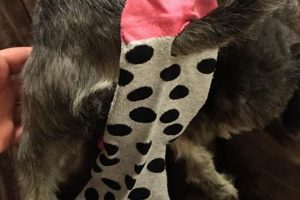
Protective coverings for canine paws, crafted at home, serve as a barrier against environmental hazards. These homemade solutions offer an alternative to commercially available products. For example, a repurposed sock, secured with tape, can temporarily shield a dog’s paws from hot pavement.
The practice of providing paw protection yields several advantages. It mitigates the risk of injuries stemming from abrasive surfaces, extreme temperatures, and chemical irritants. Historically, improvised paw wear allowed working dogs to navigate challenging terrains and climates more effectively. Such protective measures contribute significantly to a dog’s overall comfort and well-being during outdoor activities.
The subsequent discussion will delve into various construction methods, material selections, and considerations for ensuring proper fit and durability of these homemade paw protectors. Detailed instructions and safety guidelines will be presented to facilitate the creation of functional and appropriate gear for canine companions.
Essential Considerations for Homemade Canine Paw Protection
The creation of effective and safe coverings requires meticulous attention to detail. These guidelines will help ensure the resulting articles provide adequate protection without causing discomfort or injury.
Tip 1: Accurate Measurement is Crucial: Obtain precise paw dimensions before initiating construction. Variations in size and shape necessitate customized designs to prevent slippage or constriction.
Tip 2: Prioritize Breathable Materials: Select fabrics that allow for ventilation to minimize the risk of moisture buildup and subsequent dermatological issues. Avoid impermeable materials unless waterproof qualities are essential.
Tip 3: Secure Fastening Systems are Necessary: Employ adjustable straps or closures that maintain a secure fit without impeding circulation. Regularly inspect fastening mechanisms for wear and tear.
Tip 4: Reinforce High-Wear Areas: Apply durable patches or coatings to sections prone to abrasion, such as the toe and sole areas. This will extend the lifespan of the coverings and enhance their protective capabilities.
Tip 5: Implement a Gradual Acclimation Period: Introduce the coverings gradually, starting with short indoor sessions, to allow the dog to adapt to the sensation and movement restrictions. Positive reinforcement can aid in this process.
Tip 6: Regular Inspection and Maintenance are Key: Examine coverings after each use for damage, debris, or signs of irritation on the dog’s paws. Clean and repair as needed to ensure continued functionality and hygiene.
These guidelines serve as a foundation for creating safe and effective paw protection. Adherence to these principles will maximize the benefits while minimizing potential risks.
The concluding section will summarize the key aspects of constructing protective paw wear and highlight the importance of responsible application.
1. Material Selection
The selection of appropriate materials is paramount in the creation of functional and durable paw protection. The chosen fabric directly impacts the effectiveness, comfort, and safety of these homemade solutions.
- Durability and Abrasion Resistance
The material must withstand the abrasive forces encountered during typical outdoor activities. For instance, heavy-duty canvas or reinforced nylon offers superior resistance to wear and tear compared to lighter fabrics like cotton. Failure to account for abrasion can result in premature degradation and reduced protection.
- Weather Appropriateness
Environmental conditions dictate the optimal material choice. Waterproof and insulated fabrics, such as fleece-lined nylon, are suitable for cold and wet climates, providing thermal protection and preventing moisture penetration. In contrast, breathable materials, like cotton or mesh, are preferable for warmer temperatures to facilitate ventilation and minimize overheating.
- Paw Sensitivity and Comfort
Materials must be non-irritating and comfortable against the dog’s paws. Avoid coarse or abrasive fabrics that may cause chafing or discomfort. Soft, flexible materials, such as fleece or felt, can minimize friction and promote comfort during prolonged use.
- Traction and Grip
The material used for the sole directly influences traction and grip on various surfaces. Rubberized or textured materials provide enhanced grip, reducing the risk of slips and falls, particularly on ice or slick surfaces. Smooth or slippery materials may compromise stability and increase the likelihood of accidents.
The careful consideration of these factors when selecting materials is essential for maximizing the effectiveness and longevity of homemade paw protection. The right material choice ensures a comfortable, safe, and durable solution for safeguarding canine paws.
2. Accurate Sizing
Proper dimensions are crucial to the functionality of homemade canine paw coverings. Without precise measurements, the resulting articles may prove ineffective, uncomfortable, or even harmful.
- Paw Length and Width Measurement
The length and width of the paw, measured while weight-bearing, form the foundation for sizing. Insufficient length may lead to toe crowding and discomfort, while excessive length could result in tripping. Inadequate width may restrict circulation, whereas excessive width compromises stability. This necessitates the use of a ruler or measuring tape to obtain precise dimensions.
- Accounting for Paw Shape
Canine paws exhibit variations in shape, including the presence of dewclaws or disproportionate toe lengths. Generic patterns may fail to accommodate these unique features, leading to pressure points or inadequate coverage. Customizing the design to match the specific paw contour ensures a more comfortable and functional fit.
- Allowance for Sock Thickness
If intended for use with socks, an allowance for sock thickness must be incorporated into the measurements. Failure to do so may result in a fit that is too tight when socks are worn, restricting circulation or causing discomfort. A slightly larger size may be necessary to accommodate the added bulk.
- Dynamic Fit Considerations
Paw size can change slightly with activity and temperature. Exercise may cause paws to swell, while cold temperatures may cause them to contract. The design should incorporate a degree of flexibility to accommodate these fluctuations, preventing constriction or slippage under varying conditions.
Accurate sizing extends beyond mere dimensions; it necessitates an understanding of paw anatomy, anticipated usage conditions, and material properties. When these factors are meticulously considered, the resulting homemade paw coverings will offer optimal protection and comfort.
3. Secure Fit
A secure fit is paramount to the efficacy of homemade canine paw protection. The protective covering’s ability to remain in place during ambulation directly influences its capacity to safeguard the paw from environmental hazards and potential injuries. A poorly fitted covering negates its intended purpose, potentially creating new risks.
- Adjustability Mechanisms
Adjustable straps, buckles, or hook-and-loop closures are essential components of a secure fit. These mechanisms allow for fine-tuning the circumference of the covering to accommodate variations in paw size and shape, preventing slippage or constriction. For instance, multiple straps strategically positioned along the length of the boot can distribute pressure evenly, minimizing the likelihood of displacement during vigorous activity.
- Anatomical Conformance
A covering that conforms to the natural contours of the canine paw is more likely to maintain its position. Designs that incorporate anatomical considerations, such as accommodating the carpal pad or dewclaws, enhance stability and reduce the potential for rubbing or chafing. Generic, ill-fitting designs often disregard these nuances, leading to discomfort and a compromised fit.
- Material Elasticity and Grip
The material’s elastic properties and its capacity to grip the paw contribute significantly to a secure fit. Elasticized sections can provide a snug yet comfortable fit, while textured or rubberized materials on the interior lining enhance grip and minimize slippage. The interplay between these material properties ensures that the covering remains securely in place, even during dynamic movements.
- Gait Interference Assessment
A secure fit should not impede the dog’s natural gait. Covers that are too bulky, restrictive, or poorly positioned can alter the dog’s stride, leading to discomfort, fatigue, or even injury. Prior to prolonged use, it is crucial to assess the dog’s gait while wearing the coverings, ensuring that they do not cause any noticeable alterations or restrictions in movement.
The interplay between adjustability, anatomical conformance, material properties, and gait considerations dictates the overall security of the paw covering. A well-engineered design, incorporating these elements, maximizes the protective benefits while minimizing the potential for discomfort or injury. Conversely, neglecting these facets undermines the purpose of homemade paw protection, rendering it ineffective and potentially detrimental to canine well-being.
4. Weather Resistance
The ability to withstand environmental elements, denoted as weather resistance, forms a crucial performance parameter for homemade canine paw coverings. Inclement weather, encompassing rain, snow, and extreme temperatures, poses significant threats to canine paw health. Without adequate protection, prolonged exposure can lead to frostbite, chemical burns from de-icing agents, or tissue damage from abrasive surfaces. Therefore, the construction of “diy boots for dogs” must prioritize the integration of materials and designs that mitigate these environmental hazards.
The selection of waterproof fabrics, such as polyurethane-coated nylon, is paramount for constructing coverings intended for wet conditions. Such materials prevent moisture penetration, thereby reducing the risk of skin maceration and secondary infections. Similarly, insulated linings, employing materials like fleece or felt, are essential for thermal regulation in cold environments. These linings trap heat, preventing hypothermia and maintaining paw temperature within a safe physiological range. The effectiveness of weather resistance is demonstrated by its impact on canine activity; a dog fitted with appropriate coverings can maintain mobility and comfort during activities that would otherwise be prohibitive.
However, achieving optimal weather resistance poses challenges. Waterproof materials often lack breathability, potentially leading to moisture accumulation from sweat. Similarly, bulky insulation can impede mobility. Therefore, designing weather-resistant coverings requires a balance between protection and functionality. The practical significance of understanding this lies in the capacity to tailor the design and material selection to specific environmental conditions. Addressing these challenges ensures that “diy boots for dogs” effectively safeguard canine paws, contributing to their overall well-being and performance.
5. Durability
Durability, as a performance characteristic of homemade canine paw coverings, directly influences their longevity and protective capacity. The service life of these coverings, and consequently their value proposition, is inextricably linked to their ability to withstand repeated exposure to abrasive surfaces, sharp objects, and variable weather conditions. The failure of the covering material results in compromised protection, exposing the dog’s paws to potential injury. For example, a covering constructed from a flimsy material, such as thin cotton, will rapidly degrade when subjected to rough terrain, negating its intended protective function.
The selection of robust materials, reinforced seams, and robust construction techniques contributes directly to durability. High-denier nylon fabrics, ballistic weaves, and abrasion-resistant coatings enhance the covering’s ability to withstand wear and tear. Moreover, incorporating reinforced stitching at stress points, such as the toe and heel, mitigates the risk of seam failure. The practical implications of enhanced durability extend to cost-effectiveness; while initial material costs may be higher, the extended lifespan reduces the frequency of replacements, ultimately proving more economical.
In summary, durability is a non-negotiable attribute of effective canine paw protection. Compromising durability in pursuit of cost savings undermines the primary objective of safeguarding canine paws. The judicious selection of resilient materials and construction methods ensures that homemade coverings offer prolonged protection and economic value, contributing directly to canine well-being.
6. Comfort
The concept of comfort is integral to the successful implementation of “diy boots for dogs.” Ill-fitting or uncomfortable coverings are likely to be rejected by the animal, rendering them ineffective. A primary cause of rejection stems from abrasive materials or designs that restrict natural paw movement. For instance, a homemade boot constructed with rigid seams pressing against the dog’s paw pads creates discomfort, leading the dog to resist wearing the boot or attempt to remove it. Comfort, therefore, is not merely a desirable attribute but a necessary component for ensuring consistent paw protection.
Material selection and design play a crucial role in maximizing comfort. Soft, flexible fabrics such as fleece or felt, when used as interior linings, minimize friction and prevent chafing. Similarly, designs that incorporate a wide toe box and ample space for paw expansion during activity enhance comfort and promote natural movement. One practical application of this understanding is the creation of adjustable closures that allow for a customized fit, preventing constriction while maintaining secure attachment. Furthermore, gait observation following boot application is essential to identify any signs of discomfort, such as altered stride or reluctance to bear weight on the covered paw. Addressing these observations through design modifications enhances comfort and promotes compliance.
In conclusion, comfort is not a secondary consideration but a fundamental requirement for “diy boots for dogs” to achieve their protective purpose. Careful material selection, anatomically conscious design, and attention to gait dynamics are essential for maximizing comfort and ensuring consistent usage. Overlooking this critical aspect can result in non-compliance and render the boots ineffective, negating the effort invested in their creation. Prioritizing comfort directly translates to improved paw protection and enhanced canine well-being.
7. Safety
Safety is a paramount consideration in the design and utilization of homemade canine paw coverings. The purpose of these coverings is, inherently, protective. Yet, poorly designed or improperly used items can introduce new hazards, counteracting the intended benefit. For example, boots constructed with loose straps present a tripping hazard. Likewise, coverings made from non-breathable materials, particularly in warm weather, can lead to overheating and paw tissue damage. The intrinsic value of canine paw protection is only realized when safety considerations are rigorously integrated into all phases of design and application. The causal relationship between diligent safety practices and positive outcomes is evident: adherence to guidelines minimizes risk, whereas negligence invites potential harm.
Practical applications of safety-conscious design include the selection of non-toxic materials to prevent chemical exposure should the dog chew on the coverings. Reflective materials can enhance visibility during low-light conditions, reducing the risk of vehicular accidents. Furthermore, incorporating quick-release mechanisms in the fastening system allows for rapid removal in the event of entanglement or other emergencies. Regularly inspecting the coverings for signs of wear and tear, and replacing them as needed, also contributes significantly to maintaining a safe environment for the canine. In snowy or icy conditions, the selection of appropriate materials with proper grip is essential in preventing slips and falls, which can result in bone fractures or other injuries.
In summary, safety is not an optional addendum but a foundational element in the crafting and deployment of “diy boots for dogs.” Adherence to established safety protocols, encompassing material selection, design considerations, and consistent maintenance, is crucial to mitigate potential risks and ensure the coverings fulfill their intended purpose without compromising the well-being of the animal. A failure to prioritize safety undermines the rationale for paw protection, potentially leading to outcomes that are more detrimental than beneficial. Diligence in this aspect ensures the boots contribute positively to the canine’s health and safety.
Frequently Asked Questions
The following questions address common inquiries regarding the construction and utilization of homemade canine paw coverings. The provided answers aim to clarify misconceptions and offer practical guidance.
Question 1: What are the primary benefits of crafting paw coverings at home as opposed to purchasing commercially available options?
Homemade alternatives can offer cost savings and customization options. Specific needs, such as accommodating unusual paw shapes or specialized protective requirements, can be addressed more effectively through custom construction. The ability to select materials based on specific environmental conditions is another advantage.
Question 2: Which materials are deemed unsuitable for the construction of canine paw coverings, and why?
Materials that lack breathability, such as non-porous plastics, are generally unsuitable due to the risk of moisture accumulation and subsequent dermatological issues. Similarly, abrasive materials can cause chafing and discomfort. Fragile materials that degrade quickly under normal usage conditions are also not recommended.
Question 3: How should the fit of homemade paw coverings be assessed to ensure both comfort and functionality?
The fit should be snug but not restrictive, allowing for full range of motion without slippage. Observe the dog’s gait for any signs of discomfort or altered stride. Check for pressure points or areas of rubbing after initial use. Adjustable closures are crucial for achieving a customized and secure fit.
Question 4: What are the potential risks associated with prolonged use of paw coverings, and how can these risks be mitigated?
Prolonged use can lead to overheating, particularly in warm weather. Regular breaks and the use of breathable materials can mitigate this risk. Additionally, constant wear can cause chafing; regular inspection of the paws and the use of soft inner linings can help prevent irritation. The risk of restricting blood circulation can be minimized by ensuring the boots are properly fitted.
Question 5: How should homemade paw coverings be cleaned and maintained to ensure hygiene and longevity?
Regular cleaning with mild soap and water is recommended to remove dirt and debris. Allow the coverings to air dry completely before storage. Inspect the seams and closures regularly for wear and tear, and repair or replace as needed. Proper cleaning and maintenance extends the life of the paw coverings.
Question 6: Is it advisable to use paw coverings on all surfaces, or are there specific environments where they are particularly beneficial or detrimental?
Paw coverings are particularly beneficial on abrasive surfaces such as pavement, in extreme temperatures (both hot and cold), and in environments with chemical irritants such as de-icing salts. Their use may be detrimental on surfaces where they reduce traction, such as smooth ice. Assess the environment before each use.
These questions provide a foundational understanding of key considerations when creating and utilizing homemade canine paw coverings. Adherence to these principles enhances the safety, comfort, and effectiveness of the coverings.
The next section will address advanced topics in canine paw protection and offer insights into troubleshooting common issues.
diy boots for dogs
The preceding discourse has comprehensively explored the creation and application of homemade canine paw protection. Critical factors, including material selection, accurate sizing, secure fit, weather resistance, durability, comfort, and safety, have been rigorously examined. The analyses presented provide a framework for constructing functional and appropriate gear for canine companions, empowering individuals to address specific environmental challenges and individual canine needs.
Responsible application of these protective measures hinges upon diligent adherence to established guidelines and a thorough understanding of individual canine physiology and behavior. Continued research and development in material science and design methodologies promise to further enhance the efficacy and comfort of canine paw coverings. The diligent pursuit of knowledge and the responsible application of these principles are essential for ensuring the well-being and safety of canine partners across diverse environments.