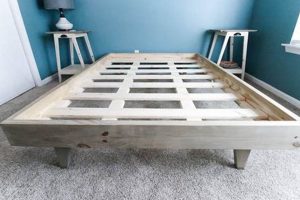
A do-it-yourself project involving the construction of a sliding platform designed to extend from beneath a bed frame. This typically aims to improve access to items stored under the bed, maximizing storage capacity within a limited space. For instance, rather than reaching and straining to access items at the back of an under-bed container, a homeowner might create a platform that rolls out, bringing the contents forward for easy retrieval.
Such a project provides an efficient and customizable storage solution. It offers a practical approach to organizing items within a bedroom or living space, especially where space is at a premium. Historically, optimizing storage has been a significant concern, particularly in smaller homes or apartments. Creating a rolling system for under-bed storage addresses this issue directly, leading to improved space utilization and a more organized living environment. Its success lies in the convenience it provides, allowing users to access their belongings quickly and easily.
The following sections will detail the planning process, required materials, construction techniques, and finishing options involved in creating an effective and durable under-bed storage solution.
Tips for Constructing a Bed Slide
The following guidelines aim to assist in the creation of a functional and structurally sound sliding bed storage system. Careful consideration of these points will contribute to a successful outcome.
Tip 1: Material Selection: Prioritize durable materials suitable for bearing weight and withstanding friction. Plywood or solid wood are recommended choices for the platform’s base and sides. Bearing hardware, such as heavy-duty casters, should be chosen based on the anticipated load.
Tip 2: Precise Measurements: Accurate measurement of the under-bed space is critical. Allow sufficient clearance for smooth operation, taking into account the thickness of the materials used and any existing bed frame components. The slide should extend fully without obstruction.
Tip 3: Robust Frame Construction: The frame should be constructed with strong joints to prevent racking and ensure stability. Employ wood glue and screws, or consider using pocket hole joinery for added strength. Reinforce corners with brackets if necessary.
Tip 4: Smooth Sliding Mechanism: Invest in high-quality casters designed for smooth, quiet operation. Ensure they are properly aligned and securely attached to the frame. Consider using drawer slides for a more controlled and stable movement.
Tip 5: Safety Considerations: Round all sharp edges and corners to prevent injury. Apply a non-toxic finish to protect the wood and improve aesthetics. Ensure the slide mechanism includes a stop to prevent it from rolling out completely.
Tip 6: Weight Distribution: Evenly distribute the load across the platform to prevent uneven wear and tear on the sliding mechanism. Avoid concentrating heavy items in one area of the slide.
Tip 7: Regular Maintenance: Periodically inspect the slide for any signs of wear, loose hardware, or debris. Clean the casters and lubricate them as needed to maintain smooth operation.
Adhering to these guidelines will enhance the functionality, durability, and safety of the under-bed storage system, contributing to an efficient and well-organized living space.
The subsequent sections will explore advanced construction techniques and design considerations for optimizing the functionality and aesthetic appeal of the bed slide.
1. Planning Dimensions
The accuracy of planned dimensions is paramount to the successful execution of a bed slide. Without precise measurements and considerations, the project risks becoming unusable or structurally unsound. Proper dimensional planning impacts functionality, ease of use, and integration within the designated space.
- Under-Bed Clearance
This dimension dictates the maximum height of the slide. Insufficient clearance prevents smooth operation, while excessive clearance wastes space. Measuring from the floor to the lowest point of the bed frame, while accounting for carpet or rugs, is crucial. An accurate assessment ensures the slide will fit and function as intended without obstruction.
- Width and Depth Constraints
The width determines the maximum storage area accessible via the slide. The depth influences how far the slide extends from under the bed. Limitations imposed by the room’s layout, such as proximity to walls or furniture, must be considered. Optimal dimensions maximize storage while maintaining accessibility and avoiding obstructions. A narrow slide may not be useful for storage, while a very long one may block doorways.
- Caster Height and Placement
The caster height contributes to the overall height of the bed slide, impacting under-bed clearance. The placement of casters affects stability and weight distribution. Casters must be rated to support the anticipated load. Incorrect caster height or placement can lead to structural instability, making the slide difficult to maneuver or prone to tipping. If there are issues, users must consider redoing their plans.
- Material Thickness Considerations
The thickness of the chosen materials affects the overall dimensions and structural integrity of the bed slide. Thicker materials provide greater strength but reduce internal storage space. Accurate accounting for material thickness is essential during the planning phase to avoid discrepancies between the design and the final product. Dimensions must be recalculated by material thickness.
These dimensional considerations directly influence the final outcome. Thorough planning ensures a bed slide that fits seamlessly, operates smoothly, and provides effective storage without compromising the integrity of the surrounding space. A failure to properly account for these dimensions can result in a cumbersome or non-functional unit, undermining the purpose of the project.
2. Material Selection
The selection of appropriate materials is a foundational determinant in the success of any bed slide construction. The interaction between material properties and the intended function dictates the durability, load-bearing capacity, and overall lifespan of the finished product. For instance, utilizing low-grade particleboard for the slide platform might initially appear cost-effective; however, its susceptibility to moisture damage and limited structural integrity will likely result in premature failure under load. Conversely, employing solid hardwood, while more expensive, offers superior strength and resistance to warping, directly contributing to a more robust and long-lasting structure.
The choice of materials also extends to the hardware components. The selection of casters, for example, must align with the anticipated weight load. Using undersized casters can lead to premature wear, difficulty in maneuvering the slide, and potential damage to flooring. Furthermore, the type of fastenersscrews versus nails, for instanceinfluences the strength of the joinery. Screws generally offer greater holding power than nails, especially when used in conjunction with wood glue. Consider the potential effect on the slide.
In summary, material selection directly impacts the functionality and longevity of a bed slide. The appropriate choice of materials, from the platform to the hardware, ensures structural integrity, smooth operation, and resistance to environmental factors. A deliberate and informed approach to material selection constitutes a critical component of a successful bed slide project.
3. Construction Techniques
Construction techniques represent a critical component within the undertaking of creating a bed slide. These techniques dictate the structural integrity, functionality, and longevity of the finished product. Improper joinery, for instance, can compromise the stability of the slide, leading to sagging, racking, or even complete failure under load. Conversely, the employment of robust techniques, such as mortise-and-tenon joints or reinforced mitered corners, enhances the frame’s resistance to stress and ensures its ability to withstand repeated use. If the slide is unstable, it presents safety hazards.
The selection of appropriate fastening methods also falls under the umbrella of construction techniques. While nails might offer a faster assembly process, screws provide significantly greater holding power, especially when used in conjunction with wood glue. Proper screw selection, encompassing length, gauge, and head type, is crucial for ensuring a secure and durable connection between components. For example, utilizing pocket hole joinery to connect the side panels to the base offers a clean, strong joint that is less prone to splitting or loosening over time. The user would be glad he or she used these techniques.
In conclusion, mastering appropriate construction techniques is paramount to the successful execution of a bed slide project. A solid foundation in joinery methods, fastening techniques, and overall structural design translates directly into a functional, durable, and safe storage solution. Therefore, individuals embarking on such a project should prioritize acquiring the necessary knowledge and skills to ensure a satisfactory and lasting outcome.
4. Hardware Integration
Hardware integration is a critical aspect of constructing a functional and durable bed slide. The proper selection and installation of hardware components directly influence the ease of use, load-bearing capacity, and longevity of the final product. Neglecting this aspect can result in a substandard build prone to failure or operational difficulties.
- Caster Selection and Mounting
Casters facilitate the smooth movement of the bed slide. Their load rating must exceed the anticipated weight of the stored items, and the mounting method must ensure secure attachment to the slide frame. Inadequate caster selection leads to difficult operation, premature wear, and potential damage to flooring. For example, using small, plastic casters on a slide designed to hold heavy storage containers will likely result in caster failure and restricted movement. Secure mounting, typically involving bolts and reinforcing plates, is essential to prevent casters from detaching under load.
- Drawer Slides and Glides
For a more controlled and stable sliding action, drawer slides or glides can be integrated. These components provide smooth, linear movement and prevent the slide from racking or tilting. Choosing the appropriate slide weight rating and length is essential for optimal performance. For example, a full-extension drawer slide allows complete access to the contents of the slide, while a three-quarter extension slide offers partial access. Inadequate slide selection results in instability and operational difficulties.
- Handles and Pulls
Handles or pulls facilitate the easy extension and retraction of the bed slide. Ergonomic design and secure attachment are essential for user convenience and safety. A poorly designed or inadequately attached handle can make the slide difficult to operate and may present a safety hazard. A recessed handle, for instance, minimizes the risk of snagging on bedding or clothing.
- Fasteners and Connectors
Screws, bolts, and other connectors are crucial for assembling the bed slide frame and attaching hardware components. The selection of appropriate fastener types and sizes ensures structural integrity and prevents premature loosening or failure. Using undersized screws or neglecting to apply wood glue can compromise the strength of the joints, leading to instability and reduced lifespan.
The successful integration of hardware elements transforms a basic storage platform into a user-friendly and reliable bed slide. The careful consideration of component selection, mounting techniques, and ergonomic design principles contributes to a finished product that enhances both functionality and convenience.
5. Finishing Details
Finishing details represent the final stage in bed slide construction, impacting both the aesthetic appeal and the long-term durability of the unit. The selection of appropriate finishes, such as sealants, paints, or stains, plays a crucial role in protecting the wood from moisture damage, scratches, and general wear and tear. For example, applying a polyurethane coating to the slide platform creates a resilient barrier against spills and abrasions, extending its lifespan and maintaining its appearance. Conversely, neglecting to apply a finish leaves the wood vulnerable to environmental factors, potentially leading to warping, cracking, or discoloration over time. The result of proper finishing is a durable and visually appealing product. The impact of proper finishing is tangible and long-lasting.
Beyond protection, finishing details also contribute to the overall safety of the bed slide. Sanding sharp edges and corners, followed by the application of a smooth, non-toxic finish, minimizes the risk of splinters and accidental injuries. This is particularly important in households with children. For instance, a bed slide constructed with exposed, rough edges poses a potential hazard, whereas a slide with rounded edges and a smooth finish provides a safer and more comfortable user experience. Choosing the right finishes also improves the look of the slide.
In summary, finishing details are not merely cosmetic enhancements but integral components of a well-executed bed slide. They provide essential protection against environmental damage, enhance user safety, and contribute significantly to the overall aesthetic appeal of the finished product. A thorough and deliberate approach to finishing details is a key determinant of a successful and long-lasting bed slide construction. The finishing of the slide adds to the user experience.
Frequently Asked Questions
The following section addresses common inquiries regarding the construction and implementation of a do-it-yourself bed slide. These answers are designed to provide clarity and guidance for those undertaking this project.
Question 1: What is the optimal material for the bed slide platform to maximize load capacity?
Plywood, specifically hardwood plywood with a thickness of at least inch, offers a balance of strength, stability, and affordability. Solid wood is a viable alternative but may be more expensive and prone to warping depending on the species. Particleboard is generally not recommended due to its limited load-bearing capacity and susceptibility to moisture damage.
Question 2: How does one ensure the bed slide operates smoothly and quietly?
Employ high-quality casters with ball bearings and a non-marking wheel material, such as polyurethane. Ensure proper alignment of the casters and lubricate them periodically with a silicone-based lubricant. Alternatively, utilize drawer slides with a soft-close mechanism for smoother and quieter operation. The alignment is a very important point.
Question 3: What safety precautions should be observed during the construction process?
Wear appropriate personal protective equipment, including safety glasses, gloves, and a dust mask. Work in a well-ventilated area. Use caution when operating power tools and adhere to all manufacturer safety guidelines. Sand all sharp edges and corners to prevent splinters and injuries. A failure to observe caution may result in harm.
Question 4: How does one determine the appropriate dimensions for the bed slide?
Measure the under-bed clearance precisely, accounting for the thickness of the materials and the height of the casters. Allow sufficient clearance for smooth operation. The width and depth of the slide should be determined based on storage needs and the available space. Accurate measurements are essential for a functional bed slide.
Question 5: What is the best method for securing the bed slide frame?
Employ a combination of wood glue and screws for maximum strength. Pocket hole joinery is an effective technique for creating strong and concealed joints. Reinforce corners with metal brackets if necessary. The frame’s joints bear the slide’s load, so they must be stable.
Question 6: How does one prevent the bed slide from rolling out completely and potentially causing injury or damage?
Install a stop mechanism, such as a wooden block or metal bracket, to limit the travel of the slide. The stop should be positioned to prevent the slide from extending beyond a safe distance. Users may consider a wheel lock instead of a stop mechanism.
In summary, careful planning, proper material selection, adherence to safety guidelines, and precise execution are essential for creating a functional, durable, and safe bed slide.
The following section explores design considerations for optimizing the functionality and aesthetic appeal of the bed slide.
Bed Slide DIY
The preceding discussion has explored the multifaceted nature of bed slide DIY projects, encompassing dimensional planning, material selection, construction techniques, hardware integration, and finishing details. A comprehensive understanding of these elements is crucial for successful project completion and the creation of a functional and durable under-bed storage solution. The absence of meticulous planning or the utilization of substandard materials can compromise the integrity and longevity of the resulting structure.
The successful implementation of a bed slide represents a practical approach to space optimization and organization. Further development of innovative designs and the incorporation of advanced materials hold the potential to enhance both the functionality and aesthetic appeal of these storage solutions. Individuals considering embarking on such a project should prioritize thorough research and meticulous execution to ensure a satisfactory and lasting outcome, thereby maximizing the benefits of this space-saving innovation.