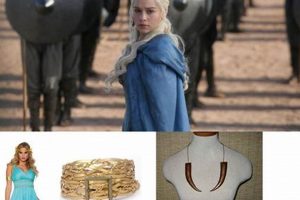
A self-made medieval outfit involves creating attire inspired by the Middle Ages through individual effort, often utilizing readily available materials and adapted patterns. Examples include crafting a tunic from linen fabric, assembling a simple circlet from wire and beads, or constructing a heraldic shield from cardboard and paint. The creation process emphasizes resourcefulness and personalized interpretation of historical styles.
The practice of constructing period-specific garments offers numerous advantages. It allows for cost-effective participation in historical reenactments, Renaissance fairs, and theatrical productions. Furthermore, the activity fosters a deeper understanding of historical clothing construction techniques and material usage. In a historical context, individuals often tailored or created their own garments, reflecting a necessity driven by economic conditions and limited access to manufactured clothing.
This exploration will delve into various aspects of crafting such attire, encompassing fabric selection, pattern adaptation, embellishment techniques, and considerations for historical accuracy. It aims to provide a foundation for individuals interested in pursuing this creative endeavor, enabling them to produce their own historically-inspired garments.
Tips for Constructing Self-Made Medieval Attire
The following suggestions provide practical guidance for individuals embarking on the creation of medieval-inspired garments. Attention to detail and informed material selection will contribute to the authenticity and durability of the finished product.
Tip 1: Research Historical Accuracy. Prior to commencing construction, conduct thorough research into the specific period and social class intended for portrayal. Examine primary sources, such as illuminated manuscripts and extant garments, to ensure accuracy in silhouette, construction methods, and embellishments.
Tip 2: Select Appropriate Fabrics. Opt for natural fibers such as linen, wool, or cotton, depending on the desired aesthetic and climate. Synthetic fabrics should be avoided as they were unavailable during the Middle Ages. Consider the weight and texture of the fabric to replicate the look and feel of historical textiles.
Tip 3: Adapt Existing Patterns. Commercially available patterns may require significant modification to achieve historical accuracy. Focus on simplified shapes and avoid modern tailoring techniques. Consult historical costuming resources for guidance on pattern drafting and alteration.
Tip 4: Employ Period-Appropriate Sewing Techniques. Utilize hand-sewing techniques whenever feasible, as these reflect historical methods. If machine sewing is employed, ensure that stitches are concealed or mimic hand-sewn construction. Pay attention to seam finishes and avoid modern overlocking techniques.
Tip 5: Focus on Simplicity and Functionality. Medieval clothing was primarily functional and characterized by simple designs. Avoid overly elaborate details or embellishments that are not supported by historical evidence. Prioritize comfort and practicality in the design and construction process.
Tip 6: Consider Layering. Medieval attire often consisted of multiple layers, allowing for adaptability to varying weather conditions. Plan for undergarments, tunics, and outer garments to create a complete and historically plausible ensemble. Ensure each layer is compatible with the overall silhouette and design.
Tip 7: Accessorize with Authenticity. The inclusion of appropriate accessories, such as belts, pouches, and headwear, can significantly enhance the overall authenticity of the outfit. Research and select accessories that are consistent with the intended period and social class. Avoid anachronistic items or embellishments.
Adherence to these guidelines will improve the accuracy and historical credibility of self-constructed medieval costumes. Careful planning, informed material selection, and attention to detail will contribute to a more authentic and satisfying result.
These tips lay the groundwork for successful creation, leading into a discussion of specific projects and techniques.
1. Historical Research

The foundation of any credible self-made medieval outfit lies in rigorous historical research. Without such investigation, the resulting garment risks being a pastiche of inaccurate details, failing to accurately represent the intended era and social class. This research directly influences design decisions, material choices, and construction methods. For example, constructing a 14th-century noblewoman’s gown necessitates consulting illuminated manuscripts, surviving garment fragments, and scholarly texts to determine the correct silhouette, fabric types (e.g., fine wool or silk), and appropriate embellishments such as embroidery or applied braids. The absence of this groundwork can lead to the utilization of anachronistic materials (e.g., synthetic fabrics) or construction techniques (e.g., modern zippers), undermining the garment’s authenticity.
Furthermore, historical research provides a critical understanding of social norms and sumptuary laws that governed clothing in the Middle Ages. These regulations dictated which fabrics, colors, and styles were permissible for different social classes. Ignoring these distinctions can result in the creation of a costume that is socially and historically implausible. For instance, portraying a peasant wearing vibrant purple silk, a color typically reserved for royalty and the upper clergy, would be a significant departure from historical accuracy. Examination of museum collections, historical reenactment groups’ documented research, and academic publications offer practical resources for gaining this necessary knowledge. These resources provide detailed information about specific garments, construction techniques, and social contexts.
In conclusion, historical research serves as the bedrock upon which any successful endeavor to create medieval clothing must be built. Its importance is multifaceted, influencing aesthetic choices, material selection, construction techniques, and adherence to social conventions. Thorough research is indispensable to crafting authentic and believable garments. While the process can be time-consuming, the investment yields a significantly more accurate and compelling representation of the Middle Ages. The potential challenges of accessing reliable information are mitigated by a growing availability of online resources and the expertise of historical costuming communities.
2. Fabric Selection
Fabric selection constitutes a critical determinant in the creation of historically plausible self-made medieval attire. The choice of materials impacts not only the visual appearance of the finished garment but also its texture, drape, and overall authenticity. Discrepancies between chosen textiles and those historically accurate for a specific period can significantly detract f
rom the credibility of the outfit.
- Fiber Content and Authenticity
Fiber content directly correlates with historical accuracy. Linen, wool, and silk represent prevalent materials during the Middle Ages, each possessing distinct properties and uses. Cotton, while present in some regions, was less common in Europe. The employment of synthetic fibers, entirely absent from the period, constitutes a significant anachronism. For instance, utilizing polyester to create a serf’s tunic fundamentally contradicts historical reality.
- Weave and Texture
The weave and texture of a fabric influence its appearance and drape. Plain weaves, twills, and damasks were common, offering varying degrees of visual interest and durability. Rough, homespun textures characterized lower-class garments, while finer, smoother textiles denoted higher social standing. A rough woolen broadcloth, for example, would be appropriate for a peasant’s overcoat, while velvet would be suitable only for a noble’s mantle. Visual inspection of historical artifacts and consultation of costuming resources aid in making informed decisions.
- Dye and Color
The method of dyeing and the resulting color significantly affect the historical plausibility of the garment. Natural dyes, derived from plants, insects, and minerals, produced a range of colors that differed from modern synthetic dyes. Certain colors, such as Tyrian purple, were highly expensive and restricted to royalty. The intensity and hue of the chosen dye should align with historical palettes. A modern, vibrant blue, achieved through synthetic dyes, would be inappropriate for a 12th-century garment.
- Weight and Drape
The weight and drape of the fabric influence the garment’s silhouette and movement. Heavier fabrics, such as wool, create structured shapes, while lighter fabrics, like linen, produce softer drapes. The intended garment’s function should dictate the fabric’s weight. A heavy wool surcoat necessitates a sturdy fabric capable of supporting its structure, while a linen chemise demands a lightweight material conducive to breathability.
In summation, fabric selection is not merely a matter of aesthetic preference but a crucial exercise in historical accuracy. Thoughtful consideration of fiber content, weave, dye, and weight enables the creation of self-made medieval attire that reflects a deeper understanding of the period and its material culture. The successful integration of appropriate fabrics elevates the realism and educational value of the endeavor.
3. Pattern Adaptation

Pattern adaptation constitutes a critical juncture in the creation of self-made medieval attire. Mass-produced patterns, particularly those marketed as “medieval” costumes, frequently incorporate inaccuracies in silhouette, construction techniques, and sizing, rendering them unsuitable for achieving historical fidelity. Therefore, adaptation becomes essential to align the pattern with available historical evidence and construction methods. Failure to adequately adapt a pattern results in garments that, while superficially resembling medieval attire, lack the subtle details and nuanced construction indicative of the period.
Adaptation can involve a multitude of adjustments, including modifying the overall shape of the garment, altering sleeve construction, adjusting neckline and hemline shaping, and incorporating historically accurate seam finishes. For example, a modern pattern for a 14th-century cotehardie, often featuring set-in sleeves and a shaped waist, would require significant alterations to reflect the more historically accurate drop-shoulder construction and looser fit prevalent during that era. Moreover, the adaptation process necessitates consideration of fabric drape and weight. A pattern drafted for modern quilting cotton may require significant adjustments when executed in a heavier wool fabric, due to differences in how the fabric drapes and conforms to the body. Researching extant garments and historical pattern diagrams provides critical guidance during the adaptation process. By comparing pattern shapes and construction details with historical examples, individuals can identify areas requiring modification and develop informed adaptation strategies.
In summation, pattern adaptation is not merely a superficial adjustment but a fundamental step in creating authentic self-made medieval outfits. It is a process driven by historical research, material considerations, and a commitment to accuracy. While the task presents challenges, demanding skill and patience, the resulting garment demonstrates a significantly enhanced level of historical plausibility. This process contributes substantively to the educational value and visual impact of the completed attire, bridging the gap between modern pattern design and historically accurate garment construction.
4. Construction Techniques

Construction techniques employed in the creation of self-made medieval attire directly influence the authenticity and durability of the finished garment. Inaccurate or anachronistic construction methods compromise the historical accuracy of the piece, diminishing its educational and representational value. The implementation of period-appropriate techniques, conversely, not only enhances the garment’s visual fidelity but also provides a tangible connection to the historical period. For example, the use of hand-sewing, common in earlier periods, versus machine sewing significantly alters the aesthetic and structural integrity of a tunic. Hand-sewn seams often exhibit a distinct visual texture and a different level of flexibility compared to machine-sewn seams, reflecting the labor-intensive nature of historical garment production. Similarly, the method of attaching sleeves, whether set-in as in modern tailoring or attached using more historically accurate methods such as drop-shoulder or gusseted construction, dramatically affects the garment’s silhouette and range of motion. The choice of seam finishes, such as flat-felled seams or simple overcast stitches, rather than modern serged edges, further contributes to the garment’s overall historical plausibility. The selection of historically accurate construction methods is not merely an aesthetic choice; it is a fundamental aspect of recreating the material culture of the Middle Ages.
Practical application of this understanding is evident in various scenarios, from historical reenactments to theatrical productions. In reenactment settings, authenticity is paramount, and participants often dedicate significant time to researching and replicating historical construction techniques. This rigorous adherence to historical methods allows for a more immersive and educational experience, fostering a deeper understanding of the period. In theatrical costuming, while strict historical accuracy may be less critical, informed choices regarding construction techniques can still significantly enhance the visual impact and credibility of the costumes. For example, using historically inspired draping techniques to create a gown, even if machine-sewn for expediency, can result in a more visually compelling and believable garment compared to a poorly constructed, albeit hand-sewn, alternative. Understanding the underlying principles of historical garment construction empowers costumers to make informed decisions that balance accuracy with practical considerations such as time and budget con
straints.
In conclusion, the connection between construction techniques and self-made medieval attire is inextricable. The choice of construction methods directly affects the historical accuracy, durability, and overall aesthetic of the garment. While challenges exist in mastering historical techniques and balancing authenticity with practical limitations, the rewards are significant. Careful attention to construction techniques transforms a generic costume into a tangible representation of the Middle Ages, fostering a deeper appreciation for the skills and ingenuity of past generations. Continued exploration of historical sources and experimentation with traditional techniques will contribute to a more nuanced and informed understanding of medieval garment construction.
5. Embellishment Methods
Embellishment methods represent a crucial facet of self-made medieval attire, directly influencing its historical accuracy and visual impact. The application of embroidery, applied trims, or decorative stitching, when executed in a historically plausible manner, elevates a simple garment to a more refined and authentic representation of medieval aesthetics. Conversely, the use of anachronistic or poorly executed embellishments detracts from the overall credibility of the costume. For example, the addition of machine-embroidered designs incorporating modern motifs to a 14th-century gown would introduce a significant visual dissonance, undermining the intended historical impression. The choice of embellishment method, therefore, warrants careful consideration, informed by rigorous research and a commitment to historical accuracy. The cause-and-effect relationship is clear: historically appropriate embellishments enhance authenticity, while inappropriate ones diminish it.
Real-life examples illustrate the practical significance of this understanding. Consider the recreation of a Bayeux Tapestry scene for a historical reenactment. The application of simple couching stitches, replicating the original tapestry’s embroidery technique, would be essential for achieving a visually compelling and historically accurate portrayal. Similarly, the embellishment of a noble’s surcoat with heraldic embroidery, executed using period-appropriate silk threads and stitching patterns, would significantly enhance its visual impact and communicate the wearer’s social status. The absence of such embellishments, or their replacement with inaccurate substitutes, would diminish the overall authenticity of the reenactment. The practical application extends to stage and screen costuming where the careful choice of embellishment can significantly impact the visual storytelling and create a more believable world for the audience.
In summary, embellishment methods are not merely decorative add-ons but integral components of constructing convincing self-made medieval attire. The selection and execution of these methods directly impact the perceived authenticity and visual appeal of the finished garment. Challenges lie in researching accurate patterns and techniques and sourcing appropriate materials, particularly in modern contexts. However, the effort invested in mastering historically plausible embellishment methods yields a significant return, transforming a simple self-made garment into a tangible representation of medieval artistry and culture. A deeper understanding of these elements allows for more accurate portrayals and enriched appreciation of the past.
6. Accessorizing Details
Accessorizing details wield substantial influence over the perceived authenticity and completeness of a self-made medieval outfit. These elements, encompassing belts, pouches, headwear, footwear, and jewelry, function as critical signifiers of social status, occupation, and period accuracy. Their inclusion, when meticulously researched and appropriately executed, elevates a basic garment ensemble into a cohesive and credible representation of a specific medieval persona. Conversely, the omission of essential accessories or the incorporation of anachronistic items detracts significantly from the overall impression, diminishing the garment’s ability to convincingly portray the intended historical context. For example, a self-constructed 14th-century merchant’s tunic, while skillfully crafted, appears incomplete and less persuasive without a leather belt, a small pouch for carrying coins, and appropriately styled footwear. The absence of these items creates a visual void, hindering the viewer’s ability to fully connect with the character and the historical setting.
Historical reenactments provide a tangible illustration of the importance of accessorizing details. Reenactors frequently dedicate considerable effort to researching and replicating accessories that accurately reflect the time period and social class they are portraying. This dedication to detail extends to the crafting of hand-stitched leather belts, the construction of linen coifs and caps, and the sourcing or creation of replica jewelry based on archaeological finds. The impact of these efforts is readily apparent; a reenactor adorned with historically accurate accessories projects a far more convincing image than one whose accessories are generic or anachronistic. Likewise, in theatrical and film productions, costume designers prioritize the selection and creation of appropriate accessories to enhance the visual storytelling and create a believable world for the audience. The effectiveness of these choices directly affects the audience’s immersion in the narrative and their ability to connect with the characters and the historical setting.
In summary, accessorizing details serve as indispensable components of self-made medieval attire. Their inclusion, guided by thorough research and accurate execution, significantly enhances the garment’s authenticity and completeness. Challenges lie in sourcing accurate materials and replicating historical construction techniques. However, the investment in creating or acquiring appropriate accessories yields substantial returns, transforming a basic garment into a nuanced and convincing portrayal of medieval life. Further exploration of historical resources and engagement with costuming communities will foster a deeper understanding of the art and science of medieval accessorizing.
7. Affordability

The consideration of affordability stands as a central tenet in the pursuit of constructing one’s own medieval attire. Economic constraints often dictate the scope and complexity of such projects, necessitating resourcefulness and creative adaptation to achieve a presentable and reasonably accurate result. The ability to create convincing medieval costumes on a budget expands accessibility to historical reenactment, theatrical productions, and educational endeavors.
- Material Substitution and Cost Reduction
The strategic substitution of historically accurate yet expensive materials with more readily available and affordable alternatives represents a primary method of cost containment. Linen, silk, and high-quality wool, while historically appropriate, often command premium prices. Substituting these with cotton, less expensive wool blends, or even repurposed fabrics significantly reduces the overall expense. For example, utiliz
ing canvas or heavy cotton in place of linen for undergarments proves a cost-effective solution without drastically compromising the visual effect. - Pattern Simplification and Waste Minimization
Simplifying complex patterns and optimizing fabric layouts minimizes material waste, translating directly to cost savings. Elaborate designs with intricate cuts and numerous seams consume more fabric, increasing the financial burden. Opting for simpler tunic designs, utilizing rectangular pattern pieces, and carefully planning fabric layouts to minimize scraps reduce material consumption. The implementation of efficient cutting techniques further reduces fabric waste.
- Resourcefulness and Upcycling
Employing resourcefulness and upcycling pre-existing materials provides significant opportunities for cost reduction. Existing garments, thrift store finds, and discarded textiles can be repurposed into medieval-inspired attire. For instance, old curtains or bedsheets can be dyed and transformed into tunics or cloaks. The resourceful utilization of available materials not only minimizes expenses but also promotes sustainable practices.
- Handcrafting over Purchased Embellishments
The creation of embellishments by hand, rather than purchasing pre-made trims and accessories, offers substantial cost savings. Embroidered details, applied braids, and decorative stitching, when purchased commercially, often represent a significant expense. Learning basic embroidery techniques and crafting trims from leftover fabric scraps reduces reliance on costly commercial products. This approach promotes skill development and allows for greater personalization of the attire.
These considerations highlight the central role of affordability in the DIY medieval costume landscape. The successful creation of convincing and historically inspired attire on a budget necessitates a strategic approach, encompassing material substitution, pattern simplification, resourcefulness, and handcrafted embellishments. The ability to navigate these considerations effectively expands accessibility to historical costuming and promotes creative problem-solving.
Frequently Asked Questions
The following questions and answers address common inquiries regarding the creation of historically inspired garments, providing clarity on potential challenges and best practices.
Question 1: What constitutes a historically accurate “diy medieval costume”?
Historical accuracy in self-made medieval attire refers to the degree to which the garment reflects the materials, construction techniques, and styles prevalent during a specific period and social class within the Middle Ages. Achieving complete accuracy is often impractical and expensive, but striving for a reasonable level of fidelity enhances the garment’s educational and representational value.
Question 2: Is it essential to hand-sew an entire garment for it to be considered authentic?
While hand-sewing represents the primary construction method during much of the Middle Ages, it is not always a practical requirement for modern self-made projects. The strategic use of machine sewing, with careful attention to concealing stitches and replicating hand-sewn seam finishes, can be an acceptable compromise for expediency, especially for larger projects. However, incorporating hand-sewing techniques for visible details and embellishments significantly enhances the garment’s authenticity.
Question 3: How can the authenticity of a self-made medieval outfit be assessed?
The authenticity of a self-made medieval outfit can be evaluated through several criteria: adherence to historical silhouettes, appropriate fabric selection (avoiding anachronistic materials), accurate construction techniques (mimicking period methods), and the inclusion of historically plausible accessories. Consulting historical sources, such as museum collections, illuminated manuscripts, and scholarly texts, provides valuable insights for assessment.
Question 4: What are the most common misconceptions regarding medieval clothing?
Common misconceptions include the notion that all medieval clothing was drab and colorless, that peasants wore rags, and that all garments were universally unflattering. In reality, medieval clothing encompassed a wide range of colors, styles, and materials, varying based on social class, geographical location, and time period. Archaeological finds and historical documents reveal a more nuanced and diverse picture of medieval attire.
Question 5: What role did sumptuary laws play in medieval clothing?
Sumptuary laws, enacted in various regions throughout the Middle Ages, regulated clothing based on social class, gender, and occupation. These laws dictated the types of fabrics, colors, and embellishments that individuals could legally wear. Understanding sumptuary laws provides valuable context for creating historically accurate costumes, preventing the portrayal of characters wearing attire inappropriate for their social standing.
Question 6: How important is it to accurately replicate the undergarments worn in the Middle Ages?
Accurate undergarments contribute significantly to the overall silhouette and comfort of a self-made medieval outfit. Items such as chemises, braies, and corsets (in later periods) provide essential support and shaping, affecting how outer garments drape and fit. While not always visible, these undergarments play a critical role in achieving an authentic and comfortable wearing experience.
The information provided aims to clarify common inquiries and misconceptions, fostering a greater understanding of the principles underlying the creation of historically informed medieval attire.
This FAQ section completes this article.
Conclusion
This exploration of creating medieval attire independently has emphasized the significance of diligent historical research, appropriate material selection, pattern adaptation, and construction techniques. Accurate embellishment and accessorizing, balanced with affordability considerations, represent critical elements in producing credible representations of medieval garments.
The creation of such attire represents more than mere costume construction. It constitutes an engagement with history, demanding thoughtful consideration of material culture and social context. Individuals pursuing this endeavor contribute to a tangible understanding of the past, enriching both personal knowledge and community engagement through historically informed representation.