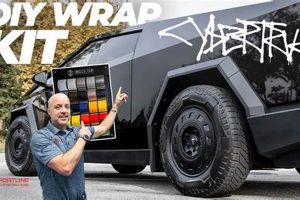
A comprehensive collection of materials and tools allows individuals to undertake automotive refinishing projects at home. This typically includes primers, paints, clear coats, sanding supplies, masking tape, and application devices such as spray guns or aerosol cans. These assortments cater to car owners who prefer handling cosmetic repairs, customization, or complete vehicle color changes themselves.
The significance of these packages lies in providing a more economical alternative to professional auto body shop services. Historically, automotive painting was exclusively the domain of skilled technicians. However, advancements in paint technology and user-friendly application methods have empowered individuals to achieve acceptable results. This has democratized the process of vehicle appearance enhancement, putting control directly into the hands of the vehicle owner.
The subsequent sections will delve into the selection criteria for effective systems, the essential preparation steps for optimal adhesion and finish quality, proper application techniques to minimize imperfections, and crucial safety precautions to ensure user well-being and environmental responsibility.
Essential Refinishing Guidance
Achieving a professional-looking finish requires careful planning and execution. The following guidelines address critical aspects of automotive refinishing using self-application products, ensuring optimal results and minimizing common pitfalls.
Tip 1: Thoroughly Prepare the Surface: Surface preparation is paramount. Remove all rust, loose paint, and contaminants. Sand the existing finish to create a uniform surface for adhesion. Degrease the area with a wax and grease remover to eliminate any residue that could compromise the paint’s bond.
Tip 2: Apply Primer Evenly: Primer provides a uniform base for the color coat. Apply multiple thin coats of primer, allowing each coat to dry completely before applying the next. Sand the primed surface with fine-grit sandpaper to eliminate any imperfections before proceeding.
Tip 3: Maintain Consistent Application Technique: Whether using aerosol cans or a spray gun, maintaining a consistent distance and speed is crucial. Overlapping each pass by approximately 50% ensures uniform coverage and minimizes streaking or uneven texture.
Tip 4: Control Environmental Conditions: Refinishing should ideally be performed in a well-ventilated area with a stable temperature and minimal dust. Avoid painting in direct sunlight or extreme humidity, as these conditions can adversely affect drying time and finish quality.
Tip 5: Apply Multiple Thin Coats: Applying several thin coats of paint is preferable to a single thick coat. Thin coats dry more evenly and reduce the risk of runs or sags. Allow sufficient drying time between each coat, as recommended by the paint manufacturer.
Tip 6: Use a High-Quality Clear Coat: Clear coat protects the color coat from UV damage, scratches, and environmental contaminants. Apply multiple coats of clear coat, following the manufacturer’s instructions for drying time and application technique. Wet sanding and buffing can enhance the gloss and smoothness of the clear coat.
Tip 7: Prioritize Safety: Always wear appropriate personal protective equipment (PPE), including a respirator, eye protection, and gloves. Ensure adequate ventilation to prevent the inhalation of harmful fumes. Dispose of waste materials properly, following local regulations.
Adhering to these guidelines will significantly improve the outcome of refinishing projects, resulting in a durable and aesthetically pleasing finish. Proper preparation, application technique, and safety precautions are essential for achieving professional-quality results.
The following sections will address common challenges encountered during automotive refinishing and provide troubleshooting advice.
1. Component Compatibility

Component compatibility within a self-application automotive refinishing system refers to the chemical compatibility between all constituent materials: primer, base coat, and clear coat. A lack of compatibility can manifest as a range of defects, including but not limited to delamination, blistering, cracking, or premature fading of the finish. These issues are often attributed to solvents in one layer reacting adversely with a previous layer, disrupting the paint film’s integrity. For instance, using an enamel clear coat over a lacquer base coat is a common error that typically results in severe cracking. The solvent properties of the enamel aggressively attack the underlying lacquer, leading to a compromised and aesthetically unacceptable finish.
The importance of selecting a system with verified component compatibility cannot be overstated. Manufacturers typically specify compatible product lines to mitigate the risk of these adverse reactions. Deviation from these recommendations introduces a high probability of failure, effectively wasting time, materials, and effort. Many successful self-application projects rely on purchasing complete systems from a single manufacturer, ensuring that all components are designed to work harmoniously. Conversely, mixing and matching products from different brands without careful consideration of their chemical composition is a frequent cause of refinishing failures reported by amateur practitioners.
In conclusion, ensuring component compatibility is a foundational principle in achieving a durable and visually appealing automotive refinish through self-application. Understanding the chemical interactions between primers, base coats, and clear coats is crucial. Adhering to manufacturer recommendations and prioritizing matched systems will significantly reduce the risk of costly and frustrating refinishing failures. The practical significance of this knowledge translates directly into a higher probability of a successful and long-lasting paint job.
2. Surface Preparation

The efficacy of a “diy car paint kit” is inextricably linked to the quality of surface preparation. Inadequate preparation invariably leads to premature paint failure, regardless of the quality of the materials used. Consider, for instance, a scenario where rust is present on the vehicle’s surface prior to paint application. The rust will continue to corrode beneath the new paint layer, causing bubbling and eventual delamination. Similarly, the presence of contaminants such as grease, wax, or silicone creates a barrier that prevents the paint from properly adhering to the substrate. This results in peeling or fish-eye defects, compromising the aesthetic and protective functions of the coating. Thus, meticulous surface preparation is not merely a preliminary step but a fundamental determinant of the final outcome.
Proper surface preparation typically involves a multi-stage process. Initially, the surface must be thoroughly cleaned to remove any loose deb
ris, dirt, and contaminants. This is commonly achieved through washing with a dedicated automotive cleaner followed by degreasing with a solvent designed to eliminate waxes and silicones. Next, any existing imperfections, such as rust, scratches, or peeling paint, must be addressed. Rust removal often requires mechanical abrasion using tools like wire brushes or sandpaper, while deeper imperfections may necessitate the use of body filler. Feathering the edges of repaired areas ensures a smooth transition between the repair and the surrounding original surface. Sanding the entire surface to be painted creates microscopic grooves that enhance mechanical adhesion, a crucial factor in the paint’s long-term durability. Each of these steps is a causal factor in achieving good adhesion and an even finish.
In conclusion, surface preparation is the cornerstone of any successful automotive refinishing project undertaken with a “diy car paint kit.” It is not an optional add-on but rather an essential prerequisite that directly influences the longevity and appearance of the finished product. Neglecting proper surface preparation renders the subsequent application of primer, paint, and clear coat largely ineffective, resulting in a compromised outcome. Adherence to best practices in cleaning, sanding, and defect correction is therefore paramount for achieving professional-quality results with a “diy car paint kit.”
3. Application Method

The efficacy of a “diy car paint kit” is substantially influenced by the chosen application method. The selection of an appropriate application method is not merely a matter of convenience; it directly impacts the quality of the finish, the efficiency of material usage, and the overall success of the refinishing project. For instance, an individual attempting to achieve a professional-grade finish using aerosol cans may encounter limitations in controlling paint flow and achieving uniform coverage, factors more readily managed with a spray gun system. The application method inherently dictates the tools required, the level of skill necessary, and the potential for achieving a desired outcome. Therefore, the application method is a critical component of the “diy car paint kit” system, influencing its practicality and ultimate effectiveness.
Several application methods are commonly associated with “diy car paint kits,” each presenting distinct advantages and disadvantages. Aerosol cans offer ease of use and minimal setup, making them suitable for small touch-up repairs or projects where portability is paramount. However, aerosol cans provide limited control over spray pattern and material flow, potentially leading to uneven coverage, runs, or orange peel texture. Spray guns, whether gravity-fed or siphon-fed, offer greater control and allow for adjusting spray parameters such as fan width, fluid delivery, and air pressure. This control enables the application of smoother, more uniform coats of paint, resulting in a higher-quality finish. However, spray gun systems require an air compressor, specialized equipment, and a greater degree of skill to operate effectively. Brush application, while less common for overall refinishing, may be employed for detailed work or areas inaccessible to spray application. Brush application demands meticulous technique to avoid brush strokes and ensure smooth blending. Choosing the most suitable application method, therefore, requires a careful evaluation of the project scope, available resources, and the user’s skill level.
In summary, the application method is a critical determinant of the success of a “diy car paint kit” endeavor. The choice between aerosol cans, spray guns, or brush application is driven by factors such as project size, desired finish quality, equipment availability, and user expertise. Understanding the capabilities and limitations of each method is essential for selecting the optimal approach and achieving a satisfactory outcome. Challenges inherent in each application method can be mitigated through proper technique, preparation, and the use of appropriate tools. The informed selection and skillful execution of the application method are, therefore, central to realizing the full potential of a “diy car paint kit.”
4. Environmental Factors

Environmental conditions exert a significant influence on the application and performance of automotive coatings utilized in “diy car paint kits.” These factors, if uncontrolled, can lead to defects in the finish, compromised adhesion, and accelerated degradation of the paint film. Maintaining awareness and implementing appropriate mitigation strategies are crucial for achieving satisfactory and durable results.
- Temperature
Temperature affects the viscosity of the paint, drying time, and the potential for solvent pop. High temperatures accelerate drying, potentially leading to solvent entrapment and blistering. Low temperatures increase viscosity, hindering proper atomization and leveling. The ideal temperature range for most automotive paints is between 65F and 80F (18C and 27C). Working outside this range necessitates adjustments to paint thinners and application techniques to compensate for the altered properties.
- Humidity
High humidity can cause moisture to condense on the surface being painted, leading to adhesion failures and the formation of cloudiness in the clear coat. Moisture can also react with certain paint chemistries, particularly those containing isocyanates, causing premature curing and compromised film properties. Maintaining a relative humidity below 60% is generally recommended. Dehumidifiers or controlled indoor environments may be necessary in humid climates.
- Airflow and Ventilation
Adequate airflow is essential for removing solvent vapors during the drying process, preventing solvent pop and ensuring uniform curing. However, excessive airflow can introduce dust and contaminants onto the wet paint surface, resulting in imperfections. Balancing ventilation with cleanliness is crucial. Using a well-ventilated spray booth with filtered air is optimal, but in less controlled environments, careful attention to cleanliness and minimal airflow is necessary.
- Light Exposure
Direct sunlight or intense artificial light can accelerate the drying of the paint’s surface, creating a skin that traps solvents underneath. This can lead to solvent pop, blistering, and uneven curing. Furthermore, UV radiation from sunlight can degrade certain paint pigments over time, causing fading or discoloration. Painting in shaded areas or under controlled lighting conditions minimizes these risks. Applying UV-resistant clear coats provides added protection against long-term degradation.
The aforementioned environmental factors underscore the complexity involved in achieving a professional-quality automotive finish using “diy car paint kits.” While these kits provide a cost-effective alternative to professional services, success hinges on understanding and mitigating the impact of ambient conditions. Ignoring these factors can result in suboptimal results, necessitating rework and increased material costs. Careful planning, diligent monitoring of environmental conditions, and adherence to recommended application techniques are essential for maximizing the potential of “diy car paint kits” and achieving a durable and aesthetically pleasing outcome.
5. Safety Precautions

The use of a “diy car paint kit” inherently involves exposure to potentially hazardous materials and conditions, necessitating stringent adherence to safety precautions. These kits typically contain paints, primers, clear coats, and solvents, many of which release volatile organic compounds (VOCs) known to pose health risks. Inhalation of these VOCs can cause respiratory irritation, neurological effects, and long-term health problems. Skin contact can lead to dermatitis or allergic reactions. Failure to implement proper safety measures can result in immediate and chronic health consequences, underscoring the critical importance of safety protocols in any automotive refinishing project.
Essential safety precautions include working in a well-ventilated area to minimize VOC concentration, wearing a properly fitted respirator with appropriate cartridges to filter out harmful vapors, and donning chemical-resistant gloves and eye protection to prevent skin and eye contact. Protective clothing, such as a coverall, further reduces skin exposure. Furthermore, the flammability of many solvents and paints necessitates a strict ban on smoking or open flames in the work area. Proper disposal of waste materials, including used rags and paint containers, is crucial to prevent environmental contamination and fire hazards. A real-life example would be an individual who fails to wear a respirator while spraying automotive paint in an enclosed garage, subsequently experiencing dizziness, nausea, and potential long-term respiratory damage. Such incidents highlight the practical significance of implementing and enforcing these safeguards.
In summary, integrating comprehensive safety precautions into the “diy car paint kit” process is not merely a recommendation, but an imperative for protecting user health and preventing accidents. Neglecting these measures can lead to severe health complications, environmental damage, and potential legal liabilities. Proper ventilation, respiratory protection, skin and eye protection, fire prevention, and waste disposal practices are fundamental to responsible and safe automotive refinishing. Compliance with these precautions ensures a safer and more successful “diy car paint kit” experience.
Frequently Asked Questions about Automotive Refinishing
The following addresses common inquiries concerning automotive refinishing using self-application systems. These questions aim to clarify key aspects and dispel misconceptions surrounding this practice.
Question 1: What constitutes a comprehensive “diy car paint kit,” and are all components essential?
A comprehensive package typically includes primer, base coat, clear coat, sandpaper of varying grits, masking tape, tack cloths, and application tools such as spray guns or aerosol cans. The necessity of each component depends on the scope of the project and the condition of the vehicle’s surface. Primer is essential for adhesion and corrosion protection. Base coat provides color. Clear coat offers protection and gloss. Sandpaper and masking tape facilitate surface preparation and accurate application. Therefore, the completeness of the system is directly correlated with the intended outcome.
Question 2: Is prior experience required to achieve acceptable results with a “diy car paint kit?”
Prior experience is beneficial but not strictly mandatory. Successful utilization necessitates a thorough understanding of surface preparation techniques, proper application methods, and safety precautions. Beginners should start with smaller, less conspicuous areas to develop proficiency before tackling larger surfaces. Consulting online resources, instructional videos, and manufacturer guidelines is strongly recommended.
Question 3: How crucial is proper surface preparation when using a “diy car paint kit?”
Surface preparation is paramount. Inadequate preparation leads to adhesion failures, premature paint degradation, and an aesthetically displeasing finish. Thorough cleaning, sanding, and removal of rust or contaminants are essential steps. Neglecting these steps compromises the entire refinishing process, regardless of the quality of the materials used.
Question 4: What are the primary risks associated with improper application techniques when using a “diy car paint kit?”
Improper application techniques can result in runs, sags, orange peel texture, uneven coverage, and solvent pop. These defects detract from the appearance and reduce the protective qualities of the paint film. Maintaining a consistent distance, speed, and overlap during application is crucial to avoid these issues.
Question 5: What safety precautions are necessary when working with a “diy car paint kit?”
Essential safety precautions include working in a well-ventilated area, wearing a properly fitted respirator to protect against harmful vapors, using chemical-resistant gloves and eye protection to prevent skin and eye contact, and avoiding open flames or smoking in the work area. These measures mitigate the risks associated with VOC exposure and flammability hazards.
Question 6: How does the cost of a “diy car paint kit” compare to professional automotive refinishing services?
Self-application systems typically offer a cost-effective alternative to professional services, particularly for smaller repairs or cosmetic enhancements. However, the final cost depends on the size and complexity of the project, the quality of the materials used, and the need for specialized equipment. While the initial investment may be lower, the labor and potential for errors should be considered when comparing costs.
These frequently asked questions aim to provide valuable insights into automotive refinishing using self-application systems. Proper planning, preparation, and adherence to safety guidelines are essential for achieving successful and durable results.
The next section will focus on advanced techniques and troubleshooting tips for automotive refinishing.
Concluding Assessment
The preceding analysis has explored the multifaceted aspects of “diy car paint kit” utilization. Surface preparation, component compatibility, application methodology, environmental control, and strict adherence to safety protocols are non-negotiable elements for achieving a successful outcome. While these systems offer an accessible avenue for automotive refinishing, their efficacy hinges on the user’s commitment to meticulous execution and a thorough understanding of the underlying principles.
The responsible application of this technology demands a balanced approach, weighing the potential cost savings against the inherent risks and skill requirements. Continued advancements in paint technology and application tools promise to further democratize the process of automotive refinishing. Diligent planning, informed decision-making, and unwavering attention to detail will empower users to realize the full potential of these systems, transforming automotive aesthetics while upholding the highest standards of safety and quality.