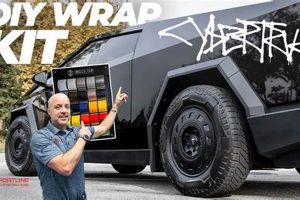
A comprehensive package of materials and tools designed for individuals to apply a new coating to their vehicle’s exterior without professional assistance. Such provisions typically include primer, paint, clear coat, sandpaper, masking tape, application tools (such as spray guns or aerosol cans), and detailed instructions. These sets empower vehicle owners to address cosmetic imperfections or undertake complete color changes independently.
The advent of these self-help systems has democratized vehicle restoration and customization. They offer a cost-effective alternative to professional body shop services, allowing individuals to personalize their vehicles according to their specific tastes and budget. Historically, automotive painting was a skill confined to trained technicians; these kits bridge the gap, enabling enthusiasts to achieve acceptable results in their own garages. This development is particularly significant for maintaining the aesthetic and structural integrity of older vehicles, extending their lifespan and preserving their value.
The following sections will explore the various components of these systems, discuss proper preparation techniques, address application methods, and provide guidance on achieving a durable and aesthetically pleasing finish. Furthermore, safety considerations and troubleshooting tips will be examined to ensure a successful and responsible painting project.
Essential Guidelines for Utilizing Automotive Refinishing Packages
The successful application of an automotive finish via a pre-packaged set requires meticulous adherence to established procedures. Optimal results hinge on proper preparation, application technique, and environmental control.
Tip 1: Environmental Considerations: Ensure a well-ventilated workspace. Temperature and humidity significantly impact paint adhesion and drying time. Optimal conditions generally range between 65-75F (18-24C) with moderate humidity.
Tip 2: Surface Preparation is Paramount: Thoroughly clean and degrease the surface to be painted. Remove any rust, loose paint, or imperfections with appropriate sanding techniques, progressing from coarser to finer grits. A smooth, clean substrate promotes optimal paint adhesion.
Tip 3: Priming for Success: Apply a uniform coat of primer specifically formulated for automotive applications. Primer enhances paint adhesion, provides a uniform base, and helps to conceal minor imperfections. Allow adequate drying time as specified by the manufacturer before proceeding.
Tip 4: Mastering Application Technique: Whether using aerosol cans or a spray gun, maintain a consistent distance and speed during application. Overlapping each pass by approximately 50% ensures even coverage and minimizes the risk of runs or drips. Multiple thin coats are preferable to a single heavy coat.
Tip 5: Curing and Finishing: Allow sufficient drying time between coats and before applying clear coat, adhering strictly to the manufacturer’s recommendations. After the final coat has dried, consider wet sanding with very fine-grit sandpaper (e.g., 2000-grit) to remove any imperfections and achieve a smooth, glossy finish. Follow with polishing and waxing for enhanced protection and shine.
Tip 6: Safety Precautions: Always wear appropriate personal protective equipment, including a respirator, gloves, and eye protection. Automotive paints contain volatile organic compounds (VOCs) that can be harmful if inhaled or come into contact with skin. Work in a well-ventilated area to minimize exposure.
Tip 7: Test Before Committing: Before applying paint to the entire vehicle, test the color match and application technique on a small, inconspicuous area. This allows for adjustments to be made without compromising the overall finish.
Adhering to these guidelines will significantly increase the likelihood of achieving a professional-looking finish and extending the lifespan of the applied coating. Careful planning and execution are essential for a successful automotive refinishing project.
The subsequent discussion will delve into specific product recommendations and provide a comprehensive comparison of available options, empowering informed purchasing decisions.
1. Component Quality
The overall success of any do-it-yourself automotive painting project is inextricably linked to the caliber of the components included in the refinishing package. Substandard materials can compromise the final aesthetic appeal, diminish the protective qualities of the coating, and ultimately reduce the lifespan of the paint job. Therefore, careful consideration of component quality is paramount.
- Pigment Concentration and Formulation
The concentration and composition of pigments directly influence the paint’s opacity, color accuracy, and resistance to fading from ultraviolet (UV) radiation. Automotive paints must maintain their hue and vibrancy over time, even under prolonged exposure to sunlight. Higher-quality kits utilize pigments formulated to resist fading and provide consistent color coverage, minimizing the likelihood of an uneven or washed-out appearance. Example: A kit using industrial-grade pigments will resist fade more so than cheaper pigments.
- Resin Type and Binder System
The resin serves as the binder, holding the pigments together and adhering them to the vehicle’s surface. The resin type directly affects the paint’s flexibility, chip resistance, and overall durability. Higher-quality kits employ advanced resin systems that provide superior adhesion, impact resistance, and resistance to environmental factors such as acid rain and road salt. Example: Acrylic urethane resins are known for their durability and resistance to chemicals, making them a desirable choice for automotive applications. Inferior resins may crack or peel prematurely.
- Solvent Composition and Evaporation Rate
The solvents in the paint control its viscosity and flow properties, influencing its ease of application and the smoothness of the final finish. Proper solvent balance ensures the paint levels properly and dries without causing imperfections like orange peel or solvent pop. Higher-quality kits use carefully formulated solvents that promote optimal flow and leveling, resulting in a smoother, more professional-looking finish. Example: Slow-evaporating solvents may be used in warmer temperatures to prevent the paint from drying too quickly, reducing the risk of orange peel.
- Abrasive Quality and Grit Consistency
Surface preparation is essential for paint adhesion, requiring the use of abrasive materials such as sandpaper. The quality and grit consistency of these abrasives directly impact the smoothness of the prepared surface. Inferior sandpaper may tear easily, clog quickly, or leave behind uneven scratches. Higher-quality kits include abrasives with consistent grit distribution and durable backing, ensuring efficient and uniform surface preparation. Example: Using high-quality 3M sandpaper ensures a uniform scratch pattern.
In conclusi
on, the use of high-quality components within the DIY automotive paint kit, ranging from durable resin and pigments to application supplies, not only guarantees ease of use, and a professional application result, but protects against common issues like fading or cracking. Lower-quality parts and supplies can be detrimental in the long term, while quality parts are more likely to give a superior outcome.
2. Color Matching
Accurate reproduction of the original vehicle color is paramount when utilizing a DIY automotive paint kit. Discrepancies in color matching can result in visually jarring inconsistencies, diminishing the overall quality and aesthetic appeal of the refinishing project. The following facets outline key considerations for achieving precise color matches.
- Paint Code Identification and Acquisition
Locating the vehicle’s paint code is the initial step in ensuring accurate color matching. This code, typically found on a sticker within the door jamb, engine compartment, or glove box, serves as a unique identifier for the original factory color. Utilizing the correct paint code allows for the procurement of pre-mixed paints or custom-tinted formulations that closely replicate the original hue. Failure to identify the correct code can lead to significant color deviations. Example: A 2010 Honda Civic with a paint code of “NH-731P” indicates a specific white pearl color formulation unique to that vehicle and year.
- Variant Considerations and Tinting Accuracy
Even with the correct paint code, subtle color variations may exist due to factors such as manufacturing tolerances, environmental exposure, and aging of the original paint. These variants necessitate careful adjustment of the paint formula through tinting. Reputable automotive paint suppliers possess the expertise and equipment to analyze the original paint and create a custom tint that compensates for these variations. Inaccurate tinting can result in noticeable color differences, particularly under varying lighting conditions. Example: Two vehicles with the same paint code may exhibit slight color variations due to different production batches or exposure to sunlight over time. This calls for a color match.
- Spray-Out Testing and Evaluation
Before applying the paint to the entire vehicle, a spray-out test is crucial to verify the color match under realistic conditions. This involves spraying a small amount of the paint onto a test panel and comparing it to the original vehicle color in various lighting environments. This step allows for visual confirmation of the color accuracy and identification of any necessary adjustments before committing to the complete refinishing process. Example: A spray-out test performed in direct sunlight may reveal subtle color differences that are not apparent under artificial lighting.
- Blending Techniques and Feathering
For partial repairs or blending adjacent panels, achieving a seamless color transition is essential. Blending involves gradually fading the new paint into the existing paint, minimizing the visibility of the repair. Proper feathering techniques, using fine-grit sandpaper to smooth the transition zone, further enhance the blending process. Poor blending can result in noticeable color breaks and an unprofessional-looking finish. Example: When repairing a small scratch on a fender, blending the new paint into the surrounding area ensures that the repair is virtually invisible.
Ultimately, successful color matching within the context of DIY automotive paint kits hinges on meticulous attention to detail and a thorough understanding of the factors that influence color accuracy. From precise paint code identification to skilled tinting and blending techniques, each step plays a critical role in achieving a visually harmonious and professionally appealing refinished surface.
3. Application Method
The method employed to apply the coating materials within a do-it-yourself automotive paint kit directly impacts the quality, consistency, and durability of the final finish. Selection of an appropriate application technique is crucial for achieving satisfactory results and requires careful consideration of equipment, skill level, and desired outcome.
- Aerosol Can Application
Aerosol cans represent a readily accessible and user-friendly option for applying automotive paints. Their inherent portability and lack of specialized equipment make them suitable for small-scale repairs or projects undertaken by individuals with limited experience. However, aerosol cans offer less control over paint flow and atomization compared to professional spray guns, potentially resulting in an uneven finish or increased risk of runs and drips. Furthermore, the limited volume of paint contained within aerosol cans may restrict their suitability for larger projects requiring extensive coverage. Example: Addressing a small scratch on a door panel using an aerosol can provides a convenient solution for localized repair.
- High Volume Low Pressure (HVLP) Spray Gun Application
HVLP spray guns offer superior control over paint application compared to aerosol cans. These systems utilize a high volume of air at low pressure to atomize the paint, resulting in a softer spray pattern and reduced overspray. This increased control allows for more consistent coverage, smoother finishes, and reduced material waste. HVLP spray guns necessitate the use of an air compressor and require a higher level of skill and experience to operate effectively. Example: Applying a complete coat on a sedan with an HVLP spray gun reduces paint and provides a more consistent finish.
- Airless Spray Gun Application
Airless spray guns utilize high pressure to atomize the paint without the need for compressed air. These systems are capable of delivering large volumes of paint quickly, making them suitable for covering large areas efficiently. However, airless spray guns offer less control over paint flow and atomization compared to HVLP systems, potentially resulting in a coarser finish and increased overspray. Example: Industrial application of paint. Airless guns are not commonly used in do-it-yourself automotive painting.
- Brush or Roller Application
While not commonly employed for overall automotive finishes, brush or roller application may be suitable for applying primer or touch-up paint in specific areas. These methods offer simplicity and require minimal equipment, but they are prone to leaving brush strokes or roller marks, resulting in an uneven and textured finish. Brush or roller application is generally reserved for areas that are not readily visible or where a high level of finish quality is not required. Example: Applying touch-up paint to small stone chips on a rocker panel using a fine-tipped brush.
In summary, selection of the appropriate application method within a DIY automotive paint kit is contingent upon a range of factors, including project scope, desired finish quality, skill level, and available equipment. While aerosol cans offer convenience and accessibility, HVLP spray guns provide superior control and professional-looking results. Proper technique and attention to detail are essential for achieving a durable and aesthetically pleasing finish, regardless of the chosen application method.
4. Surface Preparation<
/h3>
Surface preparation is an indispensable prerequisite for achieving a satisfactory and durable finish when utilizing a DIY automotive paint kit. It involves a series of meticulous steps designed to create a clean, smooth, and receptive substrate for the new coating. Inadequate preparation will invariably lead to adhesion failures, premature paint degradation, and an overall compromised aesthetic outcome.
- Cleaning and Degreasing
The initial phase necessitates the complete removal of contaminants such as dirt, grease, wax, and silicone from the surface to be painted. These substances impede paint adhesion and can cause fisheyes or other imperfections in the final finish. Specialized automotive degreasers and wax removers are employed, followed by thorough rinsing and drying. Neglecting this step can result in the new paint peeling or flaking off the existing surface. Example: Failure to remove residual wax after washing a vehicle prior to painting will create an uneven surface.
- Sanding and Feathering
Sanding serves to create a mechanical key for the new paint to adhere to, as well as to smooth out imperfections such as scratches, rust, and minor dents. Progressively finer grits of sandpaper are used to achieve a uniformly smooth surface. Feathering, the process of gradually tapering the edges of existing paint surrounding a repair area, ensures a seamless transition between the old and new finishes. Improper sanding can lead to visible scratches or adhesion problems. Example: Using too coarse of sandpaper will cause scratching.
- Rust Removal and Treatment
Any existing rust must be completely removed prior to painting. Rust not only compromises the structural integrity of the metal but also creates an unstable surface for paint adhesion. Mechanical methods such as wire brushing or grinding are typically employed, followed by chemical rust converters or inhibitors to prevent further corrosion. Painting over rust will lead to its continued spread beneath the new coating. Example: Surface rust appearing on lower door panel must be treated.
- Masking and Protection
Masking involves the careful covering of areas that are not to be painted, such as windows, trim, and adjacent panels. High-quality masking tape and paper are used to create clean, sharp paint lines and prevent overspray. Proper masking protects surrounding areas from unwanted paint contamination and ensures a professional-looking result. Example: Before applying paint make sure to tape windows and trim.
In conclusion, surface preparation is not merely a preliminary step but an integral component of the entire DIY automotive painting process. The time and effort invested in meticulous preparation will directly correlate to the quality, durability, and longevity of the final finish. A properly prepared surface provides the foundation for a successful and aesthetically pleasing paint job.
5. Clear Coat Protection
Clear coat protection is an essential element within a DIY automotive paint kit, serving as the final layer of defense for the underlying color coat. Its application represents a crucial step in enhancing the longevity, durability, and aesthetic appeal of the refinished surface. The absence of a clear coat, or the use of a substandard product, can significantly reduce the lifespan of the paint job and render it vulnerable to environmental damage.
The clear coat acts as a sacrificial layer, shielding the base coat from UV radiation, chemical contaminants, and physical abrasion. UV exposure can cause the color coat to fade and chalk over time, while exposure to acid rain, bird droppings, and road salt can etch and stain the surface. Physical abrasion from washing, waxing, and minor impacts can create scratches and swirl marks. A high-quality clear coat provides a durable and resilient barrier against these threats, preserving the color coat’s integrity and maintaining its gloss and shine. For example, a vehicle refinished without a clear coat may exhibit fading and discoloration within a year, whereas a vehicle with a properly applied clear coat can maintain its original appearance for several years. Clear coat is made of mostly transparent acrylic or urethane material.
In summary, clear coat protection is an indispensable component of a DIY automotive paint kit, offering critical defense against environmental damage and physical abrasion. Its proper application is essential for maximizing the lifespan and aesthetic appeal of the refinished surface, providing a durable and long-lasting protective layer. Failure to incorporate a high-quality clear coat can lead to premature paint degradation and a compromised overall outcome, making this step a cornerstone of successful automotive refinishing.
6. Curing Time
The duration required for a coating applied via a DIY automotive paint kit to achieve its optimal hardness, durability, and chemical resistance is a critical factor influencing the overall success of the project. Insufficient curing can lead to a soft, easily damaged finish, while premature handling can introduce imperfections and compromise the paint’s long-term performance.
- Environmental Factors and Curing Rate
Ambient temperature and humidity levels significantly impact the curing rate of automotive paints and clear coats. Elevated temperatures generally accelerate the curing process, while high humidity can impede it, potentially leading to surface defects or reduced hardness. Adherence to the manufacturer’s recommended temperature and humidity ranges during the curing period is crucial for achieving optimal results. For example, applying a clear coat in a humid environment may result in a hazy or cloudy finish due to trapped moisture.
- Paint Type and Curing Mechanism
Different types of automotive paints and clear coats employ varying curing mechanisms, influencing the required curing time. Single-stage paints typically air-dry, relying on solvent evaporation for hardening. Two-component paints, such as catalyzed urethanes, require a chemical reaction between a resin and a hardener to achieve full cure. Catalyzed systems generally offer faster curing times and greater durability compared to single-stage paints, but necessitate precise mixing ratios and controlled environmental conditions. For example, an epoxy primer could have a fast curing time of 30 minutes if baked in an oven, but may take 7 days to fully cure in room temperature.
- Layer Thickness and Curing Time
The thickness of the applied paint and clear coat layers also affects the curing time. Thicker layers require longer to cure completely, as the solvents or reactive components must diffuse through the entire film. Applying excessively thick coats can trap solvents and lead to solvent pop or other defects. Following the manufacturer’s recommended film thickness guidelines and allowing sufficient curing time between coats is essential for achieving a durable and defect-free finish. For example, the clear coat must be thick enough to prevent scratching, but if too thick the product may run during the curing process.
- Forced
Curing TechniquesTo accelerate the curing process and improve paint hardness, forced curing techniques can be employed. These techniques involve applying heat to the painted surface using heat lamps or baking ovens. Forced curing is particularly beneficial for catalyzed systems, as it promotes a more complete and uniform chemical reaction. However, careful temperature control is essential to prevent overheating or blistering of the paint film. For example, Infrared lamps can be used to evenly apply heat to the automotive body to speed the curing process.
The proper management of curing time is therefore a cornerstone of successful DIY automotive painting, directly influencing the final quality, durability, and aesthetic appeal of the finished product. Understanding the factors that affect curing and adhering to the manufacturer’s recommendations are paramount for achieving professional-looking results. By fully following curing time instructions, amateur painters can get professional level paint jobs.
7. Safety Measures
The execution of automotive painting projects utilizing do-it-yourself kits necessitates the implementation of stringent safety protocols. The materials contained within these kits, while facilitating accessible automotive refinishing, present potential hazards that demand careful mitigation. The following details the safety facets to be addressed.
- Respiratory Protection
Automotive paints and related products contain volatile organic compounds (VOCs) that pose a significant inhalation hazard. Prolonged or concentrated exposure can lead to respiratory irritation, neurological effects, and long-term health complications. Therefore, the use of a properly fitted respirator equipped with appropriate organic vapor cartridges is essential. The respirator must be NIOSH-approved and regularly inspected to ensure proper function. The selection of an appropriate respirator should factor in the concentration of VOCs and the duration of exposure. Failure to use proper respiratory protection increases the risk of respiratory illness.
- Skin and Eye Protection
Direct contact with automotive paints, primers, and solvents can cause skin irritation, dermatitis, and chemical burns. Similarly, splashes or fumes can cause severe eye irritation and potential corneal damage. Protective measures include wearing impervious gloves (e.g., nitrile), long sleeves, and chemical-resistant safety goggles or a full face shield. Immediate and thorough rinsing with water is crucial in the event of accidental skin or eye contact. Inadequate protection of skin and eyes results in damage to skin and vision.
- Ventilation and Fire Safety
The accumulation of VOCs in an enclosed space can create a flammable atmosphere, posing a significant fire and explosion risk. Adequate ventilation is crucial to maintain safe air quality. This involves working in a well-ventilated area or utilizing a forced-air ventilation system to extract fumes away from the work area. Open flames, sparks, and smoking are strictly prohibited in the vicinity of painting operations. Furthermore, proper storage of flammable materials is essential to minimize the risk of accidental ignition. Poor ventilation causes fire and explosion hazards.
- Proper Disposal Procedures
Leftover paints, solvents, and contaminated materials must be disposed of in accordance with local, state, and federal regulations. Improper disposal, such as pouring materials down drains or into the ground, can contaminate water supplies and pose environmental hazards. Many communities offer hazardous waste collection programs for the safe disposal of these materials. Compliance with disposal regulations is critical to minimizing environmental impact and ensuring public safety. Improper disposal is illegal and poses long term environmental issues.
Adherence to these safety measures is paramount for minimizing the risks associated with DIY automotive painting. Prioritizing personal protection, ensuring adequate ventilation, and following proper disposal procedures contribute to a safer working environment and minimize the potential for adverse health effects or environmental damage. The use of safety equipment when performing auto repair is always crucial.
Frequently Asked Questions About DIY Automotive Paint Kits
The following section addresses common inquiries regarding the utilization of DIY automotive paint kits, providing factual information to aid in informed decision-making.
Question 1: What level of experience is required to effectively use a DIY automotive paint kit?
While prior experience is beneficial, many such provisions are designed for users with limited or no prior expertise. Success hinges on meticulous adherence to the included instructions, careful surface preparation, and a controlled application technique. However, achieving professional-grade results typically requires practice and a degree of aptitude.
Question 2: Are DIY automotive paint kits a cost-effective alternative to professional automotive painting services?
In most instances, they offer a more economical solution compared to professional body shop services. The primary cost savings stem from the elimination of labor charges. However, the total cost can vary depending on the kit’s quality, the size of the area being painted, and the need for supplemental materials.
Question 3: How durable is the finish achieved using a DIY automotive paint kit compared to a professional paint job?
The durability of the finish is largely dependent on the quality of the materials used and the thoroughness of the application process. While high-quality DIY kits can yield respectable results, professional paint jobs typically offer superior durability due to the use of specialized equipment, advanced techniques, and more durable materials.
Question 4: What safety precautions must be observed when using a DIY automotive paint kit?
Strict adherence to safety guidelines is paramount. This includes working in a well-ventilated area, wearing appropriate personal protective equipment (respirator, gloves, eye protection), and following proper disposal procedures for hazardous materials. Failure to observe these precautions can result in serious health consequences.
Question 5: How critical is surface preparation when using a DIY automotive paint kit?
Surface preparation is arguably the most critical step in the entire process. Thorough cleaning, sanding, and priming are essential for ensuring proper paint adhesion and a smooth, uniform finish. Neglecting surface preparation will invariably lead to adhesion failures and a compromised aesthetic outcome.
Question 6: What are the common pitfalls to avoid when using a DIY automotive paint kit?
Common mistakes include inadequate surface preparation, improper mixing of paints, applying paint in unfavorable weather conditions, neglecting safety precautions, and rushing the curing process. Avoiding these pitfalls requires patience, attention to detail, and adherence to the manufacturer’s instructions.
In summary, DIY automotive paint kits offer a viable option for cost-effective vehicle refinishing, but necessitate careful planning, meticulous execution, and strict adherence to safety protocols.
The following section will address troubleshooting common issues that may arise during the use of DIY automotive paint kits.
Conclusion
The preceding exploration of
“diy automotive paint kit” applications has illuminated both the potential benefits and inherent limitations associated with their utilization. Success hinges upon understanding the nuances of surface preparation, application techniques, and safety protocols. While offering a cost-effective alternative to professional services, achieving a durable and aesthetically pleasing finish requires meticulous attention to detail and adherence to established best practices. The selection of a suitable product, tailored to the specific project requirements and the user’s skill level, is paramount.
The continued advancement of automotive paint technology promises further refinements in these systems, potentially bridging the gap between amateur and professional results. A commitment to informed decision-making and rigorous execution remains crucial. Future endeavors should prioritize comprehensive research and responsible application techniques for long-term preservation and value of refinished vehicles. Therefore, a responsible and calculated approach is critical when dealing with the kits.