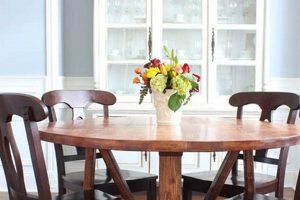
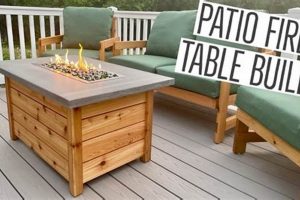
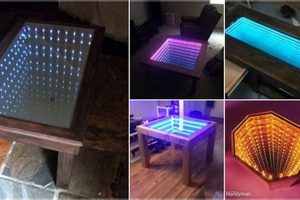
The creation of outdoor furniture through do-it-yourself methods, specifically focusing on tables intended for patios, represents a growing trend. This involves individuals constructing a table for their patio space using self-sourced materials and personal labor, rather than purchasing a pre-made product. As an illustration, someone might repurpose reclaimed wood to build a durable and aesthetically pleasing surface suitable for dining or relaxation in an outdoor setting.
This practice offers numerous advantages, including cost savings, customization, and the personal satisfaction derived from completing a project. Historically, such construction was a necessity for many; currently, it reflects a desire for unique, sustainable, and personalized home improvements. The ability to tailor the size, style, and materials to specific needs and aesthetic preferences enhances the overall value proposition.
The subsequent discussion will address essential elements involved in this construction, encompassing material selection, design considerations, construction techniques, and relevant safety measures. Further sections will elaborate on popular design approaches and offer detailed, step-by-step guidance for various skill levels.
Guidance for Patio Table Construction
Effective construction of a patio table requires careful planning and execution. The following tips aim to enhance the project’s success and longevity.
Tip 1: Material Selection: Opt for weather-resistant materials such as treated lumber, cedar, teak, or recycled plastic. Consider the local climate and choose materials that can withstand the elements. Using untreated wood may lead to premature decay and structural instability.
Tip 2: Precise Measurements and Cutting: Accurate measurements are crucial. Double-check all dimensions before cutting materials. Employ precision cutting tools to ensure clean and accurate cuts, which contribute to a structurally sound and visually appealing outcome.
Tip 3: Robust Joinery Techniques: Employ strong joinery methods such as mortise and tenon, dovetail joints, or pocket screws combined with exterior-grade adhesive. The chosen method should adequately resist the stresses of outdoor use. Weak joinery can lead to table instability and eventual failure.
Tip 4: Adequate Sealing and Finishing: Apply a high-quality sealant or exterior-grade paint to protect the table from moisture, UV radiation, and pests. Regular maintenance involving re-application of the sealant will extend the table’s lifespan. Neglecting this step can result in water damage and color fading.
Tip 5: Stable Table Base Design: Design a stable base that evenly distributes weight. Consider an “X” frame, pedestal base, or a four-legged design with appropriate bracing. An unstable base compromises safety and usability.
Tip 6: Hardware Considerations: Utilize stainless steel or galvanized hardware to prevent corrosion. Ensure that screws and bolts are appropriately sized and tightened securely. Rusted or loose hardware diminishes structural integrity.
Tip 7: Pre-Drilling Pilot Holes: Always pre-drill pilot holes before inserting screws, especially when working with hardwoods. This prevents wood splitting and ensures a stronger connection. Skipping this step often leads to material damage.
Adhering to these guidelines promotes a durable, functional, and aesthetically pleasing patio table that provides years of reliable service. Proper material selection, careful construction, and adequate protection are paramount.
The subsequent sections will delve into specific project plans and detailed construction methodologies.
1. Design and Planning
Design and planning constitute a foundational element in the successful execution of a do-it-yourself patio table project. The design phase dictates the table’s aesthetic, size, and overall functionality, influencing material selection, joinery techniques, and construction methods. Inadequate planning invariably leads to structural deficiencies, aesthetic compromises, and increased material waste. As an illustration, failure to account for the available patio space during design results in a table that is either too large, obstructing movement, or too small, failing to adequately serve its intended purpose. The design stage also incorporates considerations for the user’s needs, such as the number of people the table should accommodate and the activities for which it will be used, further underscoring the importance of well-defined requirements.
Effective planning extends beyond mere aesthetics to encompass structural integrity and material optimization. A poorly planned design may necessitate complex and inefficient cuts, leading to higher material costs and reduced structural stability. Conversely, a well-conceived plan minimizes waste, simplifies construction, and ensures that the chosen materials are utilized optimally. Furthermore, planning addresses the integration of the table with the existing outdoor environment. For example, the selection of a rustic design with reclaimed wood might complement a garden setting, while a sleek, modern design with metal accents may be more suitable for a contemporary patio.
In summation, design and planning are not merely preliminary steps but integral components that significantly impact the project’s overall success. Thorough design considerations reduce the likelihood of errors, minimize material waste, and ensure the creation of a patio table that is both functional and aesthetically pleasing. Neglecting this phase invariably leads to suboptimal outcomes and potentially costly rework. The investment in comprehensive design and planning ultimately yields a superior and more durable final product, better suited to the specific needs and aesthetic preferences of the user.
2. Material Durability
Material durability is a paramount consideration in the context of do-it-yourself patio table construction. The inherent exposure to environmental elements necessitates a selection of materials capable of withstanding degradation over extended periods. This attribute directly influences the longevity, structural integrity, and overall cost-effectiveness of the project. Neglecting material durability can lead to premature failure, increased maintenance demands, and compromised safety.
- Resistance to Moisture and Rot
The persistent exposure to rain, humidity, and ground moisture necessitates the selection of materials inherently resistant to rot and decay. Examples include treated lumber, cedar, teak, and certain composite materials. Untreated wood, in contrast, is highly susceptible to fungal decay and insect infestation, leading to rapid structural deterioration. This facet directly impacts the table’s lifespan and structural stability.
- Resistance to Ultraviolet Radiation
Prolonged exposure to ultraviolet (UV) radiation from sunlight can cause fading, cracking, and embrittlement of various materials. Certain plastics and wood finishes are particularly vulnerable. The selection of UV-resistant materials, such as those with UV-inhibiting additives or coatings, is crucial for maintaining the table’s aesthetic appearance and structural integrity over time. Failure to account for UV exposure results in premature degradation and a compromised appearance.
- Resistance to Insect Infestation
Many wood species are susceptible to infestation by wood-boring insects, such as termites and carpenter ants, which can compromise the table’s structural integrity. Choosing naturally insect-resistant materials, such as cedar or redwood, or applying effective insecticidal treatments, is essential for preventing damage. Ignoring this aspect can lead to severe structural weakening and eventual collapse of the table.
- Resistance to Temperature Fluctuations
Outdoor environments experience significant temperature fluctuations that can cause expansion and contraction of materials. Materials with low thermal expansion coefficients, or those that can accommodate dimensional changes without cracking or warping, are preferable. Materials that are too brittle or prone to expansion can develop stress fractures and ultimately fail. The table’s design should also accommodate these fluctuations by using appropriate joinery that allows for some movement.
The selection of durable materials directly correlates with the long-term viability and aesthetic appeal of a do-it-yourself patio table. Consideration of moisture resistance, UV radiation resistance, insect infestation resistance, and resistance to temperature fluctuations are crucial for ensuring a structurally sound and aesthetically pleasing outcome that withstands the rigors of outdoor exposure. Optimizing material durability minimizes maintenance requirements, reduces replacement costs, and maximizes the overall value of the investment.
3. Joint Strength
Joint strength is a critical determinant of structural integrity in any do-it-yourself patio table project. The efficacy of the joints directly influences the table’s capacity to withstand load, resist environmental stressors, and maintain its form over time. Inadequate joint strength invariably leads to instability, premature failure, and potential safety hazards. Thus, careful consideration of joint selection and execution is paramount.
- Mortise and Tenon Joints
Mortise and tenon joints represent a traditional woodworking technique wherein a projecting tenon is fitted into a mortise (a cavity or hole) to create a strong, interlocking connection. This method, when executed properly, offers significant resistance to racking forces and tensile stress. In the context of patio table construction, mortise and tenon joints are particularly suitable for connecting table legs to the tabletop frame, providing a robust and durable connection capable of withstanding heavy loads and prolonged use. An example includes the construction of a solid wood table where the legs are mortised directly into a thick apron to distribute weight evenly.
- Dovetail Joints
Dovetail joints are characterized by interlocking, fan-shaped tenons that provide exceptional resistance to pulling forces. While more complex to execute, dovetail joints are commonly employed in high-end furniture construction due to their superior strength and aesthetic appeal. In the context of do-it-yourself patio tables, dovetail joints can be used to connect the corners of a tabletop frame, providing a visually appealing and structurally sound connection. For instance, constructing a box-jointed table apron using dovetails not only adds visual appeal but also ensures a solid connection to the table top.
- Pocket Hole Screws
Pocket hole screws represent a more contemporary and accessible joinery technique, involving the drilling of angled holes into one workpiece and the subsequent fastening of a screw into the adjacent piece. While not as visually appealing as traditional joinery methods, pocket hole screws offer a relatively simple and effective means of creating strong joints, particularly when combined with wood glue. In patio table construction, pocket hole screws can be used to attach aprons to table legs or to secure tabletop boards together. For example, using pocket screws to assemble a basic rectangular table frame before attaching the table top can provide adequate support for light to moderate use.
- Butt Joints with Reinforcements
Butt joints, wherein two pieces of material are joined end-to-end, are inherently the weakest form of joinery. However, their simplicity makes them a common choice in do-it-yourself projects. To compensate for the inherent weakness of butt joints, reinforcing elements such as metal brackets, wooden cleats, or gussets are often employed. These reinforcements provide additional support and distribute stress more evenly across the joint. In patio table construction, butt joints can be used to assemble a basic frame, provided that they are adequately reinforced with brackets or cleats to ensure structural stability. An example could be building a simple frame with 2x4s and reinforcing the corners with metal L-brackets.
The selection of appropriate jointing methods should be predicated upon the specific design requirements, material properties, and intended use of the patio table. Employing robust joinery techniques, whether traditional or contemporary, is crucial for ensuring structural integrity, maximizing lifespan, and minimizing the risk of failure under load or environmental stress. Regardless of the chosen method, precise execution and the use of high-quality adhesives and fasteners are essential for achieving optimal joint strength and long-term durability. Careful planning and execution of joinery will provide stable support for DIY patio tables.
4. Weather Resistance
Weather resistance represents a critical attribute in the context of do-it-yourself patio table construction. Outdoor furniture, by its very nature, is subjected to a barrage of environmental stressors, including precipitation, solar radiation, temperature fluctuations, and humidity. The degree to which a patio table can withstand these elements directly dictates its longevity, structural integrity, and aesthetic appeal. Failure to adequately address weather resistance in the design and construction phases results in premature deterioration, increased maintenance requirements, and potential structural failure. For example, a table constructed from untreated wood will quickly succumb to rot and decay when exposed to moisture, whereas a table with inadequate UV protection will experience fading and cracking of its finish.
The selection of appropriate materials and finishes is paramount in achieving satisfactory weather resistance. Certain wood species, such as cedar, redwood, and teak, possess inherent resistance to decay and insect infestation. These materials are often preferred for outdoor furniture construction, although they may be more expensive than alternative options. Alternatively, treated lumber can provide enhanced protection against moisture and decay at a lower cost. In addition to material selection, the application of protective finishes, such as exterior-grade paints, stains, and sealants, is essential for shielding the table from the elements. These finishes create a barrier that prevents moisture penetration, reduces UV damage, and inhibits the growth of mold and mildew. Regular maintenance, including periodic re-application of these finishes, is necessary to ensure continued protection.
In summary, weather resistance constitutes an indispensable component of any do-it-yourself patio table project. The careful selection of durable materials and the application of appropriate protective finishes are essential for mitigating the damaging effects of environmental exposure. A comprehensive approach to weather resistance not only extends the lifespan of the table but also enhances its aesthetic appeal and minimizes the need for costly repairs or replacements. Neglecting this aspect of construction invariably leads to suboptimal results and ultimately undermines the value of the project. Prioritizing weather resistance ensures a durable and aesthetically pleasing outdoor furniture piece that can withstand the test of time.
5. Cost-Effectiveness
The cost-effectiveness associated with patio table construction through do-it-yourself methods represents a primary motivator for many individuals. The financial investment typically encompasses raw materials, fasteners, finishes, and occasionally, specialized tools. This expenditure is directly juxtaposed against the purchase price of comparable pre-fabricated patio tables. In numerous instances, the do-it-yourself approach yields significant savings, particularly when utilizing reclaimed materials or employing resourceful sourcing strategies. For example, constructing a table from salvaged lumber and basic hardware can substantially reduce the overall cost compared to purchasing a similar table from a retail establishment. This cost differential is further amplified when considering customization, where bespoke features and dimensions often incur premium charges on commercially available products.
The attainment of cost-effectiveness necessitates careful planning and execution. A detailed budget outlining material costs, tool requirements, and contingency funds is crucial for avoiding unforeseen expenses. Furthermore, optimizing material usage through precise cutting and efficient design minimizes waste, thereby reducing overall expenditure. Skill level significantly influences cost-effectiveness, as mistakes resulting from inexperience can lead to material spoilage and project delays. Acquiring basic woodworking skills or seeking guidance from experienced individuals can mitigate these risks. The selection of appropriate materials also contributes to cost efficiency; durable, yet affordable, options such as treated lumber offer a balance between longevity and budgetary constraints. Utilizing readily available tools and foregoing unnecessary embellishments further optimizes the economic aspect of the project.
In summary, the cost-effectiveness of a do-it-yourself patio table is contingent upon prudent planning, efficient material utilization, and the avoidance of costly errors. The potential for significant savings, coupled with the opportunity for customization, renders this approach an attractive alternative to purchasing pre-fabricated furniture. While challenges such as skill acquisition and material sourcing may arise, the overall economic benefits, combined with the personal satisfaction derived from completing a self-directed project, often outweigh these considerations. Successfully navigating these aspects culminates in a functional and aesthetically pleasing addition to the outdoor living space, achieved at a fraction of the cost associated with commercial alternatives.
Frequently Asked Questions Regarding Patio Table DIY
The following addresses common inquiries and concerns regarding the design, construction, and maintenance of patio tables created through do-it-yourself methods.
Question 1: What constitutes the most durable material for a DIY patio table intended for prolonged outdoor exposure?
Durable materials for prolonged outdoor exposure include treated lumber, cedar, teak, and recycled plastic. Each offers varying degrees of resistance to moisture, insect infestation, and UV degradation. Material selection should be contingent upon the specific environmental conditions and desired aesthetic qualities.
Question 2: Which joinery techniques provide the greatest structural integrity for a DIY patio table?
Joint strength can be achieved through mortise and tenon joints, dovetail joints, or pocket screws combined with exterior-grade adhesive. The chosen method must adequately resist the stresses of outdoor use. Selection should consider complexity of construction and material properties.
Question 3: How can the service life of a DIY patio table be extended?
Service life extension can be accomplished via adequate sealing and finishing. Apply high-quality sealant or exterior-grade paint to protect the table from moisture, UV radiation, and pests. Regular maintenance involving re-application of the sealant is necessary.
Question 4: What safety precautions should be observed during patio table construction?
Safety precautions during patio table construction must involve the use of personal protective equipment (PPE), including safety glasses, gloves, and respiratory protection when sanding or applying finishes. Work in a well-ventilated area, and adhere to the manufacturer’s instructions for all tools and materials.
Question 5: What design considerations are paramount when constructing a stable patio table base?
Design considerations for a stable table base should involve even weight distribution. Designs such as an “X” frame, pedestal base, or four-legged structure with appropriate bracing enhance stability. Proper base design is critical for safety and usability.
Question 6: How can costs be effectively managed during a DIY patio table project?
Cost management can be improved through resourcefulness. Reclaimed materials, bulk purchasing, and simplified designs reduce expenses. Planning to minimise waste and taking advantage of sales further contributes to cost-effectiveness. Budget development can also help.
Adherence to these principles of material selection, construction techniques, safety practices, and cost management promotes the development of a durable, functional, and aesthetically pleasing patio table.
The subsequent section will discuss resources available for finding plans and inspiration for future projects.
Conclusion
This examination has delineated various facets of patio table diy, encompassing design principles, material attributes, construction methodologies, safety measures, and economic considerations. The effective integration of these elements contributes substantively to the creation of durable, functional, and aesthetically congruent outdoor furnishings.
The informed application of these insights enhances the likelihood of a successful project outcome, characterized by both longevity and cost-effectiveness. Diligent planning and skillful execution remain paramount for maximizing the intrinsic value of this undertaking. Continuing exploration and refinement of these processes will ensure sustained advancement in the field of DIY outdoor furniture construction.